Application and output
Coil treatment, air-stream treatment, lamp count, size, and rated output affect equipment cost.
A correctly placed UV-C light can treat exposed HVAC surfaces or moving air. We match the lamp to the equipment, contain exposure, and verify safe operation.
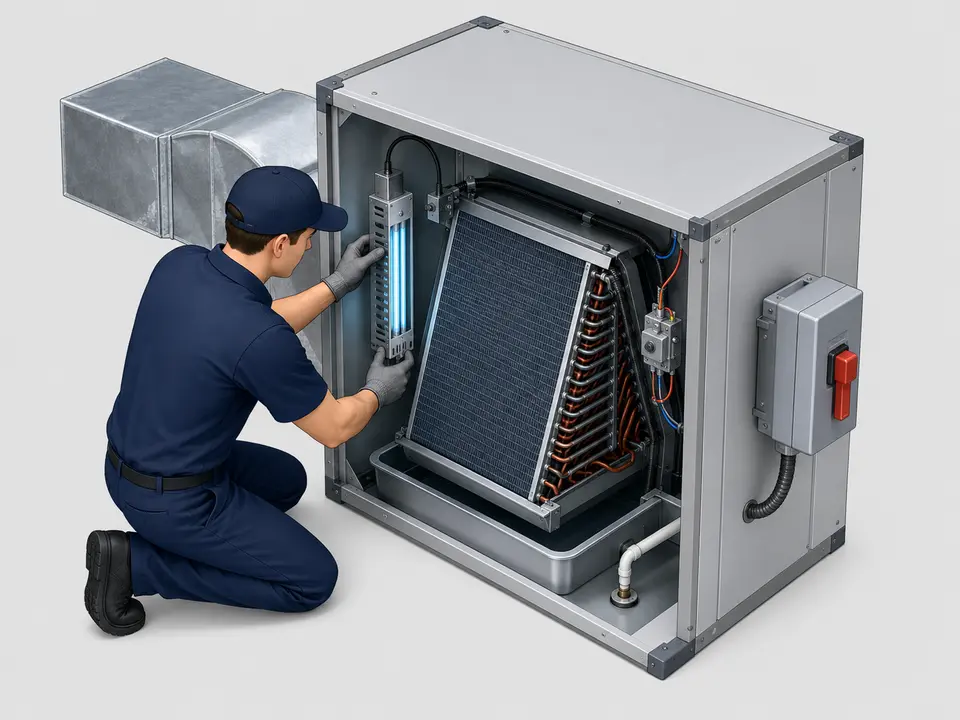
UV-C energy acts only where enough light reaches a target for enough time. Placement, lamp output, airflow, and maintenance control performance.
UV-C does not capture dust, pollen, smoke, or gases. EPA guidance treats UVGI as a supplement to filtration, not a replacement. Source control, ventilation, moisture control, and compatible filtration may still be needed.
We install, replace, repair, and maintain UV equipment for residential and commercial HVAC systems.
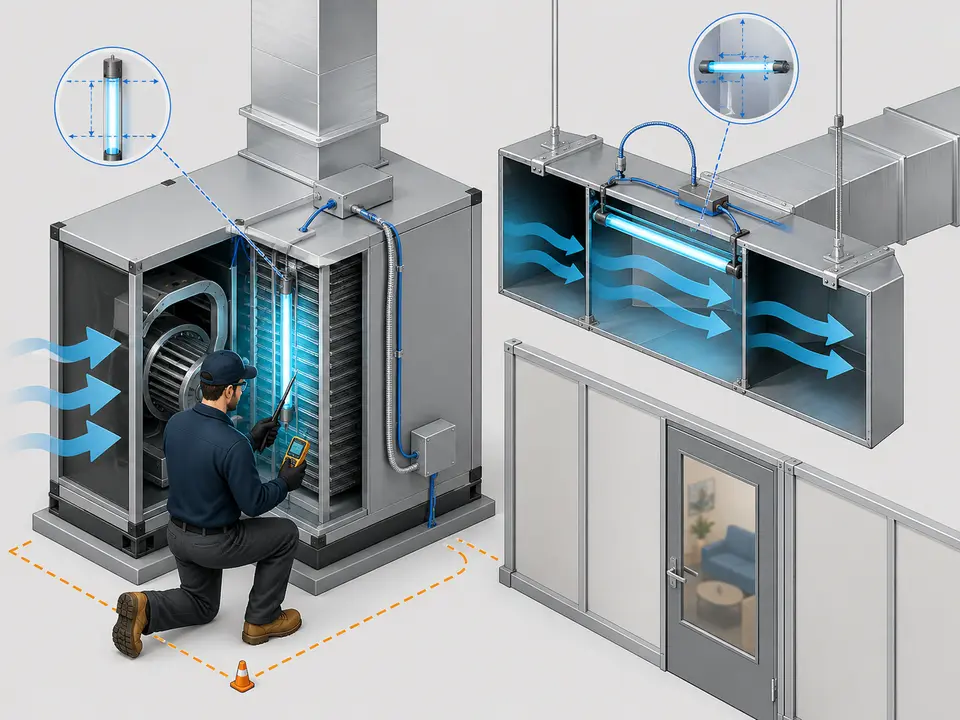
A useful estimate separates equipment, electrical work, cabinet modifications, controls, access, and maintenance.
Coil treatment, air-stream treatment, lamp count, size, and rated output affect equipment cost.
Panel construction, clearances, insulation, mounting space, and service access change labor.
Voltage, transformer, outlet, disconnect, wiring, control, interlock, and code needs affect price.
Furnaces, heat pumps, mini-splits, central air, and commercial systems need different hardware.
Shielding, viewing ports, warnings, switches, and access interlocks add protection and cost.
Coil cleanliness, biological growth, drainage, damaged insulation, and cabinet leaks may need correction.
The cheapest lamp is not always the lowest-cost system. Compare output, safety, lamp life, replacement cost, warranty, and service access.
We inspect equipment, coil, drain pan, airflow, cabinet materials, power, access, and treatment goals.
We choose compatible equipment, mount it securely, protect materials, wire controls, and contain exposure.
We test power, indicators, interlocks, access panels, lamp operation, and the maintenance schedule.
A proper recommendation begins with the target, not a product name.
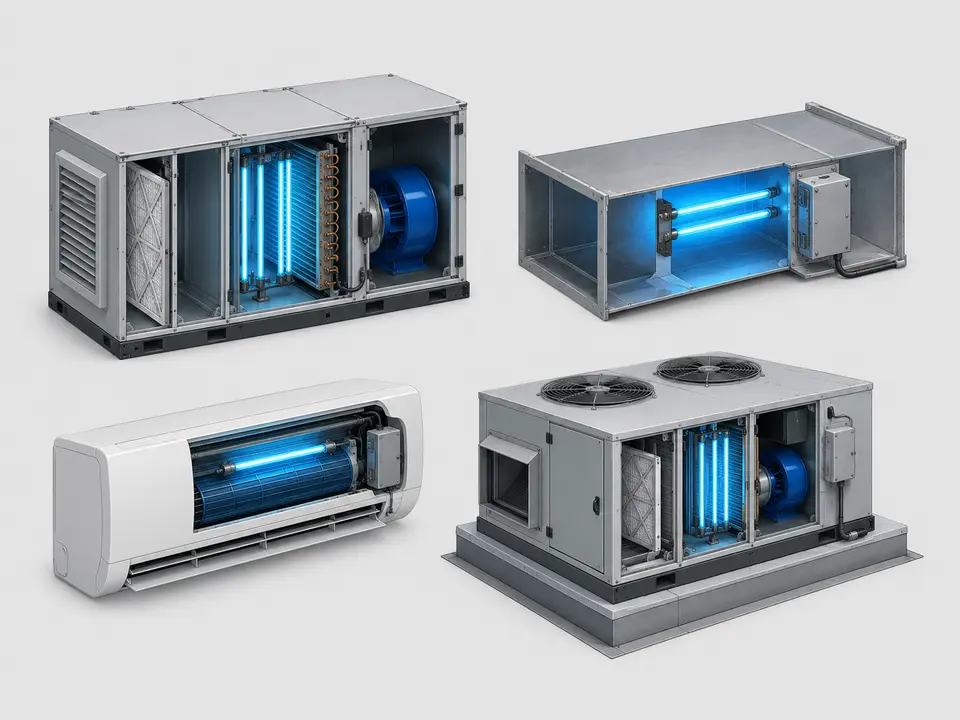
There is no universal mounting spot. The lamp must reach the intended target without damaging nearby materials or exposing people.
Direct UV-C exposure can injure eyes and skin. A permanent HVAC installation must keep energy inside the equipment.
A disconnect and safe service procedure protect anyone opening the equipment.
A correctly applied switch can stop the lamp when a protected panel opens.
Do not look directly at an operating UV-C lamp. Use approved indicators only.
Shield UV-sensitive wire insulation, plastics, filters, sealants, and drain parts.
Avoid intentional ozone generators. Confirm the exact device and certification status.
Electronic in-duct air cleaners sold in California must meet applicable CARB requirements.
A lamp can still glow after useful UV-C output has declined. Follow the exact replacement interval.
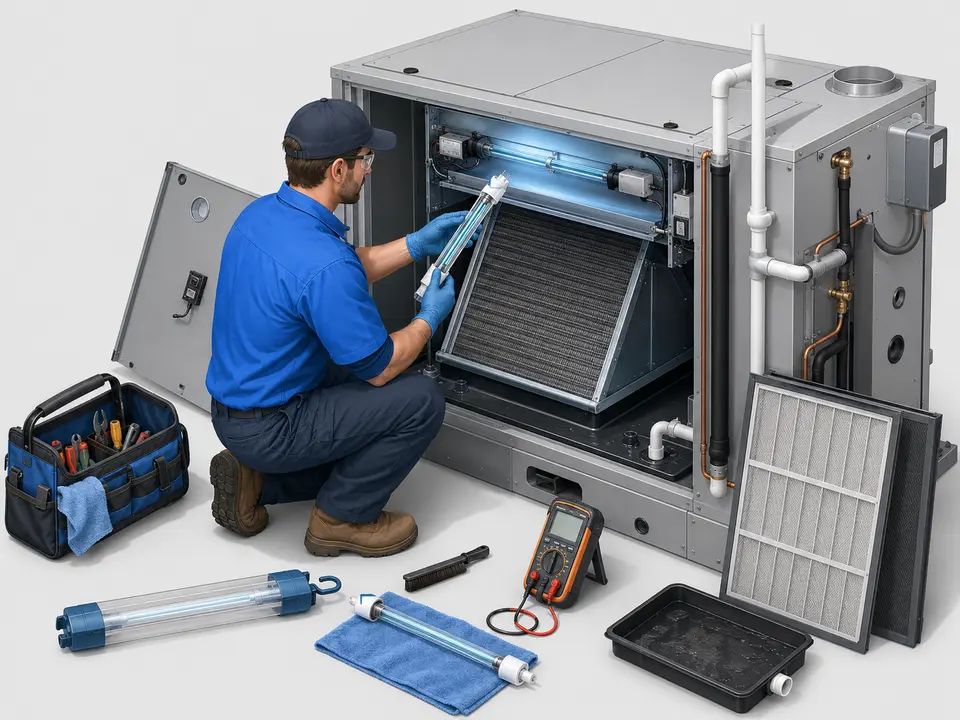
Typical residential UVGI has limits. Results depend on delivered dose, exposure time, airflow, surface condition, and maintenance. No UV product should be presented as a guaranteed health outcome.
We review exact model requirements. Brand references describe compatibility research, not manufacturer affiliation.
UV-C works best inside a complete plan for equipment cleanliness, particles, moisture, and ventilation.
These are service standards, not fictional testimonials.
The recommendation connects the treatment goal with the coil, airflow, cabinet, lamp output, and service needs.
Equipment, wiring, cabinet work, controls, safety components, testing, and exclusions remain clear.
The finished system receives lamp, electrical, indicator, panel, interlock, and containment checks.
Use this service index to identify the installation, repair, cost, equipment, or local-support topic that matches your project.
Share your city, equipment type, model, coil location, air-quality goals, existing accessories, and project timing.
Request UV light installation, replacement, repair, bulb service, ballast diagnosis, or maintenance. Recommendations depend on the target, equipment, airflow, cabinet, materials, power, access, certification, and product availability.
Cost depends on the UV application, lamp count, output, equipment layout, cabinet modifications, electrical work, controls, interlocks, access, and permits. Replacement lamps and maintenance also affect ownership cost. A system inspection creates a useful written estimate.
They can help when a properly selected lamp delivers enough UV-C energy to the intended target. Coil surfaces often receive long exposure. Moving air receives less time. Performance depends on output, distance, airflow, line of sight, cleanliness, temperature, and maintenance.
They may be useful for an exposed wet coil or a designed air-treatment goal. Value depends on equipment, moisture conditions, lamp output, maintenance, replacement cost, and expectations. UV-C does not replace filtration, cleaning, ventilation, or moisture repairs.
Placement depends on the target and equipment. A coil-treatment lamp needs line of sight to exposed coil and drain-pan surfaces. An air-stream system needs a designed irradiation zone. Materials, access, power, airflow, shielding, and product instructions also matter.
Properly designed UVGI may inactivate some biological material on illuminated HVAC surfaces. Typical residential systems have limits, and shadows receive little treatment. UV does not remove dead material or correct water damage. Moisture sources and contaminated material still need proper correction.
Follow the exact manufacturer interval. Useful UV-C output can decline even while a lamp still glows. Operating hours, temperature, cycling, contamination, and product design affect service life. Record the installation date and inspect during HVAC maintenance.
Often, yes, when compatible equipment and safe mounting space are available. Furnace heat, air-handler geometry, mini-split clearances, condensate, wiring, materials, controls, access, and manufacturer requirements need review before installation.
A properly installed system keeps UV-C inside the HVAC equipment. Direct exposure can injure eyes and skin. Safe installations use power isolation, closed panels, suitable shielding, warnings, and interlocks where required. Never look at an operating lamp.
Coil UV treats exposed surfaces continuously. In-duct UV treats moving air during a short pass. Air-stream performance needs enough irradiance and exposure time. The two applications may use different lamp quantities, mounting locations, controls, and design methods.
No. UV-C does not capture dust, pollen, pet dander, smoke particles, or other debris. Keep using a correctly sized, airflow-compatible filter. Ventilation, source control, moisture control, and cleaning may also be needed.
A correctly placed UV-C light can treat exposed HVAC surfaces or moving air. We match the lamp to the equipment, contain exposure, and verify safe operation.
UV-C energy acts only where enough light reaches a target for enough time. Placement, lamp output, airflow, and maintenance control performance.
UV-C does not capture dust, pollen, smoke, or gases. EPA guidance treats UVGI as a supplement to filtration, not a replacement. Source control, ventilation, moisture control, and compatible filtration may still be needed.
We install, replace, repair, and maintain UV equipment for residential and commercial HVAC systems.
A useful estimate separates equipment, electrical work, cabinet modifications, controls, access, and maintenance.
Coil treatment, air-stream treatment, lamp count, size, and rated output affect equipment cost.
Panel construction, clearances, insulation, mounting space, and service access change labor.
Voltage, transformer, outlet, disconnect, wiring, control, interlock, and code needs affect price.
Furnaces, heat pumps, mini-splits, central air, and commercial systems need different hardware.
Shielding, viewing ports, warnings, switches, and access interlocks add protection and cost.
Coil cleanliness, biological growth, drainage, damaged insulation, and cabinet leaks may need correction.
The cheapest lamp is not always the lowest-cost system. Compare output, safety, lamp life, replacement cost, warranty, and service access.
We inspect equipment, coil, drain pan, airflow, cabinet materials, power, access, and treatment goals.
We choose compatible equipment, mount it securely, protect materials, wire controls, and contain exposure.
We test power, indicators, interlocks, access panels, lamp operation, and the maintenance schedule.
A proper recommendation begins with the target, not a product name.
There is no universal mounting spot. The lamp must reach the intended target without damaging nearby materials or exposing people.
Direct UV-C exposure can injure eyes and skin. A permanent HVAC installation must keep energy inside the equipment.
A disconnect and safe service procedure protect anyone opening the equipment.
A correctly applied switch can stop the lamp when a protected panel opens.
Do not look directly at an operating UV-C lamp. Use approved indicators only.
Shield UV-sensitive wire insulation, plastics, filters, sealants, and drain parts.
Avoid intentional ozone generators. Confirm the exact device and certification status.
Electronic in-duct air cleaners sold in California must meet applicable CARB requirements.
A lamp can still glow after useful UV-C output has declined. Follow the exact replacement interval.
Typical residential UVGI has limits. Results depend on delivered dose, exposure time, airflow, surface condition, and maintenance. No UV product should be presented as a guaranteed health outcome.
We review exact model requirements. Brand references describe compatibility research, not manufacturer affiliation.
UV-C works best inside a complete plan for equipment cleanliness, particles, moisture, and ventilation.
These are service standards, not fictional testimonials.
The recommendation connects the treatment goal with the coil, airflow, cabinet, lamp output, and service needs.
Equipment, wiring, cabinet work, controls, safety components, testing, and exclusions remain clear.
The finished system receives lamp, electrical, indicator, panel, interlock, and containment checks.
Share your city, equipment type, model, coil location, air-quality goals, existing accessories, and project timing.
Request UV light installation, replacement, repair, bulb service, ballast diagnosis, or maintenance. Recommendations depend on the target, equipment, airflow, cabinet, materials, power, access, certification, and product availability.
Cost depends on the UV application, lamp count, output, equipment layout, cabinet modifications, electrical work, controls, interlocks, access, and permits. Replacement lamps and maintenance also affect ownership cost. A system inspection creates a useful written estimate.
They can help when a properly selected lamp delivers enough UV-C energy to the intended target. Coil surfaces often receive long exposure. Moving air receives less time. Performance depends on output, distance, airflow, line of sight, cleanliness, temperature, and maintenance.
They may be useful for an exposed wet coil or a designed air-treatment goal. Value depends on equipment, moisture conditions, lamp output, maintenance, replacement cost, and expectations. UV-C does not replace filtration, cleaning, ventilation, or moisture repairs.
Placement depends on the target and equipment. A coil-treatment lamp needs line of sight to exposed coil and drain-pan surfaces. An air-stream system needs a designed irradiation zone. Materials, access, power, airflow, shielding, and product instructions also matter.
Properly designed UVGI may inactivate some biological material on illuminated HVAC surfaces. Typical residential systems have limits, and shadows receive little treatment. UV does not remove dead material or correct water damage. Moisture sources and contaminated material still need proper correction.
Follow the exact manufacturer interval. Useful UV-C output can decline even while a lamp still glows. Operating hours, temperature, cycling, contamination, and product design affect service life. Record the installation date and inspect during HVAC maintenance.
Often, yes, when compatible equipment and safe mounting space are available. Furnace heat, air-handler geometry, mini-split clearances, condensate, wiring, materials, controls, access, and manufacturer requirements need review before installation.
A properly installed system keeps UV-C inside the HVAC equipment. Direct exposure can injure eyes and skin. Safe installations use power isolation, closed panels, suitable shielding, warnings, and interlocks where required. Never look at an operating lamp.
Coil UV treats exposed surfaces continuously. In-duct UV treats moving air during a short pass. Air-stream performance needs enough irradiance and exposure time. The two applications may use different lamp quantities, mounting locations, controls, and design methods.
No. UV-C does not capture dust, pollen, pet dander, smoke particles, or other debris. Keep using a correctly sized, airflow-compatible filter. Ventilation, source control, moisture control, and cleaning may also be needed.