Furnace Installation Sized, Installed, and Tested for Your Home
The best furnace is the one that fits the building, ducts, fuel, and real heating load.
Our furnace installation service starts with a heating assessment and load calculation. We compare gas, electric, propane, oil, efficiency, staging, blower, orientation, venting, and heat-pump alternatives before installing and commissioning the selected system.
- Load-based furnace sizingBTU output selected for the building—not square footage alone
- Complete written scopeDucts, venting, gas or electrical, drain, controls, and permits
- Safety commissioningCombustion, CO, temperature rise, airflow, and controls verified
Does Your Home Need a New Furnace?
Equipment age matters, but comfort, safety, repairs, ducts, and operating cost tell the complete story.
Repeated failures, unsafe combustion, a damaged heat exchanger, unavailable parts, poor comfort, and high operating cost can support replacement.
A larger furnace is not an automatic fix. Oversizing can increase noise, temperature swings, and short cycling. Duct and return restrictions may remain.
We compare repair, furnace replacement, heat pump, and combined furnace-and-AC options before final equipment selection.
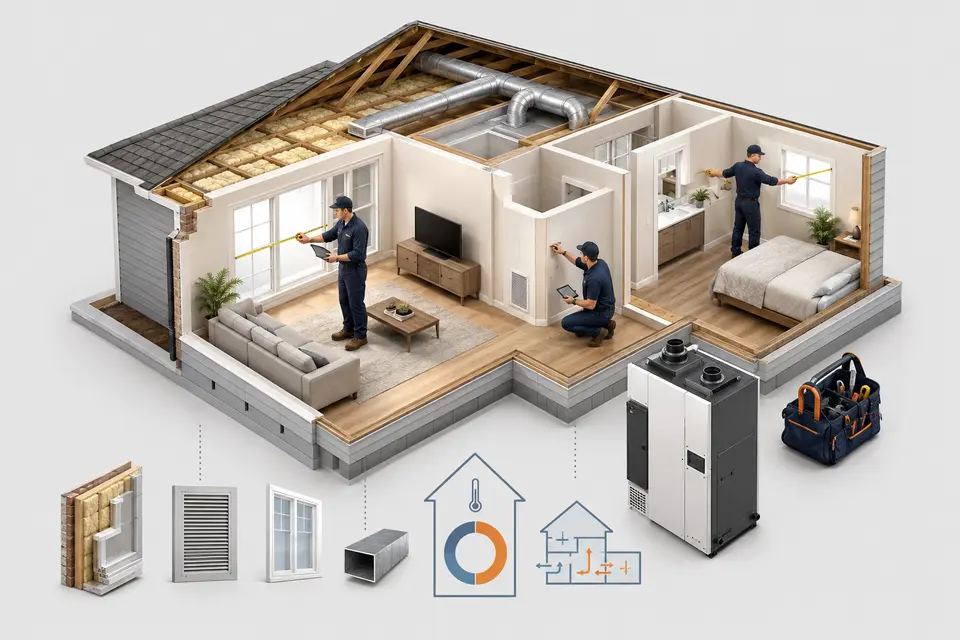
What Furnace Installation Service Includes
Equipment is only one line on a complete heating installation.
Professional furnace installation services coordinate sizing, fuel, efficiency, ducts, airflow, venting, drainage, electrical, controls, permits, safety testing, and owner handover.
From Heating Assessment to Commissioned Furnace
Furnace Installation Cost
Capacity, fuel, efficiency, access, ducts, venting, and utility work move the final price.
A new furnace commonly plans around $3,500 to $7,500+ installed. High-efficiency equipment can reach roughly $11,500 with complex professional installation. Electric furnace replacement commonly ranges around $1,900 to $5,600; oil around $2,500 to $6,000. California site conditions and the written estimate control.
What Changes the Furnace Installation Price?
- Heating load Correct BTU output and blower capacity.
- Fuel and efficiency Gas, electric, oil, propane, and AFUE.
- Orientation Upflow, downflow, horizontal, attic, garage, or closet.
- Ductwork Return size, supply transition, sealing, and modifications.
- Venting and condensate Chimney, liner, PVC, drain, and pump.
- Gas or electrical Line, shutoff, panel, breaker, and conductor changes.
- Permits and access Inspection, removal, rigging, and finished areas.
- Combined work Furnace, coil, AC, thermostat, and controls together.
How Furnace Installation Works
Calculate first, build the complete scope, then commission every safety.
- 01
Assess and size
We calculate the heating load and inspect fuel, electrical, ducts, return paths, venting, access, and controls.
You get equipment options matched to the home - 02
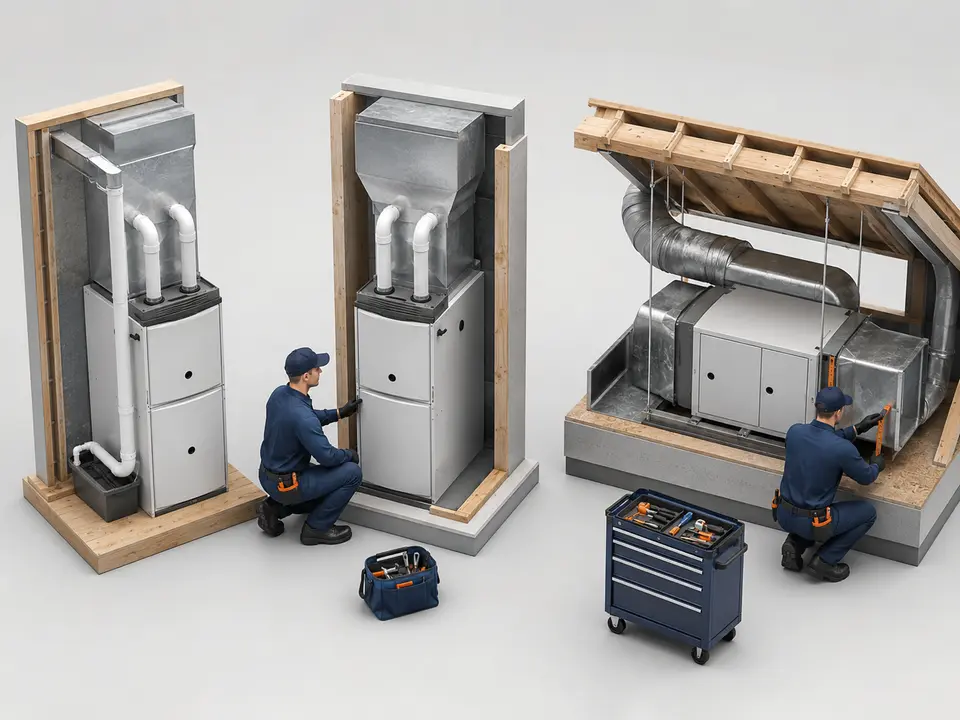
Install the complete system
We set the furnace, build sealed transitions, connect fuel or electrical service, complete venting, drain, filter, and thermostat work.
You get the defined installation scope - 03
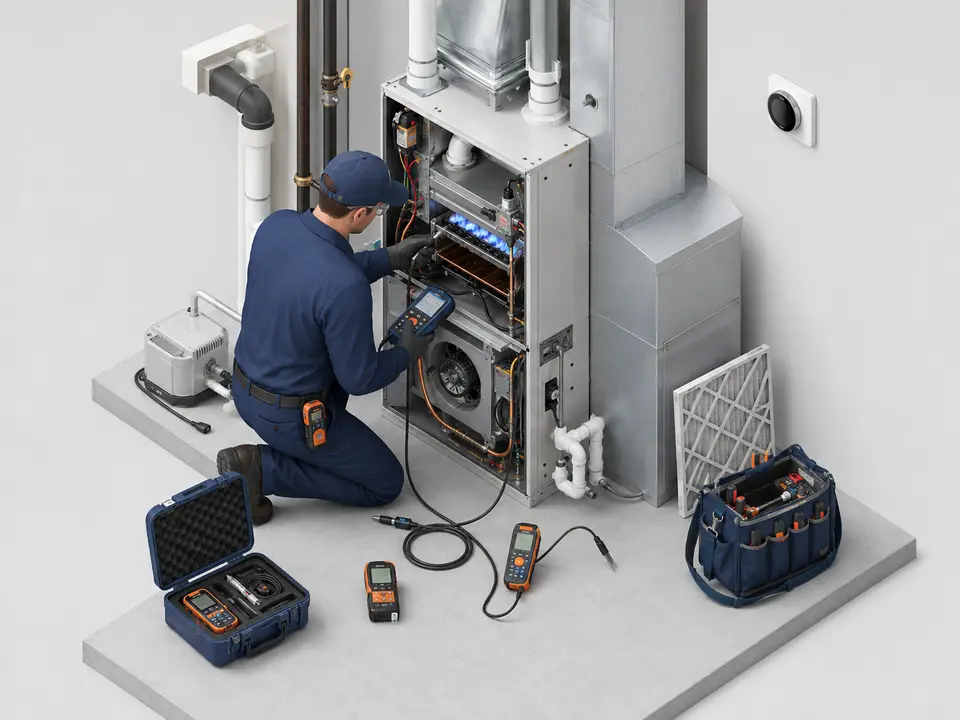
Commission and hand over
We test combustion, carbon monoxide, gas pressure, temperature rise, airflow, static pressure, drain, thermostat, and safeties.
You get documented operation and maintenance guidance
Furnace Types and Efficiency Options
Fuel, AFUE, staging, blower, and controls should fit the building and ownership plan.
Gas furnace
Natural gas or propane equipment with approved gas supply, combustion air, venting, condensate, and safety testing.
Heating optionElectric furnace
Electric resistance heat sized to the building load and verified against panel, breaker, conductor, and airflow capacity.
Heating optionHigh-efficiency condensing furnace
Typically 90% AFUE or higher, using sealed-combustion PVC venting and a managed condensate drain.
Heating optionSingle-stage furnace
One heating output level; simple, but correct sizing and airflow remain essential.
Heating optionTwo-stage furnace
Lower and higher heat output can improve comfort and reduce cycling when controls and ducts support it.
Heating optionModulating variable-speed furnace
Fine output adjustment and variable airflow require matched controls, setup, and commissioning.
Heating optionFurnace vs Heat Pump, Boiler, or Mini Split
The best heating system depends on the building, climate zone, fuel, electricity, ducts, and comfort goals.
A furnace uses ducts and provides strong forced-air heat. A heat pump provides heating and cooling. A boiler heats water for radiators or radiant systems. Mini splits offer zoned heating without central ducts. We compare installed cost, operating cost, electrical capacity, fuel, emissions, comfort, cooling needs, and existing infrastructure.
What Professional Furnace Installation Should Deliver
A furnace is not finished when the cabinet is connected.
Load-based sizing. Heating output is matched to the building.
Sealed airflow path. Return, filter, furnace, coil, plenum, and supply transitions fit.
Approved venting and utilities. Fuel, electrical, combustion air, exhaust, and condensate are complete.
Safety testing. Combustion, carbon monoxide, temperature limits, and safeties are checked.
Measured airflow. Temperature rise, blower setup, and static pressure are reviewed.
Complete installation
Why Choose All HVAC California for Furnace Installation?
A reliable furnace installation company should show how sizing, scope, and startup were decided.
- Load-based sizing Output selected for the actual home.
- Fuel-neutral comparison Furnace, heat pump, and other options explained.
- Complete scope Ducts, venting, fuel, electrical, drain, controls, and permits.
- Orientation expertise Upflow, downflow, horizontal, attic, closet, and garage.
- Safety commissioning Combustion and carbon monoxide verified.
- Airflow setup Blower, temperature rise, static pressure, and filter access checked.
- Property protected Floors, walls, occupied areas, and removal route handled carefully.
- Documented handover Equipment, settings, readings, filter, and maintenance reviewed.
Areas We Serve Across California
Home is where the heart is. Ours has crews in a lot of neighborhoods.
Search ac maintenance near me and you'll find plenty of vans. We staff local crews who know California homes, heat, and equipment.
Our furnace installation service near me teams cover every region. Same standards everywhere.
We book fast AC repair slots year round. Reliable AC repair crews carry stock.
Want affordable furnace installation service without a vague scope? We define the tune-up, cleaning, and any separate repair before extra work.
Looking for local AC repair or a local heating system installation company you can call twice? Pick your city above.
Other HVAC Services We Offer
One company, one number, everything handled. We carried every bag in one trip.
A new furnace is one heating option. Our complete service menu supports the rest of the home. Every service below is done by our own employees. Never subcontracted, never resold.
Air conditioning service for dependable comfort
From a single ductless head to a complete central system, service is matched to the equipment and the property.
- System sizing and equipment matching reviewed
- Refrigerant handled and measured professionally
- Repair findings explained before work
Our Furnace Installation Commitments
No invented warranty claims—just clear, verifiable work standards.
Capacity and output rationale documented.
Equipment, ducts, venting, utilities, drain, controls, and permits listed.
Combustion, CO, temperature rise, static pressure, and safeties checked.
Settings, filter, operation, maintenance, and next steps reviewed.
Residential and Commercial Furnace Installation
The installation changes with the building, access, orientation, fuel, ducts, and operating schedule.
Furnace Installation From Planning to Startup
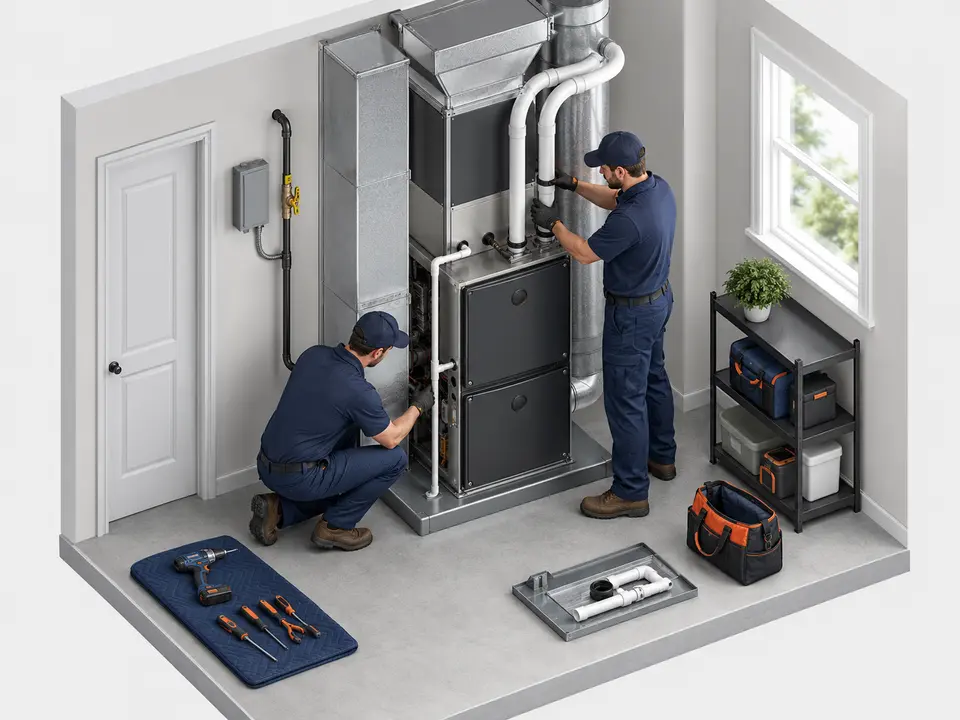
What Better Furnace Installation Feels Like
These are service standards—not fictional testimonials.
The installer explains the load calculation and why the selected BTU output fits the home.
The quote separates equipment, ducts, venting, fuel or electrical work, drainage, controls, permits, and startup.
The furnace is operated and safety-tested before panels close and the system is handed over.
Service Options, Costs, and Questions We Address
Use this service index to identify the installation, repair, cost, equipment, or local-support topic that matches your project.
Ready for a Furnace Installation Estimate?
Start with the home, the heating load, and the complete installation scope.
Request professional furnace installation for a gas, electric, propane, oil, high-efficiency, upflow, downflow, or horizontal system. We will compare the practical options before equipment is selected.
Furnace Installation Questions Answered
A new furnace commonly costs about $3,500 to $7,500+ installed. High-efficiency, difficult-access, duct, venting, gas-line, electrical, permit, or combined furnace-and-AC work can reach higher. A written load calculation and site scope control the actual furnace installation cost.
Furnace size is heating output in BTU per hour. Square-foot rules and a furnace size calculator are rough filters only. A proper load calculation considers California climate, insulation, windows, leakage, orientation, duct losses, and design temperatures before selecting input and output capacity.
A straightforward replacement may finish in one working day. New ductwork, attic or crawlspace access, vent or gas-line changes, electrical upgrades, condensate routing, permits, combined AC work, or difficult removal can extend the schedule.
Gas furnaces often provide strong output and may have lower operating cost where natural gas is available. Electric furnaces can have lower equipment complexity but may cost more to operate. Fuel prices, electrical capacity, climate, ducts, safety, emissions, and heat-pump alternatives should be compared.
Annual Fuel Utilization Efficiency compares seasonal furnace heat output with fuel input. A higher AFUE means less fuel is lost during rated operation. AFUE does not measure duct leakage, building heat loss, electricity used by the blower, installation quality, or actual fuel prices.
A heat pump provides heating and cooling and can be highly efficient. A furnace provides combustion or electric-resistance heat and may suit existing fuel and duct infrastructure. California climate zone, electric and gas rates, electrical capacity, comfort goals, incentives, and backup-heat strategy should guide the decision.
Furnace installation involves high-voltage electricity, fuel gas or heavy electrical loads, venting, combustion, condensate, airflow, permits, and carbon-monoxide risk. Professional installation and required inspections protect safety, equipment warranty, and performance.
The federal Energy Efficient Home Improvement Credit generally applied to qualifying property installed through December 31, 2025. A furnace placed in service in 2026 should not be advertised as qualifying under that expired federal provision. Check current California, utility, manufacturer, and local programs before purchase.
Furnace Installation Sized, Installed, and Tested for Your Home
The best furnace is the one that fits the building, ducts, fuel, and real heating load.
Our furnace installation service starts with a heating assessment and load calculation. We compare gas, electric, propane, oil, efficiency, staging, blower, orientation, venting, and heat-pump alternatives before installing and commissioning the selected system.
- Load-based furnace sizingBTU output selected for the building—not square footage alone
- Complete written scopeDucts, venting, gas or electrical, drain, controls, and permits
- Safety commissioningCombustion, CO, temperature rise, airflow, and controls verified
Does Your Home Need a New Furnace?
Equipment age matters, but comfort, safety, repairs, ducts, and operating cost tell the complete story.
Repeated failures, unsafe combustion, a damaged heat exchanger, unavailable parts, poor comfort, and high operating cost can support replacement.
A larger furnace is not an automatic fix. Oversizing can increase noise, temperature swings, and short cycling. Duct and return restrictions may remain.
We compare repair, furnace replacement, heat pump, and combined furnace-and-AC options before final equipment selection.
What Furnace Installation Service Includes
Equipment is only one line on a complete heating installation.
Professional furnace installation services coordinate sizing, fuel, efficiency, ducts, airflow, venting, drainage, electrical, controls, permits, safety testing, and owner handover.
From Heating Assessment to Commissioned Furnace
Furnace Installation Cost
Capacity, fuel, efficiency, access, ducts, venting, and utility work move the final price.
A new furnace commonly plans around $3,500 to $7,500+ installed. High-efficiency equipment can reach roughly $11,500 with complex professional installation. Electric furnace replacement commonly ranges around $1,900 to $5,600; oil around $2,500 to $6,000. California site conditions and the written estimate control.
What Changes the Furnace Installation Price?
- Heating load Correct BTU output and blower capacity.
- Fuel and efficiency Gas, electric, oil, propane, and AFUE.
- Orientation Upflow, downflow, horizontal, attic, garage, or closet.
- Ductwork Return size, supply transition, sealing, and modifications.
- Venting and condensate Chimney, liner, PVC, drain, and pump.
- Gas or electrical Line, shutoff, panel, breaker, and conductor changes.
- Permits and access Inspection, removal, rigging, and finished areas.
- Combined work Furnace, coil, AC, thermostat, and controls together.
How Furnace Installation Works
Calculate first, build the complete scope, then commission every safety.
- 01
Assess and size
We calculate the heating load and inspect fuel, electrical, ducts, return paths, venting, access, and controls.
You get equipment options matched to the home - 02
Install the complete system
We set the furnace, build sealed transitions, connect fuel or electrical service, complete venting, drain, filter, and thermostat work.
You get the defined installation scope - 03
Commission and hand over
We test combustion, carbon monoxide, gas pressure, temperature rise, airflow, static pressure, drain, thermostat, and safeties.
You get documented operation and maintenance guidance
Furnace Types and Efficiency Options
Fuel, AFUE, staging, blower, and controls should fit the building and ownership plan.
Gas furnace
Natural gas or propane equipment with approved gas supply, combustion air, venting, condensate, and safety testing.
Heating optionElectric furnace
Electric resistance heat sized to the building load and verified against panel, breaker, conductor, and airflow capacity.
Heating optionHigh-efficiency condensing furnace
Typically 90% AFUE or higher, using sealed-combustion PVC venting and a managed condensate drain.
Heating optionSingle-stage furnace
One heating output level; simple, but correct sizing and airflow remain essential.
Heating optionTwo-stage furnace
Lower and higher heat output can improve comfort and reduce cycling when controls and ducts support it.
Heating optionModulating variable-speed furnace
Fine output adjustment and variable airflow require matched controls, setup, and commissioning.
Heating optionFurnace vs Heat Pump, Boiler, or Mini Split
The best heating system depends on the building, climate zone, fuel, electricity, ducts, and comfort goals.
A furnace uses ducts and provides strong forced-air heat. A heat pump provides heating and cooling. A boiler heats water for radiators or radiant systems. Mini splits offer zoned heating without central ducts. We compare installed cost, operating cost, electrical capacity, fuel, emissions, comfort, cooling needs, and existing infrastructure.
What Professional Furnace Installation Should Deliver
A furnace is not finished when the cabinet is connected.
Load-based sizing. Heating output is matched to the building.
Sealed airflow path. Return, filter, furnace, coil, plenum, and supply transitions fit.
Approved venting and utilities. Fuel, electrical, combustion air, exhaust, and condensate are complete.
Safety testing. Combustion, carbon monoxide, temperature limits, and safeties are checked.
Measured airflow. Temperature rise, blower setup, and static pressure are reviewed.
Complete installation
Why Choose All HVAC California for Furnace Installation?
A reliable furnace installation company should show how sizing, scope, and startup were decided.
- Load-based sizing Output selected for the actual home.
- Fuel-neutral comparison Furnace, heat pump, and other options explained.
- Complete scope Ducts, venting, fuel, electrical, drain, controls, and permits.
- Orientation expertise Upflow, downflow, horizontal, attic, closet, and garage.
- Safety commissioning Combustion and carbon monoxide verified.
- Airflow setup Blower, temperature rise, static pressure, and filter access checked.
- Property protected Floors, walls, occupied areas, and removal route handled carefully.
- Documented handover Equipment, settings, readings, filter, and maintenance reviewed.
Areas We Serve Across California
Home is where the heart is. Ours has crews in a lot of neighborhoods.
Search ac maintenance near me and you'll find plenty of vans. We staff local crews who know California homes, heat, and equipment.
Our furnace installation service near me teams cover every region. Same standards everywhere.
We book fast AC repair slots year round. Reliable AC repair crews carry stock.
Want affordable furnace installation service without a vague scope? We define the tune-up, cleaning, and any separate repair before extra work.
Looking for local AC repair or a local heating system installation company you can call twice? Pick your city above.
Other HVAC Services We Offer
One company, one number, everything handled. We carried every bag in one trip.
A new furnace is one heating option. Our complete service menu supports the rest of the home. Every service below is done by our own employees. Never subcontracted, never resold.
Air conditioning service for dependable comfort
From a single ductless head to a complete central system, service is matched to the equipment and the property.
- System sizing and equipment matching reviewed
- Refrigerant handled and measured professionally
- Repair findings explained before work
Our Furnace Installation Commitments
No invented warranty claims—just clear, verifiable work standards.
Capacity and output rationale documented.
Equipment, ducts, venting, utilities, drain, controls, and permits listed.
Combustion, CO, temperature rise, static pressure, and safeties checked.
Settings, filter, operation, maintenance, and next steps reviewed.
Residential and Commercial Furnace Installation
The installation changes with the building, access, orientation, fuel, ducts, and operating schedule.
Furnace Installation From Planning to Startup
What Better Furnace Installation Feels Like
These are service standards—not fictional testimonials.
The installer explains the load calculation and why the selected BTU output fits the home.
The quote separates equipment, ducts, venting, fuel or electrical work, drainage, controls, permits, and startup.
The furnace is operated and safety-tested before panels close and the system is handed over.
Ready for a Furnace Installation Estimate?
Start with the home, the heating load, and the complete installation scope.
Request professional furnace installation for a gas, electric, propane, oil, high-efficiency, upflow, downflow, or horizontal system. We will compare the practical options before equipment is selected.
Furnace Installation Questions Answered
A new furnace commonly costs about $3,500 to $7,500+ installed. High-efficiency, difficult-access, duct, venting, gas-line, electrical, permit, or combined furnace-and-AC work can reach higher. A written load calculation and site scope control the actual furnace installation cost.
Furnace size is heating output in BTU per hour. Square-foot rules and a furnace size calculator are rough filters only. A proper load calculation considers California climate, insulation, windows, leakage, orientation, duct losses, and design temperatures before selecting input and output capacity.
A straightforward replacement may finish in one working day. New ductwork, attic or crawlspace access, vent or gas-line changes, electrical upgrades, condensate routing, permits, combined AC work, or difficult removal can extend the schedule.
Gas furnaces often provide strong output and may have lower operating cost where natural gas is available. Electric furnaces can have lower equipment complexity but may cost more to operate. Fuel prices, electrical capacity, climate, ducts, safety, emissions, and heat-pump alternatives should be compared.
Annual Fuel Utilization Efficiency compares seasonal furnace heat output with fuel input. A higher AFUE means less fuel is lost during rated operation. AFUE does not measure duct leakage, building heat loss, electricity used by the blower, installation quality, or actual fuel prices.
A heat pump provides heating and cooling and can be highly efficient. A furnace provides combustion or electric-resistance heat and may suit existing fuel and duct infrastructure. California climate zone, electric and gas rates, electrical capacity, comfort goals, incentives, and backup-heat strategy should guide the decision.
Furnace installation involves high-voltage electricity, fuel gas or heavy electrical loads, venting, combustion, condensate, airflow, permits, and carbon-monoxide risk. Professional installation and required inspections protect safety, equipment warranty, and performance.
The federal Energy Efficient Home Improvement Credit generally applied to qualifying property installed through December 31, 2025. A furnace placed in service in 2026 should not be advertised as qualifying under that expired federal provision. Check current California, utility, manufacturer, and local programs before purchase.