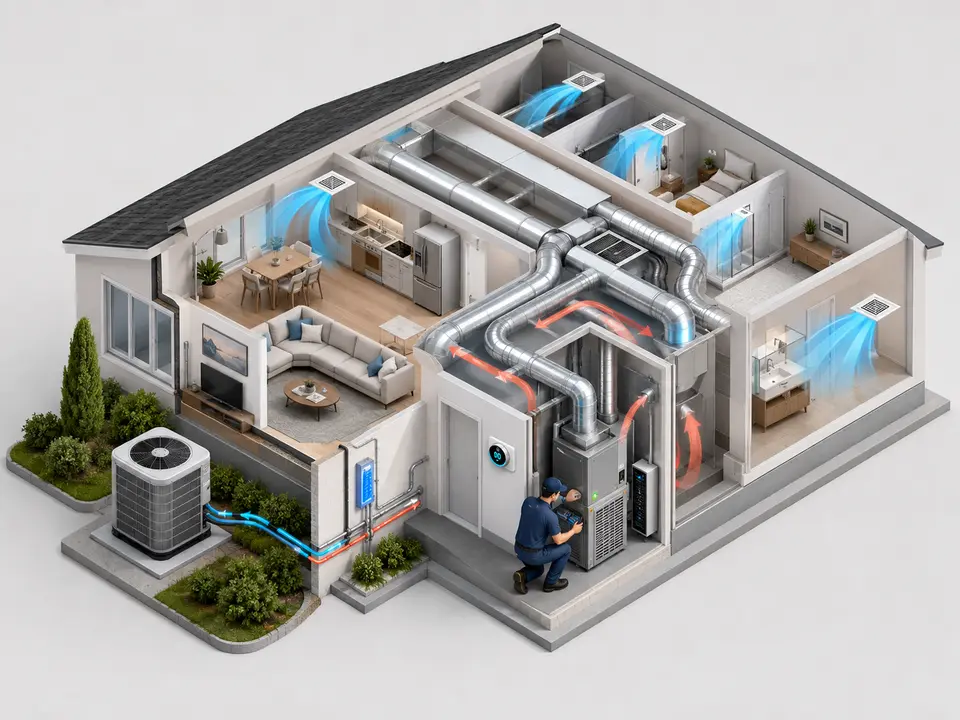
HVAC keeps your home comfortable through hot days, cool nights, and smoky seasons. You may use it every day without thinking about it. Yet the system affects your comfort, energy bills, and indoor air.
So, what is HVAC? The short answer is heating, ventilation, and air conditioning. The full answer covers several systems that work together. Some make heat. Others remove heat. Ventilation brings in fresh air and moves stale air out.
This guide explains HVAC in plain English. You will learn how the main parts work, which systems homes use, and when service makes sense. You will also get simple tips for better comfort and fewer surprises.
You do not need to become a technician to make smart decisions. A basic system map helps you describe problems clearly. It also helps you compare service options and spot vague advice. Start with the job each part performs. Then look at how those parts share air, power, controls, and space. That simple approach makes a complicated system much easier to understand.
What Does HVAC Stand For?
HVAC stands for heating, ventilation, and air conditioning. Each part handles a different comfort job.
- Heating raises indoor temperatures during cold weather.
- Ventilation moves air and helps control moisture, odors, and pollutants.
- Air conditioning removes heat and moisture during warm weather.
Many people use “HVAC” when they mean an air conditioner. That is only one piece. A complete HVAC setup may include a furnace, heat pump, air conditioner, ducts, filters, controls, and exhaust fans.
Why HVAC Matters
Your HVAC system does more than change the temperature. It helps your home feel steady from room to room. It also manages humidity and keeps air moving.
A well-designed system can support better sleep, safer indoor temperatures, and lower energy use. A poor setup may create hot rooms, cold rooms, noise, dust, and high bills. Comfort problems often come from the full system, not one broken machine.
California homes face many conditions. Coastal areas may need moisture control. Inland homes often need strong summer cooling. Mountain communities need dependable heat. Wildfire smoke can also make filtration more important.
How Does an HVAC System Work?
Think of HVAC as your home’s comfort team. The thermostat calls the play. Heating or cooling equipment changes the air temperature. A blower moves that air. Ducts or indoor units deliver it to each room.
Most systems follow a simple cycle:
- The thermostat measures the room temperature.
- It calls for heating or cooling.
- The equipment warms or cools the air.
- A fan moves conditioned air through the home.
- Return air travels back for another cycle.
The system stops when the thermostat reaches its target. Modern variable-speed systems may slow down instead. Longer, gentler cycles can improve comfort and reduce temperature swings.
The Heating Side
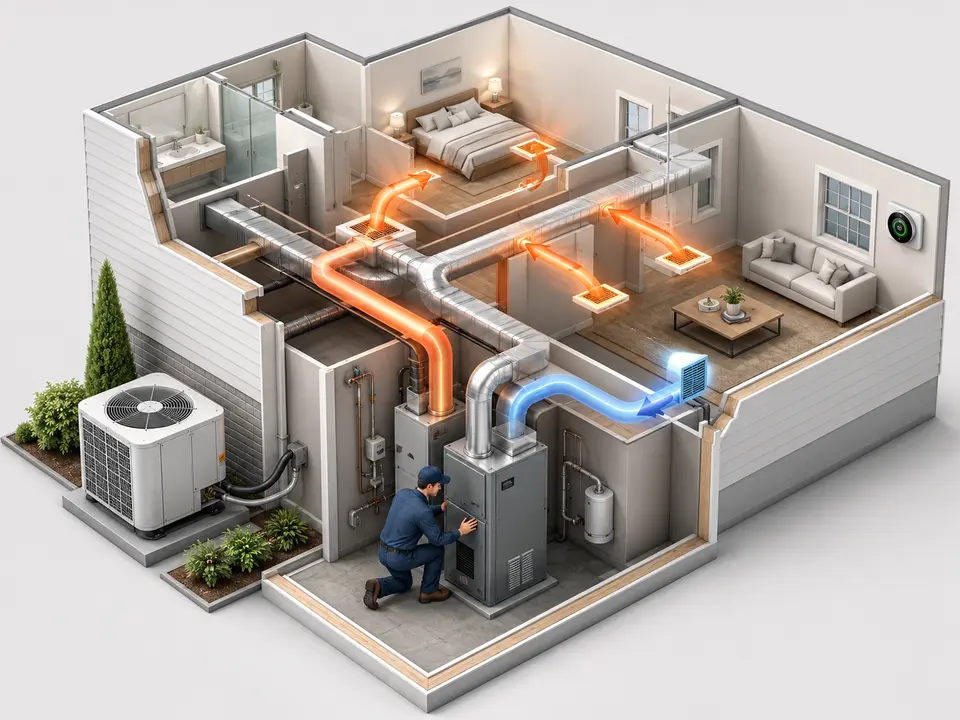
Heating equipment adds warmth or moves heat indoors. Furnaces and heat pumps are common choices.
A gas furnace burns fuel inside a sealed heat exchanger. The blower moves indoor air across that warm surface. Electric furnaces use electric heating elements instead. Neither type sends combustion air into your rooms.
A heat pump works differently. It moves heat from outside to inside. Even cool outdoor air contains usable heat. Modern heat pumps can warm many California homes efficiently. Some homes pair a heat pump with a furnace for backup.
The Cooling Side
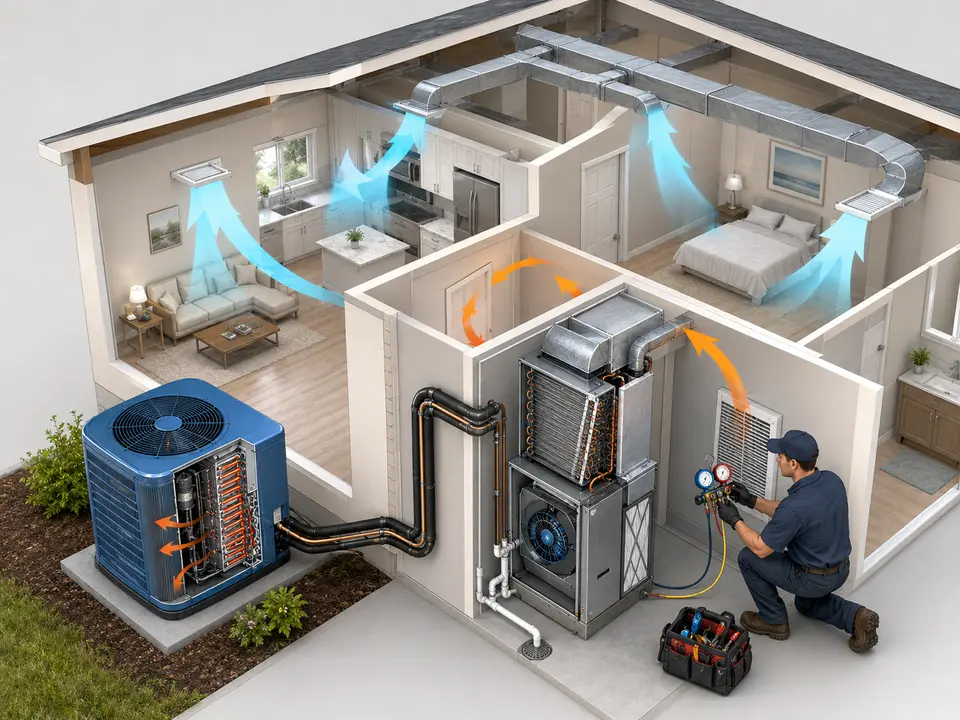
Air conditioners do not create cold air. They move heat from inside your home to the outdoors. Refrigerant carries that heat through a closed loop.
The indoor coil absorbs heat from the air. The outdoor unit releases it outside. The blower then sends cooler air back through the home. The indoor coil also removes some moisture as water.
Dirty coils, low airflow, and refrigerant problems can weaken this process. A system may run longer while delivering less comfort. Professional AC repair can identify the real cause.
The Ventilation Side
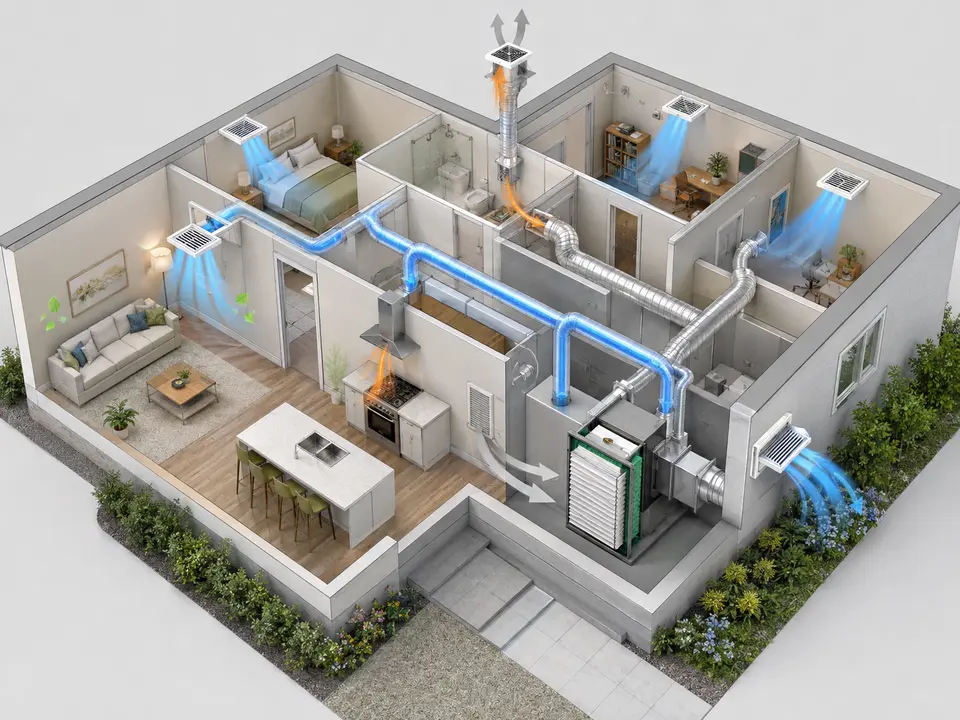
Ventilation replaces stale indoor air with cleaner outdoor air. It can also remove moisture and odors near their source.
Natural ventilation happens through open windows and small building gaps. Mechanical ventilation uses fans, ducts, and controls. Bathroom fans, kitchen hoods, and whole-home fresh-air systems are common examples.
Tighter homes save energy, but they may trap more indoor pollutants. Planned ventilation can solve that problem. It should bring in outdoor air without upsetting pressure or comfort.
Main HVAC Components
Every system is different, but most use several familiar parts.
- Thermostat: Measures temperature and sends commands.
- Furnace or air handler: Houses the blower and key indoor parts.
- Evaporator coil: Absorbs indoor heat during cooling.
- Outdoor unit: Releases or collects heat, depending on the mode.
- Ductwork: Carries supply and return air.
- Filter: Captures particles before air reaches sensitive parts.
- Vents and registers: Deliver air and return it to the system.
- Drain line: Carries away water created during cooling.
One weak part can affect everything else. A clogged filter can reduce airflow. Leaky ducts can waste conditioned air. A poor thermostat location can cause short or uneven cycles.
Common Types of HVAC Systems
There is no single best HVAC system for every home. Climate, layout, fuel access, insulation, and budget all matter.
Split Systems
A split system has indoor and outdoor equipment. A common setup pairs a gas furnace with central air conditioning. The furnace blower moves air for both seasons. Existing ducts make this choice practical for many homes.
Heat Pump Systems
A heat pump provides heating and cooling with one refrigeration system. It reverses direction when the season changes. This all-electric option works well in many mild and moderate climates. Proper sizing remains vital for comfort.
Ductless Mini Splits
Ductless systems connect one outdoor unit to one or more indoor units. Each indoor unit controls a zone. They suit additions, garages, older homes, and rooms with uneven temperatures. Learn more about ductless HVAC options.
Packaged Systems
A packaged unit places most components in one outdoor cabinet. It may sit on a roof or beside the building. These systems are common where indoor space is limited. Installation needs careful duct and weather sealing.
What Does Ductwork Do?
Ductwork is the delivery network for a central HVAC system. Supply ducts carry conditioned air to rooms. Return ducts bring indoor air back to the equipment.
Good ducts need the right size, shape, and route. They also need sealed joints and suitable insulation. Crushed, leaky, or undersized ducts can create noise and weak airflow. They may also pull dusty attic or crawl-space air into the system.
Closing many vents rarely fixes balance problems. It may raise pressure and reduce airflow. A technician can measure the system before recommending changes.
Thermostats and HVAC Controls
The thermostat is your system’s control center. Basic models hold one temperature. Programmable models follow a schedule. Smart thermostats add remote access and energy reports.
A smart thermostat cannot fix poor equipment or leaky ducts. It can still reduce waste when used well. Choose settings that match your real routine. Huge temperature changes may force long recovery cycles.
Zoning controls use dampers or separate indoor units. They send comfort where people need it. A proper design protects airflow when some zones close.
HVAC Filters and Indoor Air
The main filter protects HVAC equipment and captures airborne particles. It is not a complete indoor-air solution. Still, the correct filter can support cleaner air and steady airflow.
MERV ratings describe how well filters capture particles. A higher number usually captures smaller particles. However, extra resistance can hurt an unsuitable system. Use the highest rating your equipment can safely handle.
Fit matters too. Air will slip around a filter with large gaps. Install the arrow toward the blower. Check the filter often and replace it when loaded. Our filter replacement service can help confirm size and airflow.
Understanding HVAC Efficiency Ratings
Efficiency ratings help compare equipment under standard tests. They do not predict every home’s exact bill.
- SEER2 measures seasonal cooling efficiency.
- EER2 measures cooling efficiency at set conditions.
- HSPF2 measures seasonal heat pump heating efficiency.
- AFUE describes how efficiently a furnace uses fuel.
Higher efficiency can reduce energy use, but installation quality matters just as much. Incorrect sizing, weak airflow, and duct leaks can erase expected savings. Compare total comfort and ownership costs, not one label.
Why HVAC Sizing Matters
Bigger equipment is not always better. An oversized air conditioner may cool quickly and stop early. Those short cycles can leave moisture behind and create temperature swings. An undersized system may run constantly during extreme weather.
Contractors should calculate the home’s heating and cooling load. Square footage alone is not enough. Windows, insulation, air leakage, direction, shade, and local weather all affect the result.
Good sizing improves comfort, sound, efficiency, and equipment life. It also helps ducts and room airflow match the machine.
Simple HVAC Maintenance
Regular care helps the system breathe and catch problems early. Homeowners can handle several simple tasks.
- Check the air filter every month.
- Keep outdoor equipment clear of leaves and plants.
- Leave supply and return vents open.
- Watch for water near indoor equipment.
- Use steady thermostat settings.
- Schedule professional maintenance before heavy seasonal use.
A professional visit can include electrical checks, temperature readings, airflow tests, cleaning, and safety checks. Our AC maintenance service prepares cooling systems for demanding weather.
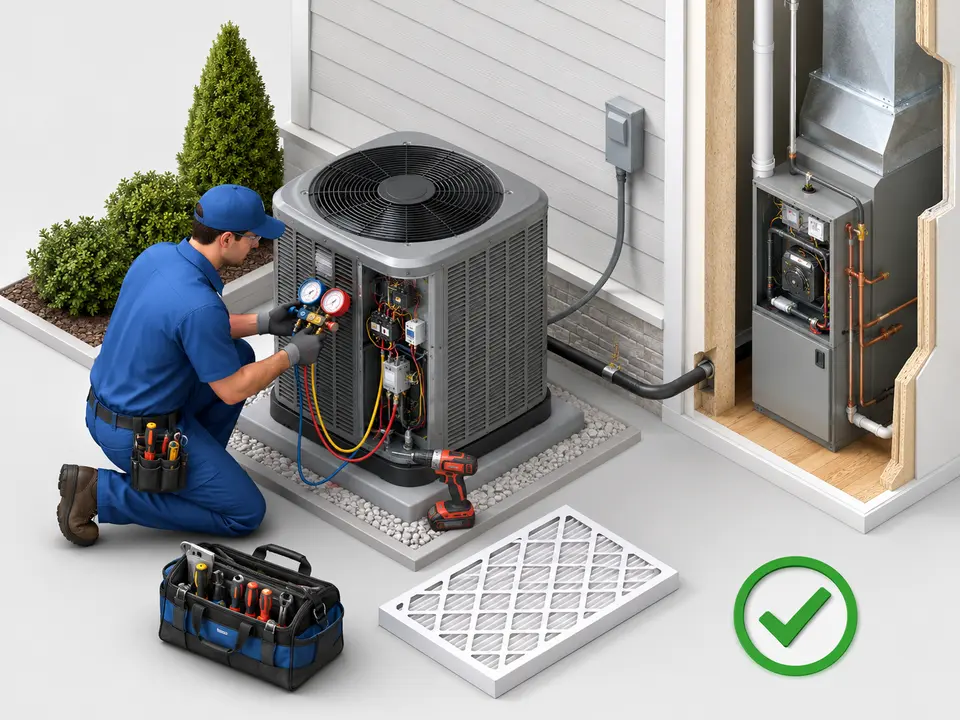
Signs Your HVAC System Needs Service
Your system often gives warning signs before it stops completely. Call for help when you notice:
- Air that feels weak or uneven.
- Rooms that never reach the set temperature.
- Grinding, buzzing, rattling, or squealing sounds.
- Burning, musty, or electrical odors.
- Frequent starts and stops.
- Unexpected energy bill increases.
- Ice on refrigerant lines or coils.
- Water around the furnace or air handler.
Turn off equipment if you smell burning or see unsafe electrical behavior. Do not open sealed refrigerant circuits or bypass safety controls.
Should You Repair or Replace HVAC Equipment?
Repair often makes sense for younger equipment with one clear problem. Replacement may offer better value after repeated failures or major component damage.
Consider equipment age, repair cost, comfort, noise, efficiency, and parts availability. Also inspect ducts and controls. New equipment cannot fix every problem around it.
Ask for both options when the answer is close. A trustworthy contractor should explain the tradeoffs without pressure. Homeowners considering all-electric comfort can explore heat pump installation.
How to Choose an HVAC Contractor
A good contractor treats the home as one connected system. The visit should include questions, measurements, and clear explanations.
- Confirm licensing and insurance.
- Ask how the contractor sizes equipment.
- Request written scope, model numbers, and warranty details.
- Compare comfort plans, not only prices.
- Ask who handles permits and inspections.
- Read recent reviews for service quality and follow-through.
Be cautious with a quote based only on square footage. The contractor should inspect existing equipment, ducts, electrical service, drainage, and access.
Reliable guides make HVAC choices easier. Review ENERGY STAR heating and cooling guidance. Read the EPA home air filter guide too.
Frequently Asked HVAC Questions
Is HVAC the same as air conditioning?
No. Air conditioning is the cooling part of HVAC. HVAC also includes heating and ventilation. Some equipment handles more than one job.
Does HVAC bring in fresh air?
Not always. Many central systems recirculate indoor air. Fresh air needs a designed intake or ventilation system. Exhaust fans also remove stale air from specific rooms.
How long does an HVAC system last?
Life span varies by equipment, climate, use, installation, and maintenance. Many systems serve for years beyond their warranties. Condition and repair history matter more than one age number.
How often should HVAC receive maintenance?
Many homes benefit from cooling service before summer and heating service before winter. Equipment type and manufacturer guidance may change the schedule.
Can HVAC help with indoor air quality?
Yes, when filtration, airflow, humidity, and ventilation are designed together. No single product removes every pollutant. Start by controlling sources and providing suitable ventilation.
What temperature should I set?
Choose the highest summer setting and lowest winter setting that feels comfortable. Small adjustments can reduce energy use. Health needs, humidity, pets, and building design also matter.
HVAC Made Simple
HVAC means heating, ventilation, and air conditioning. Those systems work together to manage temperature, airflow, moisture, and indoor comfort.
The best results come from good design and careful installation. Right-sized equipment, sealed ducts, clean filters, and regular service all play a role. When one part struggles, the whole home can feel it.
Keep a record of filter sizes, model numbers, service dates, and past repairs. That small habit can save time during future visits. It also gives you a clearer picture when repair and replacement choices appear.
Need help understanding your current setup? Explore our full range of HVAC services. All HVAC California can inspect the system and explain practical next steps.
