AC Compressor Repair With a Diagnosis You Can See
A compressor should be condemned by measurements—not by noise alone.
Our AC compressor repair service tests the control call, power, capacitor, contactor, wiring, windings, amperage, temperatures, pressures, and complete operating condition. If the compressor is failed, we explain AC compressor replacement and full-system options before work.
- Starting parts tested firstCapacitor, contactor, voltage, and controls checked
- Compressor fault provenCurrent, windings, ground, and pumping condition measured
- Repair options separatedExternal repair, compressor replacement, or system replacement
Is the AC Compressor Really the Problem?
The outdoor unit can be silent, noisy, hot, or tripping without the sealed compressor being failed.
A failed capacitor or contactor can stop power from reaching the compressor. Low voltage, damaged wiring, controls, safeties, airflow, fan, coil, or refrigerant problems can also create compressor-like symptoms.
An AC compressor not starting needs a sequence: confirm the call, test the power path, measure the starting components, then test the compressor.
If the compressor runs but cooling is weak, pressures, temperatures, airflow, and refrigerant circuit conditions must support a weak or non-pumping diagnosis.
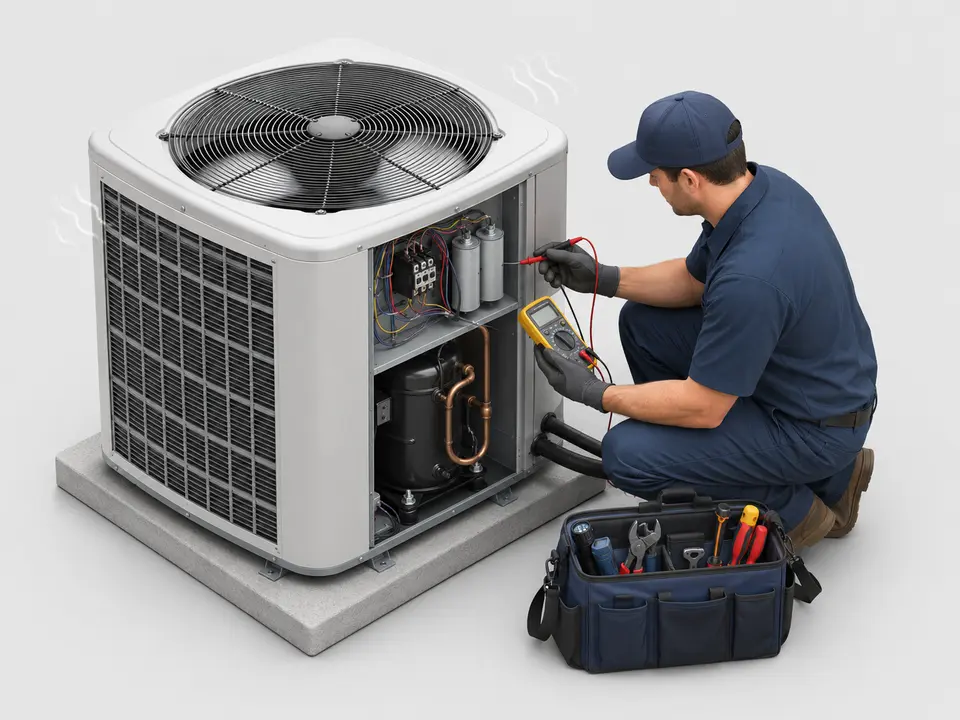
If the breaker trips again, do not keep resetting it. Switch the system off and request professional electrical diagnosis.
What AC Compressor Repair Service Includes
The right test order protects you from replacing a healthy compressor.
Our AC compressor repair service separates external starting and control faults from electrical, mechanical, and refrigerant-circuit compressor failures. The exact scope depends on the equipment, symptom, safety controls, and whether the unit can be operated.
From No-Start Diagnosis to Final Performance Test
AC Compressor Repair and Replacement Cost
A starting-component repair and a sealed-compressor replacement are not the same job.
General air-conditioning repairs commonly plan around $150 to $650. A complete AC compressor replacement cost often plans around $1,800 to $2,800, while larger or complex systems can exceed $3,000. California labor, warranty, equipment size, refrigerant, access, and cleanup requirements affect the written price.
What Changes AC Compressor Replacement Price?
- System size and compressor type Capacity, staging, scroll, rotary, and inverter designs vary.
- Parts warranty Covered compressors may still leave labor, refrigerant, and materials.
- Refrigerant Type, recovery, charge quantity, and approved handling affect scope.
- Access Rooftops, tight equipment rooms, and difficult rigging add labor.
- Electrical damage Contactor, wiring, terminals, and controls may also need work.
- Motor burnout Contamination can require additional cleanup and circuit protection.
- Matched availability Correct compressor, components, and lead time affect the option.
- System condition Age and other major repairs may justify a full replacement comparison.
How Compressor Diagnosis and Repair Works
Test the starting circuit, prove the compressor condition, then complete the approved scope.
- 01
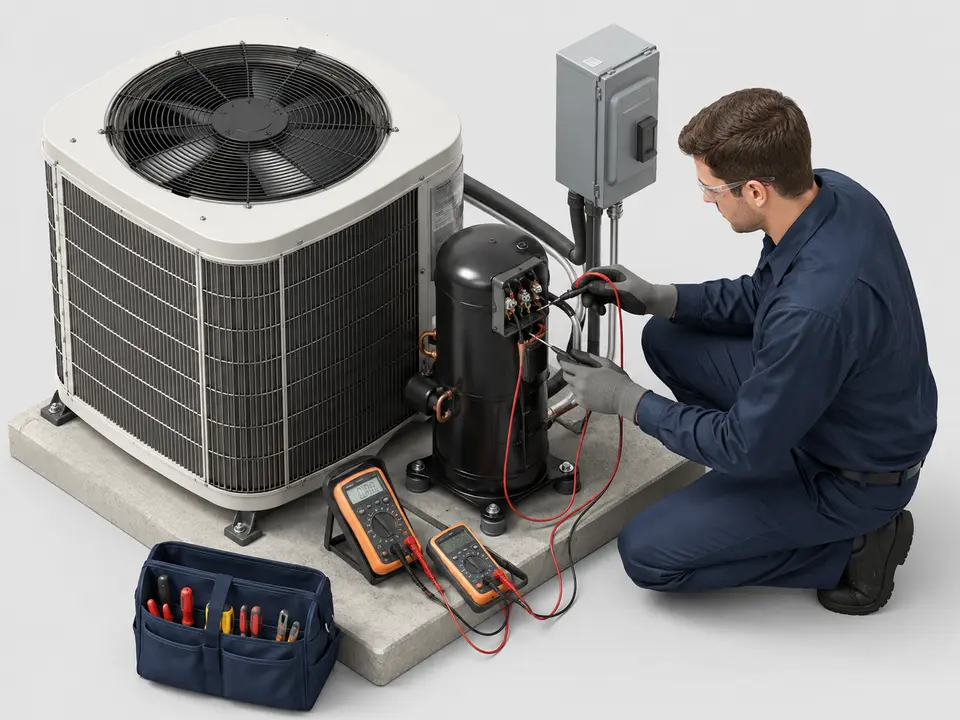
Diagnose the complete circuit
We confirm controls and power, then test voltage, capacitance, contactor condition, wiring, amperage, windings, and ground.
You get evidence that identifies the failed part - 02
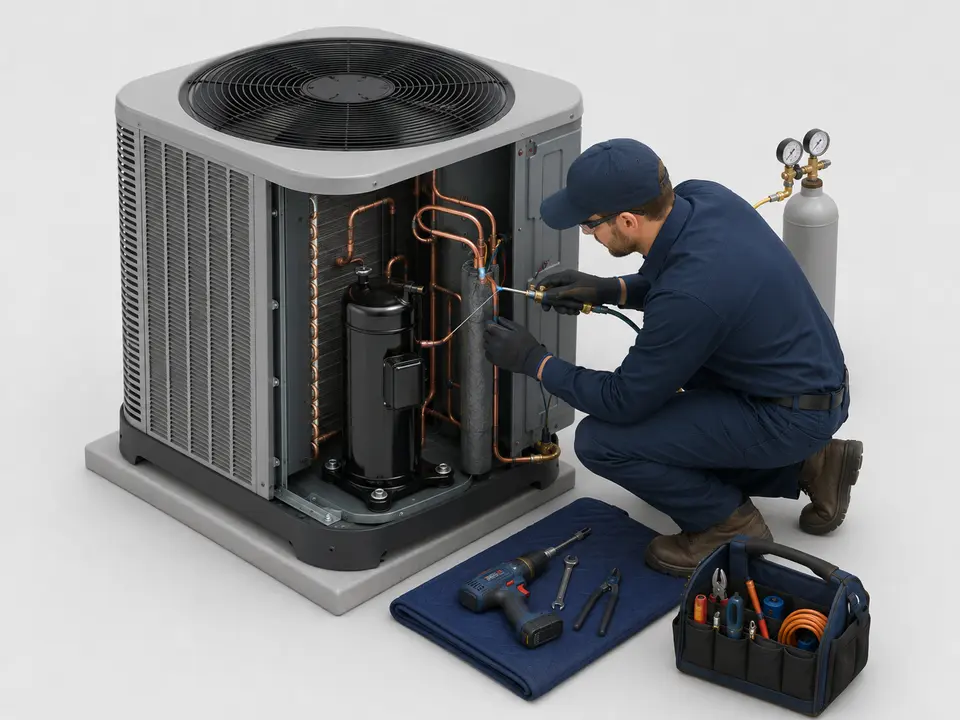
Repair or replace
After approval, we repair the responsible external component or replace the matched compressor with required electrical and refrigerant-circuit work.
You get the right scope—not an automatic compressor quote - 03
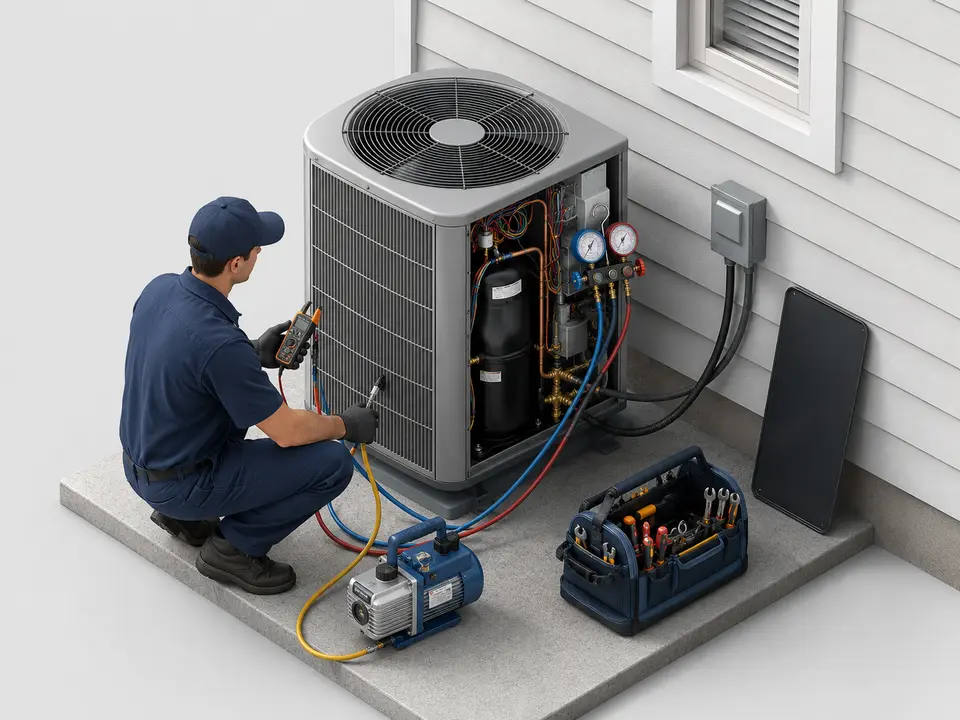
Commission and verify
Sealed-system work is pressure-tested, evacuated, charged correctly, and operated while amperage, temperatures, pressures, and safeties are checked.
You get documented startup and final performance
Common AC Compressor Problems We Diagnose
A no-start or shutdown symptom can come from an external component or the compressor itself.
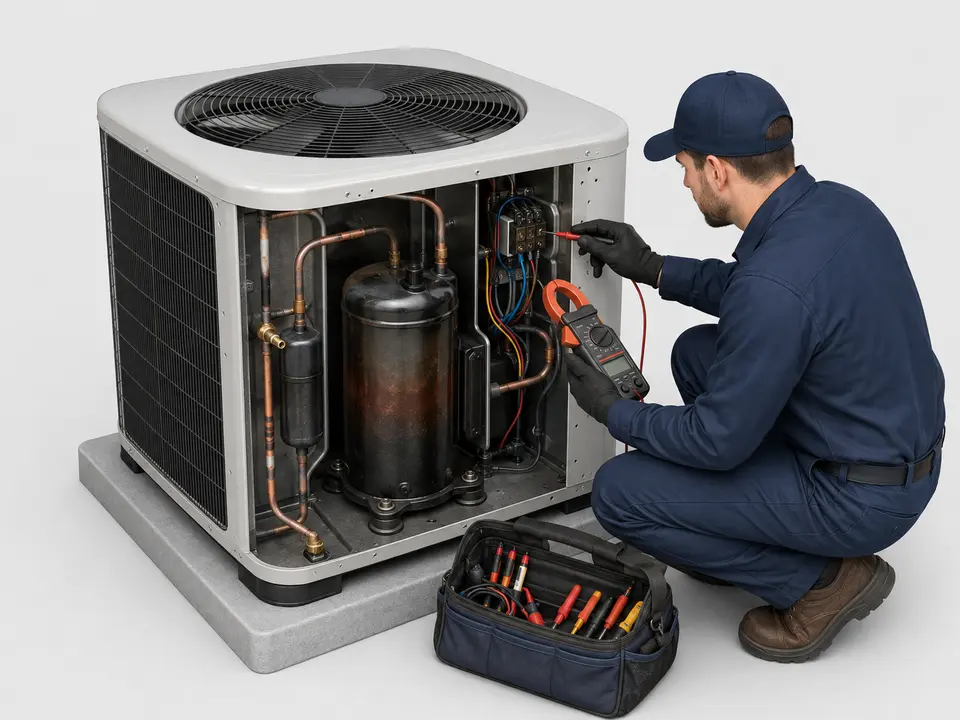
Failed run capacitor
A weak or failed capacitor can leave the compressor humming, slow to start, or unable to start.
Starting componentBurned contactor or relay
Pitted contacts, coil failure, wiring damage, or control faults can interrupt compressor power.
Control componentThermal overload
High temperature or current can open the internal protector until the compressor cools.
Operating conditionLocked or seized compressor
The motor draws starting current but the internal mechanism does not begin normal rotation.
Mechanical failureOpen or grounded winding
Electrical tests may show a broken winding circuit or current path to the compressor shell.
Electrical failureWeak or non-pumping compressor
The motor may run while compression is inadequate; system data must support that conclusion.
Performance failureLocked-rotor current, winding resistance, ground condition, voltage, and operating data are interpreted together. One reading rarely tells the whole story.
Repair Starting Components or Replace the Compressor?
A failed capacitor can mimic a failed compressor. A grounded winding cannot be fixed with a capacitor.
Repair the external cause when testing identifies the capacitor, contactor, relay, wiring, voltage, controls, airflow, or another correctable condition. Replace the sealed compressor when electrical or mechanical failure is proven and the total repair makes sense. Compare a complete system when age, efficiency, refrigerant, repeated failures, contamination, or other major components change the value.
What Professional Compressor Repair Should Deliver
The compressor is the most expensive suspect. It should be the last part guessed.
The control call is confirmed. Thermostat demand, safeties, delays, board outputs, and contactor operation are checked.
The electrical path is measured. Voltage, voltage drop, capacitance, current, wiring, terminals, windings, and ground are tested safely.
The operating system is considered. Coil condition, fan operation, airflow, pressures, temperatures, and refrigerant faults can affect the compressor.
The failure mode is explained. External starting fault, thermal trip, locked rotor, grounded winding, or loss of pumping is documented.
The repair is proven. Startup, running current, temperature change, pressures, and safety operation are verified after work.
Complete compressor service
Why Choose All HVAC California for Compressor Repair?
A reliable AC compressor repair company should test cheaper, more common causes first.
- Sequence-based diagnosis Controls and starting components tested before the compressor.
- Electrical evidence Voltage, capacitance, current, windings, and ground measured.
- Whole-system review Airflow, fans, coils, safeties, and refrigerant conditions considered.
- Failure mode explained No-start, overload, locked rotor, grounding, or pumping fault documented.
- Options separated External repair, compressor replacement, and system replacement compared.
- Matched replacement scope Compressor, electrical, refrigerant, cleanup, and commissioning listed.
- Property protected Electrical access, landscaping, roofs, and occupied areas handled carefully.
- Documented handover Findings, work completed, readings, and next priorities reviewed.
Areas We Serve Across California
Home is where the heart is. Ours has crews in a lot of neighborhoods.
Search ac maintenance near me and you'll find plenty of vans. We staff local crews who know California homes, heat, and equipment.
Our AC compressor repair service near me teams cover every region. Same standards everywhere.
We book fast AC repair slots year round. Reliable AC repair crews carry stock.
Want affordable AC compressor repair service without a vague scope? We define the tune-up, cleaning, and any separate repair before extra work.
Looking for local AC repair or a local air conditioning compressor repair company you can call twice? Pick your city above.
Other HVAC Services We Offer
One company, one number, everything handled. We carried every bag in one trip.
A compressor fault is one repair category. Our complete service menu supports the rest of the equipment. Every service below is done by our own employees. Never subcontracted, never resold.
Air conditioning service for dependable comfort
From a single ductless head to a complete central system, service is matched to the equipment and the property.
- System sizing and equipment matching reviewed
- Refrigerant handled and measured professionally
- Repair findings explained before work
Our Compressor Repair Commitments
No invented warranty claims—just clear, verifiable work standards.
Control call, voltage, capacitor, contactor, wiring, and safeties reviewed.
Windings, ground, amperage, temperature, and performance evidence explained.
External repair, compressor replacement, and full-system options separated.
Startup, run current, temperatures, pressures, and safety operation reviewed.
Compressor Repair for Central AC, Heat Pumps, and Mini Splits
Conventional, staged, and inverter compressors require different tests and replacement procedures.
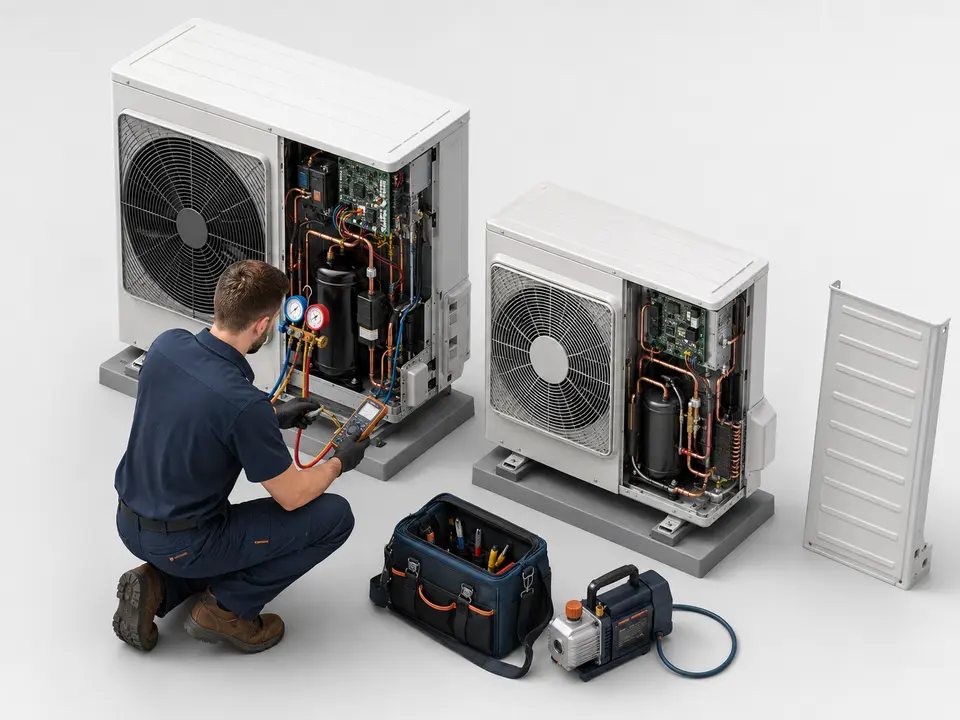
AC Compressor Repair Options by Failure Type
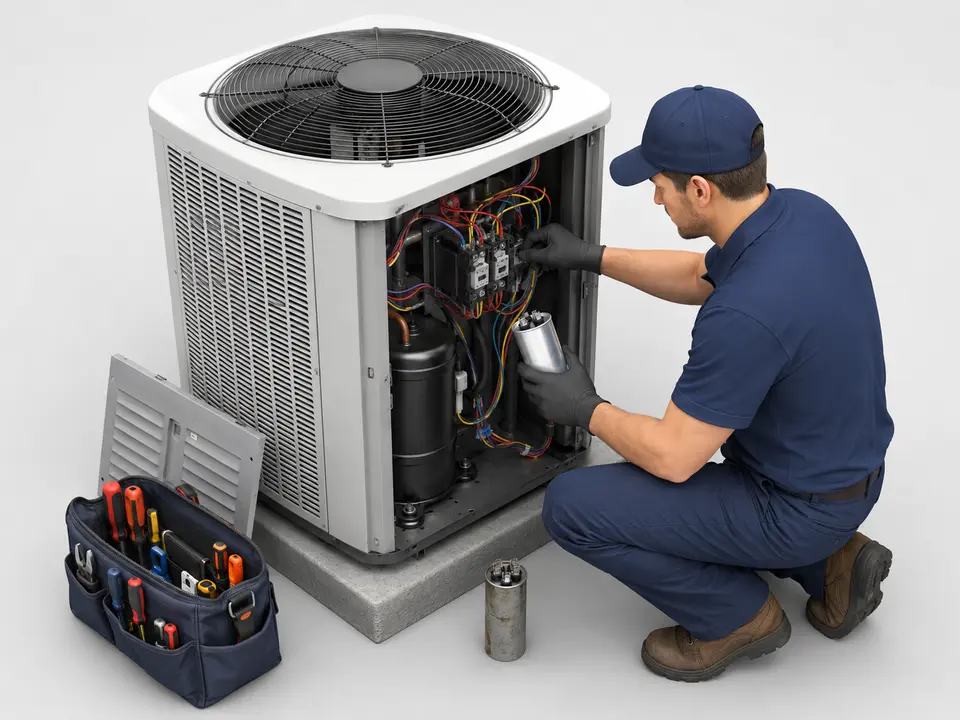
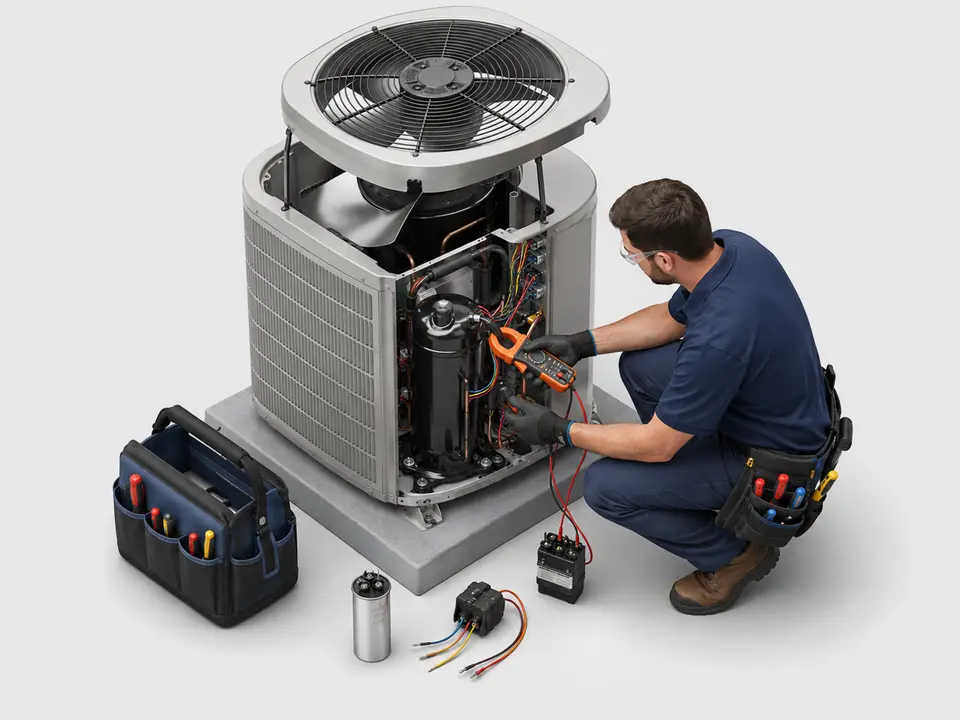
What Better Compressor Service Feels Like
These are service standards—not fictional testimonials.
The technician tests the capacitor, contactor, controls, voltage, wiring, and safeties before saying the compressor is failed.
You see the winding, ground, amperage, temperature, or performance evidence and understand what it proves.
The external repair, compressor replacement, and complete system options are separated so you can compare cost and value.
Service Options, Costs, and Questions We Address
Use this service index to identify the installation, repair, cost, equipment, or local-support topic that matches your project.
Need AC Compressor Repair or Replacement?
Do not replace the most expensive part until the starting circuit and compressor are tested.
Request professional AC compressor repair for a central air conditioner, heat pump, or mini split. We will diagnose the control and electrical path, explain the compressor evidence, and provide repair options before major work begins.
AC Compressor Repair Questions Answered
The price depends on whether the compressor is actually failed. General AC repairs often plan around $150 to $650. A capacitor, contactor, relay, wiring, or control repair is very different from replacing the sealed compressor. A complete AC compressor replacement cost commonly plans around $1,800 to $2,800, and larger or complex systems can exceed $3,000. Warranty, refrigerant, equipment size, access, and contamination affect the written quote.
External causes can often be repaired: capacitor, contactor, relay, wiring, controls, low voltage, airflow, coil, or refrigerant problems. The sealed compressor itself is usually replaced when it has grounded or open windings, severe internal mechanical damage, a locked rotor that cannot be corrected, or confirmed loss of pumping capacity.
Possible causes include no cooling call, time delay, open safety, tripped breaker, disconnect problem, low voltage, failed contactor, bad capacitor, damaged wiring, open winding, thermal overload, or a locked compressor. Testing the control signal, voltage, capacitance, current, and windings prevents a guess.
Buzzing or humming can occur when the contactor is energized but the compressor cannot start normally. Low voltage, a weak capacitor, wiring resistance, a locked rotor, or internal failure are possibilities. Turn the system off if the sound is persistent, the breaker trips, or the compressor becomes extremely hot.
The internal thermal protector may open because of high current or temperature. Dirty coils, fan problems, low voltage, refrigerant faults, restrictions, high pressure, a weak capacitor, or internal compressor damage can contribute. The technician should test the operating condition instead of waiting only for the compressor to cool.
Compressor replacement may make sense when the system is otherwise sound, the compressor is available, warranty coverage is useful, and the total installed cost is reasonable. Compare full system replacement when the equipment is older, inefficient, has repeated failures, uses a difficult refrigerant, has contamination after burnout, or needs other major components.
Yes, after confirming the compressor is the failed part. Heat pumps require mode-specific diagnosis. Inverter mini splits require board, sensor, motor, communication, and compressor testing that follows the manufacturer procedure. The replacement must match the equipment and approved refrigerant circuit.
A straightforward residential compressor replacement may take several hours when the correct part, refrigerant, and materials are available. Burnout cleanup, contamination controls, inaccessible equipment, warranty approval, inverter commissioning, or additional failed components can extend the work. The completed circuit still needs pressure testing, evacuation, charging, and operating verification.
AC Compressor Repair With a Diagnosis You Can See
A compressor should be condemned by measurements—not by noise alone.
Our AC compressor repair service tests the control call, power, capacitor, contactor, wiring, windings, amperage, temperatures, pressures, and complete operating condition. If the compressor is failed, we explain AC compressor replacement and full-system options before work.
- Starting parts tested firstCapacitor, contactor, voltage, and controls checked
- Compressor fault provenCurrent, windings, ground, and pumping condition measured
- Repair options separatedExternal repair, compressor replacement, or system replacement
Is the AC Compressor Really the Problem?
The outdoor unit can be silent, noisy, hot, or tripping without the sealed compressor being failed.
A failed capacitor or contactor can stop power from reaching the compressor. Low voltage, damaged wiring, controls, safeties, airflow, fan, coil, or refrigerant problems can also create compressor-like symptoms.
An AC compressor not starting needs a sequence: confirm the call, test the power path, measure the starting components, then test the compressor.
If the compressor runs but cooling is weak, pressures, temperatures, airflow, and refrigerant circuit conditions must support a weak or non-pumping diagnosis.
If the breaker trips again, do not keep resetting it. Switch the system off and request professional electrical diagnosis.
What AC Compressor Repair Service Includes
The right test order protects you from replacing a healthy compressor.
Our AC compressor repair service separates external starting and control faults from electrical, mechanical, and refrigerant-circuit compressor failures. The exact scope depends on the equipment, symptom, safety controls, and whether the unit can be operated.
From No-Start Diagnosis to Final Performance Test
AC Compressor Repair and Replacement Cost
A starting-component repair and a sealed-compressor replacement are not the same job.
General air-conditioning repairs commonly plan around $150 to $650. A complete AC compressor replacement cost often plans around $1,800 to $2,800, while larger or complex systems can exceed $3,000. California labor, warranty, equipment size, refrigerant, access, and cleanup requirements affect the written price.
What Changes AC Compressor Replacement Price?
- System size and compressor type Capacity, staging, scroll, rotary, and inverter designs vary.
- Parts warranty Covered compressors may still leave labor, refrigerant, and materials.
- Refrigerant Type, recovery, charge quantity, and approved handling affect scope.
- Access Rooftops, tight equipment rooms, and difficult rigging add labor.
- Electrical damage Contactor, wiring, terminals, and controls may also need work.
- Motor burnout Contamination can require additional cleanup and circuit protection.
- Matched availability Correct compressor, components, and lead time affect the option.
- System condition Age and other major repairs may justify a full replacement comparison.
How Compressor Diagnosis and Repair Works
Test the starting circuit, prove the compressor condition, then complete the approved scope.
- 01
Diagnose the complete circuit
We confirm controls and power, then test voltage, capacitance, contactor condition, wiring, amperage, windings, and ground.
You get evidence that identifies the failed part - 02
Repair or replace
After approval, we repair the responsible external component or replace the matched compressor with required electrical and refrigerant-circuit work.
You get the right scope—not an automatic compressor quote - 03
Commission and verify
Sealed-system work is pressure-tested, evacuated, charged correctly, and operated while amperage, temperatures, pressures, and safeties are checked.
You get documented startup and final performance
Common AC Compressor Problems We Diagnose
A no-start or shutdown symptom can come from an external component or the compressor itself.
Failed run capacitor
A weak or failed capacitor can leave the compressor humming, slow to start, or unable to start.
Starting componentBurned contactor or relay
Pitted contacts, coil failure, wiring damage, or control faults can interrupt compressor power.
Control componentThermal overload
High temperature or current can open the internal protector until the compressor cools.
Operating conditionLocked or seized compressor
The motor draws starting current but the internal mechanism does not begin normal rotation.
Mechanical failureOpen or grounded winding
Electrical tests may show a broken winding circuit or current path to the compressor shell.
Electrical failureWeak or non-pumping compressor
The motor may run while compression is inadequate; system data must support that conclusion.
Performance failureLocked-rotor current, winding resistance, ground condition, voltage, and operating data are interpreted together. One reading rarely tells the whole story.
Repair Starting Components or Replace the Compressor?
A failed capacitor can mimic a failed compressor. A grounded winding cannot be fixed with a capacitor.
Repair the external cause when testing identifies the capacitor, contactor, relay, wiring, voltage, controls, airflow, or another correctable condition. Replace the sealed compressor when electrical or mechanical failure is proven and the total repair makes sense. Compare a complete system when age, efficiency, refrigerant, repeated failures, contamination, or other major components change the value.
What Professional Compressor Repair Should Deliver
The compressor is the most expensive suspect. It should be the last part guessed.
The control call is confirmed. Thermostat demand, safeties, delays, board outputs, and contactor operation are checked.
The electrical path is measured. Voltage, voltage drop, capacitance, current, wiring, terminals, windings, and ground are tested safely.
The operating system is considered. Coil condition, fan operation, airflow, pressures, temperatures, and refrigerant faults can affect the compressor.
The failure mode is explained. External starting fault, thermal trip, locked rotor, grounded winding, or loss of pumping is documented.
The repair is proven. Startup, running current, temperature change, pressures, and safety operation are verified after work.
Complete compressor service
Why Choose All HVAC California for Compressor Repair?
A reliable AC compressor repair company should test cheaper, more common causes first.
- Sequence-based diagnosis Controls and starting components tested before the compressor.
- Electrical evidence Voltage, capacitance, current, windings, and ground measured.
- Whole-system review Airflow, fans, coils, safeties, and refrigerant conditions considered.
- Failure mode explained No-start, overload, locked rotor, grounding, or pumping fault documented.
- Options separated External repair, compressor replacement, and system replacement compared.
- Matched replacement scope Compressor, electrical, refrigerant, cleanup, and commissioning listed.
- Property protected Electrical access, landscaping, roofs, and occupied areas handled carefully.
- Documented handover Findings, work completed, readings, and next priorities reviewed.
Areas We Serve Across California
Home is where the heart is. Ours has crews in a lot of neighborhoods.
Search ac maintenance near me and you'll find plenty of vans. We staff local crews who know California homes, heat, and equipment.
Our AC compressor repair service near me teams cover every region. Same standards everywhere.
We book fast AC repair slots year round. Reliable AC repair crews carry stock.
Want affordable AC compressor repair service without a vague scope? We define the tune-up, cleaning, and any separate repair before extra work.
Looking for local AC repair or a local air conditioning compressor repair company you can call twice? Pick your city above.
Other HVAC Services We Offer
One company, one number, everything handled. We carried every bag in one trip.
A compressor fault is one repair category. Our complete service menu supports the rest of the equipment. Every service below is done by our own employees. Never subcontracted, never resold.
Air conditioning service for dependable comfort
From a single ductless head to a complete central system, service is matched to the equipment and the property.
- System sizing and equipment matching reviewed
- Refrigerant handled and measured professionally
- Repair findings explained before work
Our Compressor Repair Commitments
No invented warranty claims—just clear, verifiable work standards.
Control call, voltage, capacitor, contactor, wiring, and safeties reviewed.
Windings, ground, amperage, temperature, and performance evidence explained.
External repair, compressor replacement, and full-system options separated.
Startup, run current, temperatures, pressures, and safety operation reviewed.
Compressor Repair for Central AC, Heat Pumps, and Mini Splits
Conventional, staged, and inverter compressors require different tests and replacement procedures.
AC Compressor Repair Options by Failure Type
What Better Compressor Service Feels Like
These are service standards—not fictional testimonials.
The technician tests the capacitor, contactor, controls, voltage, wiring, and safeties before saying the compressor is failed.
You see the winding, ground, amperage, temperature, or performance evidence and understand what it proves.
The external repair, compressor replacement, and complete system options are separated so you can compare cost and value.
Need AC Compressor Repair or Replacement?
Do not replace the most expensive part until the starting circuit and compressor are tested.
Request professional AC compressor repair for a central air conditioner, heat pump, or mini split. We will diagnose the control and electrical path, explain the compressor evidence, and provide repair options before major work begins.
AC Compressor Repair Questions Answered
The price depends on whether the compressor is actually failed. General AC repairs often plan around $150 to $650. A capacitor, contactor, relay, wiring, or control repair is very different from replacing the sealed compressor. A complete AC compressor replacement cost commonly plans around $1,800 to $2,800, and larger or complex systems can exceed $3,000. Warranty, refrigerant, equipment size, access, and contamination affect the written quote.
External causes can often be repaired: capacitor, contactor, relay, wiring, controls, low voltage, airflow, coil, or refrigerant problems. The sealed compressor itself is usually replaced when it has grounded or open windings, severe internal mechanical damage, a locked rotor that cannot be corrected, or confirmed loss of pumping capacity.
Possible causes include no cooling call, time delay, open safety, tripped breaker, disconnect problem, low voltage, failed contactor, bad capacitor, damaged wiring, open winding, thermal overload, or a locked compressor. Testing the control signal, voltage, capacitance, current, and windings prevents a guess.
Buzzing or humming can occur when the contactor is energized but the compressor cannot start normally. Low voltage, a weak capacitor, wiring resistance, a locked rotor, or internal failure are possibilities. Turn the system off if the sound is persistent, the breaker trips, or the compressor becomes extremely hot.
The internal thermal protector may open because of high current or temperature. Dirty coils, fan problems, low voltage, refrigerant faults, restrictions, high pressure, a weak capacitor, or internal compressor damage can contribute. The technician should test the operating condition instead of waiting only for the compressor to cool.
Compressor replacement may make sense when the system is otherwise sound, the compressor is available, warranty coverage is useful, and the total installed cost is reasonable. Compare full system replacement when the equipment is older, inefficient, has repeated failures, uses a difficult refrigerant, has contamination after burnout, or needs other major components.
Yes, after confirming the compressor is the failed part. Heat pumps require mode-specific diagnosis. Inverter mini splits require board, sensor, motor, communication, and compressor testing that follows the manufacturer procedure. The replacement must match the equipment and approved refrigerant circuit.
A straightforward residential compressor replacement may take several hours when the correct part, refrigerant, and materials are available. Burnout cleanup, contamination controls, inaccessible equipment, warranty approval, inverter commissioning, or additional failed components can extend the work. The completed circuit still needs pressure testing, evacuation, charging, and operating verification.