Heat Pump Installation Sized for California Heating and Cooling
One electric system can heat and cool the home. The design still decides performance.
Our heat pump installation process begins with the building, not a tonnage guess. We assess room loads, ducts or zones, electrical capacity, climate, low-temperature output, equipment matching, controls, drainage, and installation access. The final system may be ducted, ductless, inverter-driven, cold-climate, dual-fuel, geothermal, water-source, or packaged.
- Load-based selectionManual J guides capacity instead of square-foot shortcuts
- Complete system matchOutdoor unit, indoor equipment, controls, and accessories verified
- Measured startupAirflow, charge, temperatures, controls, and drainage commissioned
What a Heat Pump Installer Should Check First
A good heat pump install starts with loads, airflow, power, climate, and controls.
Replacing a furnace or air conditioner by old tonnage can repeat an earlier sizing error. Equipment may also lose heating capacity as outdoor temperature falls.
ENERGY STAR advises contractors to use Manual J. Ducted systems also need usable airflow and return capacity. Ductless projects need correct zone loads and indoor-unit placement.
The selected outdoor and indoor units should form a certified matched system. Ask for the AHRI reference number or certificate.
Electrical work must follow the equipment data and local requirements. Breaker size cannot be selected from tonnage alone.
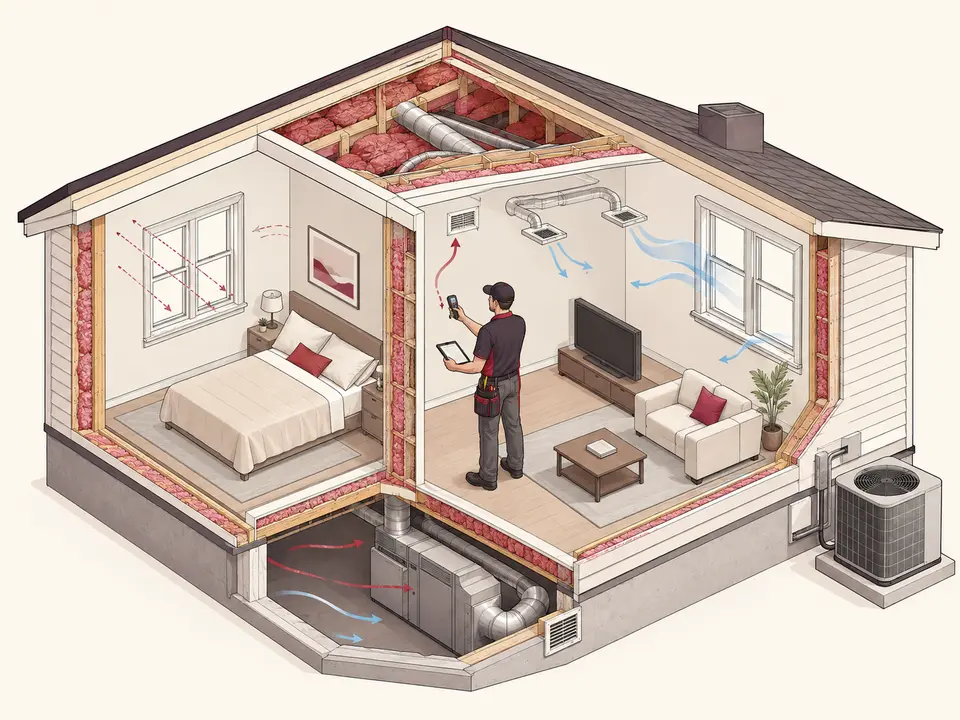
What Heat Pump Installation Services Include
The scope should connect design, equipment, permits, installation, startup, and handover.
Professional heat pump installation services cover more than setting an outdoor unit. The project coordinates the indoor air handler or heads, ducts or zones, line set, condensate, electrical supply, controls, backup heat, clearances, permits, inspections, and measured commissioning.
From Home Assessment to Final System Handover
Heat Pump Installation Cost in 2026
Capacity matters, but tonnage alone cannot produce a reliable installed price.
A current 2026 national consumer guide places many common air-source heat pump installations around $10,000 to $25,000. California projects may fall below or above that planning range. Geothermal systems and complex retrofits can reach $50,000 or more. Your written quote should reflect the actual design.
What Changes the Heat Pump Installation Price?
- Load and capacity Room loads determine required output at California design temperatures.
- System configuration Ducted, ductless, multi-zone, packaged, dual-fuel, geothermal, or water-source.
- Efficiency and features SEER2, HSPF2, COP, inverter range, cold-climate rating, sound, and controls.
- Matched components Outdoor unit, indoor coil, air handler, heat kit, thermostat, and accessories.
- Duct and zone work Leakage, insulation, returns, static pressure, new trunks, or indoor-head quantity.
- Electrical work Panel capacity, conductors, breaker, disconnect, controls, and supplemental heat load.
- Site conditions Roof, attic, crawlspace, line length, drainage, equipment pad, lifting, and access.
- Permits and conversion Inspections, refrigerant transition, old equipment removal, gas changes, and utility work.
A 2-ton, 3-ton, 4-ton, or 5-ton price is not a complete estimate. Compare matched model numbers, efficiency, low-temperature capacity, scope, exclusions, commissioning, and permit responsibility.
How Heat Pump Installation Works
Calculate the building, install the matched system, then prove operation through testing.
- 01
Assess and design
We review rooms, envelope, ducts, electricity, fuel, comfort, climate, access, and existing equipment. Manual J guides capacity.
You get a design basis and written scope - 02
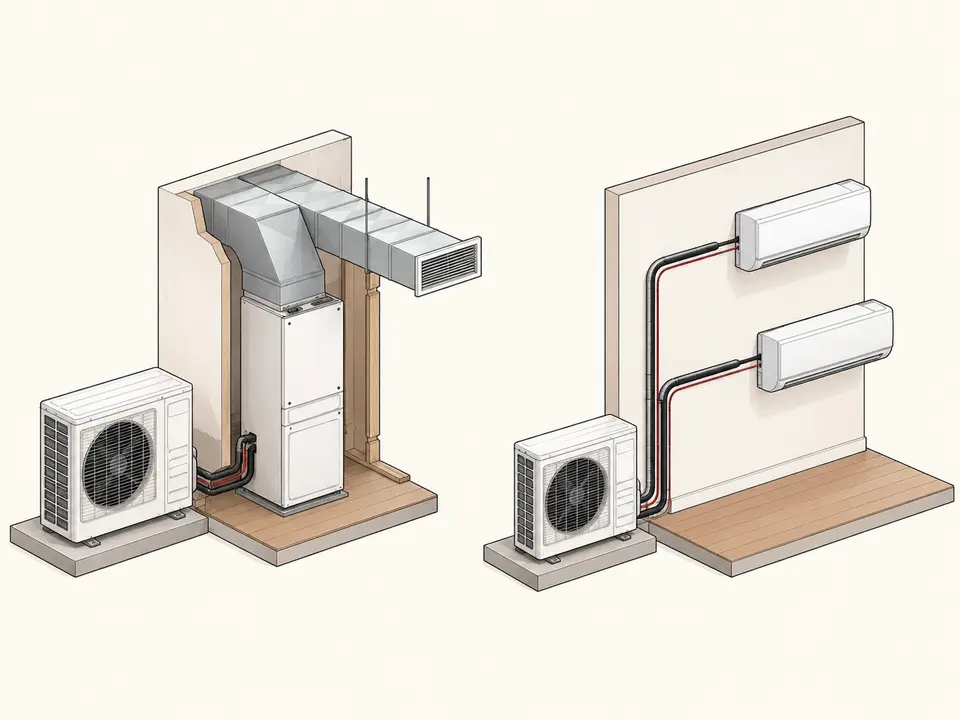
Prepare and install
The crew coordinates equipment, pad, mounts, line set, ducts or heads, drain, electrical work, controls, penetrations, and permits.
You get the selected system installed as designed - 03
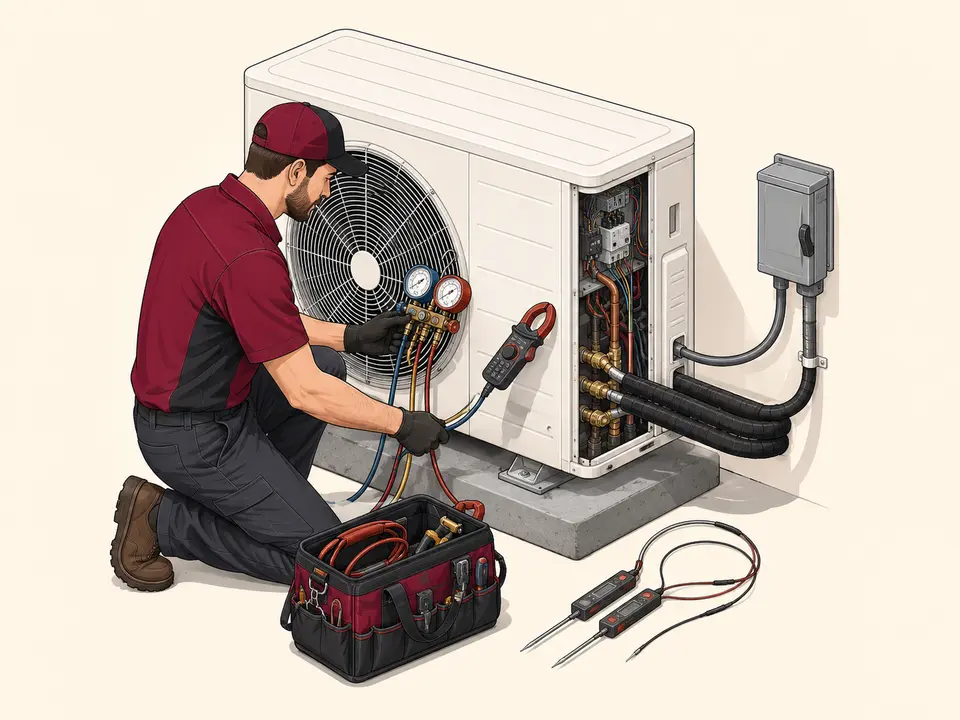
Commission and document
The technician tests airflow, charge, temperatures, controls, stages, defrost, drainage, electrical operation, and safeties.
You get measured startup results and system guidance
Ducted, Ductless, Cold-Climate, and Geothermal Heat Pumps
The best heat pump system fits the building, climate, distribution, electrical service, and budget.
Ducted air-source heat pump
Uses an air handler and ducts for whole-home heating and cooling. Duct condition affects comfort and performance.
Design-specific installationDuctless mini-split heat pump
Serves one or more zones without full ductwork. Head placement and condensate routing need careful planning.
Design-specific installationCold-climate inverter heat pump
Maintains stronger capacity at lower temperatures. Mountain and colder inland sites need low-temperature data.
Design-specific installationDual-fuel heat pump
Pairs a heat pump with a furnace. Controls select equipment using temperature, capacity, rates, and operating strategy.
Design-specific installationGeothermal or ground-source
Uses buried loops and ground temperature. Drilling, land, geology, permits, and loop design shape the project.
Design-specific installationWater-source or packaged system
Fits certain buildings and commercial layouts. Water loop, roof, curb, duct, controls, and service access matter.
Design-specific installationHeat Pump vs Furnace, Boiler, Mini-Split, and Central Air
Compare complete comfort systems, not isolated equipment labels.
- Heat pump vs gas furnace A heat pump provides cooling and electric heating. Fuel rates and climate shape operating cost.
- Heat pump vs electric furnace A heat pump moves heat. Resistance furnaces create heat and may use more electricity.
- Heat pump vs central air Both can cool. A heat pump reverses operation for heating.
- Heat pump vs mini-split Mini-split describes a ductless configuration. Many mini-splits are heat pumps.
- Heat pump vs boiler Most residential heat pumps use air distribution. Boilers commonly use water and emitters.
- Ducted vs ductless Ducted systems centralize distribution. Ductless systems provide individual zones.
When a Furnace-to-Heat-Pump Conversion Makes Sense
A conversion can combine heating and cooling in one electric system. It needs a load calculation, duct review, electrical plan, thermostat strategy, condensate path, and backup decision. Gas retirement, panel work, rates, solar, and local climate also affect the result.
What Professional Heat Pump Installation Should Deliver
Rated efficiency depends on correct design, matching, airflow, refrigerant, and controls.
Load-based capacity. Manual J supports the selected size and backup strategy.
Certified match. The indoor and outdoor combination has an AHRI reference.
Usable distribution. Ducts or zones handle required airflow without excessive restriction.
Correct electrical work. Circuits, disconnects, conductors, controls, and heat kits follow equipment data.
Measured commissioning. Airflow, charge, temperatures, controls, drainage, defrost, and stages are tested.
Complete heat pump install
Why Choose All HVAC California for Heat Pump Installation?
A reliable heat pump company should explain design, equipment, price, incentives, and commissioning.
- Whole-home assessment Comfort concerns, building loads, ducts, panel, fuel, and access reviewed.
- Manual J sizing Capacity follows calculated heating and cooling needs.
- System options compared Ducted, ductless, cold-climate, dual-fuel, geothermal, and packaged paths explained.
- Matched models verified Indoor and outdoor equipment checked through published performance data.
- Transparent scope Equipment, labor, permits, electrical, ducts, controls, and exclusions identified.
- Current incentive guidance Expired, reserved, waitlisted, and local programs clearly separated.
- Measured commissioning Airflow, refrigerant, temperatures, defrost, controls, drainage, and safeties tested.
- Documented handover Model data, settings, filter guidance, records, and maintenance needs reviewed.
Local Heat Pump Installation Across California
California design conditions range from mild coasts to hot valleys and cold mountain communities.
Homeowners searching for heat pump installation near me, a heat pump installer near me, or local heat pump companies need site-specific design. Coastal humidity, inland heat, winter lows, elevation, wildfire smoke, electricity rates, utility territories, and building type can change the equipment and scope.
- Coastal homes Moisture, corrosion exposure, mild heating loads, sound, and equipment placement.
- Central Valley properties Strong cooling loads, attic ducts, solar gain, filtration, and electrical capacity.
- Mountain and colder areas Low-temperature capacity, defrost, snow, drainage, elevation, and backup heat.
- Older buildings Electrical panels, ducts, insulation, windows, air leakage, asbestos procedures, and access.
- Homes without ducts Ductless zones, head placement, condensate, line covers, sound, and room loads.
- Commercial sites Roof access, curbs, ducts, controls, phasing, occupancy, service space, and downtime.
Related Services for a Complete Heat Pump Project
Installation may require duct, electrical, thermostat, air-quality, or existing-system decisions.
Our Heat Pump Installation Commitments
No invented rebates, efficiency savings, warranties, or plan benefits.
Capacity and distribution begin with the building and selected design conditions.
Indoor and outdoor equipment, controls, and accessories are verified together.
Equipment, labor, permits, electrical, ducts, exclusions, and responsibilities are identified.
Airflow, refrigerant, temperatures, controls, drainage, and safeties are tested.
Residential and Commercial Heat Pump Installation
Property type changes the distribution, equipment location, electrical work, access, and permit path.
Heat Pump Installation From Load Calculation to Startup
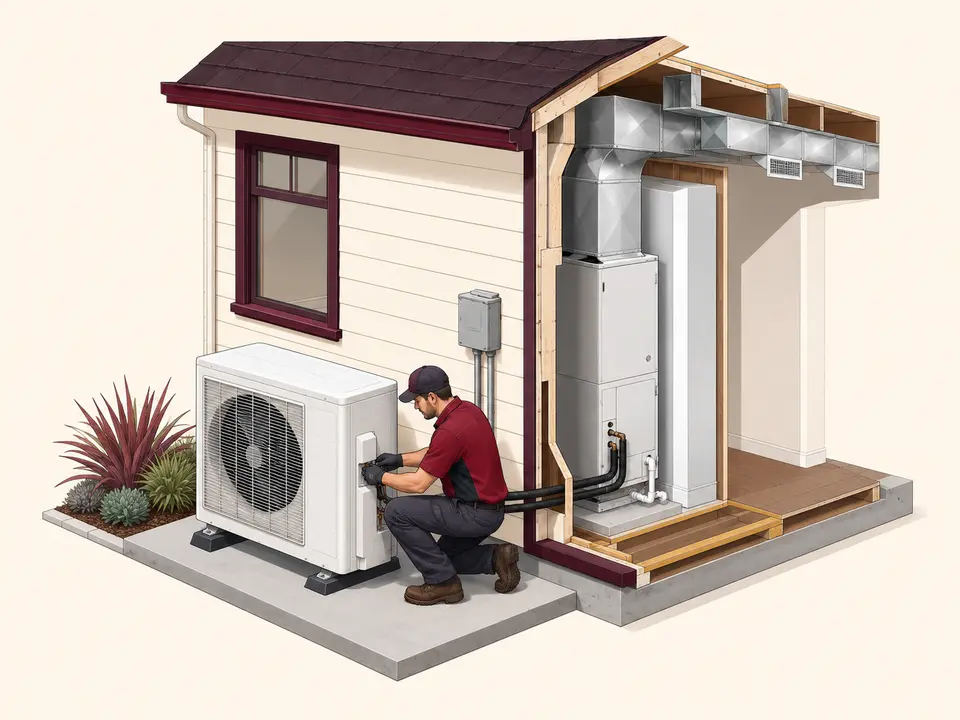
What Better Heat Pump Installation Feels Like
These are service standards—not fictional testimonials.
The proposal explains why a specific system fits the home. It connects loads, ducts or zones, climate, electricity, and comfort.
Matched model numbers, efficiency ratings, low-temperature data, price, permits, electrical work, and exclusions appear in writing.
The system completes heating and cooling checks. You receive settings, filter guidance, model data, records, and maintenance needs.
Service Options, Costs, and Questions We Address
Use this service index to identify the installation, repair, cost, equipment, or local-support topic that matches your project.
Ready to Request a Heat Pump Installation Assessment?
Share the home size, location, existing equipment, ducts, fuel, panel, and comfort concerns.
Request a professional heat pump installation assessment for a ducted air-source system, ductless mini-split, cold-climate inverter, dual-fuel conversion, geothermal project, packaged unit, or commercial application. Current timing depends on site conditions, design, permits, equipment, inspections, and trade coordination.
Heat Pump Installation Questions Answered
A current 2026 national consumer guide places many common air-source heat pump projects around $10,000 to $25,000 installed. California pricing can move outside that range. Capacity, efficiency, ducts, electrical work, access, permits, controls, refrigerant changes, and backup heat affect the final price. Geothermal and complex retrofits may reach $50,000 or more. Use these figures only for planning.
A straightforward matched-system replacement may take one or two working days. New ducts, multiple mini-split zones, electrical upgrades, permits, asbestos procedures, roof work, geothermal loops, or major conversions can take longer. The written scope should separate installation time from inspections and utility work.
Use a room-by-room Manual J load calculation. Square-foot and heat-pump tonnage calculators are only early estimates. Windows, insulation, leakage, orientation, design temperatures, internal loads, ducts, zoning, and low-temperature capacity change the correct size. Oversizing can reduce comfort and increase cycling.
Choose ducted equipment when useful ducts already serve the home. Choose ductless equipment for additions, garages, older homes, zoned comfort, or buildings without practical duct routes. Some homes use both. Compare room loads, aesthetics, filtration, noise, condensate, access, zoning, and installed cost.
Under current federal law, the Section 25C Energy Efficient Home Improvement Credit ended for qualifying property placed in service after December 31, 2025. California HEEHRA single-family heat-pump reservations were fully reserved statewide on February 24, 2026, with new projects directed to a waitlist. Utility and local programs vary. Verify current eligibility before signing a contract.
Often, yes. A ducted heat pump can replace central cooling and provide heating through the same duct system. The assessment must cover load, ducts, air handler, electrical capacity, thermostat, condensate, backup heat, gas retirement, and local climate. A dual-fuel design can retain a furnace when appropriate.
Requirements come from the selected equipment and local code. The review may cover voltage, minimum circuit ampacity, maximum overcurrent protection, breaker, conductors, disconnect, grounding, service receptacle, panel capacity, heat-strip load, thermostat wiring, and utility service. Do not choose breaker size from tonnage alone.
The best choice is a properly sized, AHRI-matched system with suitable low-temperature capacity, efficiency, controls, parts support, sound data, and service access. Compare complete model combinations from Mitsubishi, Daikin, Bosch, Carrier, Trane, Lennox, Rheem, Goodman, Bryant, York, and other qualified manufacturers. Brand name cannot correct poor design or commissioning.
Air-source systems usually require less site work and fit more homes. Geothermal systems can offer stable performance but need land, drilling or trenching, loop design, water and geology review, and higher upfront cost. Compare total design, installation, operating assumptions, maintenance, and property constraints.
Heat pump installation can involve permits, high voltage, refrigerant handling, brazing, evacuation, charging, drainage, structural support, ducts, combustion-equipment changes, and required inspections. Incorrect work can damage equipment or create safety problems. Homeowners can compare proposals and prepare access, but technical installation and commissioning belong with qualified trades.
Heat Pump Installation Sized for California Heating and Cooling
One electric system can heat and cool the home. The design still decides performance.
Our heat pump installation process begins with the building, not a tonnage guess. We assess room loads, ducts or zones, electrical capacity, climate, low-temperature output, equipment matching, controls, drainage, and installation access. The final system may be ducted, ductless, inverter-driven, cold-climate, dual-fuel, geothermal, water-source, or packaged.
- Load-based selectionManual J guides capacity instead of square-foot shortcuts
- Complete system matchOutdoor unit, indoor equipment, controls, and accessories verified
- Measured startupAirflow, charge, temperatures, controls, and drainage commissioned
What a Heat Pump Installer Should Check First
A good heat pump install starts with loads, airflow, power, climate, and controls.
Replacing a furnace or air conditioner by old tonnage can repeat an earlier sizing error. Equipment may also lose heating capacity as outdoor temperature falls.
ENERGY STAR advises contractors to use Manual J. Ducted systems also need usable airflow and return capacity. Ductless projects need correct zone loads and indoor-unit placement.
The selected outdoor and indoor units should form a certified matched system. Ask for the AHRI reference number or certificate.
Electrical work must follow the equipment data and local requirements. Breaker size cannot be selected from tonnage alone.
What Heat Pump Installation Services Include
The scope should connect design, equipment, permits, installation, startup, and handover.
Professional heat pump installation services cover more than setting an outdoor unit. The project coordinates the indoor air handler or heads, ducts or zones, line set, condensate, electrical supply, controls, backup heat, clearances, permits, inspections, and measured commissioning.
From Home Assessment to Final System Handover
Heat Pump Installation Cost in 2026
Capacity matters, but tonnage alone cannot produce a reliable installed price.
A current 2026 national consumer guide places many common air-source heat pump installations around $10,000 to $25,000. California projects may fall below or above that planning range. Geothermal systems and complex retrofits can reach $50,000 or more. Your written quote should reflect the actual design.
What Changes the Heat Pump Installation Price?
- Load and capacity Room loads determine required output at California design temperatures.
- System configuration Ducted, ductless, multi-zone, packaged, dual-fuel, geothermal, or water-source.
- Efficiency and features SEER2, HSPF2, COP, inverter range, cold-climate rating, sound, and controls.
- Matched components Outdoor unit, indoor coil, air handler, heat kit, thermostat, and accessories.
- Duct and zone work Leakage, insulation, returns, static pressure, new trunks, or indoor-head quantity.
- Electrical work Panel capacity, conductors, breaker, disconnect, controls, and supplemental heat load.
- Site conditions Roof, attic, crawlspace, line length, drainage, equipment pad, lifting, and access.
- Permits and conversion Inspections, refrigerant transition, old equipment removal, gas changes, and utility work.
A 2-ton, 3-ton, 4-ton, or 5-ton price is not a complete estimate. Compare matched model numbers, efficiency, low-temperature capacity, scope, exclusions, commissioning, and permit responsibility.
How Heat Pump Installation Works
Calculate the building, install the matched system, then prove operation through testing.
- 01
Assess and design
We review rooms, envelope, ducts, electricity, fuel, comfort, climate, access, and existing equipment. Manual J guides capacity.
You get a design basis and written scope - 02
Prepare and install
The crew coordinates equipment, pad, mounts, line set, ducts or heads, drain, electrical work, controls, penetrations, and permits.
You get the selected system installed as designed - 03
Commission and document
The technician tests airflow, charge, temperatures, controls, stages, defrost, drainage, electrical operation, and safeties.
You get measured startup results and system guidance
Ducted, Ductless, Cold-Climate, and Geothermal Heat Pumps
The best heat pump system fits the building, climate, distribution, electrical service, and budget.
Ducted air-source heat pump
Uses an air handler and ducts for whole-home heating and cooling. Duct condition affects comfort and performance.
Design-specific installationDuctless mini-split heat pump
Serves one or more zones without full ductwork. Head placement and condensate routing need careful planning.
Design-specific installationCold-climate inverter heat pump
Maintains stronger capacity at lower temperatures. Mountain and colder inland sites need low-temperature data.
Design-specific installationDual-fuel heat pump
Pairs a heat pump with a furnace. Controls select equipment using temperature, capacity, rates, and operating strategy.
Design-specific installationGeothermal or ground-source
Uses buried loops and ground temperature. Drilling, land, geology, permits, and loop design shape the project.
Design-specific installationWater-source or packaged system
Fits certain buildings and commercial layouts. Water loop, roof, curb, duct, controls, and service access matter.
Design-specific installationHeat Pump vs Furnace, Boiler, Mini-Split, and Central Air
Compare complete comfort systems, not isolated equipment labels.
- Heat pump vs gas furnace A heat pump provides cooling and electric heating. Fuel rates and climate shape operating cost.
- Heat pump vs electric furnace A heat pump moves heat. Resistance furnaces create heat and may use more electricity.
- Heat pump vs central air Both can cool. A heat pump reverses operation for heating.
- Heat pump vs mini-split Mini-split describes a ductless configuration. Many mini-splits are heat pumps.
- Heat pump vs boiler Most residential heat pumps use air distribution. Boilers commonly use water and emitters.
- Ducted vs ductless Ducted systems centralize distribution. Ductless systems provide individual zones.
When a Furnace-to-Heat-Pump Conversion Makes Sense
A conversion can combine heating and cooling in one electric system. It needs a load calculation, duct review, electrical plan, thermostat strategy, condensate path, and backup decision. Gas retirement, panel work, rates, solar, and local climate also affect the result.
What Professional Heat Pump Installation Should Deliver
Rated efficiency depends on correct design, matching, airflow, refrigerant, and controls.
Load-based capacity. Manual J supports the selected size and backup strategy.
Certified match. The indoor and outdoor combination has an AHRI reference.
Usable distribution. Ducts or zones handle required airflow without excessive restriction.
Correct electrical work. Circuits, disconnects, conductors, controls, and heat kits follow equipment data.
Measured commissioning. Airflow, charge, temperatures, controls, drainage, defrost, and stages are tested.
Complete heat pump install
Why Choose All HVAC California for Heat Pump Installation?
A reliable heat pump company should explain design, equipment, price, incentives, and commissioning.
- Whole-home assessment Comfort concerns, building loads, ducts, panel, fuel, and access reviewed.
- Manual J sizing Capacity follows calculated heating and cooling needs.
- System options compared Ducted, ductless, cold-climate, dual-fuel, geothermal, and packaged paths explained.
- Matched models verified Indoor and outdoor equipment checked through published performance data.
- Transparent scope Equipment, labor, permits, electrical, ducts, controls, and exclusions identified.
- Current incentive guidance Expired, reserved, waitlisted, and local programs clearly separated.
- Measured commissioning Airflow, refrigerant, temperatures, defrost, controls, drainage, and safeties tested.
- Documented handover Model data, settings, filter guidance, records, and maintenance needs reviewed.
Local Heat Pump Installation Across California
California design conditions range from mild coasts to hot valleys and cold mountain communities.
Homeowners searching for heat pump installation near me, a heat pump installer near me, or local heat pump companies need site-specific design. Coastal humidity, inland heat, winter lows, elevation, wildfire smoke, electricity rates, utility territories, and building type can change the equipment and scope.
- Coastal homes Moisture, corrosion exposure, mild heating loads, sound, and equipment placement.
- Central Valley properties Strong cooling loads, attic ducts, solar gain, filtration, and electrical capacity.
- Mountain and colder areas Low-temperature capacity, defrost, snow, drainage, elevation, and backup heat.
- Older buildings Electrical panels, ducts, insulation, windows, air leakage, asbestos procedures, and access.
- Homes without ducts Ductless zones, head placement, condensate, line covers, sound, and room loads.
- Commercial sites Roof access, curbs, ducts, controls, phasing, occupancy, service space, and downtime.
Related Services for a Complete Heat Pump Project
Installation may require duct, electrical, thermostat, air-quality, or existing-system decisions.
Our Heat Pump Installation Commitments
No invented rebates, efficiency savings, warranties, or plan benefits.
Capacity and distribution begin with the building and selected design conditions.
Indoor and outdoor equipment, controls, and accessories are verified together.
Equipment, labor, permits, electrical, ducts, exclusions, and responsibilities are identified.
Airflow, refrigerant, temperatures, controls, drainage, and safeties are tested.
Residential and Commercial Heat Pump Installation
Property type changes the distribution, equipment location, electrical work, access, and permit path.
Heat Pump Installation From Load Calculation to Startup
What Better Heat Pump Installation Feels Like
These are service standards—not fictional testimonials.
The proposal explains why a specific system fits the home. It connects loads, ducts or zones, climate, electricity, and comfort.
Matched model numbers, efficiency ratings, low-temperature data, price, permits, electrical work, and exclusions appear in writing.
The system completes heating and cooling checks. You receive settings, filter guidance, model data, records, and maintenance needs.
Ready to Request a Heat Pump Installation Assessment?
Share the home size, location, existing equipment, ducts, fuel, panel, and comfort concerns.
Request a professional heat pump installation assessment for a ducted air-source system, ductless mini-split, cold-climate inverter, dual-fuel conversion, geothermal project, packaged unit, or commercial application. Current timing depends on site conditions, design, permits, equipment, inspections, and trade coordination.
Heat Pump Installation Questions Answered
A current 2026 national consumer guide places many common air-source heat pump projects around $10,000 to $25,000 installed. California pricing can move outside that range. Capacity, efficiency, ducts, electrical work, access, permits, controls, refrigerant changes, and backup heat affect the final price. Geothermal and complex retrofits may reach $50,000 or more. Use these figures only for planning.
A straightforward matched-system replacement may take one or two working days. New ducts, multiple mini-split zones, electrical upgrades, permits, asbestos procedures, roof work, geothermal loops, or major conversions can take longer. The written scope should separate installation time from inspections and utility work.
Use a room-by-room Manual J load calculation. Square-foot and heat-pump tonnage calculators are only early estimates. Windows, insulation, leakage, orientation, design temperatures, internal loads, ducts, zoning, and low-temperature capacity change the correct size. Oversizing can reduce comfort and increase cycling.
Choose ducted equipment when useful ducts already serve the home. Choose ductless equipment for additions, garages, older homes, zoned comfort, or buildings without practical duct routes. Some homes use both. Compare room loads, aesthetics, filtration, noise, condensate, access, zoning, and installed cost.
Under current federal law, the Section 25C Energy Efficient Home Improvement Credit ended for qualifying property placed in service after December 31, 2025. California HEEHRA single-family heat-pump reservations were fully reserved statewide on February 24, 2026, with new projects directed to a waitlist. Utility and local programs vary. Verify current eligibility before signing a contract.
Often, yes. A ducted heat pump can replace central cooling and provide heating through the same duct system. The assessment must cover load, ducts, air handler, electrical capacity, thermostat, condensate, backup heat, gas retirement, and local climate. A dual-fuel design can retain a furnace when appropriate.
Requirements come from the selected equipment and local code. The review may cover voltage, minimum circuit ampacity, maximum overcurrent protection, breaker, conductors, disconnect, grounding, service receptacle, panel capacity, heat-strip load, thermostat wiring, and utility service. Do not choose breaker size from tonnage alone.
The best choice is a properly sized, AHRI-matched system with suitable low-temperature capacity, efficiency, controls, parts support, sound data, and service access. Compare complete model combinations from Mitsubishi, Daikin, Bosch, Carrier, Trane, Lennox, Rheem, Goodman, Bryant, York, and other qualified manufacturers. Brand name cannot correct poor design or commissioning.
Air-source systems usually require less site work and fit more homes. Geothermal systems can offer stable performance but need land, drilling or trenching, loop design, water and geology review, and higher upfront cost. Compare total design, installation, operating assumptions, maintenance, and property constraints.
Heat pump installation can involve permits, high voltage, refrigerant handling, brazing, evacuation, charging, drainage, structural support, ducts, combustion-equipment changes, and required inspections. Incorrect work can damage equipment or create safety problems. Homeowners can compare proposals and prepare access, but technical installation and commissioning belong with qualified trades.