Boiler Replacement Built Around the System That Remains
Replacing a boiler is not a nameplate swap. The new equipment must fit the building heat loss, radiators or radiant floors, piping, fuel, venting, electrical service, controls, domestic hot water, water quality, and the safe removal of the old boiler.
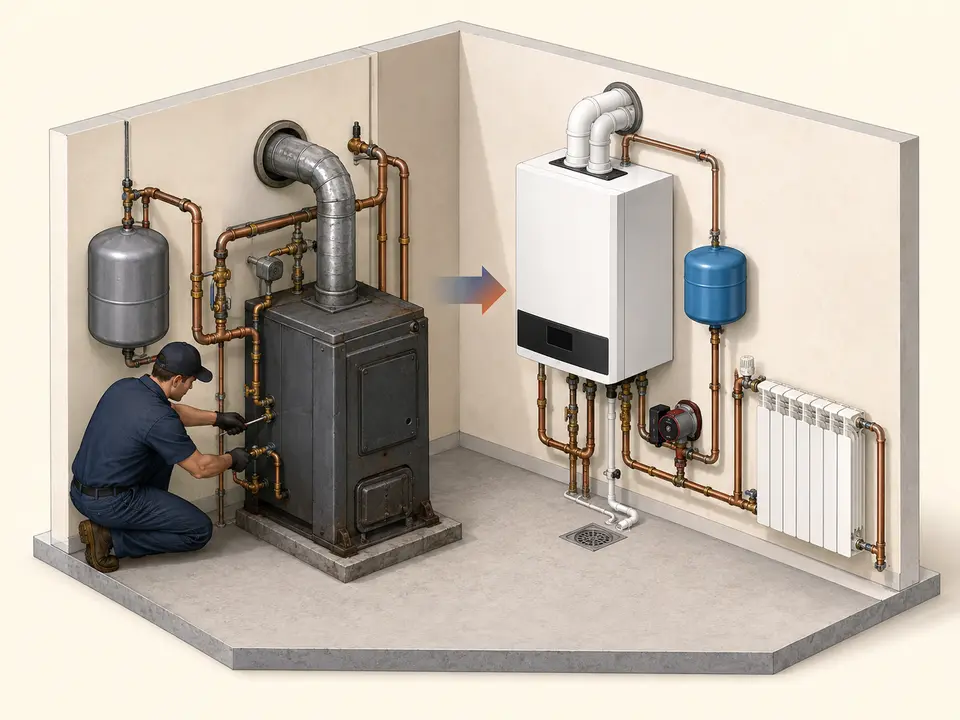
Signs Your Boiler May Need Replacing
Age matters, but condition, repair history, safety, heat delivery, parts, fuel, and the rest of the system matter more than one calendar rule.
How Long Do Boilers Last?
There is no single lifespan for every boiler. ENERGY STAR lists a furnace or boiler older than 15 years as a reason to consider replacement, especially when repairs or energy bills increase. Some well-maintained cast-iron equipment operates much longer, while condensing units, steam systems, water quality, cycling, venting, maintenance, and operating conditions change service life. Age starts the review; measured condition should finish it.
What Professional Boiler Replacement Service Includes
A complete replacement scope explains what stays, what changes, how the old boiler leaves, and how the new system will be tested.
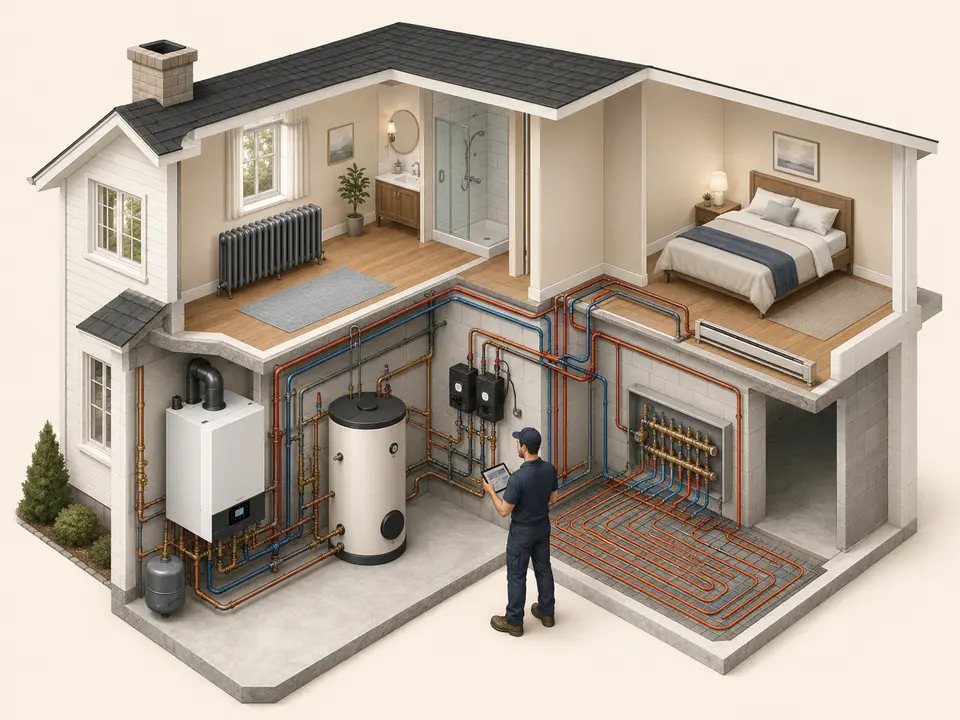
Boiler Replacement Cost and Price Factors
Online averages help with early budgeting. A reliable boiler replacement price follows a site assessment, load review, equipment selection, and complete written scope.
Current HomeAdvisor data places many boiler replacement projects near this broad range, with a national average around $5,900.
Carrier publishes a wider installed replacement guide. California labor, equipment, access, venting, and system changes can move a project beyond averages.
Connected radiation, near-boiler piping, multiple boilers, redundancy, controls, water treatment, access, shutdowns, and inspections require project-specific pricing.
What Changes Gas, Oil, Steam, and Hot-Water Boiler Replacement Cost?
- Equipment Output, fuel, efficiency, modulation, materials, heat-only or combi design, controls, and manufacturer.
- System type Hot water, steam, radiant floor, baseboard, radiators, fan coils, indirect tank, multiple zones, or multiple boilers.
- Distribution work Pumps, valves, piping, header, returns, vents, balancing, flushing, water treatment, expansion, and air separation.
- Fuel changes Oil-to-gas conversion, propane storage, gas meter or line, burner, tank removal, electrical service, or conversion to a heat pump.
- Venting Chimney inspection or liner, direct-vent route, intake air, termination, condensate drain, neutralizer, and freeze protection.
- Removal Boiler weight, sectional disassembly, stairs, tight mechanical room, rigging, disposal, floor protection, and hazardous-material coordination.
- Code and trades Mechanical, plumbing, gas, electrical, structural, environmental, permit, and inspection requirements where applicable.
- Commissioning Fill, purge, leak test, balancing, combustion setup, pressure, temperatures, controls, safety checks, and documentation.
These are broad national planning figures—not All HVAC California prices, quotes, financing terms, or promises. The local price requires a documented replacement scope.
From Old-Boiler Assessment to Verified Replacement
The process protects the building, preserves sound components, corrects known weaknesses, and documents the new boiler’s operation.
- 01
Assess and design
We document failures, repair history, heat loss, connected radiation, piping, zones, fuel, electrical service, venting, drainage, access, hot water, controls, permits, and alternatives.
You get a replacement basis and options - 02
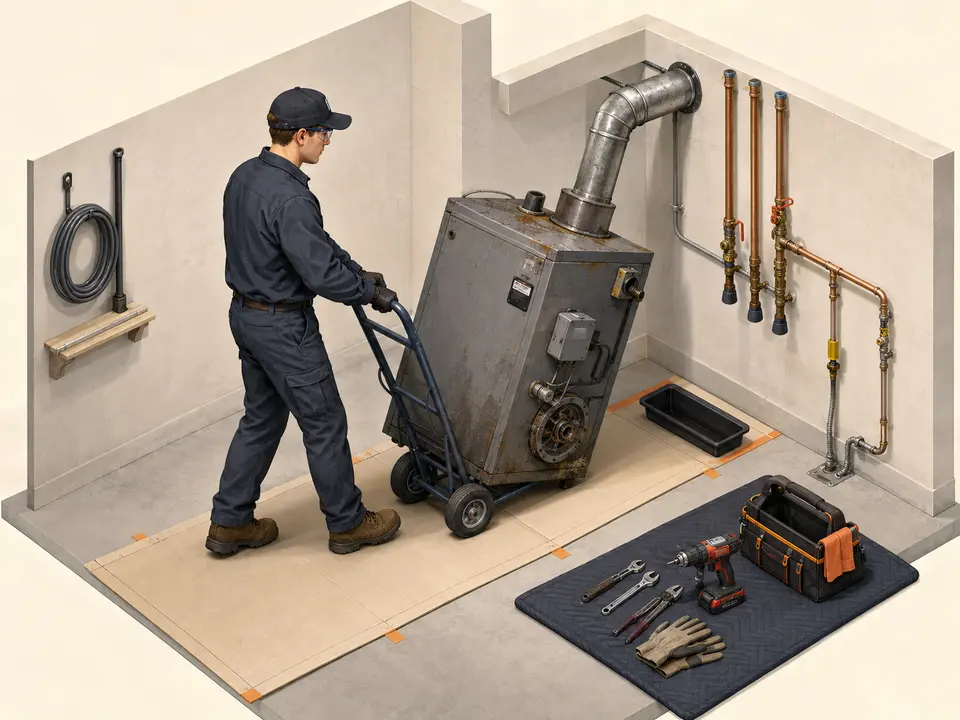
Remove and replace
The old boiler is isolated, drained, disconnected, moved, and handled according to the approved scope. The replacement, piping, pumps, expansion, fuel, venting, power, condensate, and controls are coordinated.
You get an organized installation sequence - 03
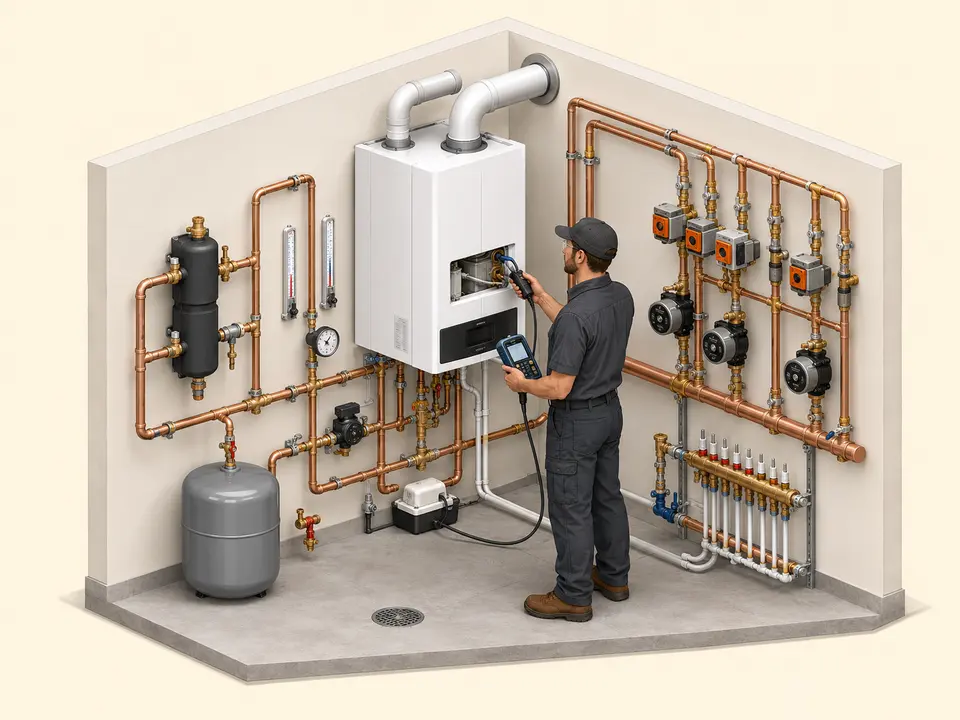
Commission and hand over
The system is filled, purged, checked for leaks, balanced, fired, tested, programmed, and verified across zones. Combustion, pressure, temperature, flow, safeties, and domestic hot water are documented where applicable.
You get measured operating results
Gas, Oil, Steam, Hot-Water, Combi, and Condensing Boiler Replacement
The replacement type must fit the existing distribution, building load, available fuel, required water or steam conditions, venting, controls, and domestic hot-water demand.
Gas and propane replacement
Output, gas or propane supply, regulator, shutoff, combustion air, venting, condensate, piping, controls, and startup requirements reviewed.
Fuel capacity verifiedOil-fired boiler replacement
Tank condition, oil line, burner, draft, chimney, combustion, soot control, removal, spill or environmental responsibilities, and fuel-change options considered.
Tank and chimney assessedSteam boiler replacement
New steam output is matched to connected radiation. Header, equalizer, risers, mains, returns, vents, waterline, controls, and pressure are included in the design.
Radiation measuredHot-water and hydronic replacement
Radiators, baseboards, radiant floors, fan coils, pumps, zones, water temperatures, expansion, air removal, treatment, and control strategy are evaluated.
Distribution matchedCombi boiler replacement
Heating load and domestic hot-water flow are checked separately. Incoming water, fixtures, simultaneous demand, priority, venting, condensate, and piping affect selection.
Hot-water demand checkedCondensing and high-efficiency replacement
Return-water temperature, outdoor reset, modulation, turndown, piping, venting material, condensate, water quality, and emitter capacity determine real performance.
Operating temperatures matterShould You Repair or Replace the Boiler?
Compare a verified repair with the condition, compatibility, efficiency, safety, and value of the entire system that would remain.
- Repair may fit An isolated, affordable fault on otherwise sound equipment with available parts, stable pressure, safe combustion, and reliable heat delivery.
- Replacement may fit A cracked section or heat exchanger, severe corrosion, repeated leakage, obsolete controls, unsafe venting, major fuel conversion, or several aging components.
- Age adds context ENERGY STAR suggests considering replacement once a furnace or boiler is over 15 years old, especially with frequent repairs or rising energy bills.
- Distribution matters Weak pumps, plugged piping, poor steam returns, undersized radiation, bad water, or control problems will not disappear when only the boiler changes.
- Capacity matters Copying the old input can preserve oversizing. Envelope work, additions, removed radiators, zoning, and hot-water changes should be reflected.
- Ownership goals matter Fuel cost, electrification, cooling, space, noise, emissions, maintenance, resilience, and planned renovations can change the best path.
Use Comparable Repair and Replacement Scopes
A repair estimate should identify the failed part, cause, risks, and remaining condition. A replacement proposal should identify load basis, equipment output, distribution changes, fuel, venting, electrical work, removal, permits, controls, commissioning, exclusions, and alternatives. Compare complete scopes—not one headline number.
What a Complete Boiler Replacement Should Prove
A good replacement corrects the reason the old system struggled instead of repeating its size, piping, control, or venting mistakes.
Condition is documented. Failure evidence, repair history, leaks, corrosion, combustion, venting, controls, pumps, piping, water quality, and distribution are reviewed.
Capacity is recalculated. Current building heat loss and connected radiation guide replacement output, modulation, and operating temperature.
Existing components are qualified. Piping, radiators, baseboards, radiant loops, steam mains, returns, chimney, fuel, electrical service, and controls are kept only when suitable.
Removal is planned. Isolation, draining, weight, stairs, sectional breakdown, rigging, disposal, floor protection, and hazardous-material responsibilities are stated.
New operation is verified. Pressure, leaks, purge, flow, temperatures, combustion, pumps, zones, controls, hot water, and safeties are tested.
Boiler replacement standard
Why Choose All HVAC California for Boiler Replacement?
A dependable boiler replacement company should make the condition evidence, sizing basis, options, responsibilities, and commissioning plan easy to compare.
- Condition before recommendation Failure, corrosion, leaks, repairs, combustion, venting, piping, pumps, controls, water quality, and distribution reviewed.
- Load-based equipment selection Current heat loss and connected radiation guide output instead of copying an oversized old nameplate.
- Multiple system paths Gas, propane, oil, electric, hot-water, steam, combi, condensing, cast-iron, heat-pump, and furnace alternatives considered where practical.
- Existing-system integration Radiators, baseboards, radiant floors, steam mains, indirect tanks, zones, chimneys, utilities, and controls checked for compatibility.
- Clear removal scope Shutdown, isolation, draining, handling, disposal, access, protection, environmental responsibilities, and exclusions identified.
- Complete written proposal Equipment, piping, pumps, fuel, electricity, venting, condensate, controls, permits, trades, commissioning, and limits separated.
- Manufacturer-aware work Published clearances, piping, venting, water quality, startup, combustion, and control requirements guide the project.
- Measured handover Pressure, temperatures, flow, combustion, gas pressure, pumps, zones, controls, safeties, hot water, and maintenance needs reviewed.
Boiler Replacement Planning Across California
California replacement projects vary by climate, elevation, fuel access, electrical capacity, building age, seismic requirements, air-quality rules, permit authority, water chemistry, and existing distribution.
- Coastal properties Corrosion exposure, smaller loads, tight boiler rooms, shared structures, vent termination, condensate routing, and mixed hot-water goals affect selection.
- Central Valley homes Cooling often remains a separate priority. Compare boiler replacement with a complete heating-and-cooling plan rather than viewing heating alone.
- Mountain climates Design temperature, altitude, freeze protection, propane or oil logistics, vent termination, combustion setup, access, and backup-power context matter.
- Older buildings Cast-iron radiators, steam piping, gravity systems, chimneys, masonry, electrical limits, asbestos, and envelope improvements require careful planning.
- Radiant homes Loop condition, manifolds, water temperature, mixing, balancing, controls, insulation, thermal mass, and floor coverings must fit the new boiler.
- Commercial properties Multiple boilers, redundancy, controls, pumps, heat exchangers, water treatment, ventilation, access, downtime, inspections, and operating records expand scope.
Service-area availability and the final replacement scope depend on property conditions, equipment, fuel, permits, access, materials, and required trades.
Services That Support a Boiler Replacement Decision
Replacement planning may begin with diagnosis and connect with new installation, radiant distribution, fuel alternatives, electrification, or forced-air heating.
Our Boiler Replacement Commitments
These are process standards—not invented availability, response times, ratings, savings, financing, rebate, or warranty claims.
Failure, repairs, safety, piping, distribution, fuel, venting, controls, water quality, and access are documented.
Heat loss, radiation, operating temperature, hot water, utilities, and building changes guide selection.
Removal, equipment, components, permits, trades, exclusions, installation, testing, and documentation are identified.
Pressure, leaks, flow, temperatures, combustion, pumps, zones, safeties, controls, and hot water are checked.
Residential and Commercial Boiler Replacement
Property type changes the boiler room, distribution, capacity, redundancy, controls, utilities, removal method, permitting, access, and commissioning plan.
Boiler Replacement From Old Equipment to Verified Heat
What Better Boiler Replacement Planning Feels Like
These are service standards—not fictional testimonials.
The assessment explains the old boiler’s condition, failure evidence, repair history, connected distribution, heat loss, utilities, venting, hot water, access, and practical alternatives.
The proposal separates equipment, removal, piping, pumps, fuel, electrical, venting, condensate, controls, permits, trades, exclusions, testing, and project responsibilities.
The new boiler is filled, purged, balanced, programmed, tested, and handed over with operating results, control guidance, documentation, and maintenance needs.
Service Options, Costs, and Questions We Address
Use this service index to identify the installation, repair, cost, equipment, or local-support topic that matches your project.
Ready to Plan a Boiler Replacement?
Share the property type, city, current boiler model and fuel, approximate age, symptoms, repair history, radiators or radiant floors, zones, hot-water needs, venting, and access.
Request a boiler replacement assessment for gas, propane, oil, electric, hot-water, steam, combi, condensing, cast-iron, radiant, residential, multifamily, or commercial equipment. Scheduling and scope depend on diagnosis, site access, load review, utilities, equipment, permits, required trades, materials, removal, and commissioning.
Boiler Replacement Questions Answered
Current 2026 national consumer data places many boiler replacements around $3,300 to $8,500, with an average near $5,900. Another current manufacturer guide shows a wider installed range of about $4,290 to $10,070. California pricing can differ. Boiler type, output, fuel, piping, venting, chimney, condensate, controls, permits, removal, access, and commissioning determine the written quote.
ENERGY STAR identifies a furnace or boiler older than 15 years as a reason to consider replacement, particularly when repairs are frequent or energy bills rise. Actual boiler life expectancy varies widely. Cast-iron construction, condensing equipment, steam or hot-water operation, water quality, cycling, combustion, venting, maintenance, and installation quality all matter. Age should trigger an assessment, not an automatic replacement.
Important signs include repeated repairs, cracked sections or heat exchangers, severe corrosion, recurring leaks, unsafe combustion or venting, unavailable parts, rising fuel use, short cycling, poor heat delivery, unstable pressure, and a system that no longer fits the building. The decision should connect verified condition and repair cost with the value and compatibility of the remaining equipment.
Timing depends on equipment type and project scope. A straightforward like-for-like replacement differs from steam repiping, oil-to-gas conversion, chimney work, direct venting, electrical upgrades, an indirect tank, multiple zones, difficult removal, hazardous-material coordination, permits, and inspections. The proposal should identify shutdown time, trade sequence, removal, installation, inspection, startup, and commissioning rather than promise one duration for every project.
Repair may fit an isolated, affordable fault on otherwise sound equipment with safe combustion, stable pressure, available parts, and reliable distribution. Replacement becomes more reasonable with major leakage, cracked sections, repeated failures, severe corrosion, unsafe venting, obsolete parts, fuel conversion, or several aging components. Compare a documented repair estimate with a complete load-based replacement proposal.
Sometimes, but it is a system conversion rather than a simple appliance swap. The assessment should cover building heat loss, climate, electrical service, panel capacity, emitter temperatures, ducts or ductless zones, cooling needs, domestic hot water, backup strategy, fuel removal, and operating goals. High-temperature radiators may need more analysis than low-temperature radiant floors or properly sized fan coils.
A furnace needs a duct system, while a boiler uses water or steam piping. Conversion may be practical when suitable ducts already exist or a full distribution redesign is planned. Compare duct installation, cooling integration, filtration, room comfort, equipment space, electrical and fuel work, removal of old radiators or piping, permits, and complete installed cost before choosing the change.
Often it can, but the emitters and piping must be qualified. Check output at proposed water temperatures, flow, zones, pump requirements, water quality, leaks, balancing, expansion, air removal, and control compatibility. Steam boiler output must be matched to connected radiation. Existing components that are sound and compatible may remain; weak or mismatched parts belong in the replacement scope.
It can be a strong option when return-water temperatures, emitter capacity, outdoor reset, modulation, piping, venting, condensate, and water quality allow efficient operation. A condensing boiler may spend less time condensing in a high-temperature system. Compare the complete installed design, likely operating temperatures, fuel, maintenance, hot-water needs, and alternatives instead of selecting from AFUE alone.
The IRS states that the Energy Efficient Home Improvement Credit applied to qualifying improvements made through December 31, 2025. Under current IRS guidance, a boiler placed in service in 2026 does not qualify for that federal Section 25C credit. State, local, utility, and manufacturer programs can differ and change, so confirm current eligibility, dates, equipment rules, and funding before purchase.
Boiler Replacement Built Around the System That Remains
Replacing a boiler is not a nameplate swap. The new equipment must fit the building heat loss, radiators or radiant floors, piping, fuel, venting, electrical service, controls, domestic hot water, water quality, and the safe removal of the old boiler.
Signs Your Boiler May Need Replacing
Age matters, but condition, repair history, safety, heat delivery, parts, fuel, and the rest of the system matter more than one calendar rule.
How Long Do Boilers Last?
There is no single lifespan for every boiler. ENERGY STAR lists a furnace or boiler older than 15 years as a reason to consider replacement, especially when repairs or energy bills increase. Some well-maintained cast-iron equipment operates much longer, while condensing units, steam systems, water quality, cycling, venting, maintenance, and operating conditions change service life. Age starts the review; measured condition should finish it.
What Professional Boiler Replacement Service Includes
A complete replacement scope explains what stays, what changes, how the old boiler leaves, and how the new system will be tested.
Boiler Replacement Cost and Price Factors
Online averages help with early budgeting. A reliable boiler replacement price follows a site assessment, load review, equipment selection, and complete written scope.
Current HomeAdvisor data places many boiler replacement projects near this broad range, with a national average around $5,900.
Carrier publishes a wider installed replacement guide. California labor, equipment, access, venting, and system changes can move a project beyond averages.
Connected radiation, near-boiler piping, multiple boilers, redundancy, controls, water treatment, access, shutdowns, and inspections require project-specific pricing.
What Changes Gas, Oil, Steam, and Hot-Water Boiler Replacement Cost?
- Equipment Output, fuel, efficiency, modulation, materials, heat-only or combi design, controls, and manufacturer.
- System type Hot water, steam, radiant floor, baseboard, radiators, fan coils, indirect tank, multiple zones, or multiple boilers.
- Distribution work Pumps, valves, piping, header, returns, vents, balancing, flushing, water treatment, expansion, and air separation.
- Fuel changes Oil-to-gas conversion, propane storage, gas meter or line, burner, tank removal, electrical service, or conversion to a heat pump.
- Venting Chimney inspection or liner, direct-vent route, intake air, termination, condensate drain, neutralizer, and freeze protection.
- Removal Boiler weight, sectional disassembly, stairs, tight mechanical room, rigging, disposal, floor protection, and hazardous-material coordination.
- Code and trades Mechanical, plumbing, gas, electrical, structural, environmental, permit, and inspection requirements where applicable.
- Commissioning Fill, purge, leak test, balancing, combustion setup, pressure, temperatures, controls, safety checks, and documentation.
These are broad national planning figures—not All HVAC California prices, quotes, financing terms, or promises. The local price requires a documented replacement scope.
From Old-Boiler Assessment to Verified Replacement
The process protects the building, preserves sound components, corrects known weaknesses, and documents the new boiler’s operation.
- 01
Assess and design
We document failures, repair history, heat loss, connected radiation, piping, zones, fuel, electrical service, venting, drainage, access, hot water, controls, permits, and alternatives.
You get a replacement basis and options - 02
Remove and replace
The old boiler is isolated, drained, disconnected, moved, and handled according to the approved scope. The replacement, piping, pumps, expansion, fuel, venting, power, condensate, and controls are coordinated.
You get an organized installation sequence - 03
Commission and hand over
The system is filled, purged, checked for leaks, balanced, fired, tested, programmed, and verified across zones. Combustion, pressure, temperature, flow, safeties, and domestic hot water are documented where applicable.
You get measured operating results
Gas, Oil, Steam, Hot-Water, Combi, and Condensing Boiler Replacement
The replacement type must fit the existing distribution, building load, available fuel, required water or steam conditions, venting, controls, and domestic hot-water demand.
Gas and propane replacement
Output, gas or propane supply, regulator, shutoff, combustion air, venting, condensate, piping, controls, and startup requirements reviewed.
Fuel capacity verifiedOil-fired boiler replacement
Tank condition, oil line, burner, draft, chimney, combustion, soot control, removal, spill or environmental responsibilities, and fuel-change options considered.
Tank and chimney assessedSteam boiler replacement
New steam output is matched to connected radiation. Header, equalizer, risers, mains, returns, vents, waterline, controls, and pressure are included in the design.
Radiation measuredHot-water and hydronic replacement
Radiators, baseboards, radiant floors, fan coils, pumps, zones, water temperatures, expansion, air removal, treatment, and control strategy are evaluated.
Distribution matchedCombi boiler replacement
Heating load and domestic hot-water flow are checked separately. Incoming water, fixtures, simultaneous demand, priority, venting, condensate, and piping affect selection.
Hot-water demand checkedCondensing and high-efficiency replacement
Return-water temperature, outdoor reset, modulation, turndown, piping, venting material, condensate, water quality, and emitter capacity determine real performance.
Operating temperatures matterShould You Repair or Replace the Boiler?
Compare a verified repair with the condition, compatibility, efficiency, safety, and value of the entire system that would remain.
- Repair may fit An isolated, affordable fault on otherwise sound equipment with available parts, stable pressure, safe combustion, and reliable heat delivery.
- Replacement may fit A cracked section or heat exchanger, severe corrosion, repeated leakage, obsolete controls, unsafe venting, major fuel conversion, or several aging components.
- Age adds context ENERGY STAR suggests considering replacement once a furnace or boiler is over 15 years old, especially with frequent repairs or rising energy bills.
- Distribution matters Weak pumps, plugged piping, poor steam returns, undersized radiation, bad water, or control problems will not disappear when only the boiler changes.
- Capacity matters Copying the old input can preserve oversizing. Envelope work, additions, removed radiators, zoning, and hot-water changes should be reflected.
- Ownership goals matter Fuel cost, electrification, cooling, space, noise, emissions, maintenance, resilience, and planned renovations can change the best path.
Use Comparable Repair and Replacement Scopes
A repair estimate should identify the failed part, cause, risks, and remaining condition. A replacement proposal should identify load basis, equipment output, distribution changes, fuel, venting, electrical work, removal, permits, controls, commissioning, exclusions, and alternatives. Compare complete scopes—not one headline number.
What a Complete Boiler Replacement Should Prove
A good replacement corrects the reason the old system struggled instead of repeating its size, piping, control, or venting mistakes.
Condition is documented. Failure evidence, repair history, leaks, corrosion, combustion, venting, controls, pumps, piping, water quality, and distribution are reviewed.
Capacity is recalculated. Current building heat loss and connected radiation guide replacement output, modulation, and operating temperature.
Existing components are qualified. Piping, radiators, baseboards, radiant loops, steam mains, returns, chimney, fuel, electrical service, and controls are kept only when suitable.
Removal is planned. Isolation, draining, weight, stairs, sectional breakdown, rigging, disposal, floor protection, and hazardous-material responsibilities are stated.
New operation is verified. Pressure, leaks, purge, flow, temperatures, combustion, pumps, zones, controls, hot water, and safeties are tested.
Boiler replacement standard
Why Choose All HVAC California for Boiler Replacement?
A dependable boiler replacement company should make the condition evidence, sizing basis, options, responsibilities, and commissioning plan easy to compare.
- Condition before recommendation Failure, corrosion, leaks, repairs, combustion, venting, piping, pumps, controls, water quality, and distribution reviewed.
- Load-based equipment selection Current heat loss and connected radiation guide output instead of copying an oversized old nameplate.
- Multiple system paths Gas, propane, oil, electric, hot-water, steam, combi, condensing, cast-iron, heat-pump, and furnace alternatives considered where practical.
- Existing-system integration Radiators, baseboards, radiant floors, steam mains, indirect tanks, zones, chimneys, utilities, and controls checked for compatibility.
- Clear removal scope Shutdown, isolation, draining, handling, disposal, access, protection, environmental responsibilities, and exclusions identified.
- Complete written proposal Equipment, piping, pumps, fuel, electricity, venting, condensate, controls, permits, trades, commissioning, and limits separated.
- Manufacturer-aware work Published clearances, piping, venting, water quality, startup, combustion, and control requirements guide the project.
- Measured handover Pressure, temperatures, flow, combustion, gas pressure, pumps, zones, controls, safeties, hot water, and maintenance needs reviewed.
Boiler Replacement Planning Across California
California replacement projects vary by climate, elevation, fuel access, electrical capacity, building age, seismic requirements, air-quality rules, permit authority, water chemistry, and existing distribution.
- Coastal properties Corrosion exposure, smaller loads, tight boiler rooms, shared structures, vent termination, condensate routing, and mixed hot-water goals affect selection.
- Central Valley homes Cooling often remains a separate priority. Compare boiler replacement with a complete heating-and-cooling plan rather than viewing heating alone.
- Mountain climates Design temperature, altitude, freeze protection, propane or oil logistics, vent termination, combustion setup, access, and backup-power context matter.
- Older buildings Cast-iron radiators, steam piping, gravity systems, chimneys, masonry, electrical limits, asbestos, and envelope improvements require careful planning.
- Radiant homes Loop condition, manifolds, water temperature, mixing, balancing, controls, insulation, thermal mass, and floor coverings must fit the new boiler.
- Commercial properties Multiple boilers, redundancy, controls, pumps, heat exchangers, water treatment, ventilation, access, downtime, inspections, and operating records expand scope.
Service-area availability and the final replacement scope depend on property conditions, equipment, fuel, permits, access, materials, and required trades.
Services That Support a Boiler Replacement Decision
Replacement planning may begin with diagnosis and connect with new installation, radiant distribution, fuel alternatives, electrification, or forced-air heating.
Our Boiler Replacement Commitments
These are process standards—not invented availability, response times, ratings, savings, financing, rebate, or warranty claims.
Failure, repairs, safety, piping, distribution, fuel, venting, controls, water quality, and access are documented.
Heat loss, radiation, operating temperature, hot water, utilities, and building changes guide selection.
Removal, equipment, components, permits, trades, exclusions, installation, testing, and documentation are identified.
Pressure, leaks, flow, temperatures, combustion, pumps, zones, safeties, controls, and hot water are checked.
Residential and Commercial Boiler Replacement
Property type changes the boiler room, distribution, capacity, redundancy, controls, utilities, removal method, permitting, access, and commissioning plan.
Boiler Replacement From Old Equipment to Verified Heat
What Better Boiler Replacement Planning Feels Like
These are service standards—not fictional testimonials.
The assessment explains the old boiler’s condition, failure evidence, repair history, connected distribution, heat loss, utilities, venting, hot water, access, and practical alternatives.
The proposal separates equipment, removal, piping, pumps, fuel, electrical, venting, condensate, controls, permits, trades, exclusions, testing, and project responsibilities.
The new boiler is filled, purged, balanced, programmed, tested, and handed over with operating results, control guidance, documentation, and maintenance needs.
Ready to Plan a Boiler Replacement?
Share the property type, city, current boiler model and fuel, approximate age, symptoms, repair history, radiators or radiant floors, zones, hot-water needs, venting, and access.
Request a boiler replacement assessment for gas, propane, oil, electric, hot-water, steam, combi, condensing, cast-iron, radiant, residential, multifamily, or commercial equipment. Scheduling and scope depend on diagnosis, site access, load review, utilities, equipment, permits, required trades, materials, removal, and commissioning.
Boiler Replacement Questions Answered
Current 2026 national consumer data places many boiler replacements around $3,300 to $8,500, with an average near $5,900. Another current manufacturer guide shows a wider installed range of about $4,290 to $10,070. California pricing can differ. Boiler type, output, fuel, piping, venting, chimney, condensate, controls, permits, removal, access, and commissioning determine the written quote.
ENERGY STAR identifies a furnace or boiler older than 15 years as a reason to consider replacement, particularly when repairs are frequent or energy bills rise. Actual boiler life expectancy varies widely. Cast-iron construction, condensing equipment, steam or hot-water operation, water quality, cycling, combustion, venting, maintenance, and installation quality all matter. Age should trigger an assessment, not an automatic replacement.
Important signs include repeated repairs, cracked sections or heat exchangers, severe corrosion, recurring leaks, unsafe combustion or venting, unavailable parts, rising fuel use, short cycling, poor heat delivery, unstable pressure, and a system that no longer fits the building. The decision should connect verified condition and repair cost with the value and compatibility of the remaining equipment.
Timing depends on equipment type and project scope. A straightforward like-for-like replacement differs from steam repiping, oil-to-gas conversion, chimney work, direct venting, electrical upgrades, an indirect tank, multiple zones, difficult removal, hazardous-material coordination, permits, and inspections. The proposal should identify shutdown time, trade sequence, removal, installation, inspection, startup, and commissioning rather than promise one duration for every project.
Repair may fit an isolated, affordable fault on otherwise sound equipment with safe combustion, stable pressure, available parts, and reliable distribution. Replacement becomes more reasonable with major leakage, cracked sections, repeated failures, severe corrosion, unsafe venting, obsolete parts, fuel conversion, or several aging components. Compare a documented repair estimate with a complete load-based replacement proposal.
Sometimes, but it is a system conversion rather than a simple appliance swap. The assessment should cover building heat loss, climate, electrical service, panel capacity, emitter temperatures, ducts or ductless zones, cooling needs, domestic hot water, backup strategy, fuel removal, and operating goals. High-temperature radiators may need more analysis than low-temperature radiant floors or properly sized fan coils.
A furnace needs a duct system, while a boiler uses water or steam piping. Conversion may be practical when suitable ducts already exist or a full distribution redesign is planned. Compare duct installation, cooling integration, filtration, room comfort, equipment space, electrical and fuel work, removal of old radiators or piping, permits, and complete installed cost before choosing the change.
Often it can, but the emitters and piping must be qualified. Check output at proposed water temperatures, flow, zones, pump requirements, water quality, leaks, balancing, expansion, air removal, and control compatibility. Steam boiler output must be matched to connected radiation. Existing components that are sound and compatible may remain; weak or mismatched parts belong in the replacement scope.
It can be a strong option when return-water temperatures, emitter capacity, outdoor reset, modulation, piping, venting, condensate, and water quality allow efficient operation. A condensing boiler may spend less time condensing in a high-temperature system. Compare the complete installed design, likely operating temperatures, fuel, maintenance, hot-water needs, and alternatives instead of selecting from AFUE alone.
The IRS states that the Energy Efficient Home Improvement Credit applied to qualifying improvements made through December 31, 2025. Under current IRS guidance, a boiler placed in service in 2026 does not qualify for that federal Section 25C credit. State, local, utility, and manufacturer programs can differ and change, so confirm current eligibility, dates, equipment rules, and funding before purchase.