Ductless Mini Split Comfort Built Around Each Room
Heat or cool the rooms you use—without rebuilding the house around new ducts.
We design, install, repair, replace, and maintain ductless mini split systems across California. From a quiet single-zone mini split AC for a bedroom or garage to multi-zone ductless heating and cooling, every project begins with room loads, equipment matching, and a practical route for lines, drainage, and power.
- Room-by-room sizingCapacity selected from the load, not a square-foot shortcut
- Single or multi-zone designOne room, several rooms, or a whole-home plan
- Installation and ongoing serviceDuctless AC repair and maintenance available
Comfort for Rooms a Central System Cannot Reach
Some rooms need their own answer—not a longer duct run.
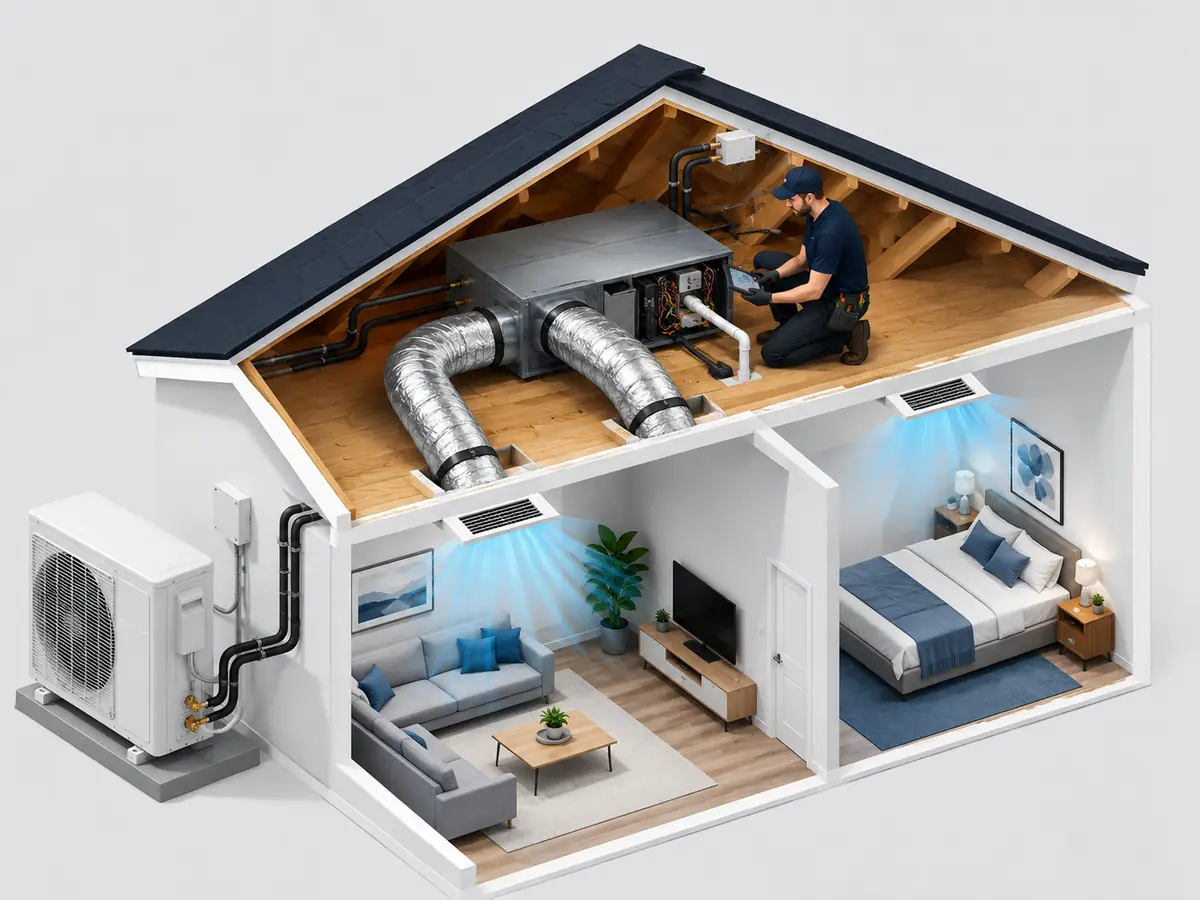
A ductless air conditioner places a compact indoor unit in the space and connects it to an outdoor inverter condenser. That avoids large supply and return ducts while giving the zone its own control.
Ductless is especially useful for additions, older homes without ducts, garages, converted attics, finished basements, sunrooms, bedrooms, studios, and rooms that never match the rest of the house.
It is not automatically the right answer everywhere. Indoor-unit visibility, condensate drainage, line routes, electrical capacity, outdoor-unit space, maintenance access, and simultaneous zone loads all matter.
Comparing a ductless system with central air? We can outline both scopes so you can compare comfort, appearance, installation disruption, operating control, and total cost.
What Ductless Mini Split Installation Includes
The equipment is only part of the project. Placement and commissioning decide how it performs.
Our ductless mini split installation scope covers load review, zone planning, indoor and outdoor equipment matching, routes, power, mounting, condensate, refrigerant procedure, controls, testing, and handover. The written estimate identifies site-specific exclusions before work begins.
A Complete Ductless AC Installation Plan
Ductless Mini Split Cost in California
Zone count matters—but capacity, access, indoor style, and routing matter just as much.
A professional mini split system cost varies widely. Use these as planning ranges, not a substitute for an on-site scope.
What Changes Ductless AC Cost?
- Zone count and capacity More connected rooms and higher loads require more equipment.
- Indoor unit style Wall heads, cassettes, floor units, and concealed ducts have different labor.
- Line length and routing Long, hidden, or difficult routes affect materials and time.
- Condensate drainage Gravity drains are simpler than pumps or difficult pathways.
- Electrical condition Circuit, disconnect, panel capacity, and code corrections affect scope.
- Structural access High walls, finished ceilings, roofs, attics, and masonry add complexity.
- Efficiency and features Cold-climate, high-efficiency, Wi-Fi, and smart controls change price.
- Existing equipment Removal, refrigerant recovery, and reuse decisions require inspection.
How Ductless System Installation Works
Plan each zone first. Then install the equipment around the plan.
- 01
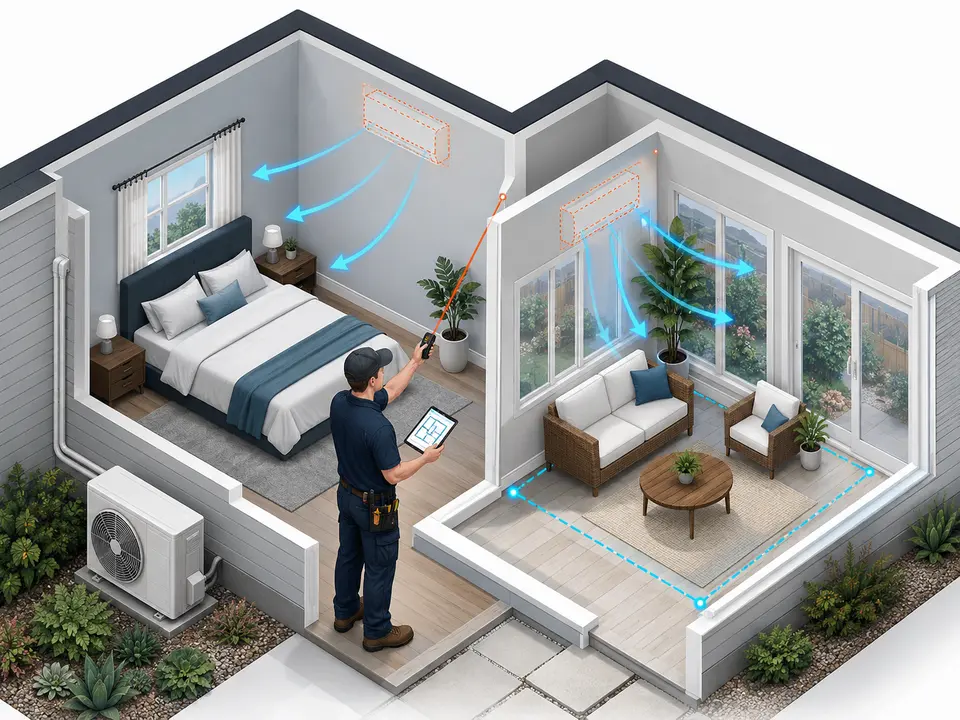
Assess rooms and loads
We review construction, exposure, windows, use, power, drainage, and possible indoor and outdoor locations.
You get a zone map and realistic scope - 02
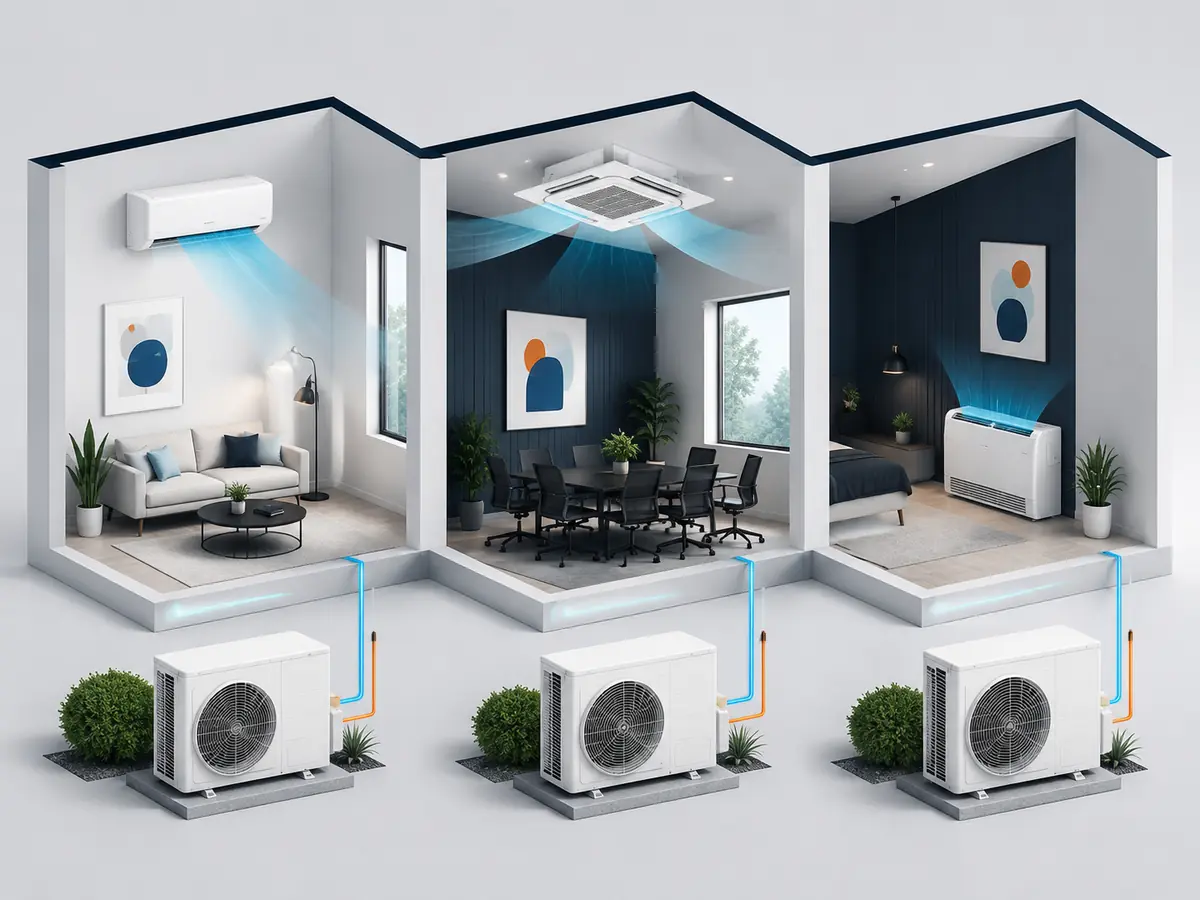
Choose the system and indoor styles
We compare single- and multi-zone options, capacity, sound, efficiency, controls, appearance, and service access.
You approve the equipment and exact locations - 03
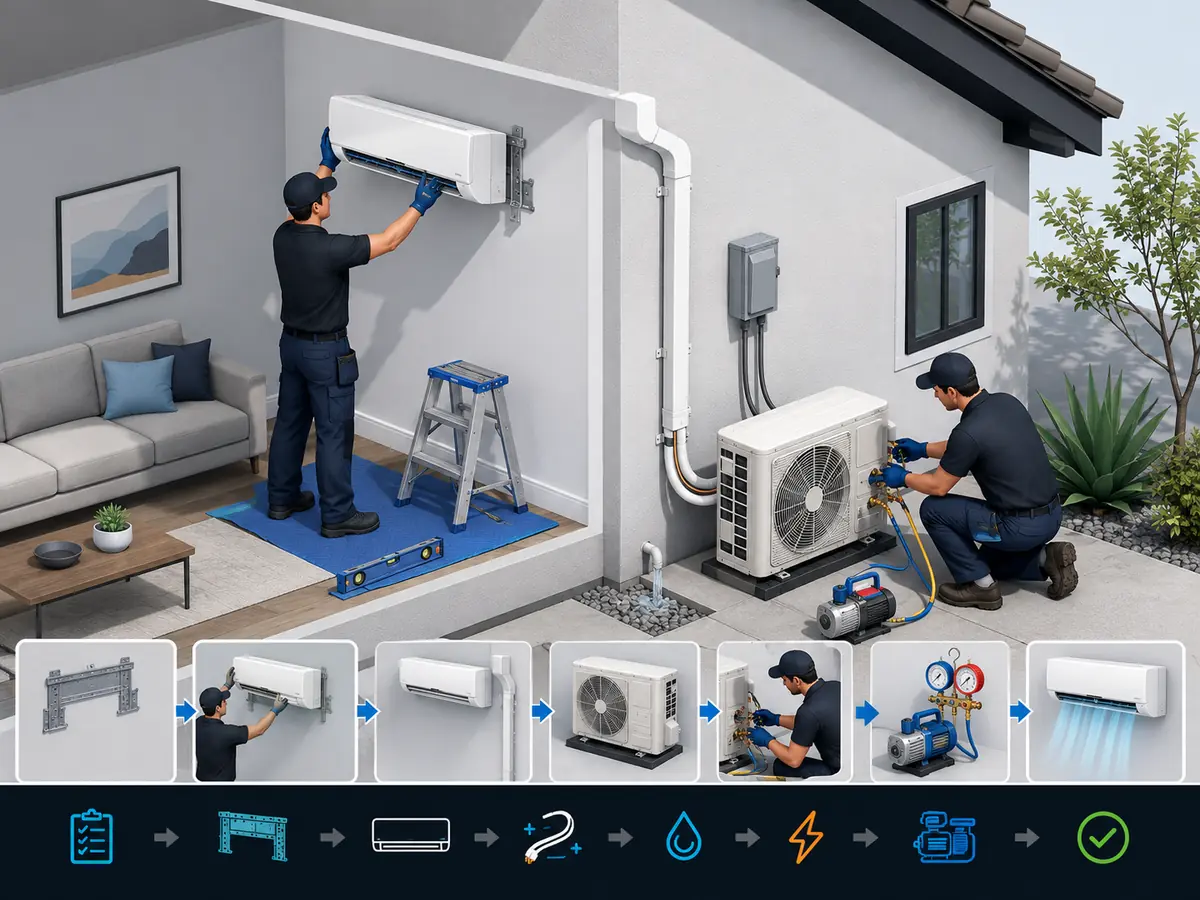
Install, commission, and hand over
The crew mounts equipment, completes routes and electrical scope, pressure-tests, evacuates, verifies drainage and operation, and explains controls.
You get a clean installation and documented startup
Choose the Right Mini Split System
The best ductless system is the one that fits the room, the structure, and the way you live.
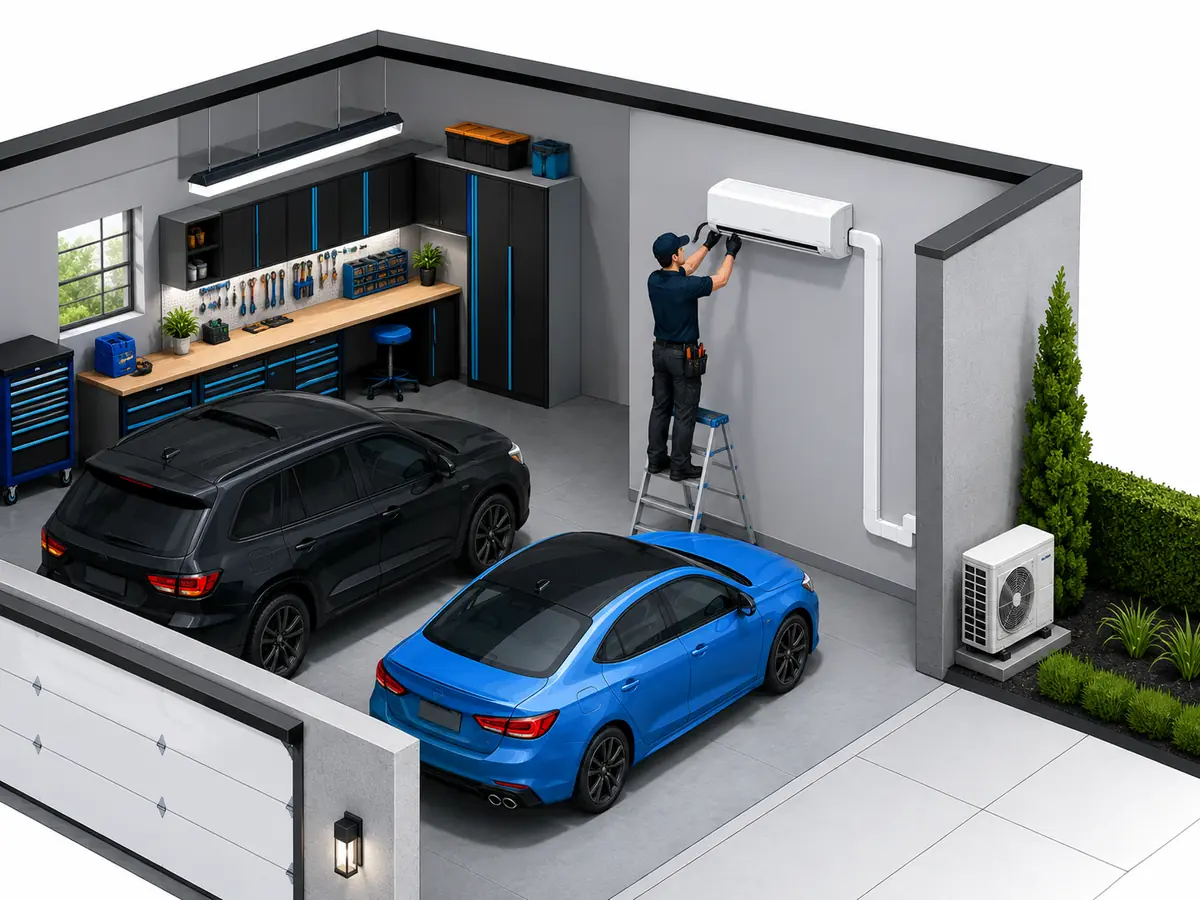
Wall-mounted mini split
The familiar high-wall indoor head. Efficient, easy to service, and suitable for many bedrooms, living rooms, garages, and additions.
Most flexible indoor styleCeiling cassette mini split
A low-profile ceiling unit that distributes air in several directions when ceiling space and structure allow.
Open-room coverageFloor-mounted mini split
A low-wall option for rooms with limited high-wall space, sloped ceilings, or large windows.
Low-wall installationConcealed-duct mini split
A compact hidden air handler with short duct runs serving one room or a small group of nearby rooms.
Hidden indoor equipmentSingle-zone mini split
One indoor unit connected to one outdoor unit for a focused room, garage, bedroom, office, or sunroom.
One room or open zoneMulti-zone mini split
Two to five indoor units connected to one compatible condenser, each with independent temperature control.
Whole-home zoningA best mini split system list cannot replace design. Equipment families have different zone combinations, minimum outputs, piping limits, low-temperature capacity, and control options.
Mini Split Sizing: BTU Is a Starting Point, Not the Answer
Square footage alone does not show how much heat enters or leaves a room.
A 12,000 BTU mini split may fit one room and be wrong for another of the same size. Windows, insulation, air leakage, ceiling height, orientation, people, equipment, and local design temperatures shape the actual load. Oversized equipment can short-cycle; undersized equipment can run continuously and miss the setpoint.
For multi-zone equipment, connected indoor-unit capacity and simultaneous room demand must be checked against the outdoor unit—not simply added from labels.
What Professional Ductless Installation Should Deliver
A mini split is not finished when it is hanging on the wall.
Load-based selection. Room conditions and connected zones support the equipment choice.
Serviceable placement. Filters, coils, electronics, drains, and panels remain reachable.
Clean routes. Line sets, condensate, cable, penetrations, and line hide are supported and sealed.
Refrigeration procedure. Connections are tested, evacuated, and handled according to the selected equipment.
Commissioning. Each mode, fan, louver, control, drain, and zone is verified before handover.
Ductless system standard
Why Choose All HVAC California for Ductless HVAC?
Good ductless work connects design decisions to the finished installation.
- Room-by-room planning Each zone is reviewed before equipment is selected.
- Options explained Single-zone, multi-zone, indoor styles, features, and tradeoffs compared.
- Written scope Equipment, zones, routes, electrical work, finishes, and startup defined.
- Service access protected Filters, coils, drains, boards, and outdoor panels remain reachable.
- Clean line routing Penetrations, supports, insulation, covers, and drainage finished carefully.
- Measured commissioning Pressure, vacuum, drainage, controls, and operating modes verified.
- Repair and maintenance support Help remains available after installation.
- Clear handover Controls, filters, maintenance, and documentation reviewed with you.
Areas We Serve Across California
Home is where the heart is. Ours has crews in a lot of neighborhoods.
Search ac maintenance near me and you'll find plenty of vans. We staff local crews who know California homes, heat, and equipment.
Our ductless mini split service near me teams cover every region. Same standards everywhere.
We book fast AC repair slots year round. Reliable AC repair crews carry stock.
Want affordable ductless mini split service without a vague scope? We define the tune-up, cleaning, and any separate repair before extra work.
Looking for local AC repair or a local ductless heating and cooling company you can call twice? Pick your city above.
Other HVAC Services We Offer
One company, one number, everything handled. We carried every bag in one trip.
A ductless system is one way to solve comfort. Our complete service menu supports the rest of the home. Every service below is done by our own employees. Never subcontracted, never resold.
Air conditioning service for dependable comfort
From a single ductless head to a complete central system, service is matched to the equipment and the property.
- System sizing and equipment matching reviewed
- Refrigerant handled and measured professionally
- Repair findings explained before work
Our Ductless System Workmanship Commitments
No invented warranty promises—just clear work standards you can verify.
Equipment, locations, routes, electrical work, and finish details stated in writing.
Surfaces, furnishings, coils, tubing, wiring, and drainage handled carefully.
Connections, vacuum, drainage, controls, and operating modes verified.
Controls, filters, care, documents, and service priorities reviewed clearly.
Ductless Heating and Cooling for Real California Spaces
Target the room that needs comfort without forcing every room into one plan.

Ductless Options Beyond the Standard Wall Unit

What a Better Ductless Project Feels Like
These are service standards—not fictional testimonials.
You see why each indoor unit, capacity, and outdoor-system combination was recommended for the actual rooms.
Locations, line-hide routes, drains, electrical work, access, noise, and finish details are agreed before drilling begins.
Every zone is operated, drainage and controls are demonstrated, and filter and maintenance access are shown at handover.
Service Options, Costs, and Questions We Address
Use this service index to identify the installation, repair, cost, equipment, or local-support topic that matches your project.
Ready for a Ductless Mini Split Quote?
Start with the rooms, the comfort problem, and the building—not a box picked from a catalog.
Request a written ductless system estimate for installation, replacement, repair, or maintenance. We will review capacity, indoor styles, routes, power, finishes, and the practical options for your property.
Ductless Mini Split Questions Answered
A professionally installed single-zone ductless mini split cost often plans around $3,500 to $7,500. Dual- and triple-zone projects commonly plan around $8,000 to $14,000, while four- or five-zone and whole-home work can reach $14,000 to $22,000 or more. Capacity, indoor unit style, line length, electrical work, access, permits, and finish details change the price. A site-specific written quote controls.
Choose a single-zone mini split when one room or open area needs independent comfort. A multi-zone mini split can serve several rooms from one compatible outdoor unit. Multiple single-zone systems can sometimes provide better redundancy or efficiency. The best layout depends on simultaneous loads, available outdoor space, line routes, and how each room is used.
A 12,000, 18,000, 24,000, 30,000, or 36,000 BTU label describes a capacity class, not an automatic room-size rule. Windows, insulation, ceiling height, orientation, air leakage, people, appliances, and California climate all affect the load. Oversizing can cause short cycling and poor comfort, so selection should follow a room-by-room load review.
Yes. Most modern ductless systems are reversible heat pumps that provide mini split heating and cooling. Heating output changes with outdoor temperature, so the equipment should be selected for the local design conditions. Ask whether a cold-climate mini split or backup heat is appropriate for the property.
Often, yes. Those spaces are common ductless applications because they may be outside the existing duct system. The installer still needs to review insulation, doors, moisture, occupancy, electrical capacity, drainage, and local code. A garage application also needs placement that protects the indoor unit from vehicles, dust, and work activity.
A wall-mounted head is usually the simplest and most serviceable choice. A ceiling cassette offers broad distribution but needs ceiling space and drainage. A floor-mounted unit works below windows or sloped ceilings. A concealed-duct mini split hides the indoor equipment but adds short ducts, static-pressure limits, and access requirements.
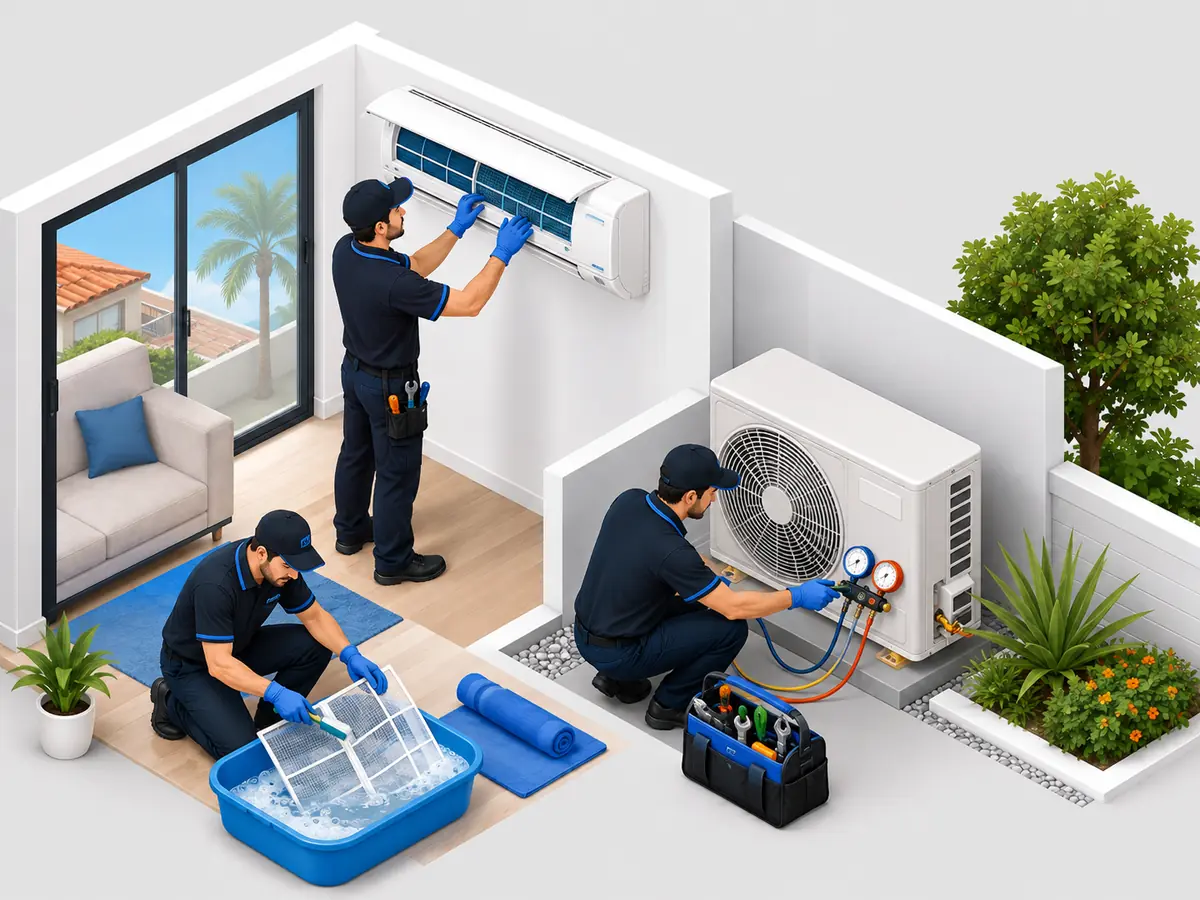
Clean or inspect the reusable filters on the schedule in the manufacturer instructions and based on pets, dust, and usage. Professional ductless mini split maintenance commonly includes indoor coils, blower wheels, drain pans and lines, outdoor coils, electrical checks, refrigerant performance, and controls. Schedule service sooner for water, ice, odors, noise, or reduced output.
Yes. Ductless AC repair can address drainage, sensors, boards, fans, refrigerant leaks, communication faults, and performance problems. Replacement may make more sense when critical parts are unavailable, several zones are failing, the system is badly mismatched, or repair cost is high relative to age and condition. We compare the practical options before work.
Ductless Mini Split Comfort Built Around Each Room
Heat or cool the rooms you use—without rebuilding the house around new ducts.
We design, install, repair, replace, and maintain ductless mini split systems across California. From a quiet single-zone mini split AC for a bedroom or garage to multi-zone ductless heating and cooling, every project begins with room loads, equipment matching, and a practical route for lines, drainage, and power.
- Room-by-room sizingCapacity selected from the load, not a square-foot shortcut
- Single or multi-zone designOne room, several rooms, or a whole-home plan
- Installation and ongoing serviceDuctless AC repair and maintenance available
Comfort for Rooms a Central System Cannot Reach
Some rooms need their own answer—not a longer duct run.
A ductless air conditioner places a compact indoor unit in the space and connects it to an outdoor inverter condenser. That avoids large supply and return ducts while giving the zone its own control.
Ductless is especially useful for additions, older homes without ducts, garages, converted attics, finished basements, sunrooms, bedrooms, studios, and rooms that never match the rest of the house.
It is not automatically the right answer everywhere. Indoor-unit visibility, condensate drainage, line routes, electrical capacity, outdoor-unit space, maintenance access, and simultaneous zone loads all matter.
Comparing a ductless system with central air? We can outline both scopes so you can compare comfort, appearance, installation disruption, operating control, and total cost.
What Ductless Mini Split Installation Includes
The equipment is only part of the project. Placement and commissioning decide how it performs.
Our ductless mini split installation scope covers load review, zone planning, indoor and outdoor equipment matching, routes, power, mounting, condensate, refrigerant procedure, controls, testing, and handover. The written estimate identifies site-specific exclusions before work begins.
A Complete Ductless AC Installation Plan
Ductless Mini Split Cost in California
Zone count matters—but capacity, access, indoor style, and routing matter just as much.
A professional mini split system cost varies widely. Use these as planning ranges, not a substitute for an on-site scope.
What Changes Ductless AC Cost?
- Zone count and capacity More connected rooms and higher loads require more equipment.
- Indoor unit style Wall heads, cassettes, floor units, and concealed ducts have different labor.
- Line length and routing Long, hidden, or difficult routes affect materials and time.
- Condensate drainage Gravity drains are simpler than pumps or difficult pathways.
- Electrical condition Circuit, disconnect, panel capacity, and code corrections affect scope.
- Structural access High walls, finished ceilings, roofs, attics, and masonry add complexity.
- Efficiency and features Cold-climate, high-efficiency, Wi-Fi, and smart controls change price.
- Existing equipment Removal, refrigerant recovery, and reuse decisions require inspection.
How Ductless System Installation Works
Plan each zone first. Then install the equipment around the plan.
- 01
Assess rooms and loads
We review construction, exposure, windows, use, power, drainage, and possible indoor and outdoor locations.
You get a zone map and realistic scope - 02
Choose the system and indoor styles
We compare single- and multi-zone options, capacity, sound, efficiency, controls, appearance, and service access.
You approve the equipment and exact locations - 03
Install, commission, and hand over
The crew mounts equipment, completes routes and electrical scope, pressure-tests, evacuates, verifies drainage and operation, and explains controls.
You get a clean installation and documented startup
Choose the Right Mini Split System
The best ductless system is the one that fits the room, the structure, and the way you live.
Wall-mounted mini split
The familiar high-wall indoor head. Efficient, easy to service, and suitable for many bedrooms, living rooms, garages, and additions.
Most flexible indoor styleCeiling cassette mini split
A low-profile ceiling unit that distributes air in several directions when ceiling space and structure allow.
Open-room coverageFloor-mounted mini split
A low-wall option for rooms with limited high-wall space, sloped ceilings, or large windows.
Low-wall installationConcealed-duct mini split
A compact hidden air handler with short duct runs serving one room or a small group of nearby rooms.
Hidden indoor equipmentSingle-zone mini split
One indoor unit connected to one outdoor unit for a focused room, garage, bedroom, office, or sunroom.
One room or open zoneMulti-zone mini split
Two to five indoor units connected to one compatible condenser, each with independent temperature control.
Whole-home zoningA best mini split system list cannot replace design. Equipment families have different zone combinations, minimum outputs, piping limits, low-temperature capacity, and control options.
Mini Split Sizing: BTU Is a Starting Point, Not the Answer
Square footage alone does not show how much heat enters or leaves a room.
A 12,000 BTU mini split may fit one room and be wrong for another of the same size. Windows, insulation, air leakage, ceiling height, orientation, people, equipment, and local design temperatures shape the actual load. Oversized equipment can short-cycle; undersized equipment can run continuously and miss the setpoint.
For multi-zone equipment, connected indoor-unit capacity and simultaneous room demand must be checked against the outdoor unit—not simply added from labels.
What Professional Ductless Installation Should Deliver
A mini split is not finished when it is hanging on the wall.
Load-based selection. Room conditions and connected zones support the equipment choice.
Serviceable placement. Filters, coils, electronics, drains, and panels remain reachable.
Clean routes. Line sets, condensate, cable, penetrations, and line hide are supported and sealed.
Refrigeration procedure. Connections are tested, evacuated, and handled according to the selected equipment.
Commissioning. Each mode, fan, louver, control, drain, and zone is verified before handover.
Ductless system standard
Why Choose All HVAC California for Ductless HVAC?
Good ductless work connects design decisions to the finished installation.
- Room-by-room planning Each zone is reviewed before equipment is selected.
- Options explained Single-zone, multi-zone, indoor styles, features, and tradeoffs compared.
- Written scope Equipment, zones, routes, electrical work, finishes, and startup defined.
- Service access protected Filters, coils, drains, boards, and outdoor panels remain reachable.
- Clean line routing Penetrations, supports, insulation, covers, and drainage finished carefully.
- Measured commissioning Pressure, vacuum, drainage, controls, and operating modes verified.
- Repair and maintenance support Help remains available after installation.
- Clear handover Controls, filters, maintenance, and documentation reviewed with you.
Areas We Serve Across California
Home is where the heart is. Ours has crews in a lot of neighborhoods.
Search ac maintenance near me and you'll find plenty of vans. We staff local crews who know California homes, heat, and equipment.
Our ductless mini split service near me teams cover every region. Same standards everywhere.
We book fast AC repair slots year round. Reliable AC repair crews carry stock.
Want affordable ductless mini split service without a vague scope? We define the tune-up, cleaning, and any separate repair before extra work.
Looking for local AC repair or a local ductless heating and cooling company you can call twice? Pick your city above.
Other HVAC Services We Offer
One company, one number, everything handled. We carried every bag in one trip.
A ductless system is one way to solve comfort. Our complete service menu supports the rest of the home. Every service below is done by our own employees. Never subcontracted, never resold.
Air conditioning service for dependable comfort
From a single ductless head to a complete central system, service is matched to the equipment and the property.
- System sizing and equipment matching reviewed
- Refrigerant handled and measured professionally
- Repair findings explained before work
Our Ductless System Workmanship Commitments
No invented warranty promises—just clear work standards you can verify.
Equipment, locations, routes, electrical work, and finish details stated in writing.
Surfaces, furnishings, coils, tubing, wiring, and drainage handled carefully.
Connections, vacuum, drainage, controls, and operating modes verified.
Controls, filters, care, documents, and service priorities reviewed clearly.
Ductless Heating and Cooling for Real California Spaces
Target the room that needs comfort without forcing every room into one plan.
Ductless Options Beyond the Standard Wall Unit
What a Better Ductless Project Feels Like
These are service standards—not fictional testimonials.
You see why each indoor unit, capacity, and outdoor-system combination was recommended for the actual rooms.
Locations, line-hide routes, drains, electrical work, access, noise, and finish details are agreed before drilling begins.
Every zone is operated, drainage and controls are demonstrated, and filter and maintenance access are shown at handover.
Ready for a Ductless Mini Split Quote?
Start with the rooms, the comfort problem, and the building—not a box picked from a catalog.
Request a written ductless system estimate for installation, replacement, repair, or maintenance. We will review capacity, indoor styles, routes, power, finishes, and the practical options for your property.
Ductless Mini Split Questions Answered
A professionally installed single-zone ductless mini split cost often plans around $3,500 to $7,500. Dual- and triple-zone projects commonly plan around $8,000 to $14,000, while four- or five-zone and whole-home work can reach $14,000 to $22,000 or more. Capacity, indoor unit style, line length, electrical work, access, permits, and finish details change the price. A site-specific written quote controls.
Choose a single-zone mini split when one room or open area needs independent comfort. A multi-zone mini split can serve several rooms from one compatible outdoor unit. Multiple single-zone systems can sometimes provide better redundancy or efficiency. The best layout depends on simultaneous loads, available outdoor space, line routes, and how each room is used.
A 12,000, 18,000, 24,000, 30,000, or 36,000 BTU label describes a capacity class, not an automatic room-size rule. Windows, insulation, ceiling height, orientation, air leakage, people, appliances, and California climate all affect the load. Oversizing can cause short cycling and poor comfort, so selection should follow a room-by-room load review.
Yes. Most modern ductless systems are reversible heat pumps that provide mini split heating and cooling. Heating output changes with outdoor temperature, so the equipment should be selected for the local design conditions. Ask whether a cold-climate mini split or backup heat is appropriate for the property.
Often, yes. Those spaces are common ductless applications because they may be outside the existing duct system. The installer still needs to review insulation, doors, moisture, occupancy, electrical capacity, drainage, and local code. A garage application also needs placement that protects the indoor unit from vehicles, dust, and work activity.
A wall-mounted head is usually the simplest and most serviceable choice. A ceiling cassette offers broad distribution but needs ceiling space and drainage. A floor-mounted unit works below windows or sloped ceilings. A concealed-duct mini split hides the indoor equipment but adds short ducts, static-pressure limits, and access requirements.
Clean or inspect the reusable filters on the schedule in the manufacturer instructions and based on pets, dust, and usage. Professional ductless mini split maintenance commonly includes indoor coils, blower wheels, drain pans and lines, outdoor coils, electrical checks, refrigerant performance, and controls. Schedule service sooner for water, ice, odors, noise, or reduced output.
Yes. Ductless AC repair can address drainage, sensors, boards, fans, refrigerant leaks, communication faults, and performance problems. Replacement may make more sense when critical parts are unavailable, several zones are failing, the system is badly mismatched, or repair cost is high relative to age and condition. We compare the practical options before work.