Furnace Replacement That Restores Safe, Reliable Heat
Replace the failing furnace—not the problems that made the old system uncomfortable.
Our furnace replacement service covers the decision, load-based sizing, equipment comparison, old furnace removal, duct and vent scope, complete installation, and documented safety startup. We compare gas, electric, oil, propane, high-efficiency, furnace-and-AC, and heat-pump options for California homes.
- Repair-or-replace evaluationSafety, age, repair history, comfort, and cost compared
- Load-based replacement sizingBTU output selected for the building—not the old nameplate alone
- Complete commissioningCombustion, CO, airflow, temperature rise, and controls verified
Signs You May Need a New Furnace
Age matters, but safety, repair history, comfort, efficiency, and parts availability matter more.
A furnace near 15 to 20 years old deserves a replacement plan, not an automatic sales pitch. Some older systems remain serviceable. Others become unsafe, unreliable, or expensive sooner.
We document the problem before recommending new furnace replacement. Duct restrictions, weak return airflow, thermostat faults, insulation, and building leakage should not be blamed on the furnace without testing.
For an emergency furnace replacement, unsafe equipment should remain off until the hazard is corrected and the complete replacement scope is ready.
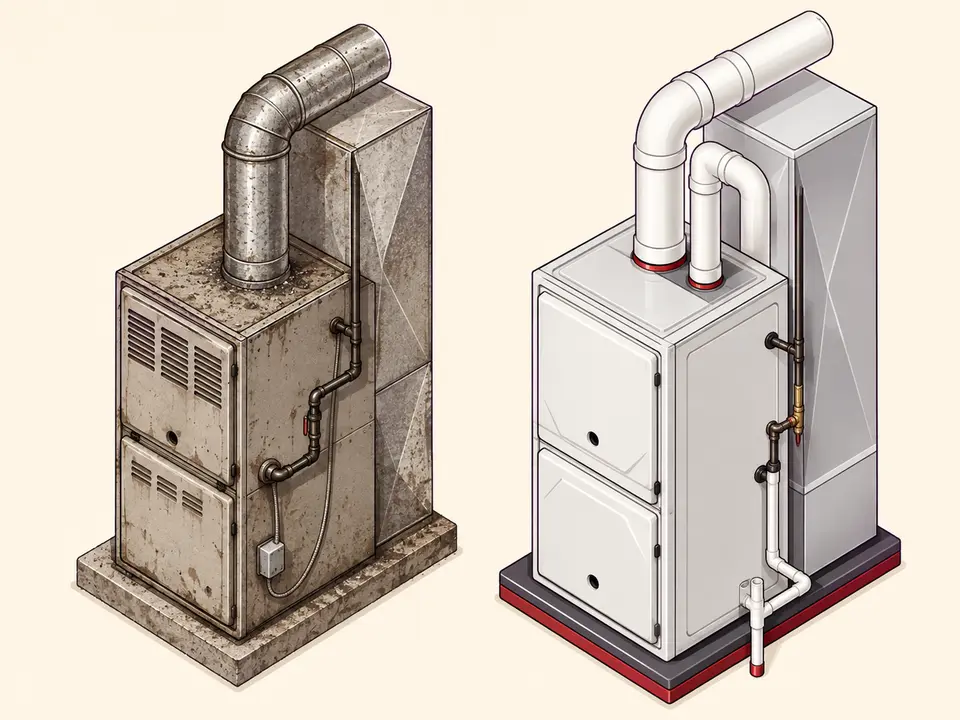
What Furnace Replacement Service Includes
A replacement is more than removing one cabinet and connecting another.
Professional furnace replacement services coordinate diagnosis, sizing, equipment selection, old furnace removal, duct transitions, fuel or electrical work, venting, drainage, controls, permits, safety testing, and owner handover.
From Old-Furnace Evaluation to Documented Startup
Furnace Replacement Cost
The furnace cabinet price is only one part of a safe, complete replacement.
A standard new furnace commonly costs about $3,500 to $7,500+ installed. High-efficiency equipment with complex venting, condensate, duct, electrical, gas, access, permit, or control work can reach about $11,500 or more. California labor, code, access, climate, and equipment availability affect the final furnace replacement price.
What Changes the Cost to Replace a Furnace?
- Heating load and BTU output Capacity should fit the home, not simply copy the old furnace.
- Fuel and AFUE Gas, electric, oil, propane, standard, or high efficiency.
- Venting and condensate Metal vent, liner, PVC intake and exhaust, drain, or pump.
- Duct transitions Return, filter rack, coil, plenum, supply, and sealing changes.
- Gas or electrical work Shutoff, piping, panel, breaker, conductors, and disconnect.
- Access and removal Closet, attic, crawlspace, roof, stairs, finished surfaces, and disposal.
- Permits and controls Inspection, thermostat, zoning, accessories, and commissioning.
- Combined HVAC replacement Furnace and AC pairing, indoor coil, blower, and shared labor.
A furnace replacement cost calculator can provide a rough budget. Only a site assessment can define the final scope, equipment match, and written price.
How Furnace Replacement Works
Evaluate the old system, design the replacement, then verify every operating condition.
- 01
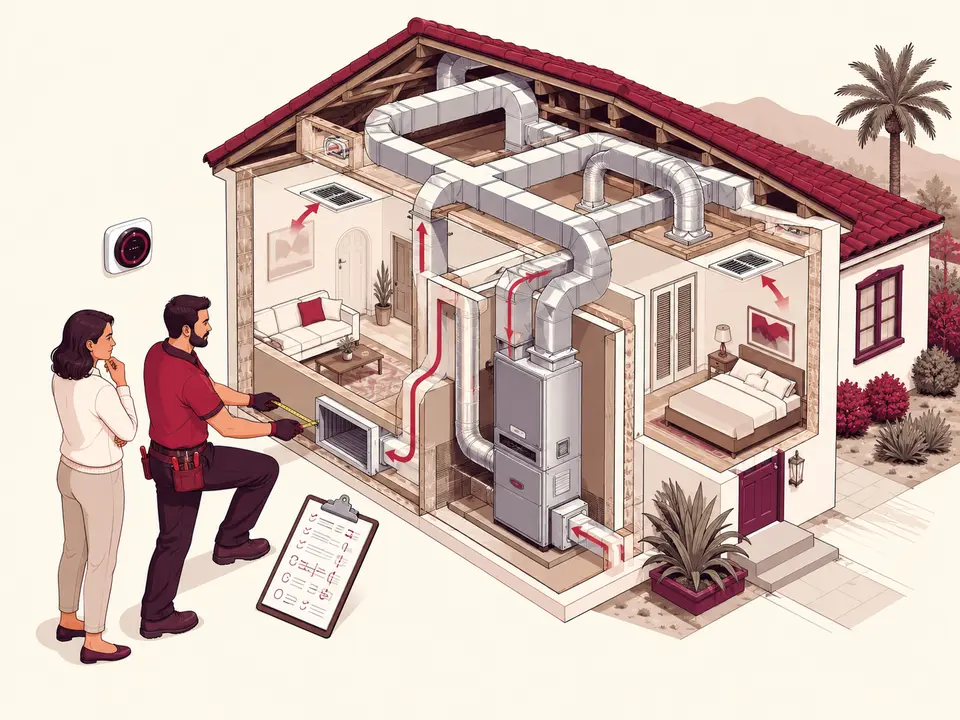
Evaluate and design
We review safety, repair history, heating load, fuel, electrical service, ducts, venting, access, controls, and replacement alternatives.
You get options and a written replacement estimate - 02
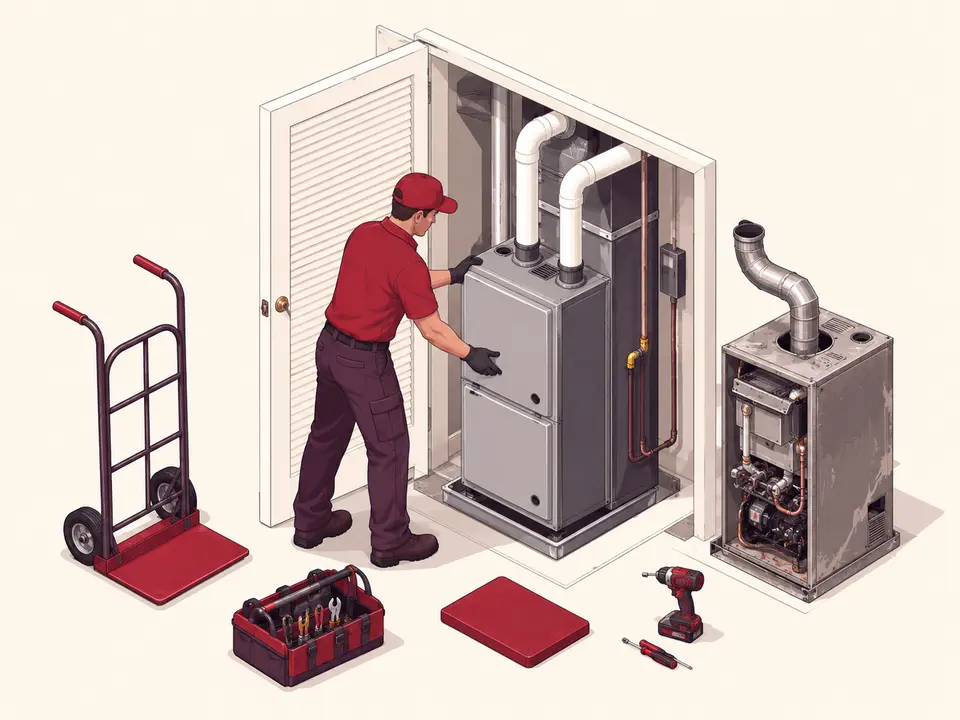
Remove and replace
We protect the work area, isolate utilities, remove the old unit, install the furnace, seal transitions, and complete vent, drain, utility, and control work.
You get the complete approved installation scope - 03
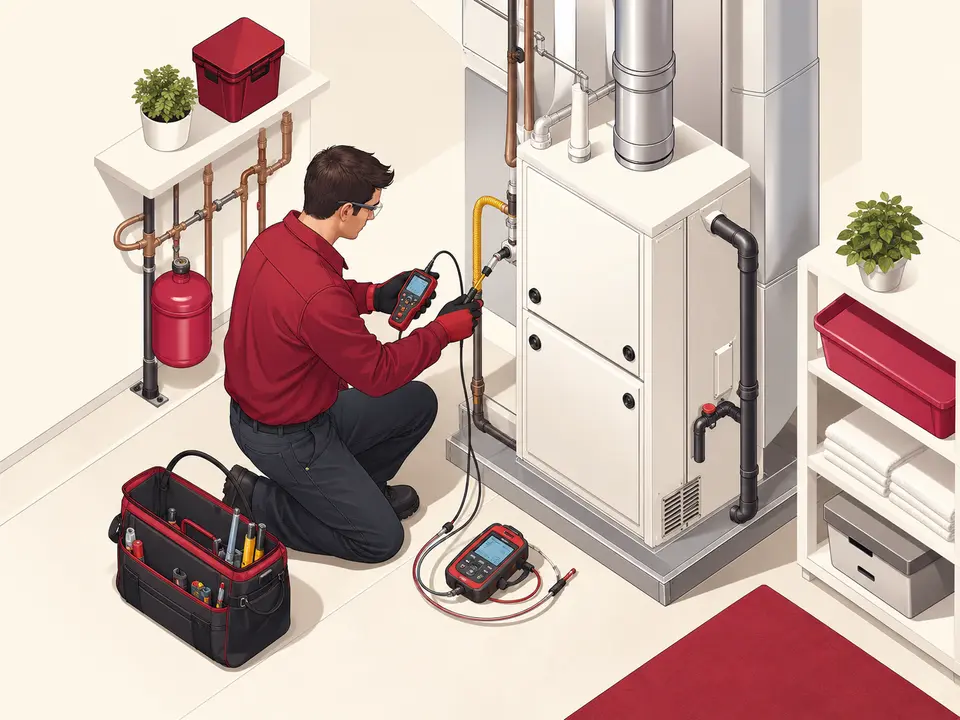
Commission and explain
We verify combustion, CO, gas pressure, temperature rise, airflow, static pressure, controls, drains, and safety shutdowns.
You get documented startup and owner guidance
Furnace Replacement Options for California Homes
The best replacement depends on fuel, ducts, electrical capacity, climate, efficiency, cooling, and ownership plans.
Like-for-like gas furnace
Retains compatible fuel and duct infrastructure while correcting sizing, venting, transitions, controls, and startup.
Replacement optionHigh-efficiency gas furnace
Higher AFUE can reduce fuel waste but may require PVC venting, combustion-air changes, and condensate drainage.
Replacement optionElectric furnace replacement
Requires verification of panel, breaker, conductors, heat-kit capacity, airflow, and local operating cost.
Replacement optionOil or propane furnace
Fuel storage, burner setup, venting, combustion testing, access, and local fuel availability shape the project.
Replacement optionFurnace and AC replacement
Coordinating the furnace, indoor coil, outdoor equipment, blower, controls, and efficiency ratings can avoid duplicated work.
Replacement optionFurnace-to-heat-pump conversion
Electrical capacity, ducts, climate, rates, backup heat, equipment location, and incentive availability must be evaluated.
Replacement optionShould You Repair or Replace Your Furnace?
A fair decision compares the repair with the expected remaining service—not age alone.
Repair may make sense when the furnace is younger, the heat exchanger and venting are sound, the fault is contained, parts are available, comfort is acceptable, and the repair buys meaningful service life. Replacement becomes stronger when safety is compromised, failures repeat, repair cost is high, parts are obsolete, operating cost keeps rising, or the system no longer heats the home evenly.
When to Start Planning a Replacement Furnace
Begin researching before an emergency when the furnace approaches 15 years, repair calls increase, a major component is failing, parts become difficult to source, or a paired AC system is also nearing replacement. Planning creates time to compare a gas furnace, electric furnace, high-efficiency model, full HVAC replacement, or furnace-to-heat-pump conversion.
What Professional Furnace Replacement Should Deliver
The new furnace should solve the replacement problem without creating new airflow, venting, or safety problems.
Independent sizing. The replacement output is checked against the building load.
Compatible system match. Furnace, blower, indoor coil, thermostat, and ducts work together.
Complete utility path. Fuel, electrical, venting, combustion air, and condensate are correct.
Measured commissioning. Combustion, CO, temperature rise, airflow, static pressure, and controls are verified.
Useful documentation. Model, settings, readings, filter, maintenance, and warranties are reviewed.
Complete replacement
Why Choose All HVAC California for Furnace Replacement?
A reliable furnace replacement company should explain why replacement is needed, what is included, and how performance was proven.
- Evidence-based recommendation Safety, age, repair history, comfort, and cost reviewed.
- Load-based sizing Capacity selected for the actual home.
- Multiple replacement paths Gas, electric, high efficiency, paired AC, and heat pump compared.
- Complete written estimate Removal, equipment, ducts, venting, utilities, controls, and permits listed.
- Old-equipment removal Utilities isolated and the removal route protected.
- Safety commissioning Combustion, carbon monoxide, and shutdown controls tested.
- Airflow setup Temperature rise, blower, static pressure, and filter access checked.
- Documented handover Equipment, readings, operation, maintenance, and next steps reviewed.
Local Furnace Replacement Across California
Climate, fuel availability, electricity rates, permitting, access, and building type change the right replacement.
Homeowners searching for furnace replacement near me, heating system replacement near me, or a local furnace replacement company need more than a nearby truck. The contractor must evaluate the building load, existing system, ducts, fuel or electrical path, venting, permits, safety, and equipment match.
- Single-family homes Central gas, electric, propane, or heat-pump options.
- Condos and townhomes Closet access, vent paths, shared walls, and association rules.
- Mobile and manufactured homes Listed equipment and approved downflow configurations.
- Attics and crawlspaces Horizontal orientation, platforms, drains, pans, and service access.
- Garages and workshops Clearances, combustion, impact protection, and controls.
- Light commercial buildings Access, downtime, schedules, controls, and operating requirements.
Related Services for the Complete HVAC System
Furnace replacement may connect with installation, repair, maintenance, AC, ducts, controls, and indoor air quality.
Our Furnace Replacement Commitments
No invented warranty claims—just clear, verifiable work standards.
Safety, condition, repair history, comfort, and cost reviewed.
Equipment, removal, ducts, venting, utilities, drain, controls, and permits listed.
Combustion, CO, temperature rise, airflow, static pressure, and safeties checked.
Settings, filter, operation, maintenance, documentation, and next steps reviewed.
Residential and Commercial Furnace Replacement
The replacement plan changes with the building, access, orientation, fuel, ducts, and operating schedule.
Furnace Replacement From Decision to Startup
What Better Furnace Replacement Feels Like
These are service standards—not fictional testimonials.
The technician explains why replacement is recommended and what evidence supports the decision.
The estimate separates equipment, removal, ducts, venting, gas or electrical work, drainage, controls, permits, and startup.
The new furnace is operated, measured, and safety-tested before the system is handed over.
Service Options, Costs, and Questions We Address
Use this service index to identify the installation, repair, cost, equipment, or local-support topic that matches your project.
Ready for a Furnace Replacement Estimate?
Start with the old system, the heating load, and the complete replacement scope.
Request professional furnace replacement for gas, electric, propane, oil, mobile-home, high-efficiency, or combined furnace-and-AC equipment. We will compare repair, replacement, and heat-pump conversion before the project is defined.
Furnace Replacement Questions Answered
A standard furnace replacement commonly plans around $3,500 to $7,500+ installed. High-efficiency or complex work can reach about $11,500 or more. Fuel type, capacity, AFUE, access, venting, ducts, electrical or gas work, permits, and combined AC work determine the actual furnace replacement cost.
A well-maintained residential furnace commonly lasts about 15 to 20 years. Installation quality, maintenance, filter changes, climate, run time, airflow, corrosion, and repair history affect furnace life expectancy. Age alone does not prove that replacement is required.
A straightforward, like-for-like furnace replacement may finish in one working day. Difficult access, new venting, condensate routing, duct corrections, gas or electrical upgrades, permits, paired AC work, or a fuel conversion can extend the schedule.
Compare safety, age, repair frequency, repair cost, parts availability, efficiency, comfort, and expected remaining life. A younger furnace with a contained repair may be worth fixing. An older system with a major safety or reliability problem may justify replacement.
Not always. Replacing both may make sense when the systems are similarly aged, the indoor coil and blower must be matched, refrigerant or efficiency compatibility is limited, or shared labor would otherwise be repeated. Each system should be evaluated separately.
Often, but the decision requires a heating-load calculation, electrical-capacity review, duct and airflow check, California climate-zone analysis, utility-rate comparison, backup-heat plan, and equipment-location review. A heat pump also provides cooling.
Homeowners insurance usually does not cover normal wear, age, neglected maintenance, or gradual mechanical failure. Coverage may differ when damage results from a covered sudden event. Review the policy and claim decision with the insurer before assuming coverage.
Coverage depends on the contract, maintenance requirements, exclusions, service limits, diagnosis, and whether repair is possible. A home warranty may contribute to repair or replacement, but it should not be presented as guaranteed furnace replacement coverage.
Utility, manufacturer, local, and contractor programs can change. Eligibility may depend on fuel, efficiency, equipment certificate, installation date, income, location, and documentation. Financing also depends on approval and plan terms. Confirm every offer in writing before purchase.
The federal Energy Efficient Home Improvement Credit under Section 25C is not allowed for property placed in service after December 31, 2025. Do not advertise a 2026 furnace replacement as qualifying under that expired provision. Check current California, utility, manufacturer, and local programs.
Furnace Replacement That Restores Safe, Reliable Heat
Replace the failing furnace—not the problems that made the old system uncomfortable.
Our furnace replacement service covers the decision, load-based sizing, equipment comparison, old furnace removal, duct and vent scope, complete installation, and documented safety startup. We compare gas, electric, oil, propane, high-efficiency, furnace-and-AC, and heat-pump options for California homes.
- Repair-or-replace evaluationSafety, age, repair history, comfort, and cost compared
- Load-based replacement sizingBTU output selected for the building—not the old nameplate alone
- Complete commissioningCombustion, CO, airflow, temperature rise, and controls verified
Signs You May Need a New Furnace
Age matters, but safety, repair history, comfort, efficiency, and parts availability matter more.
A furnace near 15 to 20 years old deserves a replacement plan, not an automatic sales pitch. Some older systems remain serviceable. Others become unsafe, unreliable, or expensive sooner.
We document the problem before recommending new furnace replacement. Duct restrictions, weak return airflow, thermostat faults, insulation, and building leakage should not be blamed on the furnace without testing.
For an emergency furnace replacement, unsafe equipment should remain off until the hazard is corrected and the complete replacement scope is ready.
What Furnace Replacement Service Includes
A replacement is more than removing one cabinet and connecting another.
Professional furnace replacement services coordinate diagnosis, sizing, equipment selection, old furnace removal, duct transitions, fuel or electrical work, venting, drainage, controls, permits, safety testing, and owner handover.
From Old-Furnace Evaluation to Documented Startup
Furnace Replacement Cost
The furnace cabinet price is only one part of a safe, complete replacement.
A standard new furnace commonly costs about $3,500 to $7,500+ installed. High-efficiency equipment with complex venting, condensate, duct, electrical, gas, access, permit, or control work can reach about $11,500 or more. California labor, code, access, climate, and equipment availability affect the final furnace replacement price.
What Changes the Cost to Replace a Furnace?
- Heating load and BTU output Capacity should fit the home, not simply copy the old furnace.
- Fuel and AFUE Gas, electric, oil, propane, standard, or high efficiency.
- Venting and condensate Metal vent, liner, PVC intake and exhaust, drain, or pump.
- Duct transitions Return, filter rack, coil, plenum, supply, and sealing changes.
- Gas or electrical work Shutoff, piping, panel, breaker, conductors, and disconnect.
- Access and removal Closet, attic, crawlspace, roof, stairs, finished surfaces, and disposal.
- Permits and controls Inspection, thermostat, zoning, accessories, and commissioning.
- Combined HVAC replacement Furnace and AC pairing, indoor coil, blower, and shared labor.
A furnace replacement cost calculator can provide a rough budget. Only a site assessment can define the final scope, equipment match, and written price.
How Furnace Replacement Works
Evaluate the old system, design the replacement, then verify every operating condition.
- 01
Evaluate and design
We review safety, repair history, heating load, fuel, electrical service, ducts, venting, access, controls, and replacement alternatives.
You get options and a written replacement estimate - 02
Remove and replace
We protect the work area, isolate utilities, remove the old unit, install the furnace, seal transitions, and complete vent, drain, utility, and control work.
You get the complete approved installation scope - 03
Commission and explain
We verify combustion, CO, gas pressure, temperature rise, airflow, static pressure, controls, drains, and safety shutdowns.
You get documented startup and owner guidance
Furnace Replacement Options for California Homes
The best replacement depends on fuel, ducts, electrical capacity, climate, efficiency, cooling, and ownership plans.
Like-for-like gas furnace
Retains compatible fuel and duct infrastructure while correcting sizing, venting, transitions, controls, and startup.
Replacement optionHigh-efficiency gas furnace
Higher AFUE can reduce fuel waste but may require PVC venting, combustion-air changes, and condensate drainage.
Replacement optionElectric furnace replacement
Requires verification of panel, breaker, conductors, heat-kit capacity, airflow, and local operating cost.
Replacement optionOil or propane furnace
Fuel storage, burner setup, venting, combustion testing, access, and local fuel availability shape the project.
Replacement optionFurnace and AC replacement
Coordinating the furnace, indoor coil, outdoor equipment, blower, controls, and efficiency ratings can avoid duplicated work.
Replacement optionFurnace-to-heat-pump conversion
Electrical capacity, ducts, climate, rates, backup heat, equipment location, and incentive availability must be evaluated.
Replacement optionShould You Repair or Replace Your Furnace?
A fair decision compares the repair with the expected remaining service—not age alone.
Repair may make sense when the furnace is younger, the heat exchanger and venting are sound, the fault is contained, parts are available, comfort is acceptable, and the repair buys meaningful service life. Replacement becomes stronger when safety is compromised, failures repeat, repair cost is high, parts are obsolete, operating cost keeps rising, or the system no longer heats the home evenly.
When to Start Planning a Replacement Furnace
Begin researching before an emergency when the furnace approaches 15 years, repair calls increase, a major component is failing, parts become difficult to source, or a paired AC system is also nearing replacement. Planning creates time to compare a gas furnace, electric furnace, high-efficiency model, full HVAC replacement, or furnace-to-heat-pump conversion.
What Professional Furnace Replacement Should Deliver
The new furnace should solve the replacement problem without creating new airflow, venting, or safety problems.
Independent sizing. The replacement output is checked against the building load.
Compatible system match. Furnace, blower, indoor coil, thermostat, and ducts work together.
Complete utility path. Fuel, electrical, venting, combustion air, and condensate are correct.
Measured commissioning. Combustion, CO, temperature rise, airflow, static pressure, and controls are verified.
Useful documentation. Model, settings, readings, filter, maintenance, and warranties are reviewed.
Complete replacement
Why Choose All HVAC California for Furnace Replacement?
A reliable furnace replacement company should explain why replacement is needed, what is included, and how performance was proven.
- Evidence-based recommendation Safety, age, repair history, comfort, and cost reviewed.
- Load-based sizing Capacity selected for the actual home.
- Multiple replacement paths Gas, electric, high efficiency, paired AC, and heat pump compared.
- Complete written estimate Removal, equipment, ducts, venting, utilities, controls, and permits listed.
- Old-equipment removal Utilities isolated and the removal route protected.
- Safety commissioning Combustion, carbon monoxide, and shutdown controls tested.
- Airflow setup Temperature rise, blower, static pressure, and filter access checked.
- Documented handover Equipment, readings, operation, maintenance, and next steps reviewed.
Local Furnace Replacement Across California
Climate, fuel availability, electricity rates, permitting, access, and building type change the right replacement.
Homeowners searching for furnace replacement near me, heating system replacement near me, or a local furnace replacement company need more than a nearby truck. The contractor must evaluate the building load, existing system, ducts, fuel or electrical path, venting, permits, safety, and equipment match.
- Single-family homes Central gas, electric, propane, or heat-pump options.
- Condos and townhomes Closet access, vent paths, shared walls, and association rules.
- Mobile and manufactured homes Listed equipment and approved downflow configurations.
- Attics and crawlspaces Horizontal orientation, platforms, drains, pans, and service access.
- Garages and workshops Clearances, combustion, impact protection, and controls.
- Light commercial buildings Access, downtime, schedules, controls, and operating requirements.
Related Services for the Complete HVAC System
Furnace replacement may connect with installation, repair, maintenance, AC, ducts, controls, and indoor air quality.
Our Furnace Replacement Commitments
No invented warranty claims—just clear, verifiable work standards.
Safety, condition, repair history, comfort, and cost reviewed.
Equipment, removal, ducts, venting, utilities, drain, controls, and permits listed.
Combustion, CO, temperature rise, airflow, static pressure, and safeties checked.
Settings, filter, operation, maintenance, documentation, and next steps reviewed.
Residential and Commercial Furnace Replacement
The replacement plan changes with the building, access, orientation, fuel, ducts, and operating schedule.
Furnace Replacement From Decision to Startup
What Better Furnace Replacement Feels Like
These are service standards—not fictional testimonials.
The technician explains why replacement is recommended and what evidence supports the decision.
The estimate separates equipment, removal, ducts, venting, gas or electrical work, drainage, controls, permits, and startup.
The new furnace is operated, measured, and safety-tested before the system is handed over.
Ready for a Furnace Replacement Estimate?
Start with the old system, the heating load, and the complete replacement scope.
Request professional furnace replacement for gas, electric, propane, oil, mobile-home, high-efficiency, or combined furnace-and-AC equipment. We will compare repair, replacement, and heat-pump conversion before the project is defined.
Furnace Replacement Questions Answered
A standard furnace replacement commonly plans around $3,500 to $7,500+ installed. High-efficiency or complex work can reach about $11,500 or more. Fuel type, capacity, AFUE, access, venting, ducts, electrical or gas work, permits, and combined AC work determine the actual furnace replacement cost.
A well-maintained residential furnace commonly lasts about 15 to 20 years. Installation quality, maintenance, filter changes, climate, run time, airflow, corrosion, and repair history affect furnace life expectancy. Age alone does not prove that replacement is required.
A straightforward, like-for-like furnace replacement may finish in one working day. Difficult access, new venting, condensate routing, duct corrections, gas or electrical upgrades, permits, paired AC work, or a fuel conversion can extend the schedule.
Compare safety, age, repair frequency, repair cost, parts availability, efficiency, comfort, and expected remaining life. A younger furnace with a contained repair may be worth fixing. An older system with a major safety or reliability problem may justify replacement.
Not always. Replacing both may make sense when the systems are similarly aged, the indoor coil and blower must be matched, refrigerant or efficiency compatibility is limited, or shared labor would otherwise be repeated. Each system should be evaluated separately.
Often, but the decision requires a heating-load calculation, electrical-capacity review, duct and airflow check, California climate-zone analysis, utility-rate comparison, backup-heat plan, and equipment-location review. A heat pump also provides cooling.
Homeowners insurance usually does not cover normal wear, age, neglected maintenance, or gradual mechanical failure. Coverage may differ when damage results from a covered sudden event. Review the policy and claim decision with the insurer before assuming coverage.
Coverage depends on the contract, maintenance requirements, exclusions, service limits, diagnosis, and whether repair is possible. A home warranty may contribute to repair or replacement, but it should not be presented as guaranteed furnace replacement coverage.
Utility, manufacturer, local, and contractor programs can change. Eligibility may depend on fuel, efficiency, equipment certificate, installation date, income, location, and documentation. Financing also depends on approval and plan terms. Confirm every offer in writing before purchase.
The federal Energy Efficient Home Improvement Credit under Section 25C is not allowed for property placed in service after December 31, 2025. Do not advertise a 2026 furnace replacement as qualifying under that expired provision. Check current California, utility, manufacturer, and local programs.