Licensed HVAC contractorServing California homes and businesses
24/7 Help: 559-651-1776
Air Quality / UV light installationAssess the system / Contain the UV-C
California HVAC UV light installation, replacement, repair, bulb service, ballast testing, and preventive maintenance

HVAC UV Light Installation for Cleaner Coils and Air Systems

A correctly placed UV-C light can treat exposed HVAC surfaces or moving air. We match the lamp to the equipment, contain exposure, and verify safe operation.
System-specific placementContained UV-C exposureVerified electrical safety
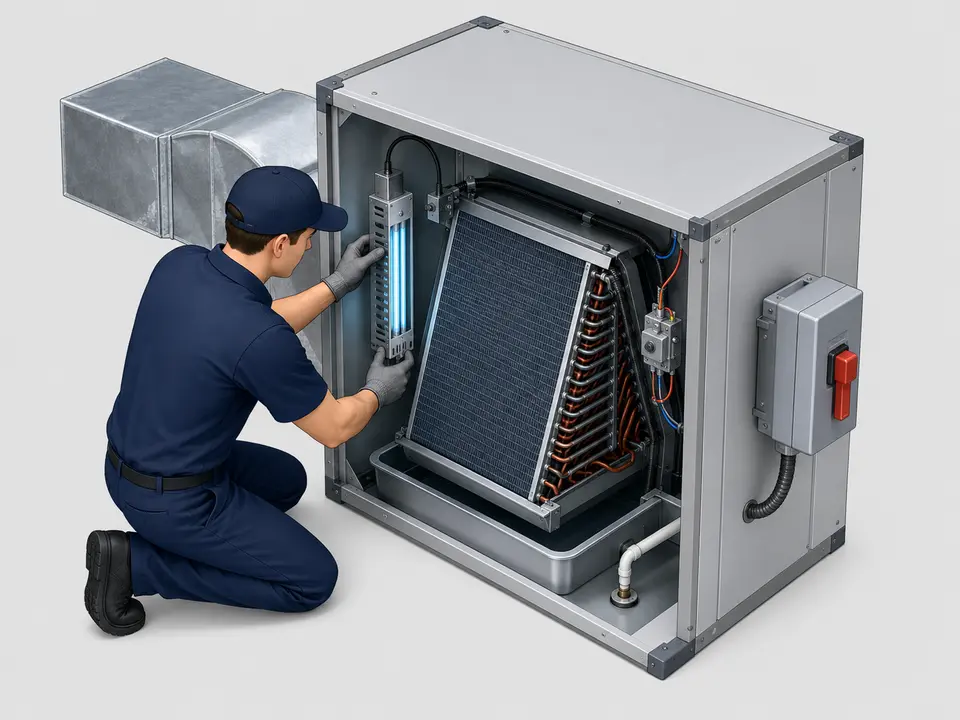
Technician installing a UV-C light near an HVAC evaporator coil in a California home
UV-C equipment planned around the coil, cabinet, airflow, controls, and service access
01HVAC cabinet and air path inspected
02UV application and lamp selected
03Shielding, power, and access installed
04Interlock and operation verified
UV-C fundamentals06 connected factors

How an HVAC UV Light Works

UV-C energy acts only where enough light reaches a target for enough time. Placement, lamp output, airflow, and maintenance control performance.

UV treatment map06 reviewed
01ApplicationCoil-surface treatment and air-stream treatment solve different problems.
02IrradianceLamp type, age, temperature, distance, and reflectivity affect delivered UV-C energy.
03Exposure timeA stationary coil receives longer exposure than fast-moving air.
04Line of sightShadows, dust, insulation, and cabinet geometry can block treatment.
05ContainmentCabinets, access panels, warnings, and interlocks prevent unintended exposure.
06MaintenanceLamp cleaning and scheduled replacement protect output over time.

UV-C Supports a Complete Indoor Air Strategy

UV-C does not capture dust, pollen, smoke, or gases. EPA guidance treats UVGI as a supplement to filtration, not a replacement. Source control, ventilation, moisture control, and compatible filtration may still be needed.

Service scope08 UV light services

Complete HVAC UV Light Services

We install, replace, repair, and maintain UV equipment for residential and commercial HVAC systems.
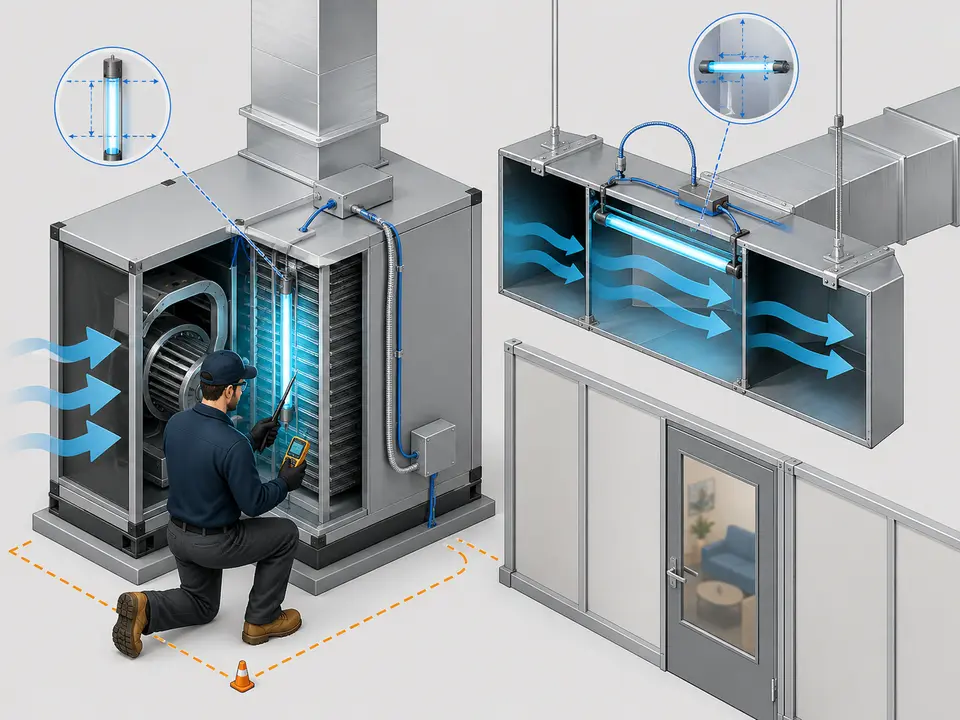
Technician assessing safe UV-C lamp placement inside an air handler and duct system
UV service schedule08 included
01HVAC UV light installationCabinet, coil, duct, power, control, and access reviewed before mounting
02Coil-surface UV treatmentLamp positioned to illuminate exposed coil and drain-pan surfaces
03In-duct air treatmentAirflow, dose, lamp banks, reflectivity, and dwell time considered
04Furnace and air-handler UVHeat, cabinet materials, filter location, wiring, and service panels checked
05Heat pump and mini-split UVCompact equipment, condensate areas, controls, and approved accessories reviewed
06Bulb and lamp replacementCorrect lamp, output, socket, disposal, date, and replacement schedule confirmed
07Ballast and control repairPower supply, transformer, wiring, relay, indicator, and interlock diagnosed
08UV system maintenanceLamp cleaned, cabinet inspected, output status checked, and service recorded
Project pricing07 cost drivers

What Affects HVAC UV Light Installation Cost?

A useful estimate separates equipment, electrical work, cabinet modifications, controls, access, and maintenance.

01

Application and output

Coil treatment, air-stream treatment, lamp count, size, and rated output affect equipment cost.

02

Cabinet and duct access

Panel construction, clearances, insulation, mounting space, and service access change labor.

03

Electrical scope

Voltage, transformer, outlet, disconnect, wiring, control, interlock, and code needs affect price.

04

System configuration

Furnaces, heat pumps, mini-splits, central air, and commercial systems need different hardware.

05

Safety components

Shielding, viewing ports, warnings, switches, and access interlocks add protection and cost.

06

Existing conditions

Coil cleanliness, biological growth, drainage, damaged insulation, and cabinet leaks may need correction.

The cheapest lamp is not always the lowest-cost system. Compare output, safety, lamp life, replacement cost, warranty, and service access.

Installation process03 clear stages

From HVAC Assessment to Verified UV Operation

01

Inspect and define

We inspect equipment, coil, drain pan, airflow, cabinet materials, power, access, and treatment goals.

02

Select and install

We choose compatible equipment, mount it securely, protect materials, wire controls, and contain exposure.

03

Test and document

We test power, indicators, interlocks, access panels, lamp operation, and the maintenance schedule.

System optionsSurface / air stream

Coil UV and In-Duct UV Serve Different Goals

A proper recommendation begins with the target, not a product name.
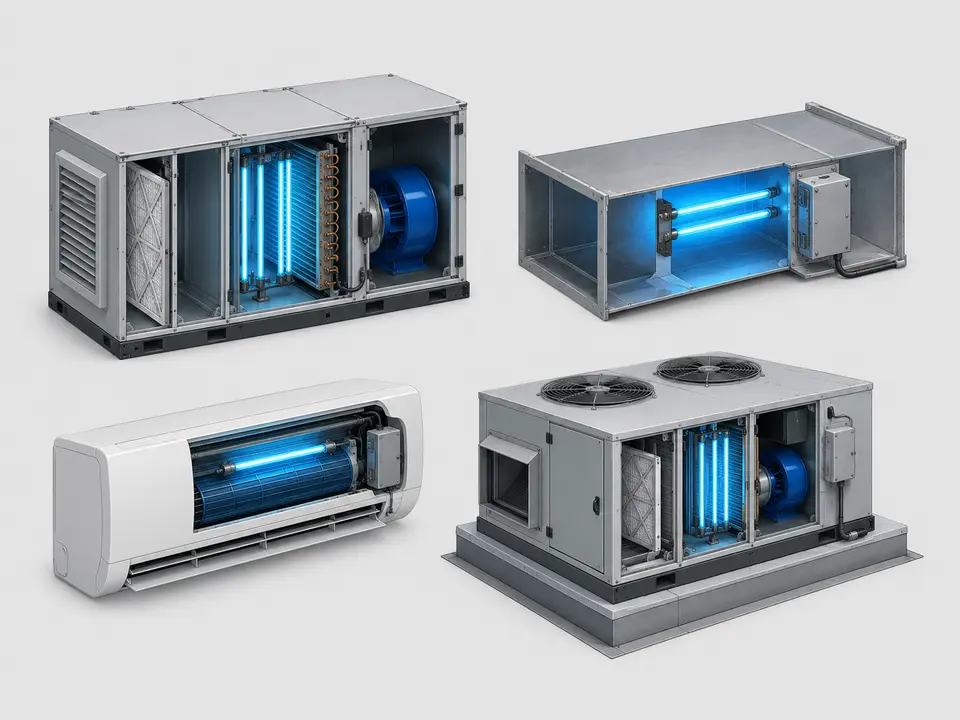
Comparison of coil-surface, in-duct, mini-split, and commercial HVAC UV systems
Coil surface

Continuous surface exposure

  • Target Exposed evaporator-coil and drain-pan surfaces
  • Strength Long exposure while the lamp operates
  • Limit Shadows and blocked surfaces receive little energy
  • Planning Coil geometry, moisture, temperature, and material compatibility
Air stream

Moving-air treatment

  • Target Air passing through a designed irradiation zone
  • Strength Can treat the active air path
  • Limit Fast airflow reduces exposure time
  • Planning Irradiance, dwell time, duct size, reflectivity, and lamp banks
Placement and dose08 design checks

Where to Install a UV Light in an HVAC System

There is no universal mounting spot. The lamp must reach the intended target without damaging nearby materials or exposing people.

Placement checklist08 reviewed
01Target visibilityLamp has direct line of sight to the intended coil, pan, or air path.
02Lamp distanceMounting distance follows the selected equipment design and output.
03Air temperatureLamp output and ballast ratings match operating temperatures.
04Material exposureWiring, filters, insulation, plastics, and seals receive UV compatibility review.
05Service accessTechnicians can isolate power, remove lamps, and clean safely.
06Panel leakageCabinet openings and viewing points do not leak UV-C into occupied areas.
07Condensate systemDrain pan, trap, line, and water management remain serviceable.
08Airflow and pressureInstallation avoids unnecessary restriction, leakage, and cabinet damage.
Safety and compliance06 protections

UV-C Safety, Ozone, and California Requirements

Direct UV-C exposure can injure eyes and skin. A permanent HVAC installation must keep energy inside the equipment.

01

Power isolation

A disconnect and safe service procedure protect anyone opening the equipment.

02

Access interlock

A correctly applied switch can stop the lamp when a protected panel opens.

03

Contained viewing

Do not look directly at an operating UV-C lamp. Use approved indicators only.

04

Material protection

Shield UV-sensitive wire insulation, plastics, filters, sealants, and drain parts.

05

Ozone review

Avoid intentional ozone generators. Confirm the exact device and certification status.

06

California certification

Electronic in-duct air cleaners sold in California must meet applicable CARB requirements.

Lamp life and serviceClean / test / replace

HVAC UV Bulb Replacement and Maintenance

A lamp can still glow after useful UV-C output has declined. Follow the exact replacement interval.
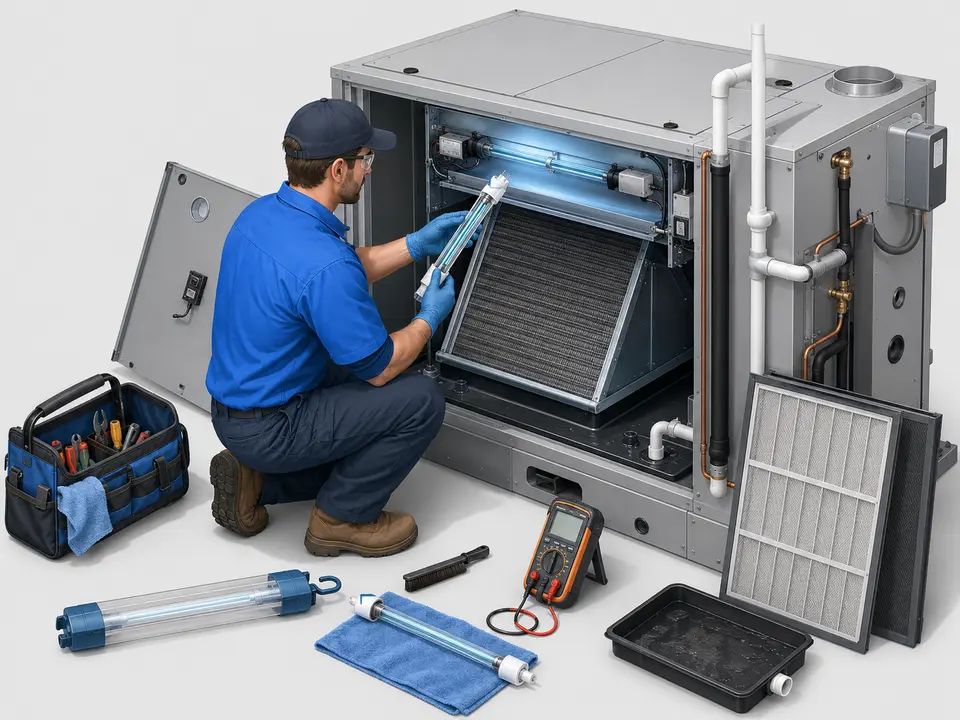
Technician replacing an HVAC UV bulb and testing the ballast and safety interlock

Maintenance includes

  • Power-down Disconnect and interlock verified before access
  • Lamp cleaning Dust and film removed with approved methods
  • Bulb replacement Correct lamp, socket, output, and schedule confirmed
  • Electrical testing Ballast, transformer, wiring, indicator, and control checked

Service may be needed when

  • Indicator is off Lamp, ballast, power, switch, or wiring may have failed
  • Lamp flickers Aging lamp, poor connection, or ballast needs diagnosis
  • Coil growth returns Placement, output, shadows, cleanliness, or moisture needs review
  • Parts degrade UV-sensitive insulation, plastic, or seal materials need protection
Clear expectationsCan / cannot

What HVAC UV Light Can and Cannot Do

Can support
  • Continuous treatment of exposed wet coil surfaces
  • Conditioning of a properly designed HVAC air path
  • Cleaner coil surfaces when placement and upkeep are correct
  • A broader plan using filters, ventilation, moisture control, and cleaning
Cannot replace
  • Particle filtration for dust, smoke, pollen, and pet dander
  • Source removal for water damage or active mold growth
  • Ventilation for indoor pollutants and stale air
  • Cleaning, drain maintenance, repairs, or humidity control

Typical residential UVGI has limits. Results depend on delivered dose, exposure time, airflow, surface condition, and maintenance. No UV product should be presented as a guaranteed health outcome.

Product compatibility12 familiar names

HVAC UV and Air-Treatment Product Compatibility

We review exact model requirements. Brand references describe compatibility research, not manufacturer affiliation.

Examples customers ask aboutVerify exact model
01REME HALO and RGFAir-treatment devices may combine UV with other technologies. Exact certification matters.
02iWave and Aerus Air ScrubberIonization or active-treatment products are not the same as a basic UV-C lamp.
03Honeywell and Fresh-Aire UVLamp, ballast, transformer, cabinet, wiring, and replacement parts receive review.
04Blue-Tube, APCO-X, and Field ControlsApplication, output, filters, catalysts, ozone status, and service needs can differ.
05Carrier, Lennox, Trane, and BryantOEM accessories and third-party options must fit cabinet and electrical requirements.
06Rheem and other HVAC systemsEquipment model, material exposure, controls, access, and warranty receive consideration.
Why All HVAC California08 planning standards

Professional HVAC UV Light Installation

  • Target-first design Coil, pan, air stream, or equipment goal defines the recommendation.
  • System-specific placement Cabinet, coil, airflow, materials, power, and access receive inspection.
  • Safety built in Shielding, panels, disconnects, indicators, and interlocks receive attention.
  • Clear written scope Equipment, wiring, modifications, testing, and exclusions stay separated.
  • Honest performance limits We do not present UV-C as a substitute for filters or repairs.
  • California product review Applicable CARB certification and ozone status receive verification.
  • Service access Bulbs, ballasts, controls, panels, and indicators remain reachable.
  • Verified handover Operation, containment, controls, and maintenance needs receive checks.
Property applications06 settings

Residential and Commercial HVAC UV Systems

Application schedule06 listed
01Central air systemsCoil, drain pan, supply plenum, return, filter, and service access reviewed
02Gas furnacesHeat, cabinet layout, coil position, controls, wiring, and materials checked
03Heat pump air handlersYear-round coil conditions, airflow, auxiliary heat, and condensate considered
04Ductless mini-splitsCompact approved accessories, coil access, condensate, wiring, and service space reviewed
05Commercial air handlersLarge coils, lamp banks, airflow, controls, interlocks, records, and access coordinated
06Rooftop HVAC unitsWeather, cabinet sections, vibration, power, controls, and maintenance access planned
UV installation visualsAssess / select / install / maintain

HVAC UV Service From Placement to Maintenance

Service experienceNo invented reviews / clear standards

What Better UV Light Installation Feels Like

These are service standards, not fictional testimonials.

01

The recommendation connects the treatment goal with the coil, airflow, cabinet, lamp output, and service needs.

01A plan you can understandTarget and equipment matched
02

Equipment, wiring, cabinet work, controls, safety components, testing, and exclusions remain clear.

02A quote you can compareComplete installation scope
03

The finished system receives lamp, electrical, indicator, panel, interlock, and containment checks.

03A verified systemSafe operating results
Service topics80 searches addressed

Service Options, Costs, and Questions We Address

Use this service index to identify the installation, repair, cost, equipment, or local-support topic that matches your project.

01iwave air purifier
02aerus air scrubber
03hvac uv light
04hvac uv light installation
05ac uv light
06reme halo uv light
07uv light for furnace
08uv light for hvac system
09hvac uv air purifier
10uv light for air conditioner
11uv light installation
12uv light for air handler
13reme halo installation
14air handler uv light
15furnace uv light
16air conditioner uv light
17rgf reme halo
18air scrubber uv light
19honeywell uv light
20how much to install uv light in hvac
21where to install uv light in hvac
22uv light for mini split
23hvac uv light installation cost
24ac uv light cost
25uv light for ductwork
26best uv light for hvac
27fresh aire uv
28whole house uv light
29hvac uv light installation near me
30uv light installation near me
31best hvac uv light
32cost to install uv light in hvac
33does uv light kill mold in hvac
34carrier uv light
35commercial hvac uv light
36uv air purifier repair
37are hvac uv lights worth it
38whole house uv air purifier
39honeywell uv air purifier
40uv light for ac cost
41uv air purifier for mold
42uv light installation cost
43hvac uv bulb
44uv germicidal lamp for hvac
45uv air purifier replacement
46do hvac uv lights work
47air handler uv light installation
48duct uv light
49hvac coil uv light
50lennox uv light
51uv air purifier installation
52uv air treatment system
53hvac uv light cost
54uv light for heat pump
55ac uv light installation
56hvac uv light bulb replacement
57upper room uvgi
58uv light for evaporator coil
59rheem uv light
60best uv light for furnace
61blue tube uv
62evaporator coil uv light
63uv light for hvac mold
64in duct uv light
65uv light for furnace cost
66bryant uv light
67hvac uv bulb replacement
68hvac uv light replacement
69honeywell uv light bulb replacement
70central air uv light
71ac coil uv light
72reme halo uv light installation
73fresh aire blue tube uv
74field controls uv light
75uv light for ac mold
76furnace uv light installation
77trane uv light
78uv light ballast replacement
79where to install uv light in air handler
80honeywell hvac uv light
Start with the HVAC system, treatment target, and safe placement

Ready to Plan HVAC UV Light Installation?

Share your city, equipment type, model, coil location, air-quality goals, existing accessories, and project timing.

Request UV light installation, replacement, repair, bulb service, ballast diagnosis, or maintenance. Recommendations depend on the target, equipment, airflow, cabinet, materials, power, access, certification, and product availability.

Answers10 UV light questions

HVAC UV Light Questions Answered

Cost depends on the UV application, lamp count, output, equipment layout, cabinet modifications, electrical work, controls, interlocks, access, and permits. Replacement lamps and maintenance also affect ownership cost. A system inspection creates a useful written estimate.

They can help when a properly selected lamp delivers enough UV-C energy to the intended target. Coil surfaces often receive long exposure. Moving air receives less time. Performance depends on output, distance, airflow, line of sight, cleanliness, temperature, and maintenance.

They may be useful for an exposed wet coil or a designed air-treatment goal. Value depends on equipment, moisture conditions, lamp output, maintenance, replacement cost, and expectations. UV-C does not replace filtration, cleaning, ventilation, or moisture repairs.

Placement depends on the target and equipment. A coil-treatment lamp needs line of sight to exposed coil and drain-pan surfaces. An air-stream system needs a designed irradiation zone. Materials, access, power, airflow, shielding, and product instructions also matter.

Properly designed UVGI may inactivate some biological material on illuminated HVAC surfaces. Typical residential systems have limits, and shadows receive little treatment. UV does not remove dead material or correct water damage. Moisture sources and contaminated material still need proper correction.

Follow the exact manufacturer interval. Useful UV-C output can decline even while a lamp still glows. Operating hours, temperature, cycling, contamination, and product design affect service life. Record the installation date and inspect during HVAC maintenance.

Often, yes, when compatible equipment and safe mounting space are available. Furnace heat, air-handler geometry, mini-split clearances, condensate, wiring, materials, controls, access, and manufacturer requirements need review before installation.

A properly installed system keeps UV-C inside the HVAC equipment. Direct exposure can injure eyes and skin. Safe installations use power isolation, closed panels, suitable shielding, warnings, and interlocks where required. Never look at an operating lamp.

Coil UV treats exposed surfaces continuously. In-duct UV treats moving air during a short pass. Air-stream performance needs enough irradiance and exposure time. The two applications may use different lamp quantities, mounting locations, controls, and design methods.

No. UV-C does not capture dust, pollen, pet dander, smoke particles, or other debris. Keep using a correctly sized, airflow-compatible filter. Ventilation, source control, moisture control, and cleaning may also be needed.

Air Quality / UV light installationAssess the system / Contain the UV-C
California HVAC UV light installation, replacement, repair, bulb service, ballast testing, and preventive maintenance

HVAC UV Light Installation for Cleaner Coils and Air Systems

A correctly placed UV-C light can treat exposed HVAC surfaces or moving air. We match the lamp to the equipment, contain exposure, and verify safe operation.

System-specific placementContained UV-C exposureVerified electrical safety
Technician installing a UV-C light near an HVAC evaporator coil in a California home
UV-C equipment planned around the coil, cabinet, airflow, controls, and service access
01HVAC cabinet and air path inspected
02UV application and lamp selected
03Shielding, power, and access installed
04Interlock and operation verified
UV-C fundamentals06 connected factors

How an HVAC UV Light Works

UV-C energy acts only where enough light reaches a target for enough time. Placement, lamp output, airflow, and maintenance control performance.

UV treatment map06 reviewed
01ApplicationCoil-surface treatment and air-stream treatment solve different problems.
02IrradianceLamp type, age, temperature, distance, and reflectivity affect delivered UV-C energy.
03Exposure timeA stationary coil receives longer exposure than fast-moving air.
04Line of sightShadows, dust, insulation, and cabinet geometry can block treatment.
05ContainmentCabinets, access panels, warnings, and interlocks prevent unintended exposure.
06MaintenanceLamp cleaning and scheduled replacement protect output over time.

UV-C Supports a Complete Indoor Air Strategy

UV-C does not capture dust, pollen, smoke, or gases. EPA guidance treats UVGI as a supplement to filtration, not a replacement. Source control, ventilation, moisture control, and compatible filtration may still be needed.

Service scope08 UV light services

Complete HVAC UV Light Services

We install, replace, repair, and maintain UV equipment for residential and commercial HVAC systems.

Technician assessing safe UV-C lamp placement inside an air handler and duct system
UV service schedule08 included
01HVAC UV light installationCabinet, coil, duct, power, control, and access reviewed before mounting
02Coil-surface UV treatmentLamp positioned to illuminate exposed coil and drain-pan surfaces
03In-duct air treatmentAirflow, dose, lamp banks, reflectivity, and dwell time considered
04Furnace and air-handler UVHeat, cabinet materials, filter location, wiring, and service panels checked
05Heat pump and mini-split UVCompact equipment, condensate areas, controls, and approved accessories reviewed
06Bulb and lamp replacementCorrect lamp, output, socket, disposal, date, and replacement schedule confirmed
07Ballast and control repairPower supply, transformer, wiring, relay, indicator, and interlock diagnosed
08UV system maintenanceLamp cleaned, cabinet inspected, output status checked, and service recorded
Project pricing07 cost drivers

What Affects HVAC UV Light Installation Cost?

A useful estimate separates equipment, electrical work, cabinet modifications, controls, access, and maintenance.

01

Application and output

Coil treatment, air-stream treatment, lamp count, size, and rated output affect equipment cost.

02

Cabinet and duct access

Panel construction, clearances, insulation, mounting space, and service access change labor.

03

Electrical scope

Voltage, transformer, outlet, disconnect, wiring, control, interlock, and code needs affect price.

04

System configuration

Furnaces, heat pumps, mini-splits, central air, and commercial systems need different hardware.

05

Safety components

Shielding, viewing ports, warnings, switches, and access interlocks add protection and cost.

06

Existing conditions

Coil cleanliness, biological growth, drainage, damaged insulation, and cabinet leaks may need correction.

The cheapest lamp is not always the lowest-cost system. Compare output, safety, lamp life, replacement cost, warranty, and service access.

Installation process03 clear stages

From HVAC Assessment to Verified UV Operation

01

Inspect and define

We inspect equipment, coil, drain pan, airflow, cabinet materials, power, access, and treatment goals.

02

Select and install

We choose compatible equipment, mount it securely, protect materials, wire controls, and contain exposure.

03

Test and document

We test power, indicators, interlocks, access panels, lamp operation, and the maintenance schedule.

System optionsSurface / air stream

Coil UV and In-Duct UV Serve Different Goals

A proper recommendation begins with the target, not a product name.

Comparison of coil-surface, in-duct, mini-split, and commercial HVAC UV systems
Coil surface

Continuous surface exposure

  • Target Exposed evaporator-coil and drain-pan surfaces
  • Strength Long exposure while the lamp operates
  • Limit Shadows and blocked surfaces receive little energy
  • Planning Coil geometry, moisture, temperature, and material compatibility
Air stream

Moving-air treatment

  • Target Air passing through a designed irradiation zone
  • Strength Can treat the active air path
  • Limit Fast airflow reduces exposure time
  • Planning Irradiance, dwell time, duct size, reflectivity, and lamp banks
Placement and dose08 design checks

Where to Install a UV Light in an HVAC System

There is no universal mounting spot. The lamp must reach the intended target without damaging nearby materials or exposing people.

Placement checklist08 reviewed
01Target visibilityLamp has direct line of sight to the intended coil, pan, or air path.
02Lamp distanceMounting distance follows the selected equipment design and output.
03Air temperatureLamp output and ballast ratings match operating temperatures.
04Material exposureWiring, filters, insulation, plastics, and seals receive UV compatibility review.
05Service accessTechnicians can isolate power, remove lamps, and clean safely.
06Panel leakageCabinet openings and viewing points do not leak UV-C into occupied areas.
07Condensate systemDrain pan, trap, line, and water management remain serviceable.
08Airflow and pressureInstallation avoids unnecessary restriction, leakage, and cabinet damage.
Safety and compliance06 protections

UV-C Safety, Ozone, and California Requirements

Direct UV-C exposure can injure eyes and skin. A permanent HVAC installation must keep energy inside the equipment.

01

Power isolation

A disconnect and safe service procedure protect anyone opening the equipment.

02

Access interlock

A correctly applied switch can stop the lamp when a protected panel opens.

03

Contained viewing

Do not look directly at an operating UV-C lamp. Use approved indicators only.

04

Material protection

Shield UV-sensitive wire insulation, plastics, filters, sealants, and drain parts.

05

Ozone review

Avoid intentional ozone generators. Confirm the exact device and certification status.

06

California certification

Electronic in-duct air cleaners sold in California must meet applicable CARB requirements.

Lamp life and serviceClean / test / replace

HVAC UV Bulb Replacement and Maintenance

A lamp can still glow after useful UV-C output has declined. Follow the exact replacement interval.

Technician replacing an HVAC UV bulb and testing the ballast and safety interlock

Maintenance includes

  • Power-down Disconnect and interlock verified before access
  • Lamp cleaning Dust and film removed with approved methods
  • Bulb replacement Correct lamp, socket, output, and schedule confirmed
  • Electrical testing Ballast, transformer, wiring, indicator, and control checked

Service may be needed when

  • Indicator is off Lamp, ballast, power, switch, or wiring may have failed
  • Lamp flickers Aging lamp, poor connection, or ballast needs diagnosis
  • Coil growth returns Placement, output, shadows, cleanliness, or moisture needs review
  • Parts degrade UV-sensitive insulation, plastic, or seal materials need protection
Clear expectationsCan / cannot

What HVAC UV Light Can and Cannot Do

Can support
  • Continuous treatment of exposed wet coil surfaces
  • Conditioning of a properly designed HVAC air path
  • Cleaner coil surfaces when placement and upkeep are correct
  • A broader plan using filters, ventilation, moisture control, and cleaning
Cannot replace
  • Particle filtration for dust, smoke, pollen, and pet dander
  • Source removal for water damage or active mold growth
  • Ventilation for indoor pollutants and stale air
  • Cleaning, drain maintenance, repairs, or humidity control

Typical residential UVGI has limits. Results depend on delivered dose, exposure time, airflow, surface condition, and maintenance. No UV product should be presented as a guaranteed health outcome.

Product compatibility12 familiar names

HVAC UV and Air-Treatment Product Compatibility

We review exact model requirements. Brand references describe compatibility research, not manufacturer affiliation.

Examples customers ask aboutVerify exact model
01REME HALO and RGFAir-treatment devices may combine UV with other technologies. Exact certification matters.
02iWave and Aerus Air ScrubberIonization or active-treatment products are not the same as a basic UV-C lamp.
03Honeywell and Fresh-Aire UVLamp, ballast, transformer, cabinet, wiring, and replacement parts receive review.
04Blue-Tube, APCO-X, and Field ControlsApplication, output, filters, catalysts, ozone status, and service needs can differ.
05Carrier, Lennox, Trane, and BryantOEM accessories and third-party options must fit cabinet and electrical requirements.
06Rheem and other HVAC systemsEquipment model, material exposure, controls, access, and warranty receive consideration.
Why All HVAC California08 planning standards

Professional HVAC UV Light Installation

  • Target-first design Coil, pan, air stream, or equipment goal defines the recommendation.
  • System-specific placement Cabinet, coil, airflow, materials, power, and access receive inspection.
  • Safety built in Shielding, panels, disconnects, indicators, and interlocks receive attention.
  • Clear written scope Equipment, wiring, modifications, testing, and exclusions stay separated.
  • Honest performance limits We do not present UV-C as a substitute for filters or repairs.
  • California product review Applicable CARB certification and ozone status receive verification.
  • Service access Bulbs, ballasts, controls, panels, and indicators remain reachable.
  • Verified handover Operation, containment, controls, and maintenance needs receive checks.
Property applications06 settings

Residential and Commercial HVAC UV Systems

Application schedule06 listed
01Central air systemsCoil, drain pan, supply plenum, return, filter, and service access reviewed
02Gas furnacesHeat, cabinet layout, coil position, controls, wiring, and materials checked
03Heat pump air handlersYear-round coil conditions, airflow, auxiliary heat, and condensate considered
04Ductless mini-splitsCompact approved accessories, coil access, condensate, wiring, and service space reviewed
05Commercial air handlersLarge coils, lamp banks, airflow, controls, interlocks, records, and access coordinated
06Rooftop HVAC unitsWeather, cabinet sections, vibration, power, controls, and maintenance access planned
UV installation visualsAssess / select / install / maintain

HVAC UV Service From Placement to Maintenance

Service experienceNo invented reviews / clear standards

What Better UV Light Installation Feels Like

These are service standards, not fictional testimonials.

01

The recommendation connects the treatment goal with the coil, airflow, cabinet, lamp output, and service needs.

01A plan you can understandTarget and equipment matched
02

Equipment, wiring, cabinet work, controls, safety components, testing, and exclusions remain clear.

02A quote you can compareComplete installation scope
03

The finished system receives lamp, electrical, indicator, panel, interlock, and containment checks.

03A verified systemSafe operating results
Start with the HVAC system, treatment target, and safe placement

Ready to Plan HVAC UV Light Installation?

Share your city, equipment type, model, coil location, air-quality goals, existing accessories, and project timing.

Request UV light installation, replacement, repair, bulb service, ballast diagnosis, or maintenance. Recommendations depend on the target, equipment, airflow, cabinet, materials, power, access, certification, and product availability.

Answers10 UV light questions

HVAC UV Light Questions Answered

Cost depends on the UV application, lamp count, output, equipment layout, cabinet modifications, electrical work, controls, interlocks, access, and permits. Replacement lamps and maintenance also affect ownership cost. A system inspection creates a useful written estimate.

They can help when a properly selected lamp delivers enough UV-C energy to the intended target. Coil surfaces often receive long exposure. Moving air receives less time. Performance depends on output, distance, airflow, line of sight, cleanliness, temperature, and maintenance.

They may be useful for an exposed wet coil or a designed air-treatment goal. Value depends on equipment, moisture conditions, lamp output, maintenance, replacement cost, and expectations. UV-C does not replace filtration, cleaning, ventilation, or moisture repairs.

Placement depends on the target and equipment. A coil-treatment lamp needs line of sight to exposed coil and drain-pan surfaces. An air-stream system needs a designed irradiation zone. Materials, access, power, airflow, shielding, and product instructions also matter.

Properly designed UVGI may inactivate some biological material on illuminated HVAC surfaces. Typical residential systems have limits, and shadows receive little treatment. UV does not remove dead material or correct water damage. Moisture sources and contaminated material still need proper correction.

Follow the exact manufacturer interval. Useful UV-C output can decline even while a lamp still glows. Operating hours, temperature, cycling, contamination, and product design affect service life. Record the installation date and inspect during HVAC maintenance.

Often, yes, when compatible equipment and safe mounting space are available. Furnace heat, air-handler geometry, mini-split clearances, condensate, wiring, materials, controls, access, and manufacturer requirements need review before installation.

A properly installed system keeps UV-C inside the HVAC equipment. Direct exposure can injure eyes and skin. Safe installations use power isolation, closed panels, suitable shielding, warnings, and interlocks where required. Never look at an operating lamp.

Coil UV treats exposed surfaces continuously. In-duct UV treats moving air during a short pass. Air-stream performance needs enough irradiance and exposure time. The two applications may use different lamp quantities, mounting locations, controls, and design methods.

No. UV-C does not capture dust, pollen, pet dander, smoke particles, or other debris. Keep using a correctly sized, airflow-compatible filter. Ventilation, source control, moisture control, and cleaning may also be needed.