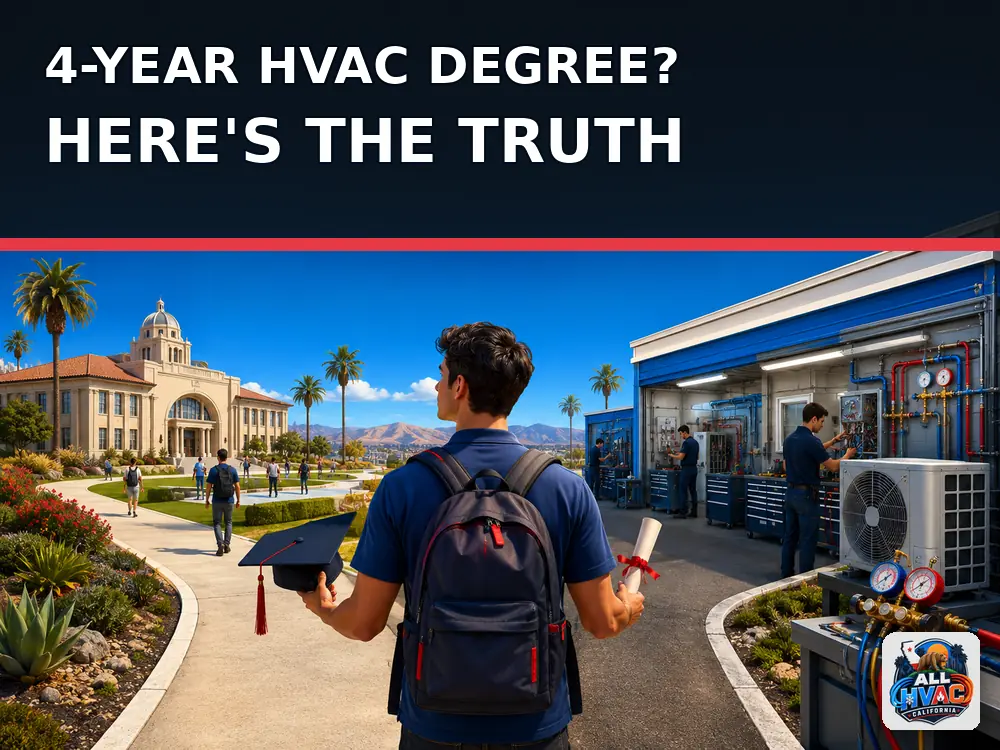
Yes, four-year HVAC degrees exist. Most service technicians still do not need one.
A bachelor’s program makes sense for certain careers. Think system design, controls, management, and building performance. A certificate or apprenticeship often fits hands-on service work better. In California, there is more than one road to Rome.
What Is a Four-Year HVAC Degree?

A four-year HVAC degree is usually a bachelor’s program focused on HVACR engineering technology. Some schools use names like building systems, energy engineering, or facilities engineering. The label changes, but the nuts and bolts stay similar.
Students study heating, cooling, refrigeration, controls, airflow, and energy use. Programs may also cover project management, estimating, codes, and system design. Many include laboratories and real equipment.
Ferris State University’s HVACR bachelor’s program shows this broader direction. It prepares students for technical and management roles, not only repair calls.
Did You Know?
The typical HVAC entry path is not a bachelor’s degree. Federal career data lists a postsecondary nondegree award as the usual starting education.
Do HVAC Technicians Need a Bachelor’s Degree?
Most HVAC technicians do not need a bachelor’s degree. Employers usually value practical training, licenses, certifications, and proven diagnostic skills. That is where the rubber meets the road.
The U.S. Bureau of Labor Statistics HVAC profile lists postsecondary nondegree training as typical. Programs commonly last six months to two years. New technicians then build skill through supervised field work.
California students can compare HVAC school timelines in California before choosing. Short training can build a foundation. It does not replace the experience needed for complex diagnosis.

What Does a Four-Year HVAC Program Teach?
A bachelor’s program teaches both technical systems and business decisions. Students move beyond replacing parts. They learn why complete buildings behave as connected systems. You cannot see the forest through one air filter.
- Thermodynamics: Heat movement, refrigeration cycles, and equipment performance.
- Airflow: Duct design, static pressure, ventilation, and indoor air quality.
- Controls: Sensors, building automation, electrical circuits, and control logic.
- Design: Load calculations, equipment selection, plans, and specifications.
- Energy: Efficiency analysis, commissioning, and building performance.
- Management: Estimating, scheduling, safety, budgets, and team leadership.
Worried about calculations? Our guide to math used in HVAC explains the real level. Most programs teach formulas through practical equipment examples.
Four-Year Degree Versus HVAC Trade School
A degree and trade school prepare students for different careers. Neither route wins every race. Your target job should decide the path.
| Factor | Four-Year Degree | Trade School or Certificate |
|---|---|---|
| Typical length | About four years | About six months to two years |
| Main focus | Design, controls, analysis, management | Installation, service, maintenance, repair |
| Cost | Usually higher | Usually lower |
| Field entry | Slower entry | Faster entry |
| Best fit | Engineering technology and leadership | Hands-on technician careers |
Can someone learn HVAC in three months? A short course can teach basics. Our three-month HVAC training guide explains the limits. Nobody becomes a complete technician overnight.
When Is a Four-Year HVAC Degree Worth It?
A four-year degree is worth considering when your goal requires deeper system knowledge. It can open doors beyond daily residential service. Still, do not put the cart before the horse.
- You want to design HVAC systems or review engineering plans.
- You want building automation or advanced controls work.
- You plan to manage projects, facilities, or technical teams.
- You want energy analysis, commissioning, or sustainability work.
- You may pursue graduate study or related engineering roles.
When Is a Shorter HVAC Program Better?
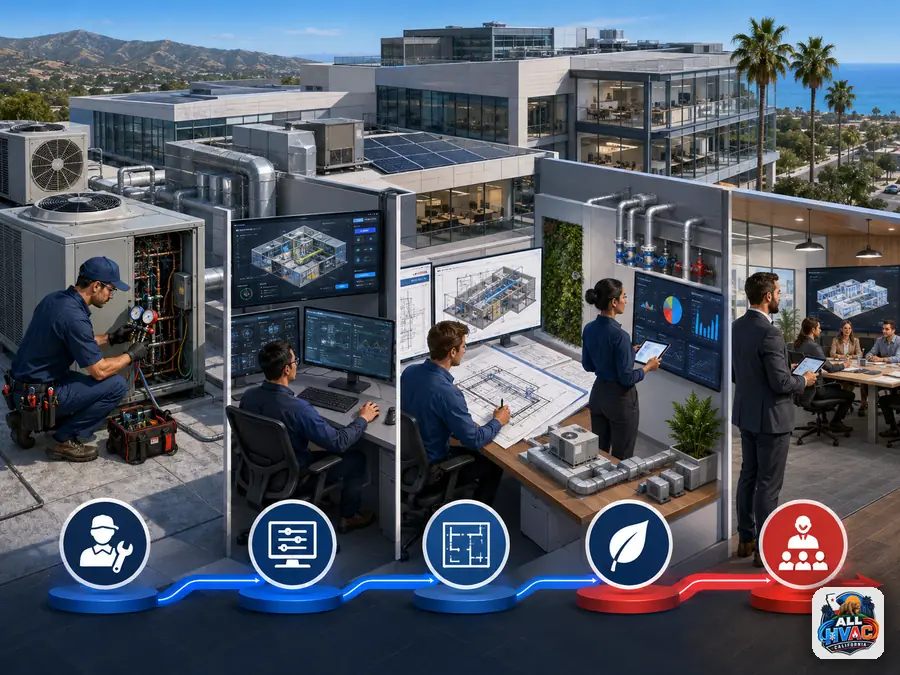
A shorter program works better when you want field experience sooner. It usually costs less and reaches paid work faster. Strike while the iron is hot.
This route suits future installers, service technicians, and maintenance technicians. Apprenticeships can also combine classroom lessons with paid job training. The trade still rewards people who keep learning.
Before enrolling, review how demanding the classes feel. Our explanation of how hard HVAC school is covers labs, math, and study habits.

What Jobs Can a Four-Year HVAC Degree Lead To?
A four-year HVAC degree can lead to technical and leadership roles. Job titles vary between employers, so read duties carefully. The proof is in the pudding.
- HVAC system designer
- Building automation specialist
- Controls technician or controls engineer
- Energy analyst
- Commissioning technician
- Facilities manager
- Project manager
- Estimator or manufacturer representative
Many graduates still begin near the field. That experience helps them make better design and management choices. Equipment rarely behaves exactly like a textbook diagram.
How Should California Students Choose a Program?
California students should compare outcomes, cost, location, and hands-on access. A polished brochure does not tell the whole story. Look before you leap.
- Confirm the exact degree and school accreditation.
- Review laboratories, equipment, and software used.
- Ask how many classes are available each term.
- Check internship and employer partnership options.
- Compare tuition, fees, housing, and lost work time.
- Request real graduate job titles and placement data.

Can Experience Replace an HVAC Degree?
Experience can replace a degree for many technician and supervisory roles. It may not satisfy every design or engineering requirement. Horses for courses.
Strong technicians learn electrical testing, airflow, refrigeration, controls, and customer communication. Certifications can confirm specific skills. A degree adds breadth, but experience adds judgment.
The strongest long-term path may combine both. Some people work first, then complete a degree part-time. Employer tuition support can reduce the bill.
Frequently Asked Questions
How Much Can a Four-Year HVAC Degree Cost?
A four-year degree can cost far more than technician training. Tuition is only one piece. Fees, books, housing, travel, and lost wages also count. Every penny adds up.
Compare the full price against the job you actually want. A high-cost program may make sense for design or management. It may not make sense for basic residential service.
Ask about transfer credits, paid internships, scholarships, and employer support. Community college courses may reduce early costs. Get every promise in writing.
Does a Degree Replace HVAC Certification or Licensing?
A degree does not automatically replace required certifications or local licenses. Education and legal authorization serve different purposes. Do not put the cart before the horse.
Refrigerant work requires the proper federal certification. Contractor work may involve state rules, experience requirements, and business licensing. Employers can also require manufacturer credentials.
Check the rules for your exact role and location. A school adviser should explain them clearly. Vague answers deserve another question.
Can You Work While Completing the Degree?
Many students work while completing an HVAC degree. Evening, hybrid, and transfer options may help. Where there is a will, there is a way.
Field work can make classroom lessons easier to understand. It also builds a résumé before graduation. However, full-time work can stretch a four-year plan.
Ask how often required laboratories meet. Some classes may only run once yearly. Build a realistic schedule before promising yourself a graduation date.
A Simple HVAC Education Decision Checklist
A good education choice starts with clear answers. Use this checklist before signing enrollment papers. Look before you leap.
- Name the exact job you want after graduation.
- Check five real job listings for education requirements.
- Compare total costs after grants and aid.
- Confirm laboratory time and internship access.
- Ask employers which programs they respect.
- Calculate expected debt against starting pay.
- Keep a lower-cost route as a backup.
Certificate, Associate Degree, or Bachelor’s Degree?
Each HVAC credential serves a different career goal. The shortest route is not always cheapest long-term. The longest route is not always best. Horses for courses.
A certificate focuses on entry-level service and installation skills. It usually limits general education classes. Students can reach field work sooner.
An associate degree adds technical depth and broader coursework. It may include controls, design basics, communication, and business classes. Credits may transfer into a bachelor’s program.
A bachelor’s degree adds analysis, management, advanced controls, and system design. It can support jobs outside routine service. Those roles may require stronger writing and project skills.
An apprenticeship combines paid work and formal lessons. It suits people who learn best through repetition. Availability and entry rules vary between programs.
HVAC Engineering Technology Versus Mechanical Engineering
HVAC engineering technology is usually more applied than mechanical engineering. Mechanical engineering covers wider theory and stronger mathematics. Apples and oranges can share one fruit bowl.
Engineering technology students often spend more time with equipment, controls, testing, and applications. Mechanical engineering students usually study calculus, physics, mechanics, materials, and design theory.
Both can lead toward building systems work. However, employers may treat the degrees differently. Professional engineering licensure also follows separate education and experience rules.
Read program course lists closely. A familiar title can hide a very different curriculum. Compare laboratory hours, design projects, and required mathematics.
Can You Earn an HVAC Degree Online?
Some HVAC degree coursework can be completed online. Practical laboratories still matter for equipment-based learning. You cannot learn every wrench turn from a screen.
Online classes may cover management, energy, estimating, controls theory, and general education. Hybrid programs can combine remote lessons with scheduled campus labs.
Ask how remote students complete experiments and group projects. Confirm whether required software works on your computer. Also check time zones for live classes.
Fully online claims deserve careful review. Employers value graduates who can connect theory with real systems. A strong program should explain that connection.
What Should a Strong HVAC Degree Program Include?
A strong program should include laboratories, projects, and current industry tools. Theory without practice leaves a weak foundation. Actions speak louder than brochures.
- Heating and cooling load calculations
- Refrigeration and heat pump laboratories
- Airflow testing and duct design
- Electrical troubleshooting and control sequences
- Building automation and energy analysis
- Codes, safety, and technical communication
- Internships or employer-connected projects
- A final project using real performance data
Ask when laboratory equipment was last updated. Old equipment can still teach basics. Students should also see modern variable-speed and communicating systems.
How Do Employers View a Four-Year HVAC Degree?
Employers value a degree when it fits the available job. They still expect reliability, judgment, and practical awareness. The proof is in the pudding.
A service manager may prefer strong field experience for a technician opening. A controls firm may value programming, networking, and degree-level analysis.
Internships help close that gap. They show that a graduate can work safely, communicate, and manage ordinary job pressure.
Do not assume the degree guarantees a management role. New graduates often need time near equipment and customers. Leadership grows through results.
What Is the Return on Investment?
The return depends on cost, debt, completion time, and target salary. A useful degree should change your reachable roles. Money talks, but debt also talks.
Calculate tuition after grants, not before them. Add housing, transportation, tools, and income lost during study.
Then compare entry salaries for jobs that actually require the degree. Use local listings instead of national promises. Check how many openings exist nearby.
A cheaper technician program may provide faster payback. A bachelor’s degree may offer higher ceilings in certain roles. Your timeline decides which matters more.
What Should You Ask During a Campus Visit?
Ask questions that reveal outcomes, equipment, and teaching quality. A campus tour should provide more than clean hallways. Ask and you shall receive.
- How many students complete the program?
- Which employers hire recent graduates?
- What job titles do graduates receive?
- How much laboratory time happens weekly?
- Which controls platforms do students use?
- Are internships paid and guaranteed?
- Can certificate credits transfer later?
- What additional certifications are included?
Speak with current students without staff nearby. They can explain scheduling, equipment access, and instructor support. One honest conversation can save years.
What Is a Practical Four-Year Career Roadmap?
A practical roadmap combines classes, work exposure, and professional relationships. Graduation should not be the first employer conversation. Start as you mean to go on.
During year one, build mathematics, electricity, and refrigeration basics. Tour facilities and join student industry groups.
During year two, seek part-time maintenance or installation exposure. Practice reading diagrams and documenting test results.
During year three, pursue an internship in controls, design, energy, or project work. Build examples that show your thinking.
During year four, complete a useful final project. Ask supervisors for references. Apply before graduation, not after it.
Which Skills Matter Beyond the Degree?
Employers need skills that a diploma cannot prove alone. Communication, documentation, and judgment turn knowledge into useful work. Actions speak louder than credentials.
Students should explain measurements in plain language. They should write clear reports and organize technical evidence. Group projects also reveal reliability.
Basic spreadsheet and presentation skills help with estimates, energy reports, and project updates. Controls roles may require networking or programming basics.
Customer awareness still matters in design roles. A technically perfect idea can fail when cost, access, or maintenance gets ignored.
How Valuable Is HVAC Work Experience During College?
Relevant work experience can make a degree far more valuable. It connects formulas with noise, heat, access, and customer reality. Experience is the best teacher.
Part-time maintenance work can expose students to filters, belts, motors, and controls. Installation work reveals layout, lifting, sealing, and coordination problems.
Even a summer internship can build references and confidence. Keep notes about systems, tasks, and results without exposing customer details.
Do not let work destroy academic progress. A balanced schedule beats a heroic month followed by burnout.
What Mistakes Should HVAC Students Avoid?
The biggest mistake is choosing a program before choosing a career direction. Another is borrowing heavily without checking outcomes. Look before you leap.
- Assuming every HVAC degree teaches the same material
- Ignoring transfer rules between schools
- Skipping internships until the final year
- Choosing prestige over laboratory access
- Believing a degree removes entry-level work
- Ignoring certifications required for field duties
- Using national salaries without checking local openings
A written comparison prevents emotional decisions. Rank programs against cost, access, outcomes, and career fit.
How Can Career Changers Use a Four-Year Program?
Career changers can use a degree to redirect existing skills into building systems. Prior business, military, technical, or construction experience may transfer well. Waste not, want not.
A former technician may use the program to enter design or management. An electrician may move toward controls. A facility worker may pursue energy management.
Ask schools to review previous credits before applying. Also ask whether experience earns any formal credit. Written evaluations prevent surprises later.
Career changers should compare part-time study against lost earnings. The best route should fit both work and family responsibilities.
What degree is best for HVAC?
HVACR engineering technology is the closest four-year option. Mechanical engineering offers a broader and more mathematical route.
Can an HVAC technician become an engineer?
Yes, but the required education depends on the role. Licensed engineering work has separate state requirements.
Is a two-year HVAC degree useful?
Yes. An associate degree can combine practical training with broader technical classes. It may support faster advancement.
Do HVAC employers care about college grades?
Some entry-level employers review grades. Most also weigh labs, internships, certifications, reliability, and practical skill.
The Bottom Line
Four-year HVAC degrees exist, but they are not the standard technician route. Choose one for design, controls, energy, or management goals. Otherwise, focused training may offer better value. Different strokes fit different folks.
All HVAC California believes clear information prevents costly choices. The same rule applies to education and home comfort.