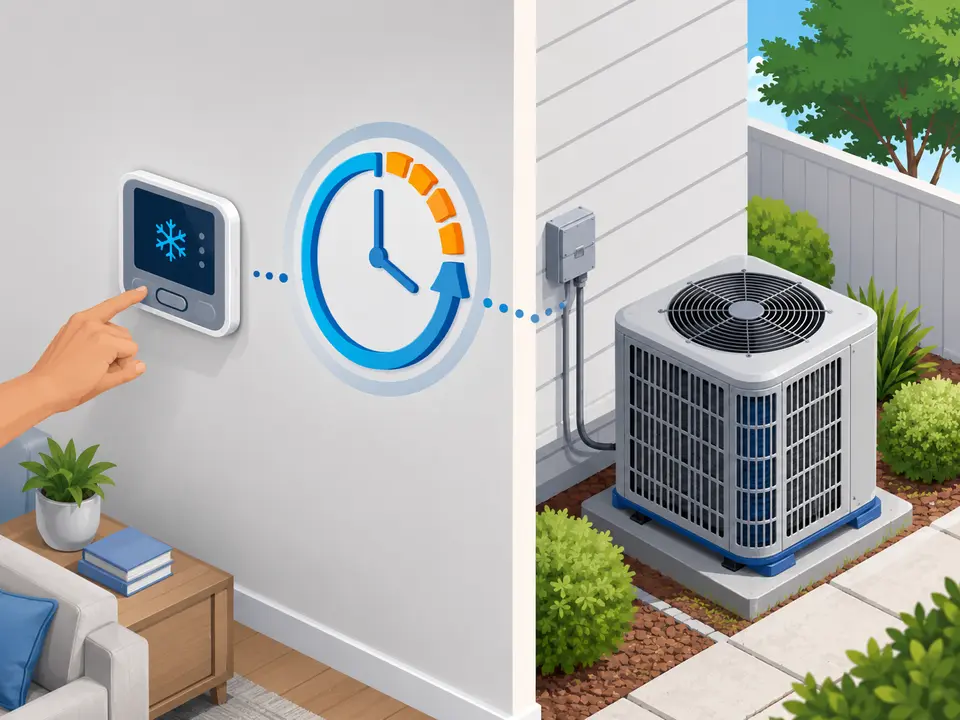
Your air conditioner may pause because it is protecting itself. That quiet wait can feel strange. Yet it often shows that the controls work correctly.
The 3 minute rule for air conditioners prevents a fast compressor restart. Most systems wait three to five minutes. Why risk an expensive part for three impatient minutes?
This guide explains the delay in plain English. It covers normal waits and real warning signs. Keep your cool because knowledge brings relief.
The Quick Answer
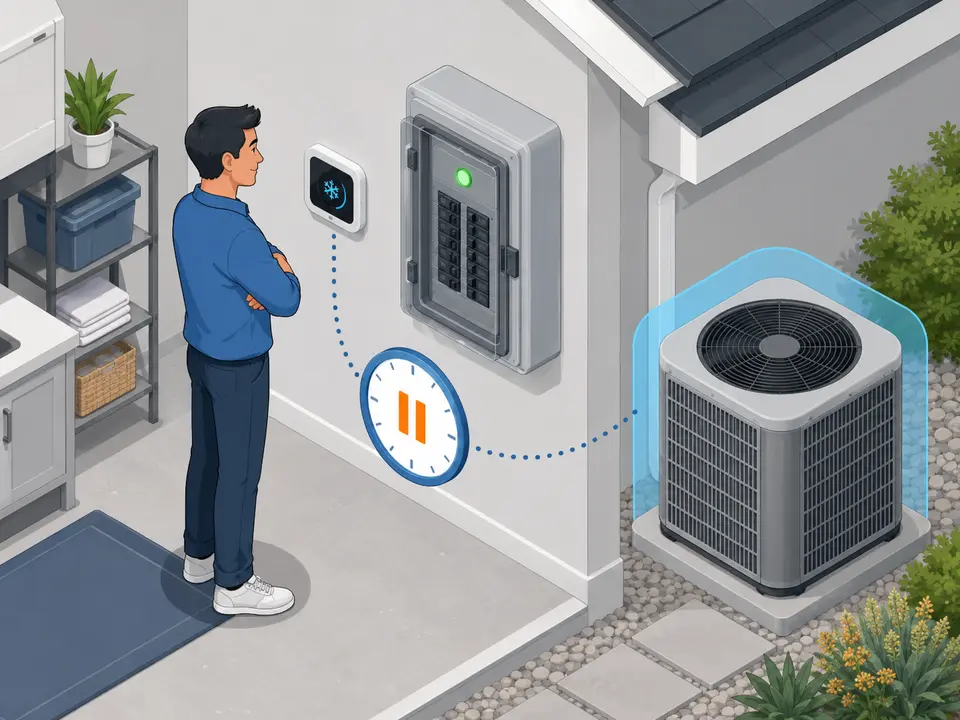
The AC 3 minute rule means waiting before restarting cooling. This pause allows internal pressures to settle. Better safe than sorry fits perfectly here.
A typical air conditioner restart delay lasts three to five minutes. Your exact wait depends on the controls. Always follow the equipment manual first.
The indoor fan may start during this pause. The outdoor compressor may remain silent. That short gap does not always mean trouble.
What the Three-Minute Rule Actually Means
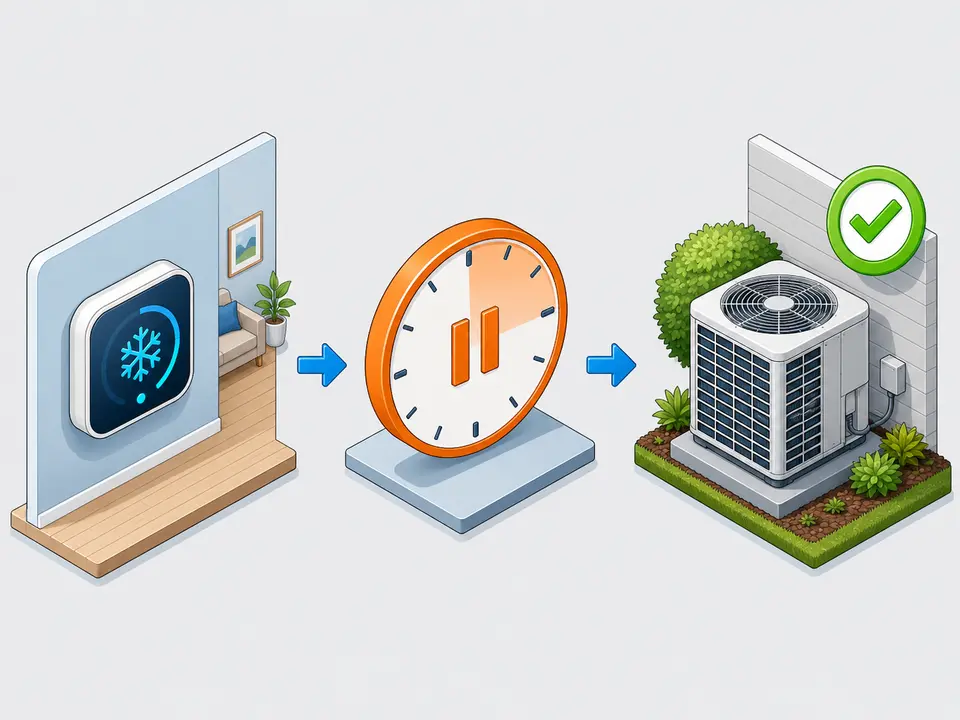
The rule controls minimum compressor off time after shutdown. It blocks another start until the timer ends. Slow and steady wins this race.
An AC compressor delay may begin after thermostat changes. It can also follow a power interruption. The timer protects the hardest-working cooling part.
This feature is also called a compressor protection delay. Some manuals call it an anti short cycle delay. Both names describe the same basic safeguard.
Why a Fast Restart Can Strain the Compressor
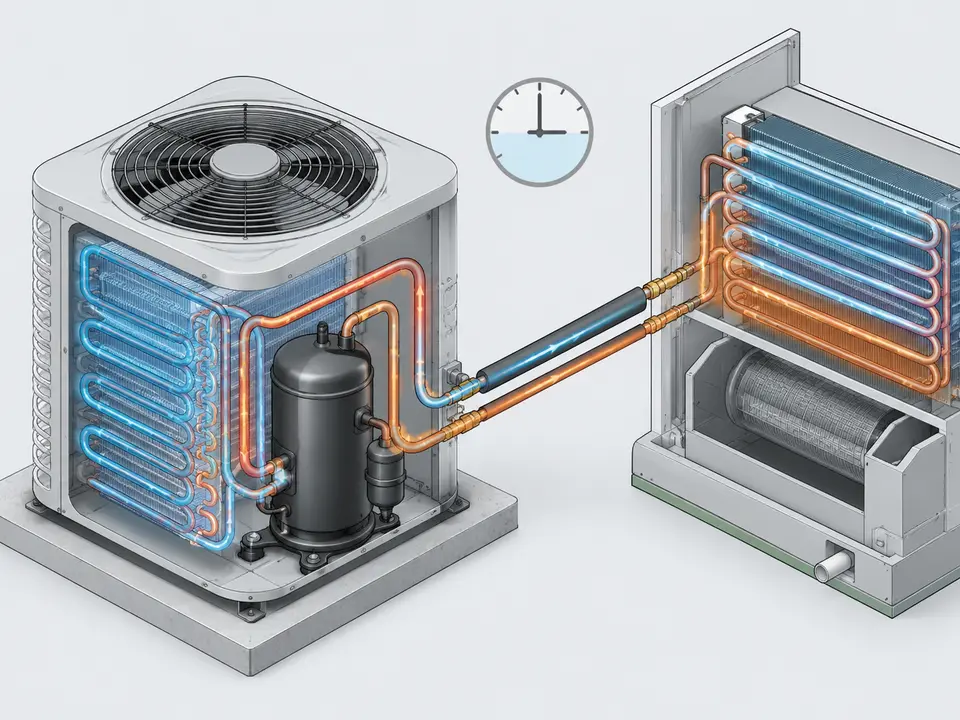
The compressor moves refrigerant between high and low pressure areas. Pressure stays uneven briefly after shutdown. Time heals all wounds, even inside cooling equipment.
Compressor pressure equalization lowers the force needed for another start. Uneven refrigerant pressure can make startup harder. The compressor then pulls more electrical current.
A rapid AC restart can stress windings and starting parts. Repeated attempts may contribute to AC compressor damage. Learn more through our HVAC parts guide.
Think of the compressor like a cyclist facing a steep hill. A balanced start feels like level ground. A rushed start feels like climbing from a dead stop.
Why Some Systems Wait Five Minutes
A three minute compressor delay is a common minimum. However, a five minute compressor delay is also normal. Different controls use different protection settings.
The broader rule is a 3 to 5 minute AC delay. Manufacturer instructions always beat a general shortcut. The devil is in the details.
A modern thermostat may extend the wait after power returns. It may also track recent cooling calls. That prevents confused or repeated commands. A Resideo thermostat manual notes a five-minute safety delay.
Where the Delay Lives
The protection may sit inside the thermostat or equipment controls. A dedicated HVAC time delay relay can provide it. Many control boards include the same function.
A thermostat delay often appears as a screen message. You may see thermostat says wait during the pause. No news is good news when cooling starts afterward.
The cool on flashing message often marks normal protection. A cool on blinking display can mean the same thing. Carrier describes this common 3–5 minute thermostat delay.
What to Do After a Power Outage
An AC after power outage may not restart immediately. The thermostat can reboot before outdoor equipment. Haste makes waste during this short recovery.
Use basic power outage AC safety after unstable power. Leave the system off during repeated flickers. Wait for steady power before requesting cooling.
A brownout AC protection device may block unsafe voltage. That feature can extend the normal wait. Never keep flipping switches during unstable service.
The AC power cycle should follow manufacturer instructions. Avoid random breaker resets. Those actions can hide a larger electrical problem.
How to Restart an Air Conditioner Safely
First, set the thermostat above room temperature. Wait until the cooling call stops. Measure twice and cut once applies to every reset.
Leave the system off for at least five minutes. Then choose thermostat set to cool. Lower the setting only a few degrees.
This simple process helps you reset air conditioner controls safely. It also gives the timer room to finish. This is an AC system reset, not a repair. Do not press buttons repeatedly.
An AC breaker reset is not routine maintenance. Reset one clear trip only once. Call a professional after another trip.
Normal Delay Versus Short Cycling
A normal delay happens after one completed stop. AC short cycling means repeated brief starts and stops. Do not mix apples and oranges.
Air conditioner short cycling can reduce comfort and moisture control. Compressor short cycling also adds frequent startup strain. The pattern deserves attention.
Watch for frequent AC cycling across an hour. An AC turning on and off every few minutes is different. It is not the protective delay.
An air conditioner cycling too often may have airflow problems. Wrong sizing or sensor placement may also contribute. Our HVAC maintenance checklist covers useful first checks.
What if the Fan Runs but Cooling Does Not?
The blower may run while compressor protection remains active. This can look like AC fan running but not cooling. Patience is a virtue for five minutes.
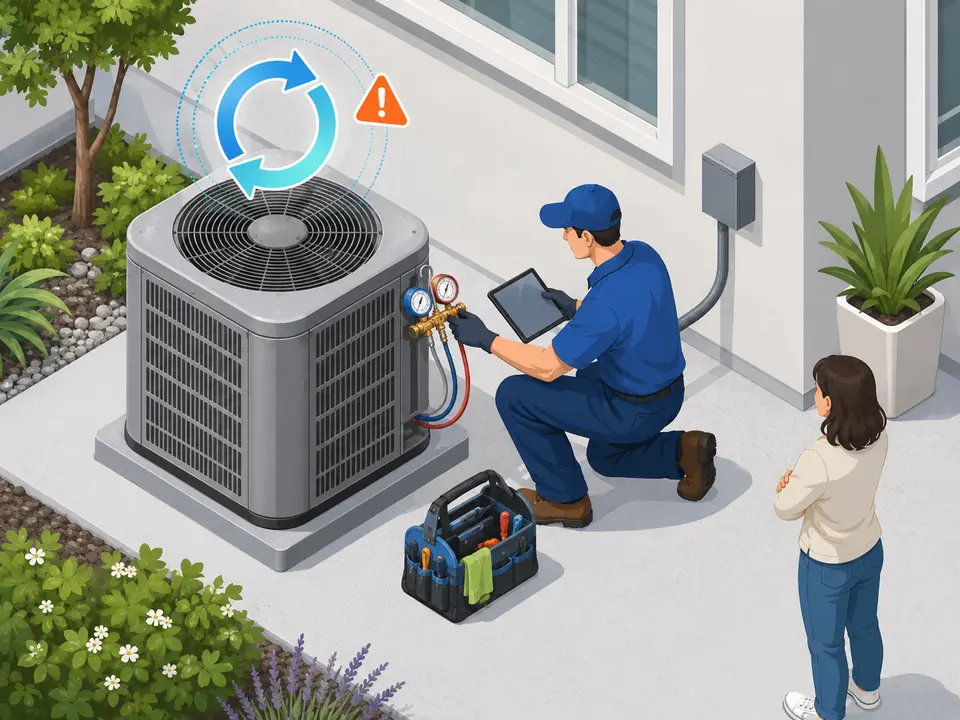
An outdoor AC unit not starting after five minutes needs closer checks. Confirm the thermostat mode and breaker. Do not open electrical panels.
A compressor not starting can involve several parts. A weak AC capacitor may prevent startup. A damaged AC contactor can also interrupt power.
An AC not turning on immediately is normal during protection. A long silence with warm air is different. Note the timing before calling for help.
How the Rule Changes Across AC Types
A central air conditioner delay commonly comes from the thermostat. Equipment controls may add another timer. Different strokes work for different folks.
A mini split restart delay usually lives inside electronic controls. A portable AC restart delay may be built into its plug-in unit. Check each manual.
A heat pump compressor delay protects cooling and heating operation. An inverter AC restart delay follows its control design. Never assume every model behaves alike.
Some variable systems avoid full stops more often. They can reduce output instead. Yet safety timers may still appear after shutdowns.
What Not to Do During the Waiting Period
Do not force the thermostat rapidly between modes. Avoid repeated breaker cycling. When in doubt, sit tight.
Do not bypass short cycle protection. Never defeat a compressor lockout with improvised wiring. These safeguards protect expensive equipment.
A hard starting compressor needs proper testing. Repeated commands will not repair it. They can add heat and electrical stress.
Do not confuse lower thermostat settings with faster cooling. The system cools at its designed rate. More button presses do not create more capacity.
When the Wait Becomes a Repair Problem
Most protection delays end within five minutes. A longer wait may signal a control problem. Where there is smoke, there is fire.
Call for AC troubleshooting when breakers trip repeatedly. Seek help for burning odors or loud buzzing. Stop the system around visible wire damage.
Professional AC repair can test voltage and control signals. A technician can also check startup parts. Would guessing be worth risking the compressor?
Share the exact AC restart time with the technician. Mention any outage or thermostat change. Clear details shorten the diagnostic path.
Simple Habits That Reduce Restart Problems
Good airflow helps every cooling cycle finish normally. Change dirty filters before they choke airflow. An ounce of prevention is worth a pound of cure.
Schedule regular AC maintenance before California heat arrives. Service can catch loose connections and weak parts. It can also confirm normal controls.
Use smart thermostat compressor protection when your system supports it. A programmable thermostat delay offers similar protection. Follow installer settings and equipment limits.
Track normal AC run time on hot afternoons. Note sudden changes or repeated starts. Small records can reveal a growing problem.
Frequently Asked Questions
These quick answers cover the most common restart questions. They separate normal behavior from service warnings. The proof is in the pudding when timing stays consistent.
What is the 3-minute rule for air conditioners?
It is a short waiting period before the compressor restarts. The pause protects starting parts and supports pressure balance. Many systems wait three to five minutes.
Why should I wait before restarting AC?
You should wait before restarting AC so pressures can settle. The pause reduces startup strain. Your manual may require a longer wait.
Can I turn AC back on after exactly three minutes?
You can turn AC back on after the required delay. Five minutes is a safer general wait. Follow the manufacturer when its instructions differ.
Why is my thermostat showing “Wait”?
The thermostat is likely holding a cooling command temporarily. Its timer prevents another immediate compressor start. Cooling should begin after protection ends.
Why is “Cool On” blinking?
The display often blinks during a normal compressor delay. Wait five minutes without changing settings. Investigate if the message continues without cooling.
Does every air conditioner use three minutes?
No, restart timing varies by thermostat and equipment. Three to five minutes is common. Always check the correct product manual.
Can fast restarting damage the compressor?
Repeated fast starts can add electrical and mechanical strain. Built-in timers reduce that risk. One accidental command rarely proves damage.
What is an AC safety feature?
The restart delay is an AC safety feature for compressor protection. Pressure switches and overloads provide other safeguards. Never bypass those controls.
What is an AC compressor start?
An AC compressor start begins refrigerant movement through the system. Startup demands more current than steady operation. Protection controls manage that demanding moment.
How many times should an AC start each hour?
No single number fits every system and weather condition. Healthy cycles usually last longer than three minutes. Repeated brief cycles deserve professional review.
Should I restart the AC after a power flicker?
Wait until utility power becomes stable. Keep cooling off during repeated flickers. Then request cooling once and allow the delay.
When should I call an HVAC technician?
Call when cooling never returns after a reasonable wait. Repeated trips, odors, or buzzing also need help. Shut down unsafe equipment.
The Bottom Line
The three-minute rule is simple compressor protection. Many systems extend that pause to five minutes. Good things come to those who wait.
Use one steady thermostat command and let controls work. Watch for repeated short cycles or long failures. Those patterns deserve trained attention.
For broader system context, read how an HVAC system works. You will see how every part shares the load. That knowledge makes future choices easier.