A little HVAC care now can prevent a lot of discomfort later.
Maintenance protects airflow, safety, drainage, and equipment life. It also helps you notice changes early. Would you rather plan a check or face a surprise breakdown?
This HVAC maintenance checklist keeps every task simple. It separates safe homeowner jobs from professional work. An ounce of prevention is worth a pound of cure.
Build a Simple HVAC Maintenance Schedule
A clear HVAC maintenance schedule uses monthly, seasonal, and annual tasks. Good home HVAC maintenance starts with observation. You do not need special tools for every check.
Monthly HVAC maintenance focuses on filters, vents, noise, and drainage. Seasonal HVAC maintenance prepares equipment for heavier demand. Slow and steady wins the race.
Annual HVAC maintenance should include trained testing. A professional HVAC tune up measures operation and safety. Records help track changes over time.
Monthly Homeowner Checks
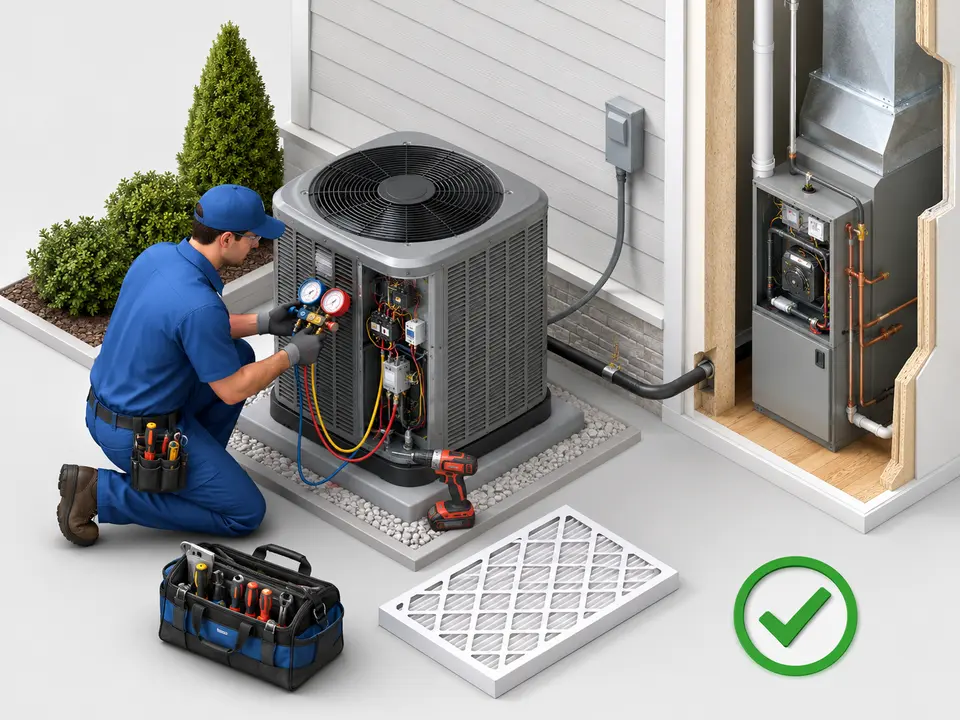
Start by checking whether you need to change HVAC filter media. Timely air filter replacement protects airflow and equipment. Clean filters also support cleaner rooms.
Clean air vents with a vacuum or soft cloth. Also clean return vents when dust gathers. A clean sweep makes a clean start.
- Listen for new rattles or grinding sounds.
- Check for water near indoor equipment.
- Keep furniture away from supply and return grilles.
- Watch room temperatures for sudden changes.
Thermostat and Control Checks
Check thermostat settings before blaming the equipment. Confirm the mode, target, schedule, and fan choice. Don’t put the cart before the horse.
Use the app to test smart thermostat schedules and alerts. Replace batteries when the model needs them. Keep heat sources away from the sensor.
Airflow and Duct Checks
Walk through the home and check HVAC airflow at each open vent. Weak rooms may point toward duct or balance problems. All roads lead home through sound air paths.
Look inside accessible areas to inspect ductwork. Watch for loose joints, torn flex ducts, or damaged insulation. Professionals can test and seal duct leaks.
Never close many vents to force air elsewhere. That action can raise system pressure. A chain is only as strong as its weakest link.
Spring HVAC Maintenance
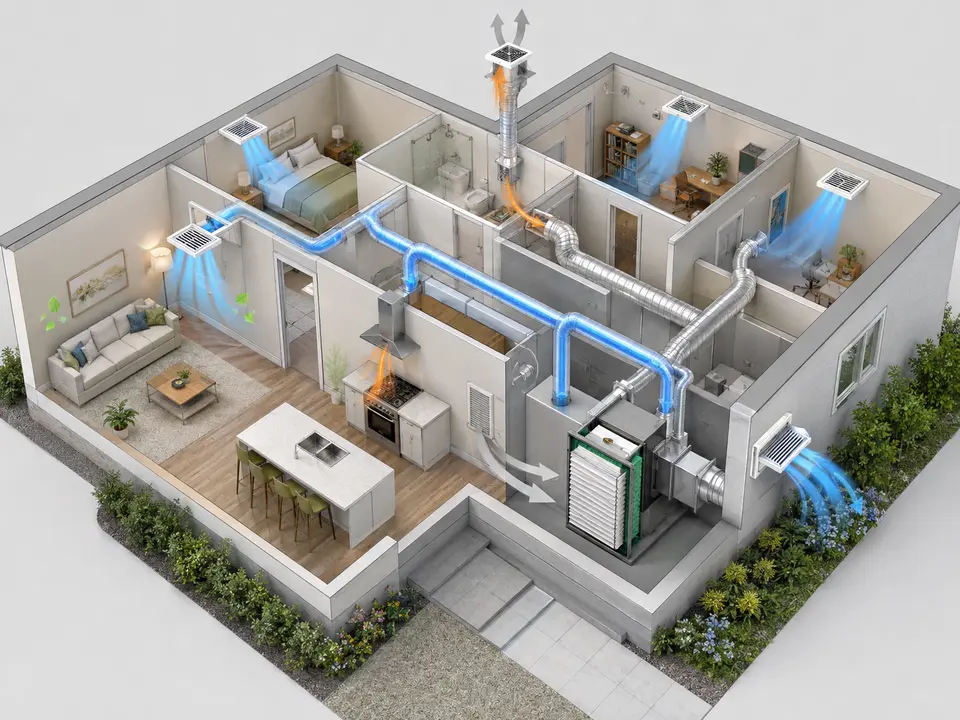
Spring HVAC maintenance prepares cooling equipment before high heat. Follow an AC maintenance checklist while outdoor weather stays mild. Make hay while the sun shines.
Turn off safe power before you clear outdoor condenser debris nearby. Keep plants and stored items away. Do not bend coil fins.
A technician can clean condenser coil surfaces correctly. They also inspect evaporator coil condition and airflow. Coil work can involve sharp edges and electrical parts.
Drainage and Moisture Checks
Cooling creates water at the indoor coil. Homeowners can watch for standing water or stains. Where there’s smoke, there’s fire when new water appears.
Professionals can clean condensate drain openings and flush condensate line blockages. They also check drain pan condition. Safety switches should stop overflow.
Summer HVAC Maintenance
Summer HVAC maintenance focuses on airflow and operating changes. Keep filters ready during smoke or dusty weather. The heat is on, so small restrictions matter.
Visually inspect refrigerant lines and watch for ice. A technician should check refrigerant level through proper measurements. Low charge usually points toward a leak.
Do not spray water into live electrical sections. Keep pets and yard tools away. Safety first keeps a simple task simple.
Fall HVAC Maintenance
Fall HVAC maintenance prepares heating equipment before cold nights. Use a furnace maintenance checklist for fuel-burning systems. Better safe than sorry around combustion.
Technicians inspect heat exchanger surfaces and test furnace ignition. They may also clean furnace burners. Correct combustion protects safety and efficiency.
They should inspect flue pipe condition and draft. Homeowners should check carbon monoxide detector batteries. Never ignore an active alarm.
Winter HVAC Maintenance
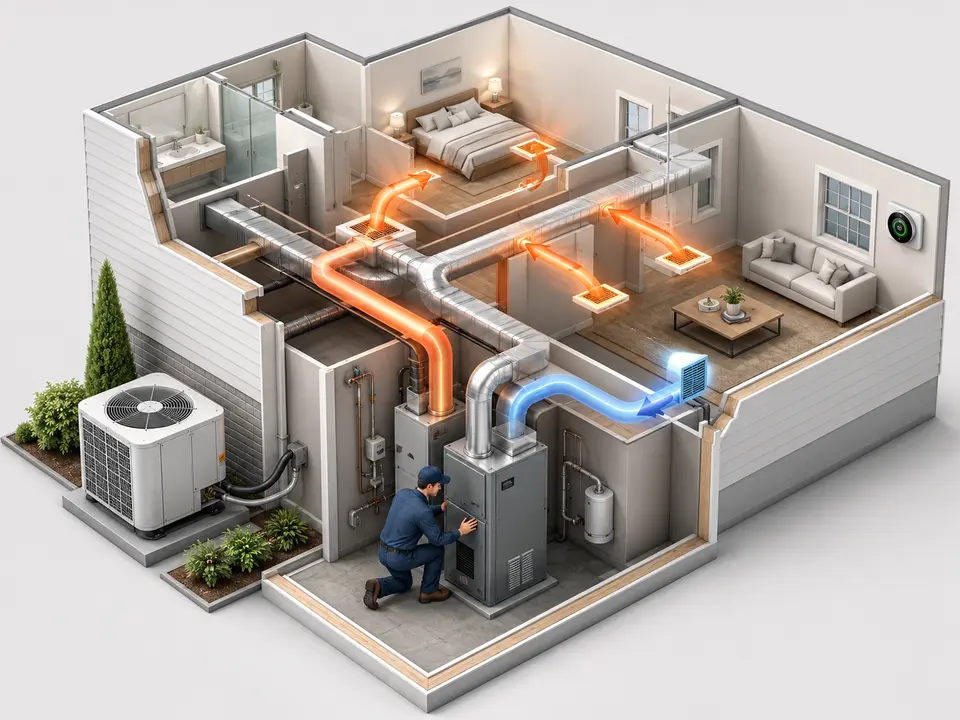
Winter HVAC maintenance starts with clear vents and stable settings. Avoid extreme thermostat changes. Easy does it when equipment faces cold mornings.
A heat pump maintenance checklist includes outdoor clearance and drainage. Observe the heat pump defrost cycle during cold damp weather. Brief steam can be normal.
Never chip ice from coils with tools. Turn off equipment when severe icing continues. Call for testing.
Ductless Mini-Split Maintenance
A mini split maintenance checklist covers every indoor head and the outdoor unit. Homeowners can clean mini split filters as the manual directs. Many hands make light work across several rooms.
Professionals can clean mini split coils, blowers, drains, and electrical parts. Dirty wheels can reduce airflow. Watch for water near wall units.
Boiler and Radiator Maintenance
A boiler maintenance checklist covers water, pressure, combustion, pumps, and controls. Homeowners can watch for unusual readings. Don’t fix what isn’t broken, but never ignore leaks.
A professional performs a boiler pressure check and can inspect boiler leaks. Some systems need technicians to bleed radiators. System type guides safe steps.
Electrical and Mechanical Testing
Trained service includes work to inspect electrical connections. Technicians may test HVAC capacitor values and inspect contactor wear. Electricity deserves respect.
They also check blower motor performance and clean blower wheel buildup. A dirty wheel can lose airflow. Numbers tell the tale during testing.
Safety, Efficiency, and Air Quality
An HVAC safety inspection checks electrical, combustion, drainage, and controls. An HVAC efficiency check reviews temperatures and airflow. The proof is in the pudding when measured results match comfort.
Good maintenance can improve indoor air quality through filtration and moisture control. It may also lower HVAC energy bills. Results depend on system condition.
Consistent care can extend HVAC lifespan and prevent HVAC breakdowns. It cannot remove every risk. It helps you act before trouble grows.
DIY Care Versus Professional Service
DIY HVAC maintenance should stay with filters, clearances, settings, and simple observation. Professional HVAC maintenance covers electrical, refrigerant, and combustion work. Know your limits before starting.
HVAC maintenance cost changes by equipment and service scope. A written checklist shows what the visit includes. Cheap inspections may skip measured testing.
An HVAC service plan can help schedule seasonal work. Compare discounts, response rules, and included tasks. You get what you pay for.
Keep this checklist close throughout the year. Review our repair versus replacement guide. Then learn which HVAC parts need care.
Official checklists support safer upkeep. Follow the ENERGY STAR maintenance checklist. Review the EPA air filter guide too.
Frequently Asked Questions
How often should HVAC maintenance be done?
Seasonal checks prepare cooling and heating equipment. Homeowners should inspect filters more often.
What HVAC maintenance can homeowners do?
Homeowners can replace filters, clear outdoor space, clean vents, and watch drainage. Technical work needs trained service.
How often should an HVAC filter be changed?
Timing depends on filter type, system use, pets, smoke, and dust. Replace loaded filters promptly.
Should I cover my outdoor AC unit?
Full covers can trap moisture and pests. Follow the equipment maker’s instructions for local conditions.
Can HVAC maintenance lower energy bills?
Cleaning, airflow correction, and repaired faults may reduce wasted energy. Savings depend on existing problems.
What happens during an HVAC tune-up?
A technician checks controls, temperatures, airflow, drainage, electrical parts, and safety systems. Tasks vary by equipment.
How long does HVAC maintenance take?
A basic visit may take one to two hours. Multiple systems or found problems can take longer.
Is an HVAC maintenance plan worth it?
It may help with scheduling, discounts, and priority service. Compare the written benefits with the price.
Does a heat pump need maintenance twice yearly?
Heat pumps work in both seasons. Spring and fall checks can support year-round readiness.
Why is water near my HVAC unit?
A blocked drain, damaged pan, or frozen coil may cause water. Turn off equipment when overflow threatens damage.
Can dirty ducts damage HVAC equipment?
Leaks and restrictions can disturb airflow. Ordinary settled dust alone may not require duct cleaning.
What is the best time for HVAC maintenance?
Book cooling checks before summer and heating checks before winter. Mild seasons often offer easier scheduling.
Keep Comfort Boring in the Best Way
A good checklist turns maintenance into a calm routine. Pride of place starts with equipment that works quietly. Small checks build relief and trust.
Explore our AC maintenance service and furnace maintenance service. Read our HVAC lifespan guide next. Planned care keeps choices in your hands.
