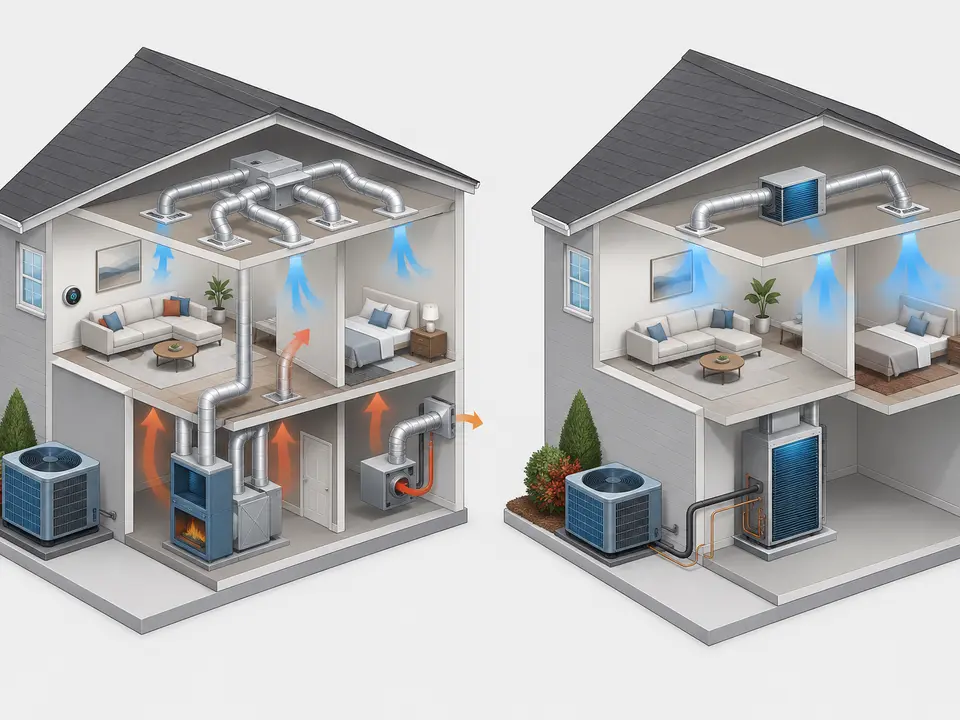
HVAC and AC sound interchangeable, but they describe different scopes. One covers the whole comfort system. The other usually means cooling.
The difference between HVAC and AC becomes simple once you separate their jobs. Why use three letters when two seem easier? The answer depends on what your home needs.
This guide explains HVAC vs AC without industry fog. You will know which term fits each call. Knowledge is power when repair decisions arrive.
The Quick Answer
HVAC meaning covers heating, ventilation, and cooling. AC meaning usually covers cooling and moisture removal. The whole is greater than the sum of its parts.
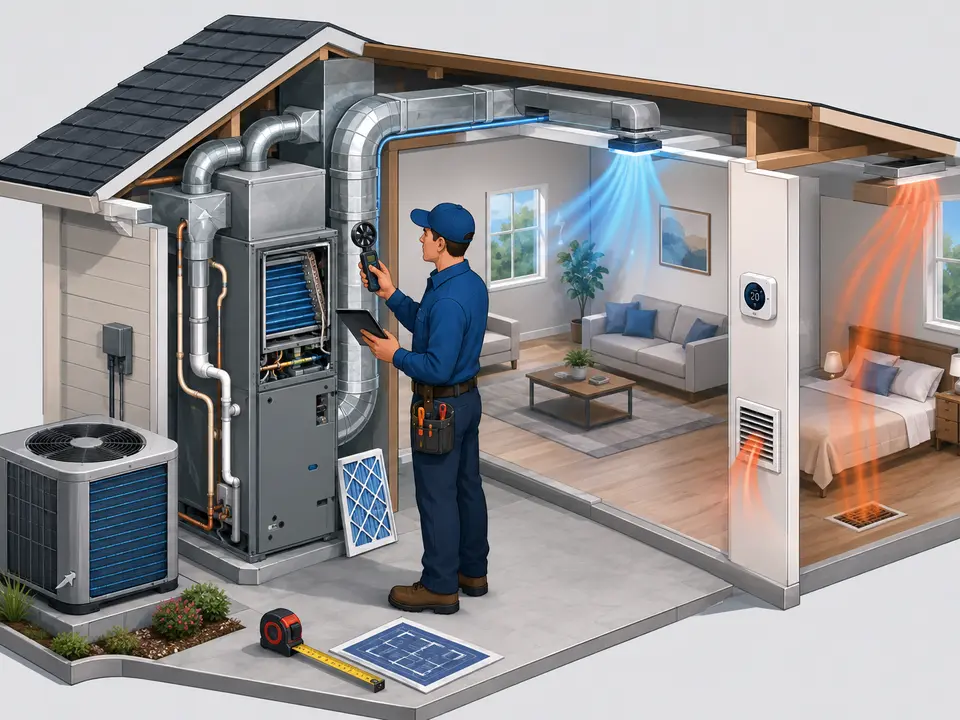
An HVAC system may include a furnace, air conditioner, ducts, and controls. An air conditioning system handles the cooling side. Some systems combine several jobs inside one cabinet.
Use HVAC when discussing the complete home setup. Use AC when discussing cooling equipment. Calling a spade a spade keeps service requests clear.
What Does HVAC Stand For?
What does HVAC stand for in everyday home service? It means heating ventilation and air conditioning. Each word represents a separate comfort job.
The heating side warms rooms during cold weather. Ventilation moves or replaces indoor air. Air conditioning removes indoor heat and often lowers moisture.
A central HVAC system can coordinate those jobs through shared controls. It may also share fans and ducts. Many hands make light work inside a matched system.
Read our complete HVAC beginner guide for broader context. It explains common system types and household roles.
What Does AC Stand For?
What does AC stand for on an estimate or thermostat? It means air conditioning. The term points toward equipment that cools indoor spaces.
Central air conditioning moves cooled air through household ducts. A room unit cools one smaller area. Different roads can lead to Rome when cooling spaces.
Whole house cooling may use central equipment or several ductless zones. AC does not automatically include a furnace. It also may not provide outdoor air.
HVAC Covers More Than Cooling
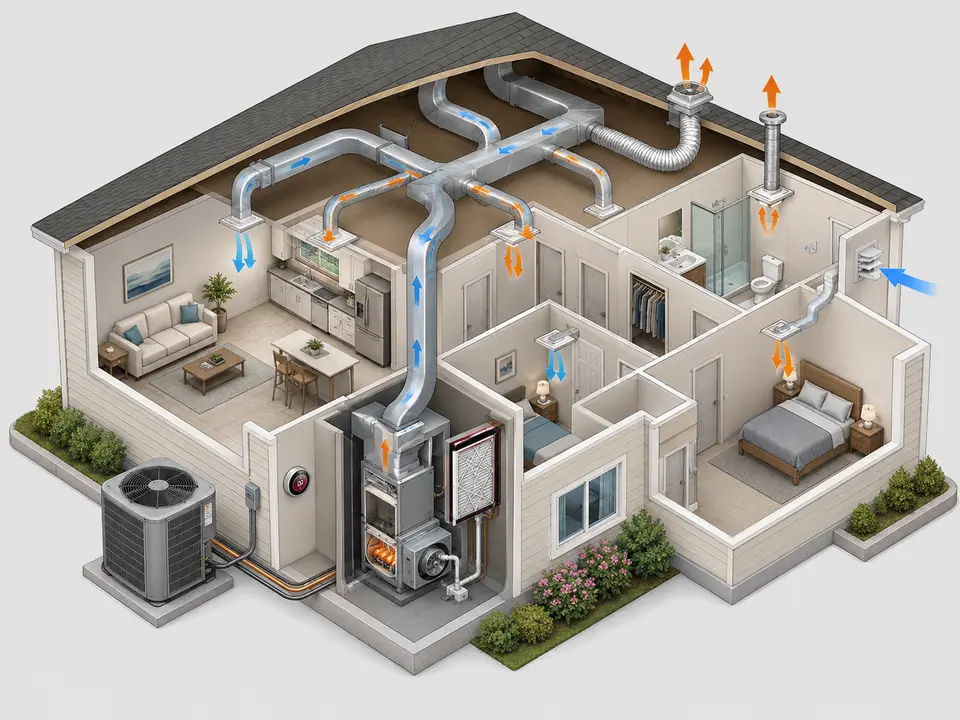
A complete heating and cooling system manages comfort across changing seasons. It can also support airflow and filtration. Do not judge a book by its cover.
Your home comfort system may connect several machines through one control. The heating system might use gas or electricity. The cooling system usually moves heat outdoors.
Year-round comfort depends on more than cold supply air. Balanced airflow matters during every season. Safe heat and moisture control also matter.
AC Focuses on the Cooling Process
Most AC equipment uses a refrigeration cycle to move heat outdoors. The compressor circulates refrigerant between indoor and outdoor coils. Cool as a cucumber describes the goal.
The evaporator coil absorbs indoor heat. The outdoor condenser releases that heat outside. A blower moves household air across the cold coil.
AC components also include electrical controls, drains, and starting parts. Each part supports one cooling process. A failed supporting part can stop the entire system.
Main Parts Inside a Complete HVAC Setup
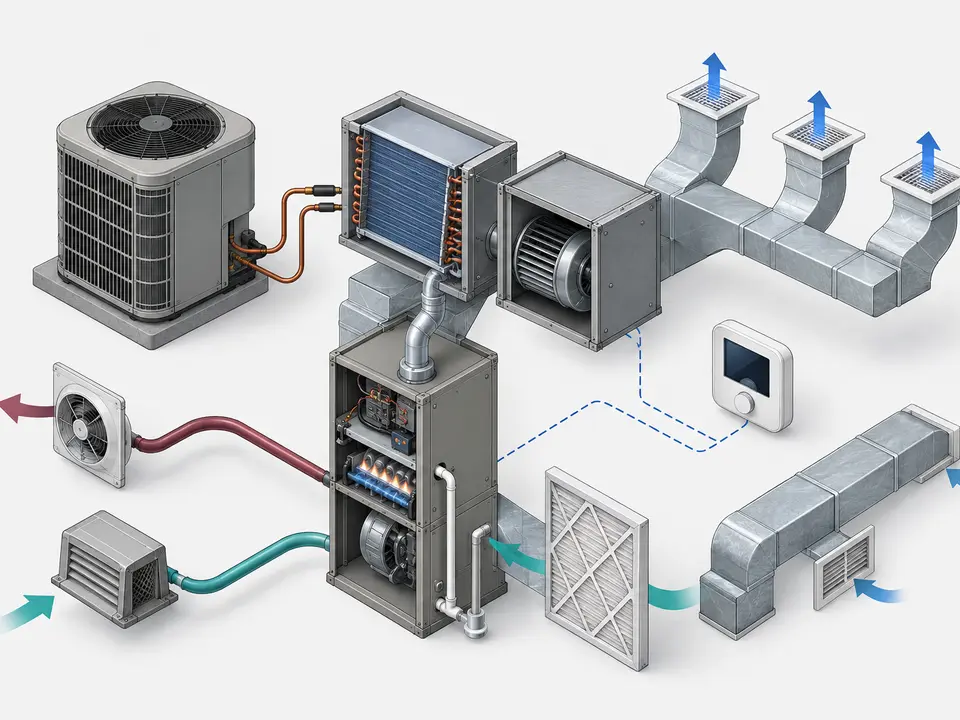
Common HVAC components include heat, cooling, airflow, and control equipment. A furnace and air conditioner often share one indoor blower. Two heads are better than one when equipment matches.
The indoor air handler moves conditioned air through the home. The ductwork carries supply and return air. An air filter protects equipment and captures particles.
A wall thermostat sends operating commands. Dampers may control separate zones. Review our HVAC parts guide for a full visual breakdown.
Where Ventilation Fits
A ventilation system brings outdoor air inside or removes stale air. Standard cooling alone may only recirculate household air. Fresh air can be a breath of life.
Ventilation supports indoor air quality by diluting some indoor pollutants. It does not replace source control or proper filtration. Outdoor smoke may change the best strategy.
Some homes add exhaust fans or balanced air exchangers. Others use controlled outdoor-air ducts. EPA explains ventilation and filtration within broader HVAC design guidance.
Heating Equipment Changes the Label
A furnace clearly belongs to HVAC because it provides heat. An air conditioner beside it only provides cooling. Horses for courses applies to seasonal equipment.
A heat pump system can heat and cool using one refrigeration cycle. Reversing valves change heat direction. That makes the same outdoor unit useful year-round.
A forced air system uses a blower and air pathways. Furnaces and heat pumps can both use this approach. Boilers use water or steam instead.
Ductless and Packaged Systems
A ductless mini split can provide cooling only or heating and cooling. Its label depends on the exact model. Never put the cart before the horse.
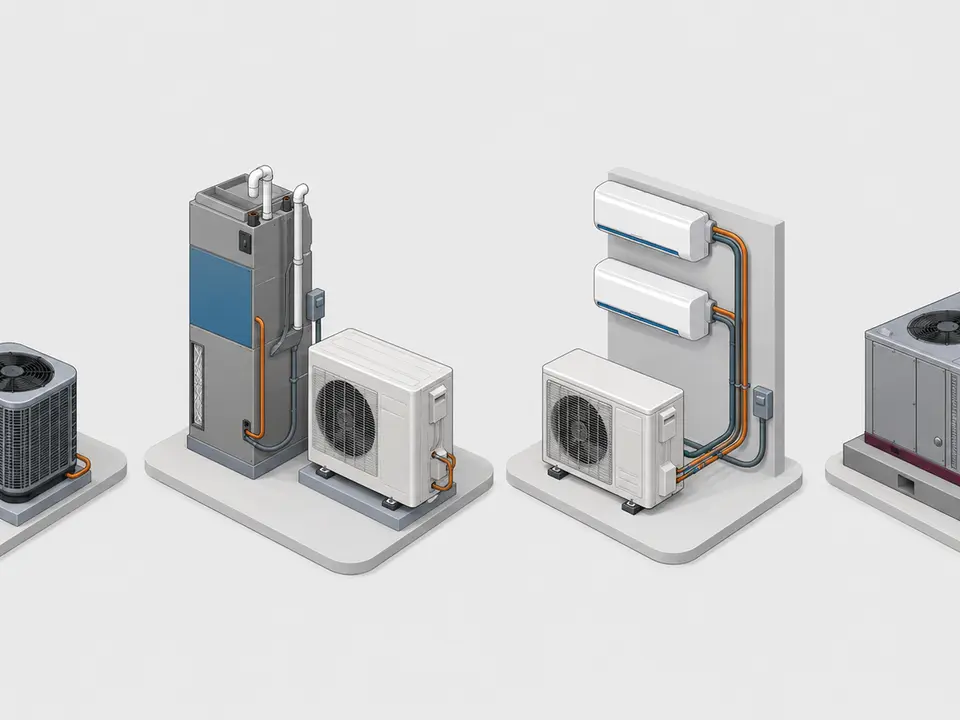
A split system air conditioner uses separate indoor and outdoor assemblies. A packaged HVAC unit places major parts inside one cabinet. Both designs can serve residential or business spaces.
System layout does not change the core difference. HVAC describes the broader function set. AC identifies the cooling function.
Compare choices in our guide to HVAC system types. The examples show ducted, ductless, and packaged layouts.
Why the Names Get Mixed Up
Homeowners often call every outdoor cabinet the AC. That shortcut works during summer conversations. When in Rome, people use the familiar local term.
However, the outdoor cabinet may belong to a heat pump. That machine can also heat the home. The indoor cabinet may contain a furnace or air handler.
Contractors often say HVAC because their work reaches connected parts. Shared controls and airflow can affect both seasons. A cooling complaint may begin with an indoor airflow problem.
Labels also change across estimates and property listings. One seller may advertise central air. Another may list complete HVAC equipment with heating details.
Ask what each quoted term includes before comparing prices. Written equipment model numbers remove doubt. Clear definitions protect your budget and expectations.
Maintenance and Repair Differences
HVAC maintenance can cover cooling, heating, airflow, and safety checks. AC maintenance focuses on cooling readiness. An ounce of prevention is worth a pound of cure.
HVAC repair may involve furnaces, heat pumps, controls, or ventilation. AC repair usually targets cooling faults. Clear symptoms help dispatch the right technician.
An HVAC contractor may service the whole connected system. An AC technician may focus on cooling calls. Licensing and training matter more than the label.
Comfort Features Beyond Temperature
Whole-home comfort includes airflow, moisture, noise, and cleanliness. Temperature tells only part of the story. There is more than meets the eye.
Cooling naturally removes some indoor moisture during normal operation. Dedicated humidity control may add stronger seasonal support. Equipment size and cycle length affect that result.
Filters can reduce particles moving through a forced-air setup. Better filters must still fit system airflow limits. A tight filter cabinet also prevents air bypass.
Ventilation can dilute indoor pollutants with outdoor air. Exhaust fans remove moisture near bathrooms and kitchens. Balanced systems can exchange heat between outgoing and incoming air.
These features belong to the broader HVAC conversation. Calling everything AC can hide their value. A complete assessment connects comfort complaints with the right function.
Installation and Replacement Language
HVAC installation can include several connected systems and new air pathways. AC installation may only add cooling equipment. Measure twice and cut once before signing.
HVAC replacement might involve heating and cooling together. AC replacement may preserve an existing furnace. Equipment compatibility should guide that choice.
Ask whether the indoor and outdoor units form a rated match. Ask what existing parts remain. A clear scope prevents surprise costs later.
Efficiency Ratings Use Different Measures
Energy efficiency cannot be judged through one universal number. Cooling and heating use different ratings. Comparing apples and oranges creates poor decisions.
A SEER2 rating describes seasonal cooling efficiency. An AFUE rating describes annual furnace fuel use. Heat pumps also carry heating efficiency ratings.
Equipment ratings do not guarantee low bills. Installation, ducts, controls, and household habits still matter. DOE guidance treats the complete building as one system.
Capacity and Sizing Still Matter
Cooling capacity describes how much heat equipment can move. Contractors often express that capacity using BTU per hour. Bigger is not always better.
Correct system sizing supports steady cycles and moisture control. A Manual J load calculation estimates the home’s actual demand. Square footage alone cannot finish that job.
Oversized cooling may cycle too quickly. Undersized equipment may struggle during design weather. Proper selection protects comfort and pride in your home.
California Homes Need the Right Scope
California HVAC needs vary across coastal, valley, mountain, and desert climates. One size never fits all. Know which way the wind blows before choosing equipment.
Residential HVAC planning should consider comfort, smoke, humidity, and local weather. Commercial HVAC planning also considers occupancy and operating schedules. Building use shapes the final design.
Describe your real problem before requesting a quote. Say whether heating, cooling, or airflow failed. Our HVAC service guide can help you choose the right starting point.
Which Term Should You Use?
Say AC when the problem only affects cooling. Say HVAC when several comfort functions may be involved. Keep it simple because plain words open doors.
Request AC service for warm supply air during cooling season. Request HVAC service when controls, airflow, or heating also fail. The company can refine the scope.
Does the label change the actual repair? Usually, the observed symptoms matter more. Clear details help the office send suitable tools and skills.
Mention unusual sounds, odors, leaks, or breaker trips. Explain when the problem began. Note whether the thermostat shows an error.
Share recent repair history when possible. That record can reveal repeat failures. It also helps technicians avoid retracing old steps.
See how a complete HVAC system works before your next service call. The guide connects every major function.
Frequently Asked Questions
These answers resolve the most common wording questions. They keep estimates and service calls clear. The proof is in the pudding when everyone understands the scope.
Is HVAC the same as AC?
No. HVAC covers heating, ventilation, and air conditioning. AC usually refers only to cooling.
Does HVAC include heating?
Yes. Heating is the first function in the HVAC abbreviation. Furnaces, boilers, and heat pumps may provide it.
Does AC include ventilation?
Not automatically. Many air conditioners recirculate indoor air. Dedicated equipment may provide controlled outdoor air.
Is a furnace part of HVAC?
Yes. A furnace provides the heating function. It may share a blower and ducts with cooling.
Is a heat pump HVAC or AC?
A heat pump belongs to HVAC. Most models provide both heating and cooling through one refrigeration system.
What does an HVAC technician service?
The scope may include heating, cooling, airflow, controls, and ventilation. Exact licensing and services vary.
Can I replace only the AC?
Sometimes. The new cooling equipment must match retained indoor parts. A contractor should verify compatibility and ratings.
Why do contractors say HVAC?
The term covers the connected comfort system. It helps include heating, cooling, ventilation, airflow, and controls.
Does central air mean HVAC?
Central air usually means ducted cooling. HVAC describes the broader system that may also provide heat.
What is included in an HVAC system?
Common parts include heating equipment, cooling equipment, fans, filters, ducts, controls, and ventilation components.
Is ductless AC considered HVAC?
Yes, when discussing the broader comfort system. Cooling-only ductless equipment still performs the AC function.
Which term should homeowners use?
Use AC for cooling-only questions. Use HVAC when the issue may involve the complete comfort system.
The Bottom Line
HVAC is the umbrella. AC is one important section beneath it. Do not make a mountain out of a molehill.
Use the term that matches your actual need. Share symptoms, equipment type, and affected rooms. Those details build trust and speed diagnosis.
DOE lists heating, ventilation, and air conditioning as connected building functions. Review its official HVAC overview. EPA also explains HVAC ventilation and filtration roles.