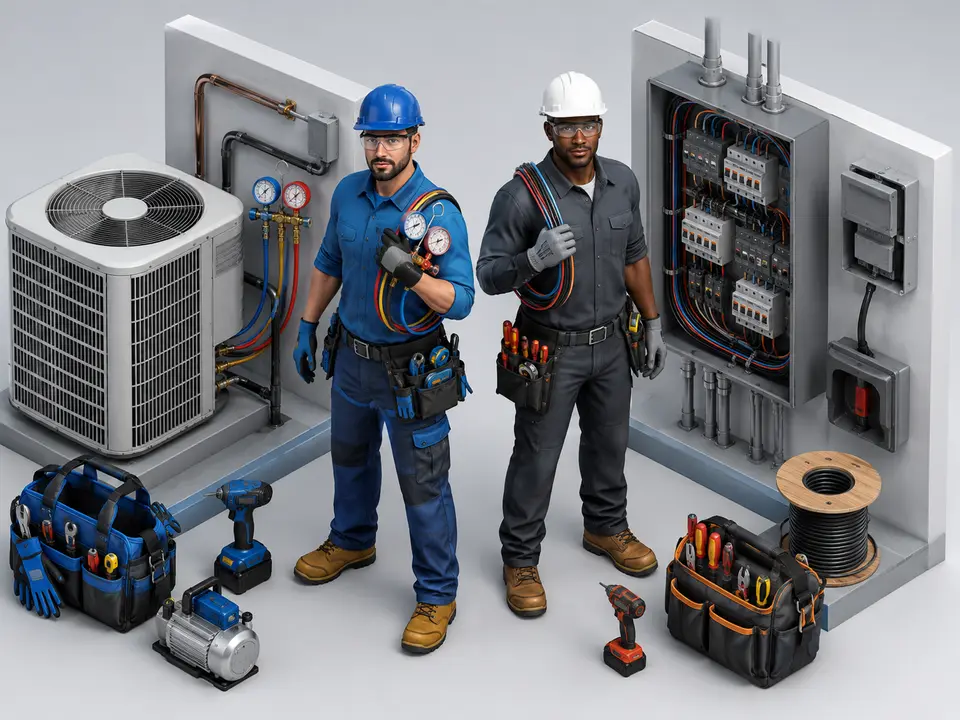
Electricians earned a slightly higher national median than HVAC technicians in May 2025. Electricians reached $63,190. HVAC technicians reached $61,010.
The $2,180 gap is small before overtime, benefits, location, and specialty. Don’t judge a book by its cover.
This guide answers what pays better HVAC or electrician with current official data. It also compares training, demand, and lifestyle.
Neither trade wins every city or career stage. Personal fit can matter more than one national median.
Wages also change each year. Always check the date and local market before making a training decision.
A career lasts longer than one wage report. Growth, health, and schedule deserve equal weight.
Who Earns More, HVAC Technicians or Electricians?
HVAC vs electrician salary data currently favors electricians by $2,180 yearly at the national median.
Electrician median salary reached $63,190 in May 2025. That equals about $30.38 hourly.
HVAC median salary reached $61,010. That equals roughly $29.33 hourly.
HVAC electrician pay difference equals about $1.05 hourly at those medians. The devil is in the details.
Official BLS electrician data provides the current national figures.
That median includes apprentices, journey workers, and experienced specialists. It doesn’t describe one exact job offer.
HVAC data combines service, installation, refrigeration, and maintenance workers. Each group can follow a different pay path.
How Wide Is the Hourly Pay Gap?
HVAC technician hourly pay and electrician wages sit close nationally. Local offers can reverse the order.
Electrician hourly pay varies by license, industry, experience, and union status.
HVAC hourly wage may include commission, standby pay, or seasonal overtime.
Electrician versus HVAC hourly rate comparisons should use employee wages. Customer service rates include business overhead.
A dollar per hour matters, but benefits can outweigh it. The whole is greater than the sum.
Forty hours at the median gap equals about $42 weekly before deductions. Overtime can widen that difference.
Commission can also reverse it. Some residential HVAC technicians earn variable pay beyond their base wage.
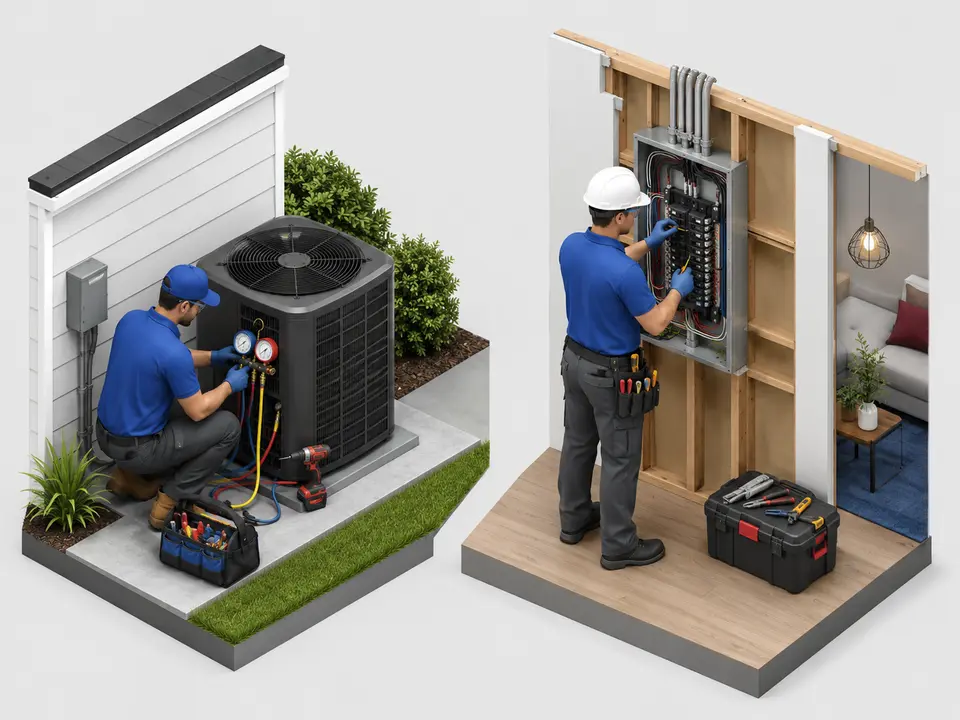
Which Trade Has Higher Top-End Pay?
Top electrician salary exceeded $108,510 for the highest 10% nationally.
Top HVAC technician salary exceeded $95,210 for the highest 10%.
Electrician pay ceiling appears higher in current BLS employee data. Self-employed earnings aren’t included.
HVAC pay ceiling can rise through controls, chillers, sales, management, or ownership.
Top figures describe experienced workers, not normal starting offers. All that glitters isn’t gold.
Electricians in government and manufacturing may earn strong industry medians. HVAC wholesale roles can also outpace contractor wages.
The highest 10% includes many years of experience. New workers should build plans around realistic early steps.
Which Trade Has Better Job Growth?
HVAC job growth is projected at 11% from 2025 through 2035.
Electrician job growth is projected at 9% across the same period.
HVAC job outlook includes about 40,600 yearly openings. New systems and worker replacement support demand.
Electrician job outlook includes about 72,700 yearly openings. The occupation is much larger.
Read the official BLS HVAC profile. A rising tide lifts all boats.
More yearly openings don’t always mean easier entry. Local apprenticeships and employers control actual access.
HVAC growth percentage is higher, while electrician opening counts are larger. Both trades show strong demand.
Does HVAC or Electrical Training Cost More?
HVAC training cost varies across short certificates, community colleges, and apprenticeships.
Electrician training cost may stay lower through paid apprenticeships. Competition and entry rules vary.
HVAC trade school cost should be compared with lab hours and placement support.
Electrician apprenticeship pay usually rises as skills grow. Apprentices earn less than journey workers.
Measure training debt beside starting wages. Don’t put the cart before the horse.
Some HVAC employers hire helpers and fund certifications. Some electrical programs require competitive testing before apprenticeship entry.
Paid training can beat a higher first wage after tuition. Compare total cost across the full training period.
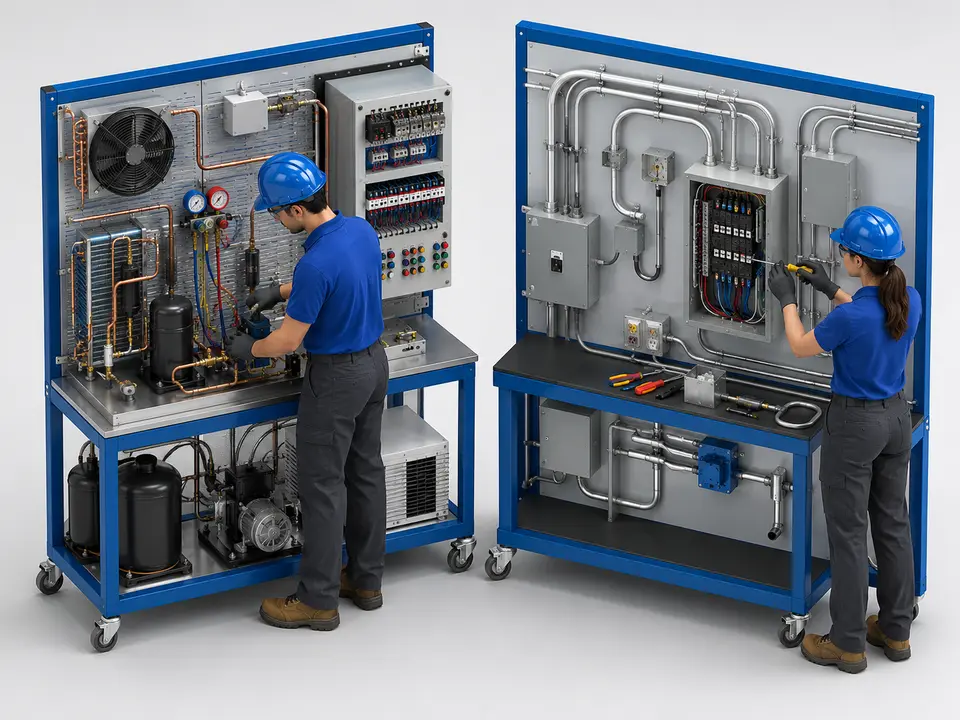
Which Trade Takes Longer to Learn?
HVAC training length can begin with a shorter school program. Field competency still takes years.
Electrician apprenticeship length commonly runs four or five years. BLS notes about 2,000 paid hours yearly.
HVAC apprenticeship length varies by program and specialty. Structured routes can also last several years.
Electrician license requirements differ by state and locality. Rome wasn’t built in a day.
Our HVAC difficulty guide explains the trade’s learning curve.
HVAC students meet refrigeration, airflow, electricity, and combustion. Electrical apprentices focus more deeply on power and code.
Both careers require continuing learning. Equipment, codes, controls, and safety rules continue changing.
Which Trade Offers Better Overtime Pay?
HVAC overtime pay often rises during extreme heat or cold. Emergency calls can stretch evenings.
Electrician overtime pay may rise during construction deadlines, shutdowns, or scheduled maintenance.
HVAC on call pay can include standby money or minimum call hours.
Electrician weekend pay depends on employer, agreement, and overtime law.
Compare base wages before relying on extra hours. When it rains, it pours.
Ask whether extra work is mandatory. High annual earnings may require a schedule that doesn’t fit family life.
Standby pay matters for HVAC. Travel and shutdown premiums may matter more in electrical work.
Which Trade Has Better Union Pay?
Union electrician salary can include defined wage steps, pensions, health coverage, and training.
Union HVAC salary packages may follow pipefitter, sheet metal, or service agreements.
Electrician prevailing wage and HVAC prevailing wage depend on project, classification, and location.
Union trade pay comparison must include dues and benefits. One hourly number cannot settle it.
Local agreements matter more than national stereotypes. Know the lay of the land.
Union entry can be competitive and seasonal. Training quality and pension value may still justify patience.
Nonunion offers deserve the same careful review. Written raise schedules can replace some union predictability.
Which Trade Pays More in California?
HVAC vs electrician salary California changes across metros and industries. Statewide figures can hide local gaps.
California electrician salary may rise around construction, utilities, manufacturing, and public work.
California HVAC salary may rise with extreme heat, controls, commercial systems, and refrigeration.
California skilled trade pay should be compared with rent, commuting, licenses, and benefits.
Our HVAC pay guide explains wage ranges. Look before you leap.
California licenses and public-work rules can shape both paths. Requirements differ by job scope and employer.
A higher Bay Area wage may face greater housing costs. Inland earnings can stretch differently.
Does Commercial Work Change the Winner?
Commercial HVAC salary can rise with chillers, automation, and large-system diagnosis.
Commercial electrician salary can rise with controls, distribution, construction, and specialized installations.
Industrial HVAC pay may include shifts, travel, or shutdown work.
Industrial electrician pay may reward automation, motors, drives, and production knowledge.
Specialty depth can reverse national averages. Skill is a ladder, not an elevator.
Data centers need both trades. Electricians support power distribution. HVAC teams protect cooling and environmental control.
Workers who understand controls may cross project boundaries. Clear licensing and role limits still apply.
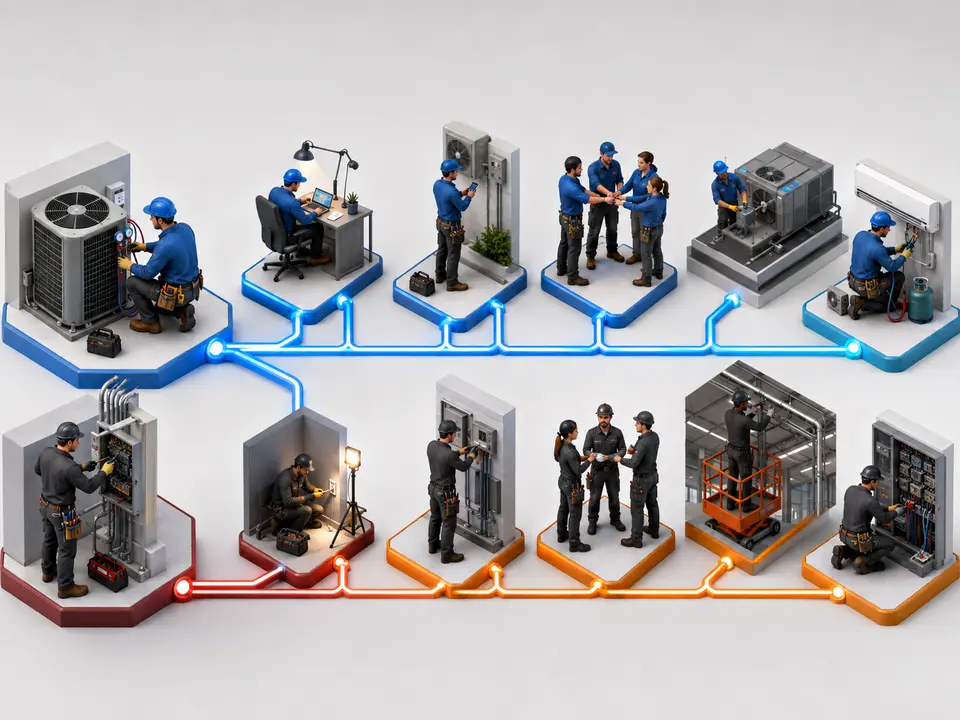
Which Trade Has Better Benefits?
HVAC technician benefits may include vehicles, tools, insurance, retirement, paid leave, and training.
Electrician benefits may include similar coverage through contractors, unions, government, or manufacturing.
HVAC total compensation can look stronger when a vehicle reduces commuting costs.
Electrician total compensation may rise through pensions or strong public-sector packages.
A penny saved is a penny earned. Compare employee costs, not only employer promises.
Tool allowances can matter early. Electrical and HVAC meters, hand tools, and protective gear add real expense.
Which Trade Has Better Work-Life Balance?
HVAC work life balance varies with on-call rotations and seasonal demand.
Electrician work life balance varies with construction deadlines, shutdowns, and commuting.
HVAC schedule flexibility may improve in facilities or maintenance roles.
Electrician schedule flexibility may improve through maintenance or self-employment.
Our HVAC schedule guide explains those trade-offs. Time is money.
Self-employed schedule control often comes with customer and paperwork pressure. Freedom isn’t the same as fewer hours.
Which Trade Is More Physically Demanding?
HVAC physical demands include lifting, kneeling, ladders, rooftops, and hot attics.
Electrician physical demands include standing, kneeling, pulling wire, ladders, and cramped spaces.
HVAC safety risks include electricity, refrigerants, heat, combustion, and moving parts.
Electrician safety risks include shock, arc hazards, burns, falls, and construction exposure.
Better safe than sorry. Our HVAC safety guide covers daily controls.
Physical fit can change over time. Both trades offer estimating, supervision, teaching, and management routes later.
Which Career Has More Advancement Options?
HVAC career advancement can lead toward controls, refrigeration, sales, estimating, management, or ownership.
Electrician career advancement can lead toward master status, supervision, project management, or contracting.
HVAC specialization pay may grow through chillers and automation.
Electrician specialization pay may grow through industrial systems, controls, or high-voltage work.
Our high-paying HVAC fields guide maps specialty choices. Strike while the iron is hot.
Leadership pay requires communication and planning. Technical excellence alone may not prepare someone to manage people.
Which Trade Is Better for Starting a Business?
HVAC business owner income depends on service demand, pricing, overhead, and team quality.
Electrical contractor income depends on project mix, licensing, collections, and labor.
HVAC self employment pay and electrician self employment pay aren’t included in BLS wage medians.
Ownership can build wealth or create losses. Don’t count your chickens before they hatch.
Business skill matters as much as technical skill. Marketing, finance, hiring, and law join the toolbox.
Customer demand differs too. HVAC service creates repeat maintenance. Electrical contractors may rely more on projects or renovations.
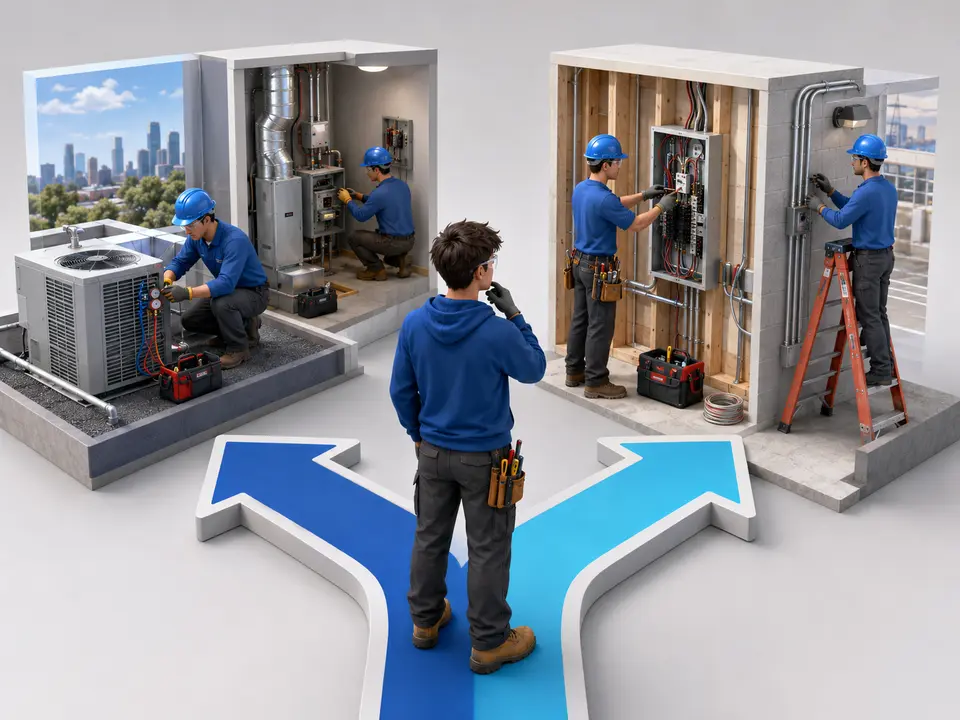
Final Answer: What Pays Better, HVAC or Electrician?
Electricians currently hold the higher national median by $2,180 yearly. Their top 10% threshold is also higher.
HVAC or electrician pay can reverse locally through specialty, overtime, union coverage, or employer.
Better trade salary decisions should include training cost, benefits, hours, and living expenses.
HVAC electrician career choice depends on preferred systems and work style.
Choose the trade you can master safely. Good work speaks for itself, and mastery often earns more.
Shadow both trades before enrolling. A real workday can reveal which tasks feel sustainable and interesting.