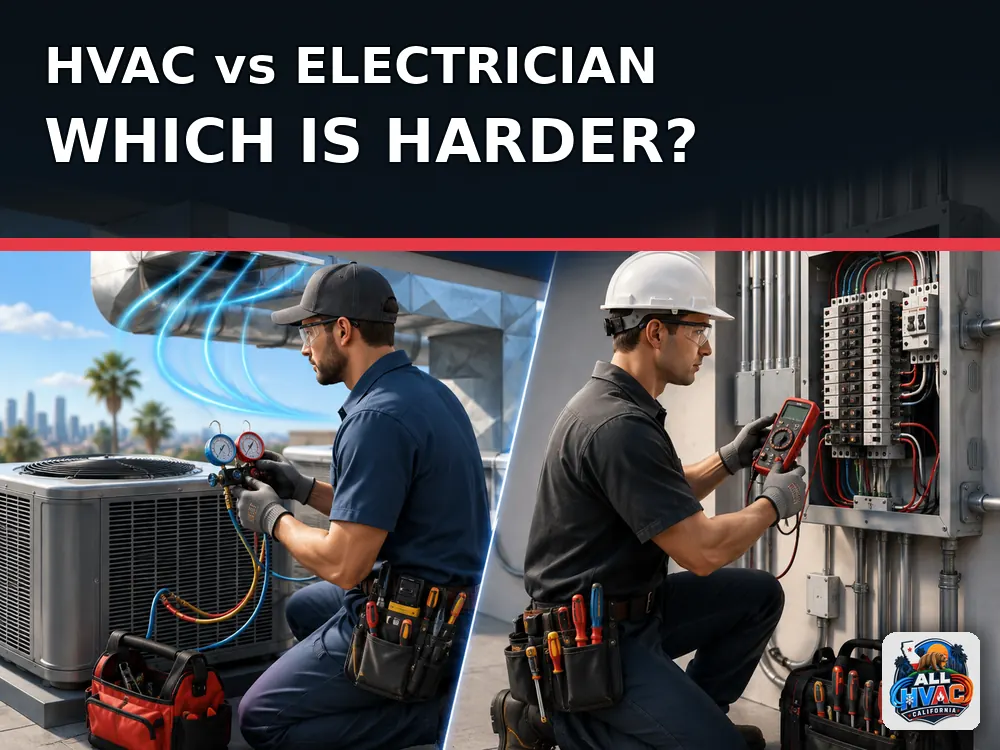
HVAC is not always harder than electrical work. Each trade is difficult in a different way.
HVAC blends refrigeration, airflow, wiring, controls, and customer service. Electricians go deeper into circuits, codes, and electrical safety. The better fit depends on your mind, body, and career goals. There is no one-size-fits-all answer.
Is HVAC Harder Than Being an Electrician?
HVAC feels harder when broad troubleshooting makes you uncomfortable. Electrical work feels harder when detailed code and circuit work feels stressful. Different strokes suit different folks.
An HVAC technician may test voltage, refrigerant pressure, airflow, and temperature during one call. An electrician may trace a circuit, calculate load, and follow strict code rules. Both trades punish careless guesses.
The best question is not which trade sounds tougher. Ask which problems you enjoy solving repeatedly. That answer usually points toward the better career.
Did You Know?
HVAC technicians often troubleshoot electrical controls. However, electricians receive deeper training in wiring systems, electrical code, and power distribution.
Which Trade Has Harder Training?
Electrical training is often longer and more regulated. HVAC training usually starts faster, but learning continues for years. Slow and steady still wins the race.
The BLS electrician profile lists an apprenticeship as the typical entry path. Electricians commonly complete several years of paid training. Licensing rules also vary by state and locality.
The BLS HVAC profile lists a postsecondary nondegree award as typical. Many programs last six months to two years. Technicians then receive long-term field training.
How Do the Technical Skills Compare?
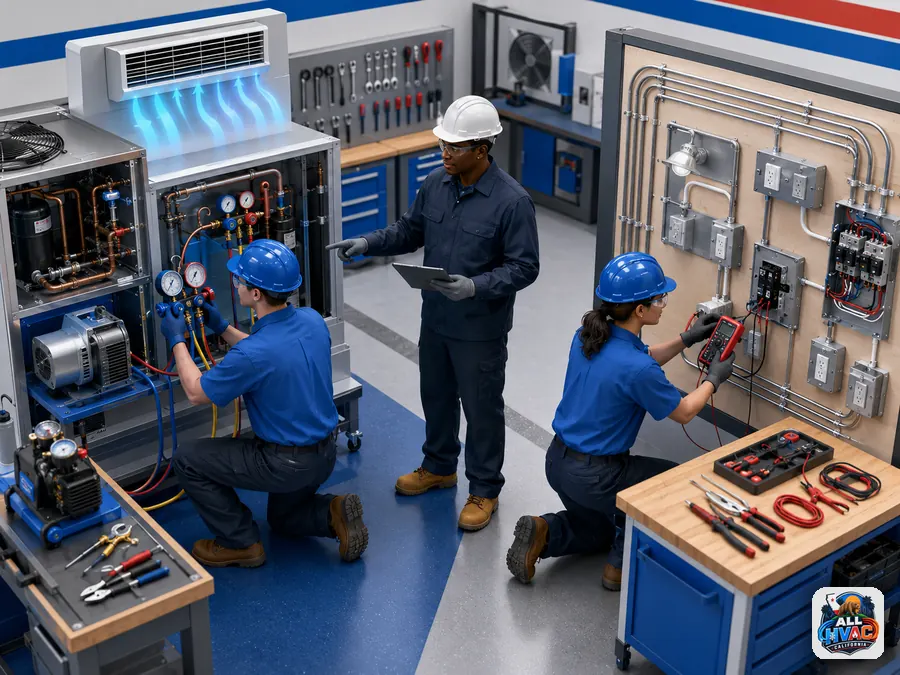
HVAC requires wider system knowledge, while electrical work requires deeper electrical knowledge. Both demand careful measurement and logical steps. You must keep your eye on the ball.
- HVAC: Refrigeration cycles, airflow, combustion, motors, wiring, and controls.
- Electrical: Circuits, panels, conductors, grounding, code, and load calculations.
- Both: Diagrams, meters, safety procedures, mathematics, and troubleshooting.
People often worry about formulas before starting. The guide on math used by HVAC technicians explains the practical calculations.
HVAC Versus Electrician Difficulty
The harder trade changes with the task being measured. A fair comparison needs more than one number. Do not judge a book by its cover.
| Difficulty Area | HVAC | Electrician |
|---|---|---|
| Knowledge range | Very broad | More specialized |
| Code depth | Moderate to high | Very high |
| Seasonal pressure | Often high | Varies by sector |
| Heat exposure | Common in summer | Common on job sites |
| Electrical risk | Present | Central risk |
| Customer contact | Frequent in service | Depends on role |
Which Trade Is More Physically Demanding?
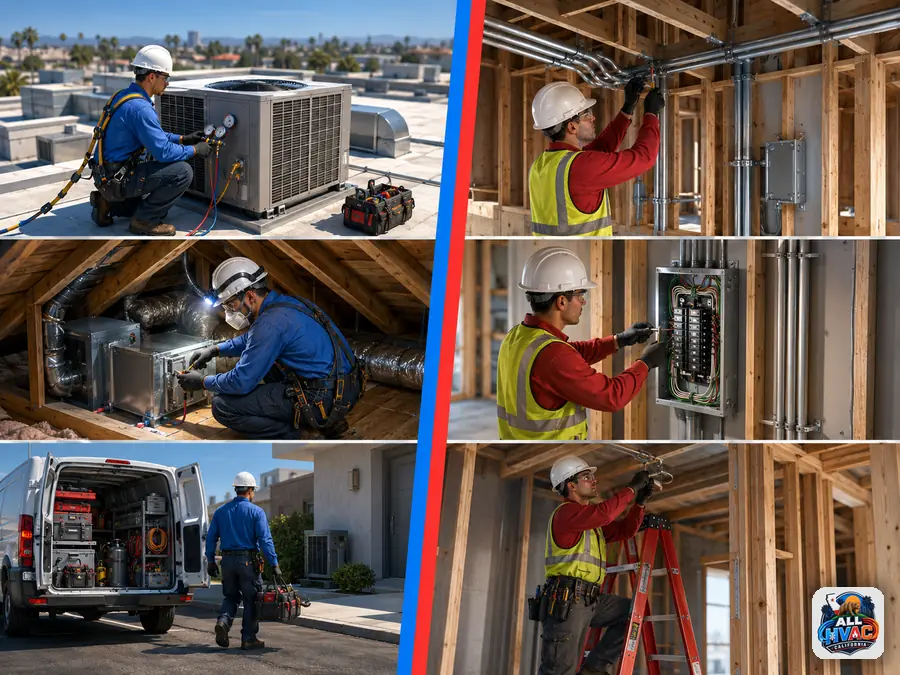
Both trades are physically demanding, but the strain appears differently. HVAC includes lifting, attics, roofs, and outdoor heat. Electricians bend conduit, pull wire, climb ladders, and work overhead. No pain, no gain is bad safety advice.
California HVAC calls can mean hot attics during triple-digit weather. Equipment may be heavy and difficult to reach. Electrical construction can mean long hours on active sites.
Which Trade Has Greater Safety Risks?
Electricians face more direct exposure to shock and arc hazards. HVAC technicians face electricity, refrigerants, pressure, heat, and moving equipment. Safety must stay front and center.
Proper lockout procedures protect workers in both trades. Personal protective equipment also matters. Rushing creates risk, especially during busy summer calls.
If risk is your biggest concern, review our honest look at HVAC job hazards. Good training reduces danger, but never removes it.

Which Career Pays Better?
Pay depends on location, specialty, licensing, overtime, and experience. Electricians often show a higher national median. HVAC specialists can still earn strong pay. The devil is in the details.
Our full HVAC versus electrician pay comparison covers salary factors separately. Do not choose from one national figure alone.
Commercial controls, refrigeration, union work, and ownership can change HVAC earnings. Industrial electrical work can also pay more than basic residential work.
Which Trade Offers Better Work-Life Balance?
Work-life balance depends more on the employer and specialty. Residential HVAC service often includes summer overtime and on-call shifts. Construction electricians may start early and follow project schedules. Every rose has its thorn.
Maintenance roles can offer steadier hours in both trades. Schools, hospitals, factories, and government facilities employ technical workers. Ask about on-call rules before accepting an offer.
Who Should Choose HVAC?
Choose HVAC if you enjoy varied problems and complete mechanical systems. It suits curious people who can explain repairs clearly. Variety is the spice of life.
- You enjoy refrigeration, airflow, wiring, and mechanical work.
- You prefer changing job sites and service calls.
- You can stay calm around uncomfortable customers.
- You want several entry routes and specialties.
- You like finding one fault inside a connected system.
Read whether HVAC is a good career before making the final call.
Who Should Choose Electrical Work?
Choose electrical work if circuits and code hold your attention. It suits precise thinkers who respect detailed rules. Measure twice and cut once.
- You enjoy wiring diagrams and structured systems.
- You want a formal apprenticeship path.
- You can follow exact codes without shortcuts.
- You prefer electrical depth over mechanical variety.
- You want residential, commercial, or industrial options.
Frequently Asked Questions
What Does a Normal Workday Look Like?
A normal HVAC day changes more often than an electrical day. Service technicians may visit several properties. Electricians may stay on one project longer. Every day has its own weather.
HVAC calls can include diagnosis, repair, maintenance, and customer explanations. Electrical work can include rough wiring, panels, fixtures, testing, and inspection preparation.
Construction roles in both trades feel different from service roles. Ask workers about ordinary Tuesdays, not only exciting projects.
Which Trade Offers Better Advancement?
Both trades offer strong advancement for reliable workers. Skill, licensing, leadership, and business judgment drive progress. The cream rises to the top.
HVAC technicians can enter controls, refrigeration, estimating, sales, or management. Electricians can specialize in industrial systems, controls, supervision, estimating, or contracting.
Advancement often requires better communication, not only better tool skills. Leaders must plan jobs, explain risks, and support teams.
Which Tools Will You Use?
HVAC workers use a wider mix of diagnostic tools. Electricians rely heavily on electrical testers and installation tools. A good worker knows every tool has limits.
HVAC tools include gauges, thermometers, vacuum pumps, scales, and airflow instruments. Electrical tools include meters, conduit benders, fish tape, and wire tools.
Both careers require safe meter use. Cheap tools can cost more after one bad reading. Buy quality slowly and protect it.
A Quick Trade-Fit Test
A simple fit test can narrow your choice. Answer honestly before paying tuition. The truth will out.
- Do you prefer broad systems or electrical depth?
- Can you handle customer conversations?
- Do hot attics bother you more than construction sites?
- Would you enjoy a long formal apprenticeship?
- Which work would still interest you after five years?
Which Trade Uses More Math?
Both trades use practical math, but electricians often meet more code-based calculations. HVAC uses formulas across airflow, heat, pressure, and electricity. Numbers tell a story.
Electricians calculate load, voltage drop, conductor size, and circuit capacity. HVAC technicians calculate temperature change, airflow, superheat, subcooling, and equipment capacity.
Most daily work uses arithmetic, fractions, measurements, and basic algebra. Advanced design roles require more. A calculator helps, but understanding still matters.
Students should not quit because school math felt difficult. Applied examples often make formulas easier. Practice turns unfamiliar steps into habits.
Which Career Has Stronger Job Demand?
Both careers have strong demand because buildings depend on power and climate control. Local construction and replacement cycles change openings. A rising tide can lift both boats.
HVAC demand grows through aging equipment, efficiency upgrades, heat pumps, and recurring service. Electrical demand grows through construction, electrification, controls, and infrastructure.
Demand does not guarantee a good employer. Look for training, safety, benefits, and clear advancement. A busy company can still be poorly managed.
Review several months of local job postings. Note repeated requirements and pay ranges. Patterns give better guidance than one advertisement.
Which Trade Is More Seasonal?
HVAC service is usually more seasonal than electrical work. Hot weather can create sudden call volume. Make hay while the sun shines.
California climates vary widely. Inland heat creates strong cooling demand. Coastal areas may have milder peaks. Mountain regions add heating pressure.
Electrical construction can slow between projects. Service and maintenance work may stay steadier. Industrial facilities can also provide year-round demand.
Ask employers how hours change across seasons. Overtime can raise income, but unstable schedules can exhaust workers.
How Do Licensing Paths Differ?
Electrical work often follows more defined licensing and apprenticeship rules. HVAC requirements depend on duties, refrigerants, and contracting scope. Rules are rules.
Employees and business owners may face different requirements. City, state, and project rules can also change. Never rely on a social post.
Ask training programs which credentials graduates receive. Confirm answers with the responsible government agency. Keep copies of completed hours and certificates.
A license can improve mobility and trust. It does not replace safe judgment. Skilled workers still verify conditions before acting.
Which Personality Fits HVAC Better?
HVAC fits curious troubleshooters who tolerate changing conditions. The work rewards flexible thinking and calm explanations. Keep your cool.
One call may involve a failed capacitor. The next may involve airflow, controls, or a refrigerant issue. Technicians switch mental gears often.
Residential service also requires trust. Customers may feel hot, worried, and suspicious about cost. Clear evidence helps them decide.
People who enjoy variety often thrive. People who want identical tasks may find service work tiring.
Which Personality Fits Electrical Work Better?
Electrical work fits precise thinkers who respect structured rules. Details around conductors, connections, and protection matter. Measure twice and cut once.
Electricians need patience during repetitive installation. They also need logical thinking during troubleshooting. Small errors can create serious consequences.
Construction teams must coordinate with other trades. Clear planning prevents conflicts inside walls and ceilings.
People who enjoy diagrams and organized systems may prefer this depth. Strong safety habits are non-negotiable.
How Should You Compare Training Programs?
Compare programs through outcomes, cost, and real training hours. A flashy workshop does not guarantee good teaching. Looks can be deceiving.
- Confirm recognized credentials and apprenticeship links.
- Ask how much time students use real equipment.
- Compare total tuition, tools, and fees.
- Review completion and job placement figures.
- Speak with employers who hire graduates.
- Check evening and part-time options.
- Ask which costs arrive after enrollment.
Visit during a normal class. Watch whether students perform tasks or only listen. Practical trades require practical repetition.
Can You Own a Business in Either Trade?
Both trades can support profitable service businesses. Ownership adds sales, scheduling, hiring, compliance, and financial risk. Heavy is the head that wears the crown.
HVAC businesses can build recurring maintenance relationships. Electrical businesses can serve repairs, upgrades, construction, and specialized systems.
Technical skill alone does not guarantee profit. Owners must estimate accurately and control callbacks. They must also communicate expectations clearly.
Learn inside a strong company first. Watch how leaders price work, train people, and solve complaints.
A First-Year Success Plan
A strong first year should build safe habits and reliable basics. Speed comes after control. Crawl before you walk.
Arrive prepared and document what you learn. Ask why each measurement matters. Keep tools organized and inspect them.
Practice diagrams away from the job. Review mistakes without hiding them. Good mentors prefer honest questions over dangerous confidence.
Track completed tasks and training hours. That record supports raises, licenses, and future applications.
How Do Pay Structures Differ?
Both trades may pay hourly wages, overtime, bonuses, or project rates. Residential HVAC can also include sales incentives. Read the fine print.
A high hourly rate may hide weak benefits or unstable hours. A lower rate may include training, health coverage, retirement, and paid travel.
Ask whether drive time counts. Confirm tool allowances, uniforms, and after-hours pay. Small details change real income.
Never compare offers using base wages alone. Estimate a full year with likely hours and deductions.
Which Trade Works Indoors More Often?
Neither trade stays indoors all day. HVAC technicians move between homes, rooftops, attics, and outdoor units. Electricians move between sites, panels, ceilings, and equipment. The grass is not always greener indoors.
HVAC service includes conditioned rooms and extremely hot equipment spaces. Electrical construction may expose workers to weather before buildings close.
Industrial roles can provide sheltered work with noise and heat. Maintenance jobs may offer the most predictable setting.
Visit several specialties before deciding. The same trade can feel completely different across employers.
How Is Technology Changing Both Careers?
Technology is adding controls, sensors, networks, and connected equipment to both trades. Workers who keep learning gain options. Change is the only constant.
HVAC technicians now see variable-speed equipment, communicating thermostats, and building automation. Electricians see smart panels, energy systems, chargers, and advanced controls.
Digital tools do not remove fundamentals. Good technicians still verify voltage, connections, airflow, and equipment condition.
Choose training that teaches principles and current tools. Brand-specific lessons alone can become outdated.
How Can You Job-Shadow Safely?
Job shadowing should happen with employer permission and clear safety limits. Watching is valuable, but untrained work is dangerous. Better safe than sorry.
Ask schools, contractors, unions, or workforce programs about structured visits. Wear required clothing and follow every site instruction.
Notice pace, communication, cleanup, and documentation. Also notice how experienced workers handle uncertainty.
Afterward, write what attracted and worried you. Compare feelings after seeing both trades.
What Questions Should You Ask Employers?
Good questions reveal the job behind the advertisement. Ask before accepting, not after problems start. Forewarned is forearmed.
- How often will I be on call?
- Who trains first-year workers?
- How are raises decided?
- Which tools must I buy?
- How much travel happens weekly?
- What caused the last person to leave?
- Which career paths are realistic here?
Write answers after each interview. Good comparisons prevent excitement from hiding weak terms.
Is HVAC easier to learn than electrical work?
Both trades become easier when lessons connect with supervised practice. Strong basics reduce confusion later.
HVAC may offer a faster entry path. Mastering diagnosis still takes years of field experience.
Do HVAC technicians do electrical work?
They test and repair equipment circuits within their scope. Building wiring may require an electrician.
Can an electrician move into HVAC?
Yes. Electrical knowledge helps greatly. Refrigeration, airflow, and equipment training remain necessary.
Which trade has more career options?
Both offer strong options. HVAC spans service, refrigeration, controls, sales, and management. Electrical work spans several construction and industrial sectors.
The Bottom Line
HVAC is broader, while electrical work goes deeper into power and code. Neither trade is universally harder. Pick the challenge that feels worth mastering. Where there is a will, there is a way.
All HVAC California shares straight answers about the systems behind California comfort.