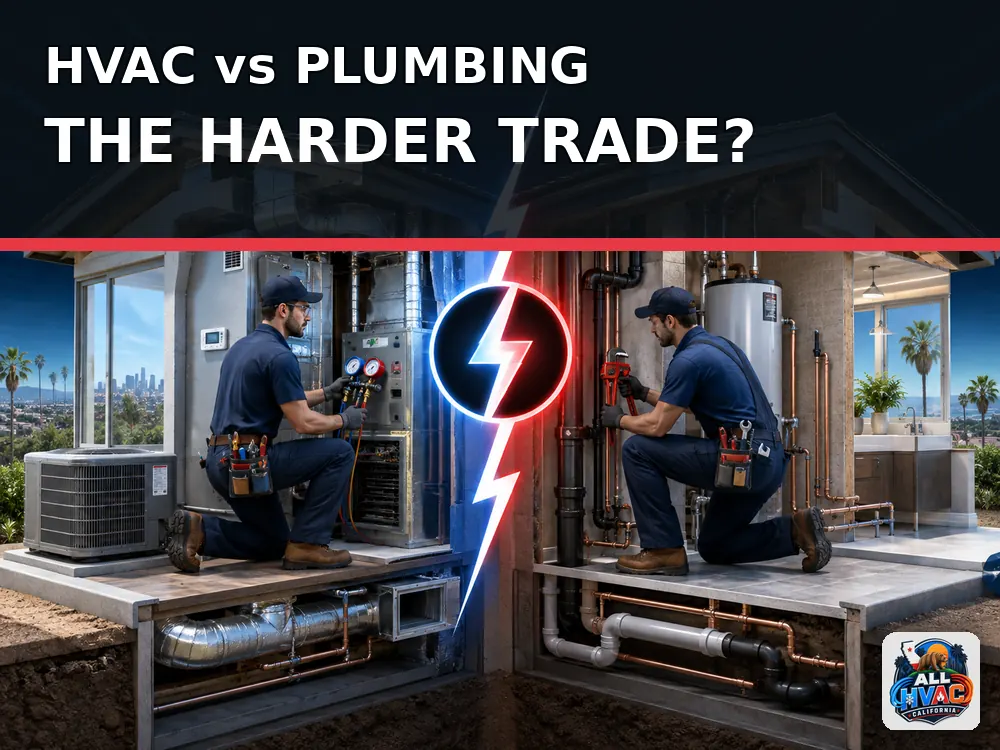
HVAC and plumbing are both hard trades. The tougher choice depends on the work you dislike most.
HVAC demands broad diagnostics across mechanical and electrical systems. Plumbing brings heavy materials, tight spaces, water damage, and sanitation problems. One trade tests your brain differently. The other may test your stomach.
Is HVAC or Plumbing Harder?

HVAC is usually harder technically, while plumbing can feel harder physically. That simple answer has exceptions. The job site and specialty change everything. Horses for courses.
An HVAC technician may diagnose airflow, voltage, refrigerant pressure, and control signals. A plumber may locate a hidden leak, move heavy pipe, and repair drainage. Neither can guess safely.
Did You Know?
Both trades use pressure, flow, temperature, tools, codes, and customer service. Their shared skills explain why some workers move between them.
Which Trade Has Harder Training?
Plumbing often follows a longer apprenticeship. HVAC offers shorter school programs, followed by long field training. Rome was not built in a day.
The BLS plumbing career profile lists an apprenticeship as typical. Apprentices learn installation, code, safety, and blueprint reading while working.
The BLS HVAC career profile lists postsecondary nondegree training as typical. Programs commonly last six months to two years.
Which Trade Is More Technical?
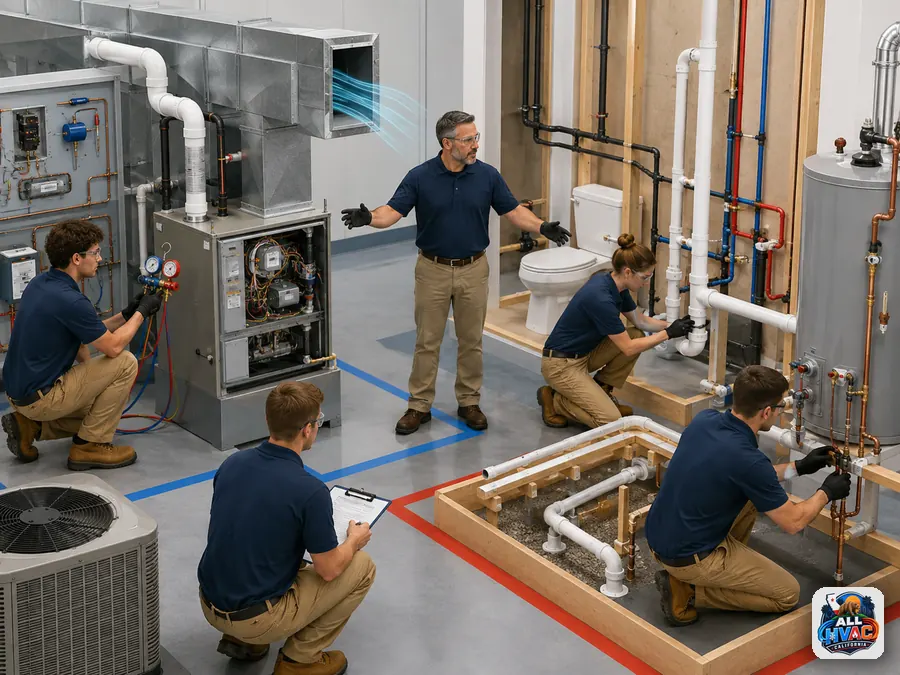
HVAC usually covers a wider technical range. Plumbing has deep code, sizing, drainage, and pressure knowledge. Keep your eye on the ball.
- HVAC: Refrigeration, airflow, electricity, combustion, motors, and controls.
- Plumbing: Supply, drainage, venting, gas piping, fixtures, and water heating.
- Both: Codes, measurements, drawings, troubleshooting, and safety.
HVAC troubleshooting often changes between equipment brands. Plumbing diagnosis often follows the path of flow and pressure. Both reward patient thinking.
HVAC Versus Plumbing Difficulty
The difficulty becomes clearer when each part gets compared. One hard day does not define a career. Do not make a mountain from one service call.
| Difficulty Area | HVAC | Plumbing |
|---|---|---|
| Technical range | Very broad | Focused but deep |
| Heavy lifting | Common | Very common |
| Tight spaces | Attics and crawlspaces | Crawlspaces and cabinets |
| Dirty work | Dust, condensate, old equipment | Drainage and sewage possible |
| Emergency calls | No cooling or heat | Leaks, backups, no water |
| Seasonal pressure | Often high | Usually steadier |
Which Trade Is Harder on Your Body?
Plumbing can be harder on backs, knees, and shoulders. HVAC also includes awkward lifting and extreme temperatures. Your body keeps the score.
Plumbers carry pipe, water heaters, toilets, and heavy tools. They kneel under sinks and work inside crawlspaces. HVAC technicians move condensers, furnaces, compressors, and recovery equipment.
Our guide on HVAC’s physical demands explains common strain points. Good lifting habits and team support matter.
Which Trade Has Worse Working Conditions?
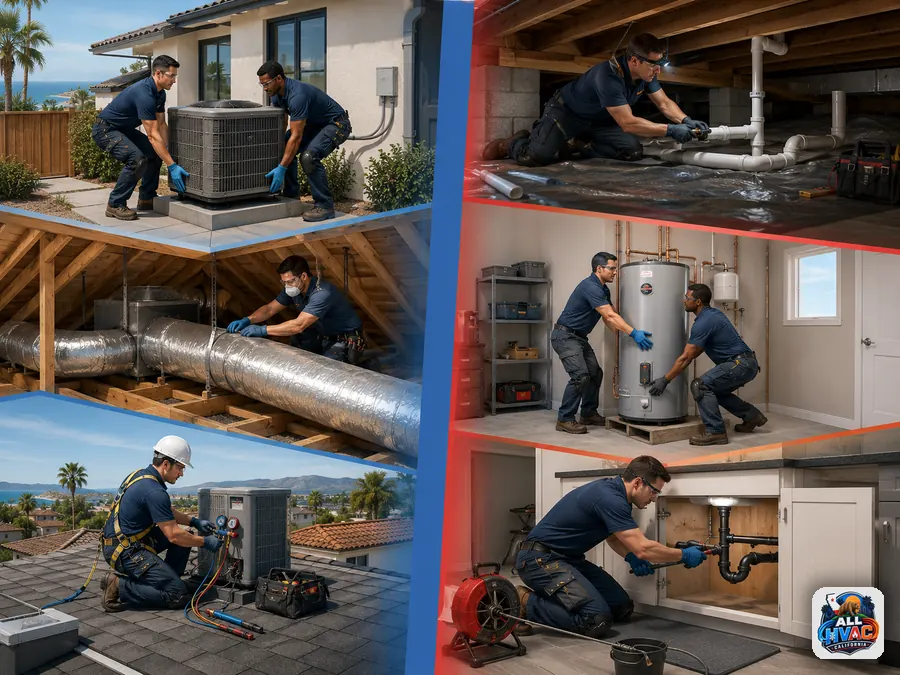
Plumbing brings more sanitation exposure. HVAC brings more heat, rooftops, and seasonal weather. Every cloud has a silver lining.
A residential plumber may handle sewer backups or contaminated water. An HVAC technician may enter a 130-degree attic. Commercial roles can feel very different.
Some workers prefer mechanical rooms over drains. Others prefer pipes over electrical diagnostics. Visit real job sites before deciding.

Which Career Pays Better?
National median plumbing pay is often higher, but specialties change the picture. Local demand, overtime, licensing, and ownership matter. The devil is in the details.
Our separate guide answers whether HVAC or plumbing pays more. It keeps salary intent away from this difficulty comparison.
Commercial refrigeration and controls can raise HVAC earnings. Pipefitting, steamfitting, union work, and business ownership can raise plumbing income.
Which Trade Has Better Hours?
Both trades can include nights, weekends, and emergency calls. HVAC demand often spikes during hot or cold weather. Plumbing emergencies happen throughout the year. When it rains, it pours.
Installation crews may have steadier daytime schedules. Service technicians often rotate on-call coverage. Employer policy matters more than marketing promises.
Read about HVAC on-call schedules before comparing job offers.
Who Should Choose HVAC?
Choose HVAC if you enjoy varied diagnostics and connected systems. It rewards curiosity and calm customer communication. Variety is the spice of life.
- You like electrical and mechanical problems.
- You enjoy learning new equipment and controls.
- You can work in heat and changing locations.
- You want service, installation, controls, or refrigeration options.
Who Should Choose Plumbing?
Choose plumbing if you enjoy building reliable piping systems. It rewards practical planning, strength, and code discipline. Measure twice and cut once.
- You prefer flow and piping over electrical diagnosis.
- You can handle dirty or wet conditions.
- You want a structured apprenticeship route.
- You value steady repair demand.
How Can You Test Each Career First?
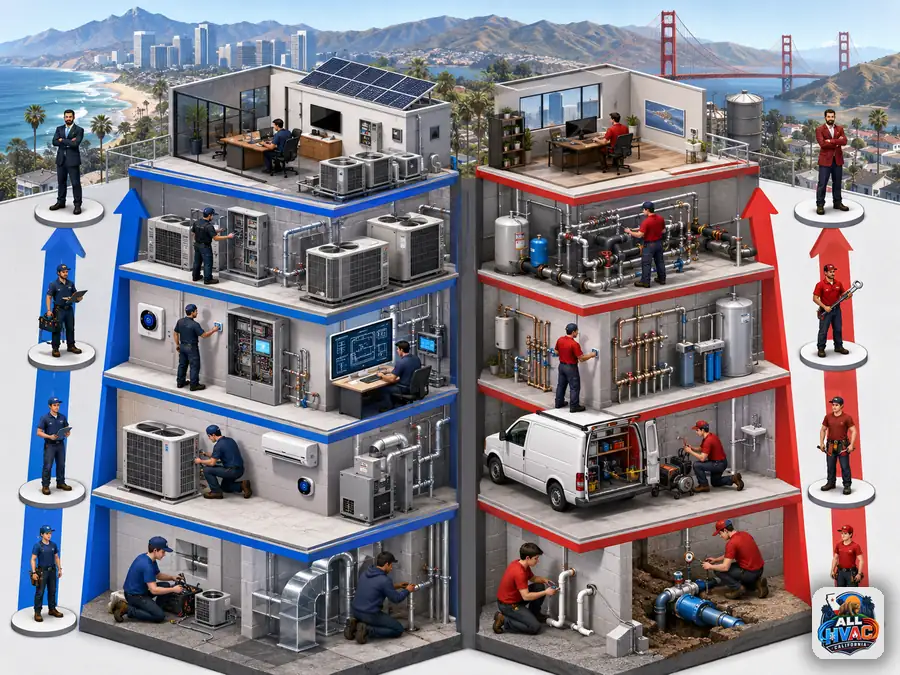
You can test each career through job shadowing and entry-level exposure. A real workday beats twenty online opinions. The proof is in the pudding.
- Tour trade schools and apprenticeship programs.
- Ask contractors about ride-along opportunities.
- Try an introductory electrical or mechanical course.
- Speak with first-year and senior workers.
- Compare tools, schedules, benefits, and advancement.
Our guide on whether HVAC is a good career adds job outlook and fit questions.
Frequently Asked Questions
Which Trade Has More Customer Contact?
Residential HVAC and plumbing both involve frequent customer contact. Service workers enter private homes and explain costly decisions. Manners cost nothing.
HVAC conversations often focus on comfort, energy use, and replacement choices. Plumbing conversations often focus on leaks, damage, sanitation, and urgency.
Clear communication builds trust in both trades. A skilled worker who cannot explain findings may struggle in service work.
Which Trade Is Better for Business Ownership?
Both trades can support strong local businesses. Plumbing offers steady emergencies, while HVAC adds maintenance and replacement demand. Do not count your chickens before they hatch.
Ownership requires more than technical skill. Pricing, scheduling, permits, insurance, hiring, and customer service shape profits.
Work for a well-run company before opening one. Watch how estimates, callbacks, and complaints get handled.
What Tools and Costs Should Beginners Expect?
Both trades require growing tool collections. HVAC diagnostic equipment can become expensive. Plumbing tools can become heavy and specialized. You get what you pay for.
Ask whether employers supply large equipment. Compare required starter lists before choosing school. Some programs include tools inside tuition.
Do not buy every shiny item at once. Start with required quality tools. Add specialty equipment after understanding the work.
A Quick HVAC or Plumbing Fit Test
A short fit test can expose your real preference. Be honest about ordinary work, not only pay. The truth will out.
- Would you rather trace voltage or water flow?
- Can you tolerate drain and sewer work?
- Do you enjoy learning electronic controls?
- Which emergency calls would stress you less?
- Which physical demands can you manage safely?
Which Trade Uses More Math?
Both trades use practical math every day. HVAC uses more formulas across several sciences. Plumbing uses detailed sizing, slope, volume, and pressure calculations. Numbers do not lie.
HVAC technicians measure voltage, temperature, pressure, airflow, and capacity. Plumbers measure pipe, grade, fixture demand, and water pressure.
Most entry work uses arithmetic, fractions, and basic algebra. Plans and codes guide the harder calculations. Consistent practice matters more than natural talent.
Ask training programs how math gets taught. Applied laboratories often make numbers easier to understand.
Which Trade Has Stronger Job Demand?
Both trades have steady demand because buildings always need comfort and water. Replacement cycles and construction create additional work. A rising tide can lift both boats.
HVAC creates recurring maintenance, repair, and replacement demand. Plumbing creates repairs, remodeling, water heater work, drainage, and new construction.
California population, climate, and aging buildings support both careers. Local demand still varies. Compare openings within a realistic commute.
Strong demand does not excuse weak employment terms. Review training, benefits, safety, schedules, and advancement together.
What Specialties Exist in HVAC?
HVAC offers specialties beyond residential air conditioner repair. Each path changes pay, schedule, and technical depth. Variety is the spice of life.
- Residential service and installation
- Commercial heating and cooling
- Refrigeration and low-temperature systems
- Building automation and controls
- Testing, adjusting, and balancing
- Energy management and commissioning
- Sales, estimating, and project management
Beginners do not need to choose forever. Build strong fundamentals, then follow the systems that hold your attention.
What Specialties Exist in Plumbing?
Plumbing also offers several distinct careers. The word plumber covers more ground than many beginners expect. Do not judge a book by its cover.
- Residential service and repair
- Commercial plumbing installation
- Drain cleaning and inspection
- Pipefitting and steamfitting
- Medical gas systems
- Fire protection piping
- Backflow testing and prevention
Some specialties require added credentials. Others involve union apprenticeships or industrial sites. Research the actual route before enrolling.
How Do Emergency Calls Compare?
HVAC emergencies threaten comfort and sometimes health. Plumbing emergencies can quickly damage property. When it rains, it pours.
During heat waves, HVAC companies may receive more calls than teams can handle. Technicians work under heat and customer pressure.
A burst pipe or sewer backup creates immediate damage and sanitation concerns. Plumbers may make decisions while water keeps moving.
Good dispatch, stocked vehicles, and senior support reduce stress. Ask employers how they manage after-hours problems.
How Do the First Five Years Differ?
The first five years build speed, judgment, and independence. Both trades begin with basic tasks under supervision. Good things take time.
HVAC beginners may start with maintenance, installations, and simple parts. They gradually handle complex diagnostics and customer decisions.
Plumbing apprentices learn materials, fittings, layouts, fixtures, and codes. Responsibility grows as required hours and skills accumulate.
Keep records of training and completed work. Documentation supports licenses, raises, and stronger job applications.
What Makes a Good Employer?
A good employer trains workers and protects safety. Pay matters, but daily support shapes your future. All that glitters is not gold.
- Clear pay and overtime rules
- Documented training and supervision
- Safe vehicles, tools, and lifting support
- Reasonable on-call rotation
- Honest customer pricing
- Defined promotion requirements
- Benefits explained in writing
Ask why the position is open. Also ask how long current technicians stay. Those answers reveal company health.
How Can You Protect Your Body Long-Term?
Long careers require smart movement and recovery. Toughness does not replace safe technique. An ounce of prevention beats a pound of cure.
Use lifting aids and ask for help. Rotate kneeling positions. Wear suitable gloves, footwear, and eye protection.
Build strength outside work without ignoring mobility. Report injuries early. Small pain can become a lasting problem.
Choose employers that provide equipment and realistic staffing. A career should not consume your health.
How Does Weather Affect Each Trade?
California weather affects HVAC more directly. Hot periods create urgent cooling calls and hotter work areas. When the heat is on, schedules stretch.
Plumbing also responds to weather. Cold snaps can damage pipes in some regions. Heavy rain can expose drainage and sewer problems.
Construction workers in both trades face outdoor conditions. Residential service moves between vehicles, homes, roofs, and crawlspaces.
Ask employers how they manage heat, hydration, and rest. Safety plans should be specific, not motivational slogans.
How Does Customer Trust Affect the Job?
Customer trust shapes success in both residential trades. Workers enter homes and discuss repairs customers cannot easily verify. Honesty is the best policy.
Show readings, photos, and clear explanations. Separate urgent safety needs from optional improvements. Customers should understand every recommendation.
Pressure tactics can create fast sales and long-term damage. Strong companies build repeat relationships through consistent work.
Technicians should also document declined work. Clear records protect everyone when conditions change.
What Should Apprentices Expect Early?
Early work often includes cleaning, carrying, observing, and repeating basic tasks. That foundation may feel slow. You must learn to walk before running.
HVAC beginners may change filters, assist installations, and record measurements. Plumbing apprentices may prepare materials, support layouts, and install fixtures.
Good mentors explain why each task matters. Good apprentices arrive prepared and accept correction without defensiveness.
Ask for regular skill reviews. Clear milestones make progress visible and reduce frustration.
How Should Career Changers Decide?
Career changers should compare time, income, body demands, and family schedules. Starting later is possible, but planning matters. Better late than never.
List transferable skills from construction, maintenance, customer service, or mechanical work. Then identify missing credentials and training.
Compare beginner wages against current bills. Paid apprenticeships may reduce financial pressure. Short HVAC programs may allow faster entry.
Talk with workers who changed careers at a similar age. Their practical obstacles may match yours.
A Final Side-by-Side Decision Method
A scored decision can reduce guesswork. Rate each trade from one to five. Let the chips fall where they may.
- Interest in daily technical problems
- Tolerance for heat, dirt, and tight spaces
- Training cost and time
- Local beginner opportunities
- Likely schedule and on-call duty
- Long-term physical sustainability
- Specialties you want later
Weight important factors more heavily. A career should fit your life, not somebody else’s ranking.
What Does Long-Term Success Require?
Long-term success requires more than finishing training. Reliable tradespeople keep learning, protect their health, and communicate honestly. Slow and steady wins the race.
HVAC systems keep changing through controls, refrigerants, efficiency standards, and heat pump adoption. Plumbers also meet new products, codes, and water-saving systems.
Build a habit of reading manuals and reviewing completed jobs. Ask why callbacks happened. Small lessons prevent repeated losses.
Protect your reputation as carefully as your tools. Arrive when promised. Keep work areas clean. Explain changes before creating extra charges.
Save money during strong earning periods. Emergencies, layoffs, injuries, and tool replacements can happen. A financial cushion supports better career decisions.
Finally, choose mentors carefully. Skilled workers who teach safe thinking can shorten years of trial and error.
Which Trade Better Fits California?
Both trades fit California because the state has varied climates and dense building markets. Local conditions shape demand. Location, location, location.
Inland areas create major cooling needs. Coastal cities have apartments, restaurants, and commercial systems. Older properties can need plumbing and HVAC upgrades.
New construction creates installation work for both trades. Existing buildings create ongoing repair and maintenance. No single market remains busy forever.
Review permits, licensing, wages, and commuting costs in your area. California traffic can turn a wide service territory into long unpaid days.
Is plumbing easier to learn than HVAC?
Not necessarily. Plumbing uses fewer system types, but apprentices still master codes, sizing, installation, and diagnosis.
Can an HVAC technician become a plumber?
Yes, but plumbing has separate training and licensing requirements. Shared mechanical skills can make learning easier.
Which trade is cleaner?
HVAC is usually cleaner than drain and sewer work. Dust, mold, oil, and condensate still appear.
Which trade has better long-term demand?
Both provide essential services. Buildings always need heating, cooling, water supply, and safe drainage.
The Bottom Line
HVAC is often harder technically. Plumbing may be harder physically and messier. Neither trade is easy. Choose the challenges you can handle for years. Where there is a will, there is a way.
All HVAC California explains home comfort without pressure or confusing language.