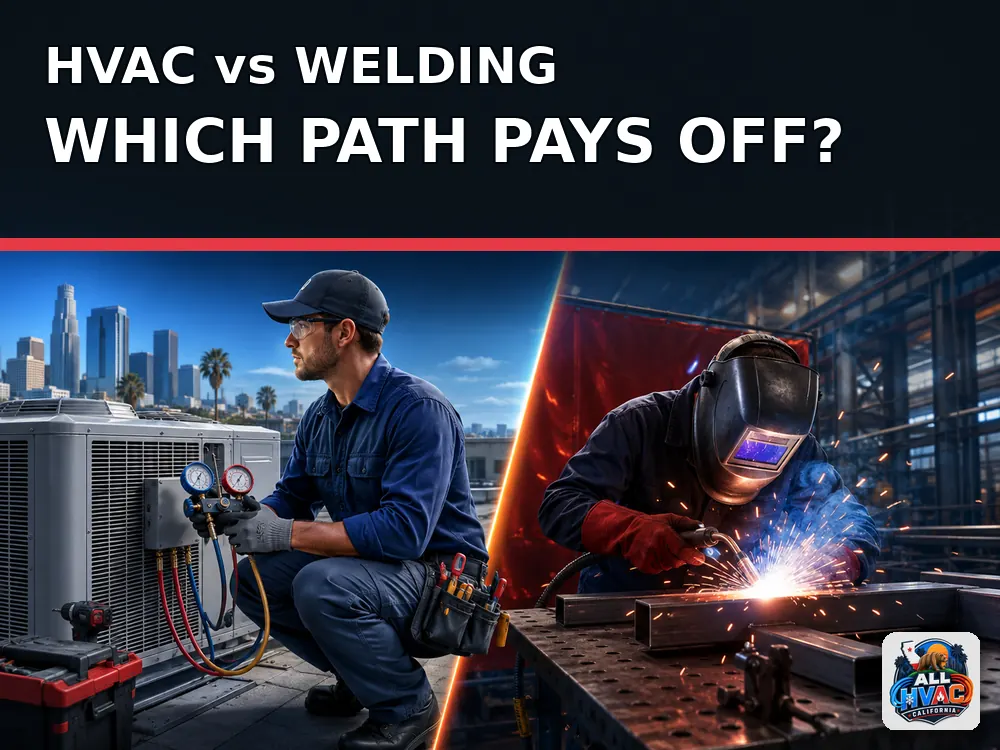
HVAC is usually the better long-term career for steady service demand. Welding is better for people who love fabrication.
HVAC combines diagnostics, repair, installation, and customer service. Welding focuses on joining metal with heat, control, and precision. Both can build pride. Their workdays feel very different.
Is HVAC or Welding a Better Career?
HVAC is better for broad demand and service-based advancement. Welding is better for metalwork, fabrication, and project-focused careers. Different strokes suit different folks.
HVAC workers keep buildings comfortable and equipment running. Welders build or repair structures, products, pipes, and machinery. Your preferred result matters.
Did You Know?
Some HVAC installation work uses brazing and soldering. Those skills help connect refrigerant lines, but they differ from structural welding.
What Does Each Trade Actually Do?

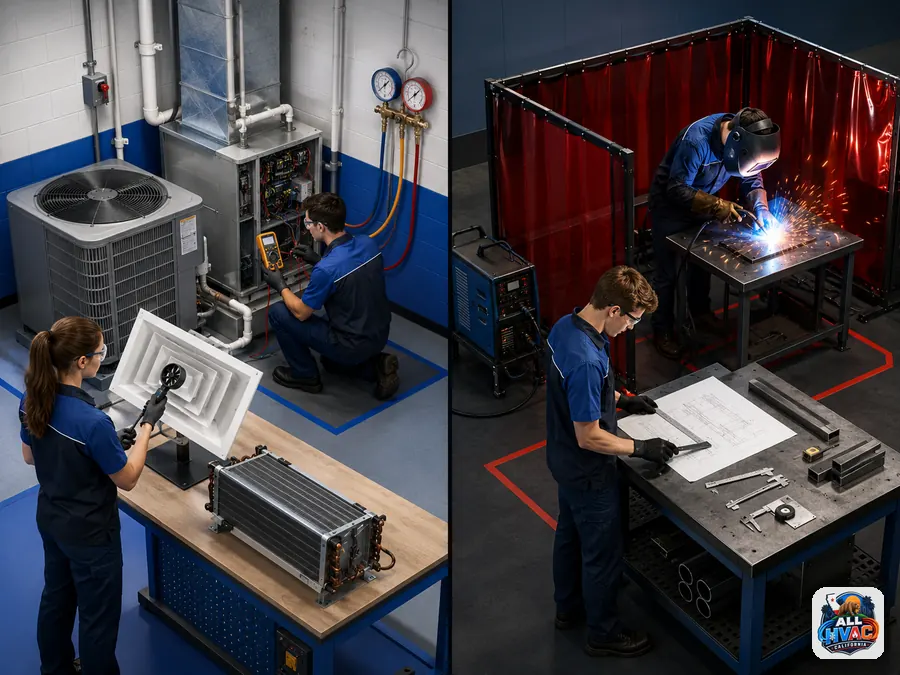
HVAC technicians diagnose complete comfort systems. Welders create strong, accurate metal joints. That is the heart of the matter.
- HVAC work: Service calls, maintenance, installation, airflow, wiring, and refrigerant.
- Welding work: Layout, cutting, fitting, joining, grinding, and inspection.
- Shared habits: Measurement, safety, tool care, patience, and quality control.
Which Trade Is Easier to Learn?
Basic welding can be learned faster than complete HVAC diagnosis. Professional welding consistency still takes serious practice. Practice makes progress.
The BLS welding career profile lists a high school diploma as typical. Technical and on-the-job training remain common.
The BLS HVACR career profile lists postsecondary nondegree training as typical. New technicians then complete long field training.
HVAC requires several sciences at once. Welding demands steady technique across positions, metals, and processes.
HVAC Versus Welding Career Comparison
A clear comparison should cover more than salary. Work setting, demand, and physical strain also matter. The devil is in the details.
| Career Factor | HVAC | Welding |
|---|---|---|
| Main work | Diagnose and service systems | Join and fabricate metal |
| Typical locations | Homes, businesses, rooftops | Shops, sites, factories |
| Customer contact | Often high | Usually lower |
| Technical range | Very broad | Focused technique |
| Demand pattern | Ongoing service demand | Industry and project dependent |
| Schedule pressure | Seasonal and on-call | Shift and deadline driven |
Which Career Pays More?
HVAC shows a higher national median wage than welding. Specialized welders can still earn excellent pay. One number never tells the whole story.
Our guide to HVAC technician pay explains how location and experience affect earnings.
HVAC controls, refrigeration, sales, and ownership can raise income. Pipe welding, underwater work, inspection, and travel can raise welding pay.
High-paid specialties may involve extra danger or time away. Look before you leap.
Which Career Has Better Job Stability?
HVAC usually offers steadier local service demand. Welding demand can rise or fall with manufacturing and construction. Make hay while the sun shines.
Homes and businesses need heating and cooling every year. Equipment also needs recurring maintenance. That creates repeat local work.
Welding supports many industries, which provides options. Project endings, plant changes, or economic cycles may affect openings.
Which Trade Is Harder on Your Body?
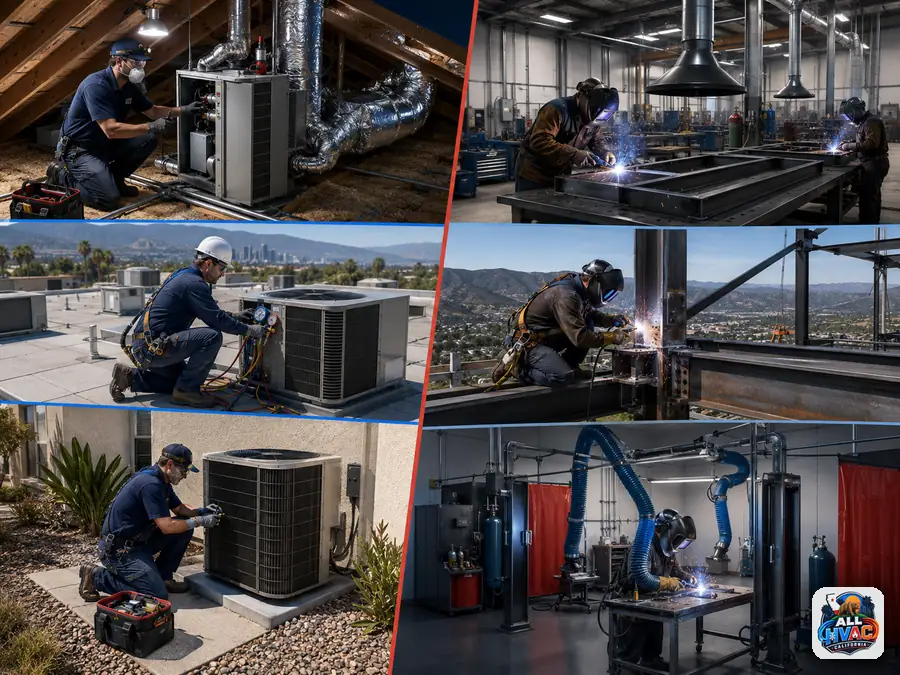
Both trades can strain the body, but welding adds intense heat and fumes. HVAC adds attics, ladders, rooftops, and heavy equipment. Your body keeps the score.
Welders may hold fixed positions and wear heavy protective gear. HVAC technicians crawl, climb, kneel, and move equipment.
Our article on HVAC’s physical impact explains common demands and prevention.
Which Career Has Better Hours?
Neither career guarantees a nine-to-five schedule. HVAC service can include emergency calls. Welding may involve shifts, deadlines, or travel. Every rose has its thorn.
HVAC installation and facilities maintenance can offer steady daytime work. Shop welding may also provide predictable shifts.
Ask about weekend work, overtime, travel, and rotation rules. The employer can shape your life more than the trade.
Who Should Choose HVAC?
Choose HVAC if you enjoy diagnosis, movement, and customer service. It rewards people who connect many clues. Variety is the spice of life.
- You enjoy electrical and mechanical troubleshooting.
- You want local service demand.
- You can explain technical choices clearly.
- You want several career branches.
- You can manage seasonal pressure.
Review whether HVAC is a good career for your goals.
Who Should Choose Welding?
Choose welding if you enjoy making precise physical results. It rewards control, focus, and repetition. Measure twice and weld once.
- You enjoy fabrication and metalwork.
- You prefer less customer conversation.
- You can tolerate heat, sparks, and protective gear.
- You may travel for specialized projects.
- You take pride in visible finished work.

Can HVAC and Welding Skills Work Together?
HVAC and welding skills can work together in installation and fabrication roles. However, brazing refrigerant lines is not structural welding. Apples and oranges both have value.
Sheet metal, piping, industrial HVAC, and mechanical construction can reward both skill sets. Cross-training may also improve job flexibility.
Do not skip core safety training. Each process has separate hazards, standards, and quality checks.
How Should You Choose?
Choose by testing the real work before paying for school. A short shop tour can reveal more than advertisements. The proof is in the pudding.
- Try an introductory HVAC and welding class.
- Ask workers about their hardest ordinary day.
- Compare total training costs and paid pathways.
- Review local jobs within commuting distance.
- Ask about benefits, overtime, and advancement.
For broader earning paths, see the highest-paying HVAC specialties.
Frequently Asked Questions
Which Career Offers Better Advancement?
HVAC offers broader advancement through service, controls, sales, and management. Welding offers advancement through process skill, inspection, supervision, and specialized sectors. The cream rises to the top.
Both careers reward workers who read plans, document work, and communicate clearly. Technical excellence opens the first door. Leadership skills open later doors.
Ask employers what happened to their best apprentices. Real career paths matter more than vague promises.
Which Career Travels More?
Most residential HVAC work stays within a local service area. Specialized welding may require travel between projects. The road less traveled can pay more.
Travel can increase income and experience. It can also strain family time, sleep, and routines. Read job offers carefully.
Some industrial HVAC and refrigeration roles also travel. Local maintenance positions usually provide more predictable locations.
What Does Success Look Like After Five Years?
After five years, a strong HVAC worker may diagnose systems independently. A strong welder may hold valuable process certifications. Good things take time.
HVAC workers may lead installations, manage service calls, or enter controls. Welders may tackle harder positions, inspect work, or supervise fabrication.
The best outcome comes from deliberate practice. Repeating easy tasks alone does not create mastery.
A Quick HVAC or Welding Fit Test
A short fit test can expose the better trade. Choose honest preferences over outside opinions. The truth will out.
- Do you prefer diagnosis or fabrication?
- How much customer contact do you want?
- Can you tolerate fumes, sparks, and heavy gear?
- Would you travel for better welding projects?
- Which finished work gives you more pride?
Which Career Uses More Math?
HVAC uses math across several systems. Welding uses geometry, layout, measurement, and heat-related judgment. Numbers tell a story.
HVAC technicians calculate temperature change, pressure relationships, airflow, voltage, and capacity. Welders calculate angles, dimensions, spacing, and material needs.
Advanced HVAC design uses stronger mathematics. Advanced fabrication and inspection also require detailed standards and measurements.
Neither trade requires a natural math genius. Accurate habits and repeated practice matter more.
What Welding Processes Could You Learn?
Welding includes several processes, materials, and positions. One beginner class cannot represent the whole career. Do not judge a book by its cover.
- Shielded metal arc welding
- Gas metal arc welding
- Flux-cored arc welding
- Gas tungsten arc welding
- Oxy-fuel cutting and brazing
- Pipe and structural welding
- Robotic welding support
Employers choose processes around material, speed, quality, and environment. A valuable welder learns why the method fits.
How Do Certifications Differ?
Welding certifications often prove ability for a process, position, or code. HVAC certifications cover refrigerants, safety, equipment, or manufacturer knowledge. Paper opens doors, but skill keeps them open.
A welding test may use a specific metal, joint, and position. Passing one test does not qualify every kind of work.
HVAC credentials also have limits. A refrigerant certificate does not prove complete diagnostic skill.
Ask employers which credentials they actually require. Avoid expensive certificates with little local value.
Which Career Has Better Local Mobility?
HVAC skills transfer well between California cities because every community has buildings. Welding mobility depends more on nearby industries. Location, location, location.
Residential and commercial HVAC companies operate across most populated areas. Facilities also hire internal maintenance teams.
Welding opportunities may cluster near manufacturing, ports, construction, energy, and repair businesses. Specialized travel can expand options.
Search your realistic work radius before choosing school. Training should match the jobs you can reach.
How Does Quality Get Checked?
Both trades require proof that work performs safely. Welding inspects joints. HVAC measures system operation. Trust, but verify.
Weld quality may involve visual inspection, gauges, or testing methods. Requirements depend on the job and governing standard.
HVAC quality checks may include pressure, vacuum, temperature, airflow, combustion, and electrical readings. Documentation helps prevent callbacks.
Good workers welcome inspection. Evidence protects the customer, employer, and technician.
Can Either Trade Become a Side Business?
Both skills can support side work, but legal and safety requirements matter. Easy money can become expensive trouble. Look before you leap.
Welders may offer small fabrication or repair services. HVAC workers may perform maintenance or service within legal limits.
Insurance, licensing, taxes, tools, and customer expectations still apply. Employer agreements may also restrict outside work.
Build competence before building a customer list. One poor job can damage trust quickly.
What Makes a Strong Training Program?
A strong program provides real practice, safety coaching, and honest job outcomes. Fancy equipment alone does not teach judgment. Actions speak louder than brochures.
- Qualified instructors with recent field experience
- Enough laboratory time for every student
- Clear safety standards and supervision
- Transparent costs for tools and tests
- Employer partnerships and work exposure
- Verified completion and placement results
- Skills that match nearby job postings
Visit while classes are running. Ask students how much time they personally use equipment.
How Can You Protect Your Health?
Long careers require serious health protection. HVAC and welding hazards build through repeated exposure. An ounce of prevention beats a pound of cure.
Welders need ventilation, suitable respiratory protection, eye protection, and skin coverage. HVAC workers need electrical, lifting, heat, and refrigerant controls.
Hearing protection matters in both careers. Hydration and recovery also support safe decisions.
Never accept missing safety equipment as normal toughness. A job should not trade tomorrow’s health for today’s speed.
How Does Weather Affect Each Career?
HVAC demand rises sharply during temperature extremes. Welding weather exposure depends on the project and site. When the heat is on, work gets harder.
HVAC technicians may enter hot attics and sunny rooftops. Outdoor welders may face heat, cold, wind, or rain limitations.
Shop welding offers more controlled conditions, but heat and ventilation still matter. Facilities HVAC may also provide steadier indoor work.
Ask employers how they handle heat and unsafe weather. A real plan matters more than tough talk.
Will Automation Replace Welders?
Automation changes welding tasks, but it does not remove every skilled worker. Robots suit repeatable production. People handle setup, variation, repair, and inspection. Do not throw the baby out with the bathwater.
Workers who understand robotic cells may gain opportunities. Programming, fixture setup, quality checks, and troubleshooting add value.
HVAC also gains remote monitoring and automated controls. Buildings still need technicians for physical diagnosis and repair.
Choose a career that rewards learning. Static skills become vulnerable faster than adaptable ones.
What Should Beginners Expect?
Beginners should expect repetition, correction, cleanup, and gradual responsibility. Mastery does not arrive after one course. Practice makes progress.
HVAC beginners may assist installations, perform maintenance, and record readings. Welding beginners may prepare metal, practice positions, and inspect basic work.
Good programs make safety part of every task. Good beginners ask questions before creating risk.
Track completed skills and instructor feedback. A visible record helps turn effort into advancement.
How Should Career Changers Compare the Trades?
Career changers should compare finances, family needs, physical ability, and local work. A fresh start still needs a plan. Better late than never.
HVAC may offer more local service jobs. Welding may fit people with fabrication or manufacturing experience.
Try short introductory courses before committing. Speak with workers near your age. Ask what surprised them most.
Calculate training costs against beginner pay. Keep an emergency budget for the transition.
A Final Career Decision Scorecard
A scorecard can turn vague preferences into a useful decision. Rate each trade from one to five. Let the chips fall where they may.
- Interest in diagnosis or fabrication
- Comfort with customers
- Tolerance for heat, fumes, and awkward spaces
- Local entry-level demand
- Training cost and duration
- Preferred schedule and travel
- Long-term advancement
Weight the most important factors. Your career must fit your life, not somebody else’s opinion.
Which Career Better Fits California?
HVAC offers work across nearly every California community. Welding opportunities depend more on local construction, manufacturing, ports, and repair markets. Location, location, location.
Inland heat creates major cooling demand. Coastal cities, offices, apartments, schools, and stores also need ongoing HVAC service.
Welding can be strong near industrial areas and active construction. Specialized workers may travel toward larger projects.
Compare job postings within your real commuting range. California travel time can change an attractive wage quickly.
What Does Long-Term Success Require?
Long-term success requires dependable quality, safe habits, and continued learning. Both trades notice workers who solve problems without creating new ones. Slow and steady wins the race.
Review mistakes instead of hiding them. Maintain tools and protective equipment. Ask for harder tasks after mastering basic ones.
Build communication skills even when customer contact stays low. Teams need clear handoffs, drawings, reports, and safety updates.
Save examples of completed work when permitted. A strong record supports future applications and promotions.
Protect your health from the first year. A long career is the real measure of success.
Is welding harder than HVAC?
Welding demands precise physical technique. HVAC demands broader diagnosis. Your natural strengths decide which feels harder.
Can welders work in HVAC?
Yes, especially in fabrication and mechanical construction. HVAC-specific training and refrigerant certification may still be required.
Is HVAC safer than welding?
Both have meaningful risks. Welding adds arc, fume, and burn hazards. HVAC adds electricity, pressure, and heights.
Which career is better for self-employment?
Both can support businesses. HVAC offers recurring service relationships. Welding offers fabrication, repair, and mobile services.
The Bottom Line
HVAC offers broader service demand and a higher national median wage. Welding offers focused craft and visible results. Choose the work you respect enough to master. Where there is a will, there is a way.
All HVAC California provides practical answers about California heating and cooling.