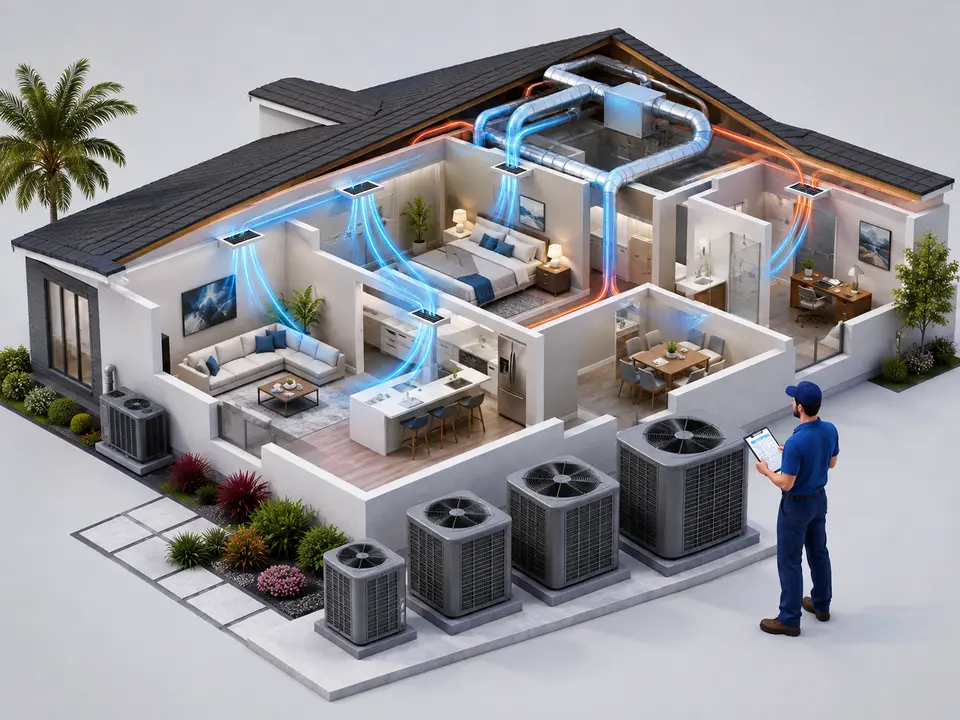
HVAC tonnage tells you how much heat a cooling system can remove each hour. It describes capacity. It never describes equipment weight.
That difference matters when you compare quotes. Bigger equipment does not guarantee better comfort. Knowledge is power before any replacement decision.
This guide explains what does tonnage mean in HVAC using plain words. You will learn the numbers. You will also learn why proper sizing protects your home.
The Quick Answer
One ton of cooling equals 12000 BTU of heat removal each hour. Contractors use tons as shorthand for residential cooling capacity.
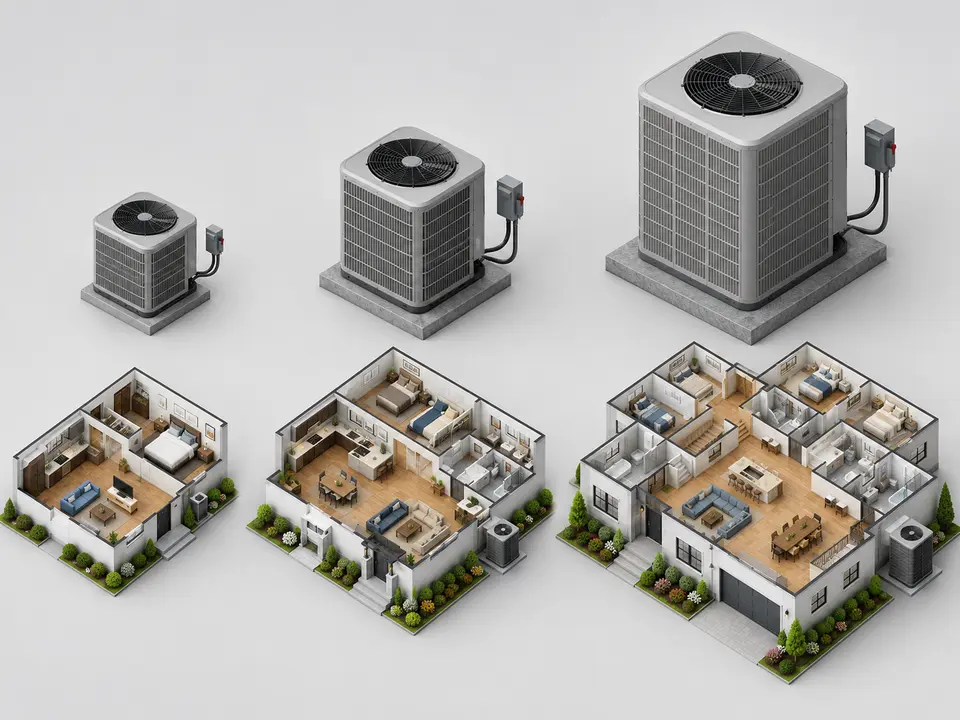
AC tonnage usually ranges from 1.5 to 5 tons in homes. Every home needs its own calculation. One size never fits all.
The term comes from old ice-based cooling. It compares modern cooling work with melting ice. Old habits die hard.
A ton therefore works like a capacity bucket. Each bucket represents the same hourly heat movement. Your house determines how many buckets it needs.
Tonnage Measures Capacity, Not Weight
Air conditioner tonnage does not tell you how heavy the outdoor unit feels. It measures hourly heat movement.
Cooling capacity describes the system’s available cooling work. A larger rating moves more heat under rated conditions. Do not judge a book by its cover.
Cabinet size can change between models. Similar cabinets can also hold different compressors. Physical appearance cannot prove capacity.
Delivery trucks and cranes care about physical weight. Designers care about cooling tons. Keeping those meanings separate prevents confusion during planning.

How Tons Convert to BTUs
BTU per hour provides the same capacity in another unit. The conversion stays simple. Measure twice and cut once.
- A 1.5-ton system provides about 18,000 BTUs hourly.
- A two ton AC provides about 24000 BTU hourly.
- A three ton AC provides about 36000 BTU hourly.
- A four ton AC provides about 48000 BTU hourly.
- A five ton AC provides about 60000 BTU hourly.
The Department of Energy also defines one ton as 12,000 BTUs hourly. Read its official HVAC capacity guidance. Facts speak louder than guesses.
What HVAC System Size Really Means
HVAC system size usually means rated output. It does not mean cabinet dimensions. Words can wear different hats.
Air conditioner size often means nominal tons. Heat pump size also uses nominal cooling tons. Heating output needs a separate review.
Your complete system includes indoor and outdoor equipment. Those parts must form a rated match. One label cannot tell the whole story.
Our BTU guide explains the heat unit behind every ton.
Nominal Capacity and Actual Capacity Differ
Nominal capacity gives equipment a simple size class. Actual capacity changes with indoor and outdoor conditions. The devil is in the details.
Hotter outdoor air can reduce delivered performance. Airflow and coil conditions also change results. Manufacturer data shows tested combinations.
A three-ton label may not deliver exactly 36,000 BTUs everywhere. Rated performance uses specific test conditions. Field conditions rarely stay identical.
Square Footage Cannot Finish the Job
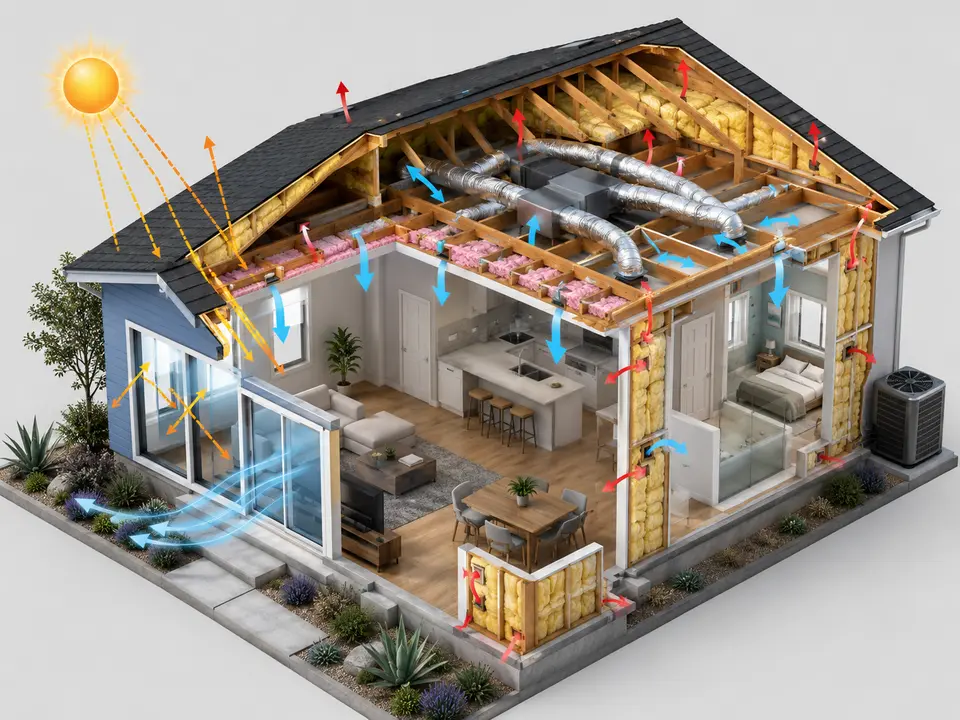
Square footage offers only a rough starting point. It misses glass, shade, insulation, leakage, and local weather. Looks can be deceiving.
A fixed BTU per square foot rule can oversize newer homes. It can undersize older, leakier homes. Either mistake can cost comfort.
Two equal homes may need different equipment. One may face strong afternoon sun. Another may have better windows and attic insulation.
Manual J Calculates the Home’s Load
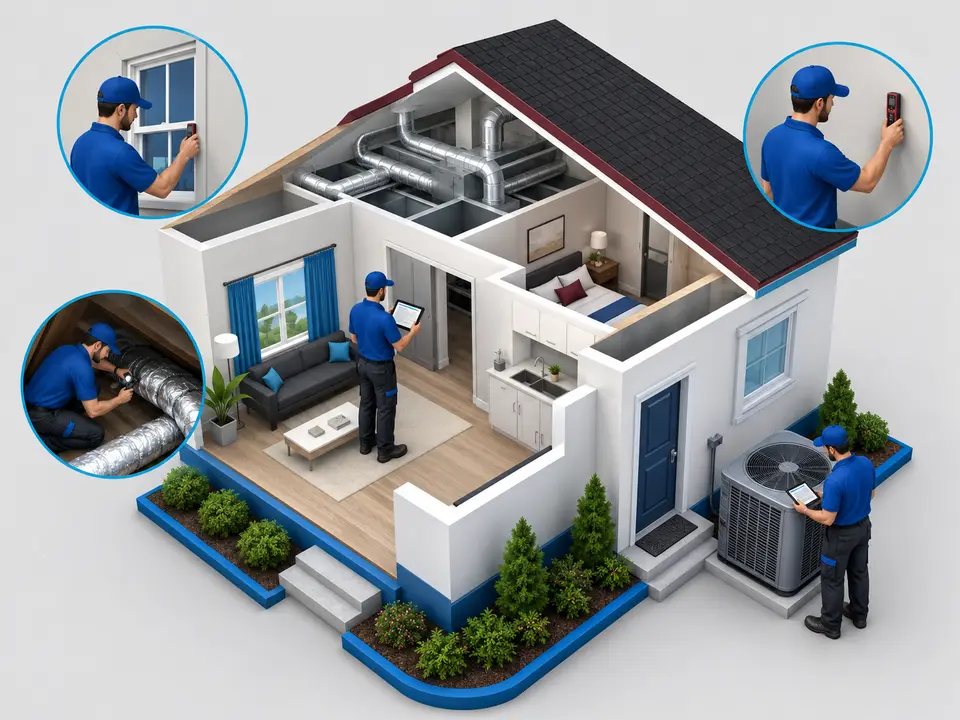
An HVAC load calculation estimates heat gain and heat loss. A Manual J load calculation uses measured building details. Measure twice and cut once.
The calculation creates a room-by-room cooling load. It also creates a separate heating load. Those numbers guide equipment selection.
ACCA identifies Manual J as its recognized residential sizing method. Review the official Manual J overview. Good work starts with good inputs.
Read our HVAC system guide for the full heat-moving process.
Manual S Selects Real Equipment
Manual S equipment selection connects the calculated load with available models. A perfect paper number may not match one product exactly. Close enough can still be correct.
The contractor checks performance tables for design conditions. The selected system must serve both comfort and moisture needs.
Available models arrive in set capacity steps. Selection balances the calculated result with certified performance. It should never become casual guesswork.
Good HVAC sizing considers capacity ranges and operating stages. It does not simply round upward. Bigger is not always better.
California Climate Changes Tonnage Needs
California climate ranges from cool coasts to hot deserts. Each climate zone uses different design conditions. Know which way the wind blows.
A coastal home may face mild afternoons. An inland home may face long triple-digit heat. Mountain homes carry stronger winter needs.
Local weather matters more than a national chart. Neighborhood shade and elevation also change the result. Site facts finish the picture.
California’s coastal fog can lower afternoon demand. Desert sunlight can raise roof temperatures sharply. Inland nights can still bring welcome cooling.
Building Details Change the Load
Insulation levels slow heat movement. Window area changes solar gain. The proof is in the pudding.
Ceiling height changes room volume. Air leakage brings untreated outdoor air inside. Both influence hourly demand.
Sun exposure heats roofs and glass. Home orientation changes when rooms receive sunlight. Shade can lower peak needs.
Occupancy adds body heat and moisture. Appliances create indoor heat gain. Many hands make light work, but they also add heat.
Ducts and Airflow Must Support the Tonnage
Existing ductwork must carry the selected system’s air volume. Proper airflow protects capacity and temperature control. A chain is only as strong as its weakest link.
Too little air can freeze an evaporator coil. Too much air can increase noise. Poor distribution also creates hot and cold rooms.
Duct design must consider length, fittings, leakage, and pressure. Equipment tonnage alone cannot fix a weak delivery system.
Return air matters as much as supply air. A restricted return can starve the blower. Balanced paths help every room receive useful airflow.
Our HVAC parts guide shows how ducts connect with indoor equipment.
Sensible and Latent Work Share Capacity
Sensible heat changes temperature. Latent heat involves indoor moisture. There is more than meets the eye inside one rating.
Equipment must divide available capacity between both jobs. Hot, dry areas need different handling than warm coastal areas.
Proper humidity control needs suitable cycle length and airflow. A large unit can cool quickly but remove less moisture.
Oversized Systems Can Create Problems
An oversized air conditioner may reach the thermostat setting too quickly. It can stop before distant rooms catch up. Haste makes waste.
Frequent starts create short cycling. Short runs can reduce moisture removal. They may also create sharper temperature swings.
Oversizing can increase noise and duct pressure. It may also raise the purchase price. Extra tons are not free comfort.
Short cycles also create more starts. Every start places demand on electrical parts. Proper sizing supports calmer operation and steadier room temperatures.
Undersized Systems Have Different Symptoms
An undersized air conditioner may fall behind during peak heat. Rooms can warm even while the system keeps running. Every cloud has a silver lining.
Long cycles do not always prove undersizing. Modern systems may run longer for steady comfort. Dirty filters and low refrigerant can mimic low capacity.
A technician should test operation before recommending replacement. Diagnosis protects good equipment from an expensive mistake.
Peak-day operation deserves context. A correct system may run for long periods. Concern grows when room temperatures continue climbing beyond the set point.
Efficiency Does Not Replace Correct Capacity
Energy efficiency measures useful output compared with energy input. A SEER2 rating describes seasonal cooling efficiency. Apples and oranges need separate labels.
A highly efficient unit can still be too large. A correctly sized system can still waste energy through leaky ducts.
Capacity, efficiency, installation, and distribution work together. One strong number cannot rescue a weak system design.
Compare certified matched-system ratings. Mixing indoor and outdoor parts can change both output and efficiency. Written model numbers support a fair comparison.
Staging Changes How Capacity Feels
A single stage AC usually runs at full available output. A two stage AC can use lower and higher stages. Slow and steady wins the race.
Variable speed HVAC can adjust output across a wider range. An inverter heat pump can change compressor speed gradually.
Modulation supports quieter, longer cycles. It can improve comfort during mild weather. Maximum capacity still needs proper selection.
Lower stages handle many normal hours. Higher stages answer stronger demand. This range can feel smoother than repeated full-power starts and stops.
How to Find Your Existing Tonnage
The equipment nameplate may list BTUs or tons. The model number often contains a capacity code. Look before you leap.
Common codes include 18, 24, 30, 36, 42, 48, and 60. Divide the code by 12 for nominal tons.
Manufacturers can use different patterns. Confirm the code through official product data. Keep photos with your home records.
Indoor coil labels also matter. The furnace or air handler must match the outdoor unit. Ask for the complete certified combination.
How to Compare HVAC Quotes
A clear HVAC quote should list model numbers and proposed capacity. It should explain the sizing method. The proof is in the pudding.
Quality HVAC installation also includes airflow setup, drainage, controls, and commissioning. Ask what tests follow startup.
During HVAC replacement, old tonnage should never become the automatic choice. Home improvements may have changed the load.
A qualified HVAC contractor can connect calculations with rated equipment. Review our California HVAC services before requesting an assessment.
Good proposals explain assumptions in plain language. They also identify testing after installation. Clear documents bring relief when future service questions appear.
Frequently Asked Questions
These answers cover the searches homeowners ask most. They separate capacity, weight, and efficiency. A little knowledge goes a long way.
What does tonnage mean in HVAC?
Tonnage measures cooling capacity. One nominal ton equals 12,000 BTUs of heat removal each hour.
Does HVAC tonnage describe equipment weight?
No. It describes heat-moving capacity. Cabinet weight has no direct connection with the ton rating.
How many BTUs equal one ton?
One cooling ton equals 12,000 BTUs per hour. A three-ton system equals about 36,000 BTUs hourly.
How many tons does my house need?
Your home needs a documented load calculation. Size, windows, insulation, leakage, ducts, and local weather all matter.
Can square footage determine AC tonnage?
Square footage gives a rough estimate. It cannot account for all building and climate factors.
Is a bigger HVAC system better?
No. Oversized equipment can cycle quickly, create noise, and weaken moisture control. Correct capacity works better.
What happens when AC tonnage is too small?
The system may fall behind during peak heat. Equipment faults can create similar symptoms, so testing matters.
Where can I find my AC tonnage?
Check the outdoor unit label and model data. Capacity codes often appear inside the model number.
Does a heat pump use tonnage?
Yes. Heat pumps use nominal cooling tons. Their heating output changes with outdoor temperature and model design.
Does higher SEER2 mean more tonnage?
No. SEER2 describes efficiency. Tonnage describes capacity. A system can have either rating at several levels.
Can variable-speed equipment be oversized?
Yes. Modulation reduces some problems, but major oversizing can still harm comfort and system design.
Who should calculate HVAC tonnage?
A qualified professional should measure the home and document the load. Clear records build trust.
The Bottom Line
HVAC tons describe hourly cooling capacity. They do not describe equipment weight. Keep your eye on the ball.
Correct capacity starts with the home. It ends with matched equipment, ducts, airflow, and testing.
Residential HVAC works best when every part supports the calculated load. Read our HVAC system comparison next.