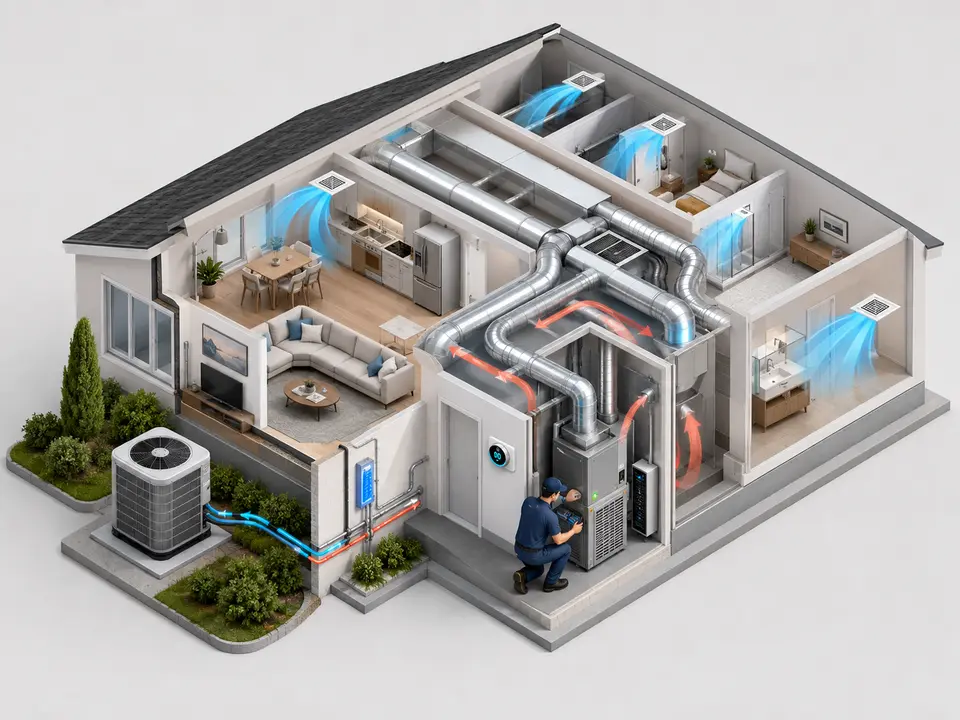
Your HVAC system is the quiet comfort crew behind every normal day.
It warms cold rooms, cools hot spaces, and keeps air moving. Most people only notice it when comfort disappears. Why should home comfort feel like a guessing game?
This guide explains how does an HVAC system work in plain English. You’ll see each part, cycle, and warning sign. As Californians say, keep your cool when the heat is on.
What an HVAC System Actually Does
An HVAC system controls temperature, airflow, moisture, and basic filtration. Your heating and cooling system does not work as one magic box. Several parts share the load.
A home HVAC system follows simple commands from the wall control. It starts equipment, moves air, and stops at the target. The proof is in the pudding when every room feels steady.
- Heating: Adds warmth or moves outdoor heat inside.
- Cooling: Collects indoor heat and releases it outdoors.
- Ventilation: Moves stale air and supports fresh air control.
- Filtration: Captures particles before air returns to your rooms.
Good HVAC system operation balances all four jobs. One weak area can affect the others. A chain is only as strong as its weakest link.
The Main HVAC Components
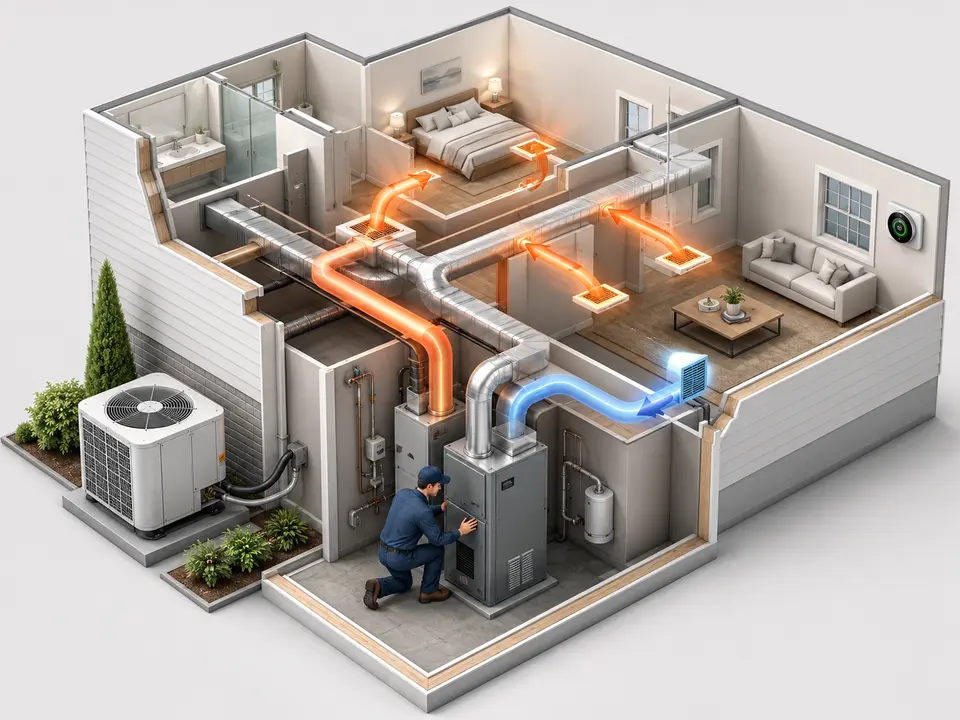
Most HVAC components sit indoors, outdoors, or inside walls. Their locations change with the system design. Measure twice, cut once applies strongly to equipment placement.
The thermostat reads room temperature and calls for action. An air conditioner removes indoor heat. A furnace creates heat with fuel or electric elements.
A heat pump moves heat in either direction. The air handler houses the fan and related parts. Together, they form the system’s working core.
- The evaporator coil absorbs indoor heat during cooling.
- The condenser coil releases collected heat outside.
- The compressor moves and pressurizes refrigerant.
- The expansion valve controls refrigerant entering the indoor coil.
- The blower motor pushes air through the home.
- The air filter catches particles before air reaches equipment.
Clean airflow also supports better indoor air quality. Little things add up across the whole system.
How the Thermostat Starts Each Cycle
Your thermostat works like the system’s quarterback. It reads temperature and calls the next play. A smart thermostat may also follow schedules and occupancy.
The control compares room temperature with your chosen setting. It then starts a cooling or heating cycle. Don’t put the cart before the horse by blaming equipment first.
Loose wiring, poor placement, or weak batteries can cause false readings. Direct sunlight may also confuse the sensor. Would you drive without a working dashboard?
How Air Moves Through Your Home
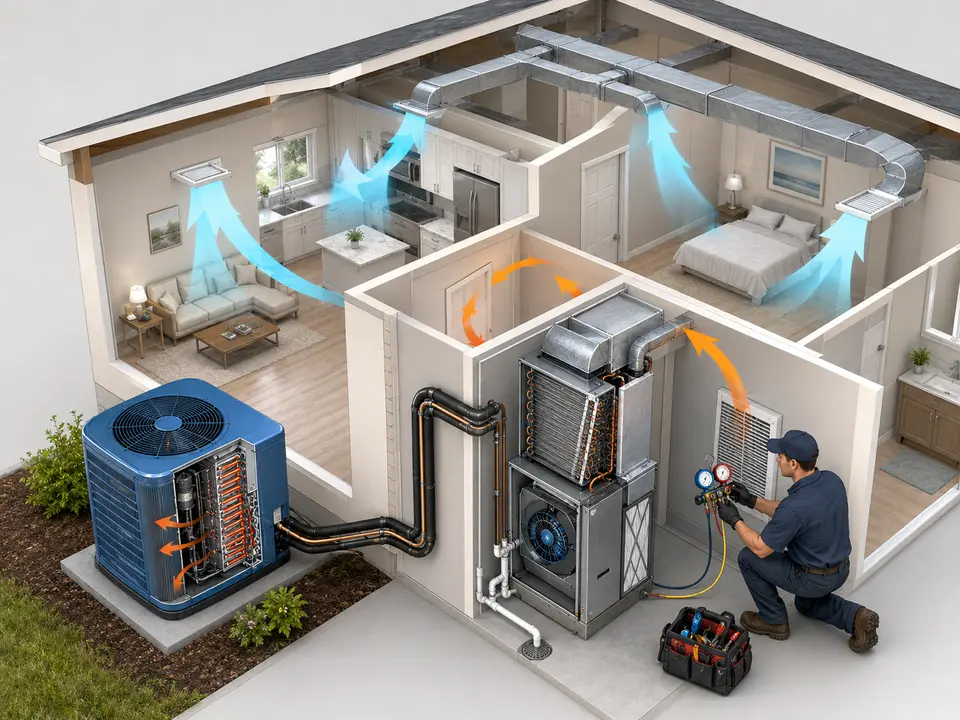
Ductwork acts like a road network for moving air. Supply vents deliver treated air into each room. Return vents pull room air back toward equipment.
This returning stream is called return air. After heating or cooling, it becomes conditioned air. All roads lead home when ducts stay sealed and balanced.
Healthy HVAC airflow needs open vents and clean pathways. Closed registers raise pressure and may increase noise. Damaged ducts can lose comfort inside attics or crawl spaces.
How the Cooling Cycle Works
The cooling cycle moves heat instead of making cold air. Liquid refrigerant reaches the indoor coil at low pressure. Warm room air passes across that cold surface.
The coil collects heat and some moisture. The refrigerant changes into a gas. Slow and steady wins the race when airflow stays correct.
The compressor then raises refrigerant pressure and temperature. Hot gas travels to the outdoor coil. Outdoor air carries that heat away.
This repeating refrigeration cycle powers a central air conditioning system. It also supports many heat pumps. Each step must stay balanced.
How a Furnace Heats the House
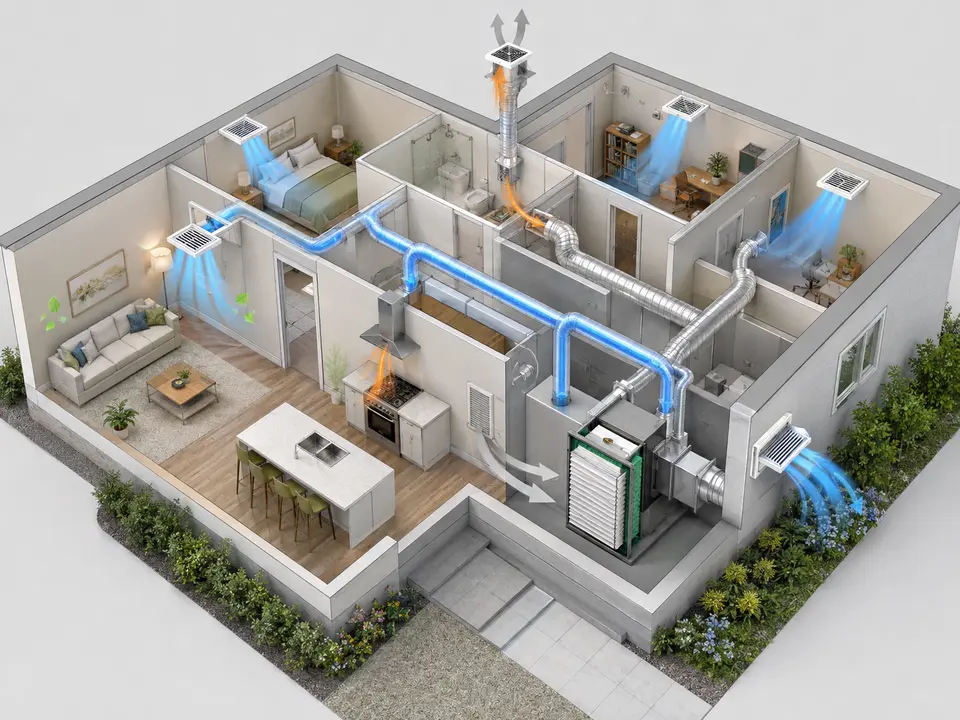
A gas furnace starts inside its combustion chamber. Burners create controlled heat. That heat warms the metal heat exchanger.
Indoor air passes across the sealed exchanger. The blower sends warm air through the ducts. Safety controls watch flame, pressure, and temperature.
Combustion gases leave through a flue pipe. Those gases never belong in living spaces. Where there’s smoke, there’s fire, so safety checks matter.
An electric furnace uses heated electric elements instead. It needs no combustion vent. Both systems can serve a forced air system.
How a Heat Pump Works
A heat pump uses the same basic refrigerant process year-round. In summer, it moves indoor heat outside. In winter, a reversing valve changes direction.
Outdoor air still holds usable heat during cool weather. Refrigerant gathers that heat and moves it indoors. Make hay while the sun shines applies to mild California winters.
Modern systems can work in lower temperatures. Correct sizing remains important. Oversized equipment may cycle too quickly and waste energy.
How Moisture Leaves the System
Cooling removes moisture when warm air touches the cold indoor coil. Water drops into the drain pan. The condensate drain carries it outside.
A blocked drain may cause leaks or shutdowns. Standing water can also support odors and growth. A stitch in time saves nine with simple drain care.
Humidity control depends on cycle length and airflow. Oversized units may cool too quickly. Longer balanced cycles often remove more moisture.
Common HVAC System Designs
A split HVAC system separates indoor and outdoor equipment. This setup is common across California homes. It often pairs a furnace with an outdoor cooling unit.
A packaged HVAC system keeps major parts inside one outdoor cabinet. Rooftops and compact properties often use this approach. Horses for courses means each building needs its own answer.
A ductless mini split connects an outdoor unit with one or more indoor heads. It avoids large ducts. It works well for additions, garages, and room-by-room control.
How System Stages Change Comfort
A single stage HVAC system runs at full output or stops. A two stage HVAC system adds a lower setting. That lower stage can reduce temperature swings.
A variable speed HVAC system adjusts output across a wider range. It often runs longer at lower power. Easy does it when steady comfort matters.
An HVAC zoning system uses dampers or separate indoor units. Each zone follows its own control. Proper design prevents pressure problems.
How Efficiency Ratings Fit Together
HVAC efficiency compares useful comfort with consumed energy. Different equipment uses different rating systems. Apples and oranges should not share one score.
- SEER2 rating: Measures seasonal cooling efficiency.
- AFUE rating: Shows how much furnace fuel becomes useful heat.
- HSPF2 rating: Measures seasonal heat-pump heating efficiency.
Higher ratings may lower operating costs. Installation quality still shapes real results. Poor airflow can waste the value of premium equipment.
What Can Interrupt Normal Operation
A dirty air filter can reduce airflow and raise system pressure. Low refrigerant usually means a leak needs attention. Neither problem improves by waiting.
A frozen evaporator coil may follow low airflow or refrigerant trouble. Short cycling can point toward controls, sizing, or safety shutdowns. Trouble often travels in packs.
Uneven temperatures may come from ducts, insulation, airflow, or equipment sizing. One hot room does not always mean failed equipment. Check the whole path.
Maintenance That Keeps the Cycle Healthy
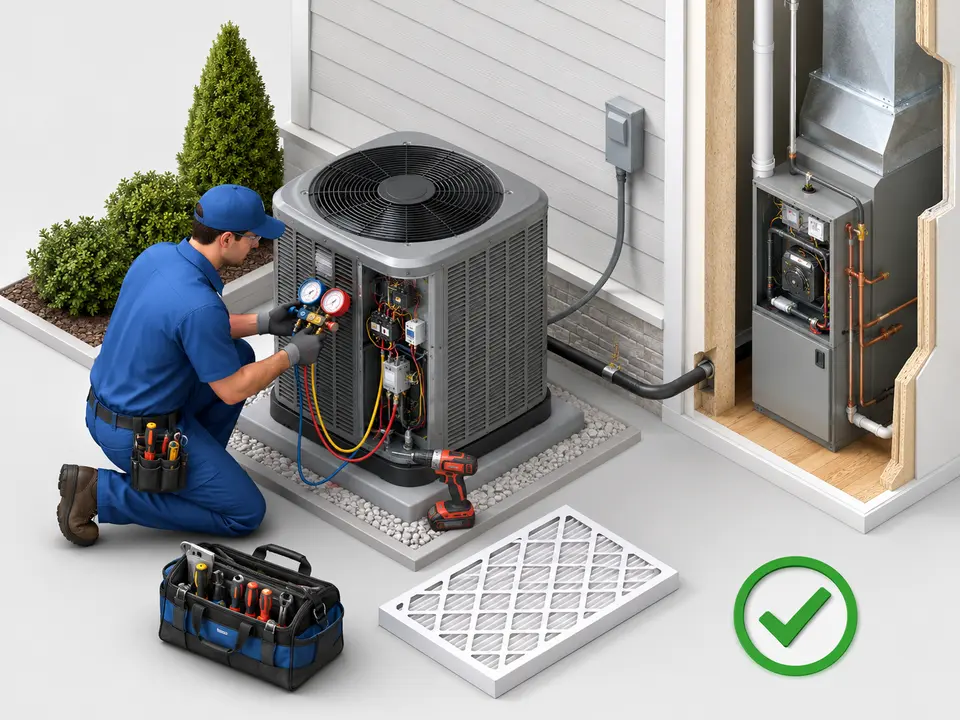
Regular HVAC maintenance protects airflow, drainage, controls, and safety parts. A professional HVAC tune up checks the full operating cycle. An ounce of prevention is worth a pound of cure.
- Replace filters when they look loaded.
- Keep outdoor equipment clear of leaves.
- Leave supply and return vents open.
- Watch for new sounds or smells.
- Book seasonal professional checks.
Good care supports comfort and equipment life. It may also catch small faults early. Pride of place starts with equipment that works quietly.
When Repair or Replacement Makes Sense
HVAC repair makes sense when the fault is isolated and the system remains dependable. Repeated breakdowns change that math. Don’t throw good money after bad.
HVAC replacement may help when age, comfort, and repair costs climb together. A planned HVAC installation also allows proper sizing. It can correct old airflow mistakes.
The outdoor condenser unit and indoor HVAC unit must match correctly. Mixing unsuitable parts can reduce performance. Ask for written options before deciding.
Keep learning before you make a comfort decision. Compare HVAC system types. Then learn the main HVAC parts and use our maintenance checklist.
Good sources make hard choices easier. Read ENERGY STAR quality installation guidance. Review the EPA indoor air guide too.
Frequently Asked Questions
How does HVAC work?
The thermostat starts equipment when room temperature misses your setting. Heating or cooling changes air temperature. The blower then moves that air through the home.
What does an HVAC system do?
It controls heating, cooling, airflow, moisture, and basic filtration. Many systems also support fresh-air ventilation. The whole setup works as one comfort network.
How does a thermostat control HVAC?
It measures room temperature and sends a heating or cooling call. Controls then start the correct equipment. The cycle stops after reaching the target.
How does central air conditioning work?
Refrigerant absorbs indoor heat at the evaporator coil. The outdoor coil releases that heat. The blower sends cooled air through ducts.
How does a furnace heat a house?
Burners or electric elements create heat. Air passes across the warm surface. The blower distributes that heated air through supply ducts.
How does a heat pump work?
A heat pump moves heat with refrigerant. It moves heat outside during summer. It reverses direction for winter heating.
Why does HVAC use refrigerant?
Refrigerant changes pressure and temperature easily. Those changes let it collect and release heat. It stays inside a sealed piping loop.
Where is the HVAC air filter?
Many filters sit inside a return grille or near the indoor unit. Some systems use a media cabinet. Follow the airflow arrow during replacement.
Why does HVAC cycle on and off?
The thermostat starts and stops cycles to hold your chosen temperature. Very short cycles may signal trouble. Normal cycle length changes with weather and equipment.
How long should an HVAC system run?
Cycle length depends on weather, insulation, sizing, and system type. Many cycles last around ten to twenty minutes. Variable systems may run much longer.
Does HVAC bring outside air indoors?
Most basic forced-air systems mainly recirculate indoor air. Dedicated ventilation equipment adds controlled outdoor air. Exhaust fans remove stale air from key rooms.
When should I call an HVAC technician?
Call when comfort drops, breakers trip, or strange odors appear. Water leaks and repeated shutdowns also need attention. Better safe than sorry protects your home.
The Simple Way to Think About HVAC
Your system senses, changes, moves, and repeats. The thermostat senses temperature. Equipment changes the air, while ducts move it.
That cycle should feel boring in the best way. Quiet comfort builds relief and trust every day. Home is where the heart is, and comfort helps it feel right.
Explore our complete HVAC services when your system needs professional help. You can also review our HVAC beginner guide. Clear knowledge makes every service decision easier.
