Your HVAC system contains a team of parts, not one lonely machine.
Each component handles a clear job. One failure can disturb airflow, temperature, drainage, or safety. Why wait for a breakdown to learn the basics?
This guide explains the main parts of an HVAC system. You’ll learn where they sit and what they do. Knowledge is power when service decisions arrive.
The HVAC System Parts at a Glance
Most HVAC system parts fall into five groups. They control, heat, cool, move air, or protect equipment. Many hands make light work inside a healthy system.
Core HVAC components include indoor equipment, outdoor equipment, controls, ducts, and accessories. Different HVAC equipment may combine those jobs. System design changes their exact locations.
- Controls start and stop cycles.
- Heating parts add or move heat.
- Cooling parts collect and release heat.
- Airflow parts carry comfort through rooms.
- Safety parts stop dangerous operation.
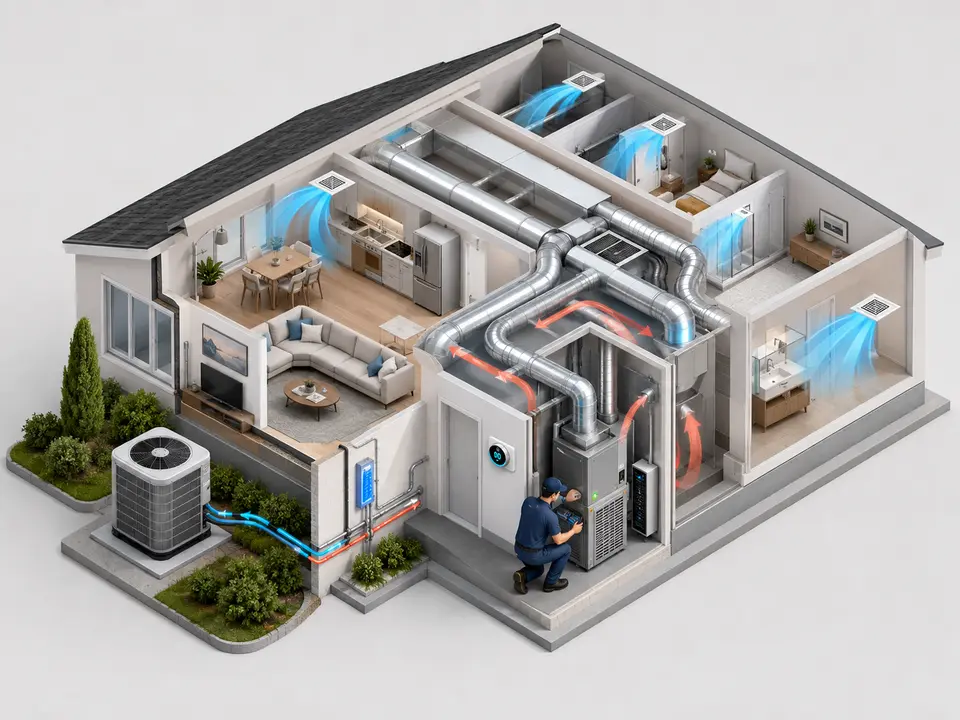
Thermostats and System Controls
The thermostat measures room temperature and requests heating or cooling. A smart thermostat can follow schedules and remote commands. Don’t put the cart before the horse when settings cause the problem.
The control board receives signals and starts equipment in order. A transformer lowers voltage for control circuits. Wiring links sensors, switches, and relays.
HVAC zoning controls manage separate comfort areas. A zone damper opens or closes a duct branch. Correct setup protects airflow while zones change.
Furnace Heating Parts
A furnace creates heat with gas or electric elements. Gas models use a burner assembly and sealed combustion path. The ignition system starts the flame.
A flame sensor confirms safe burner operation. The limit switch watches temperature and stops overheating. Better safe than sorry belongs inside every furnace.
The heat exchanger transfers burner heat to indoor air. Combustion gases stay inside its sealed walls. Cracks require urgent professional attention.
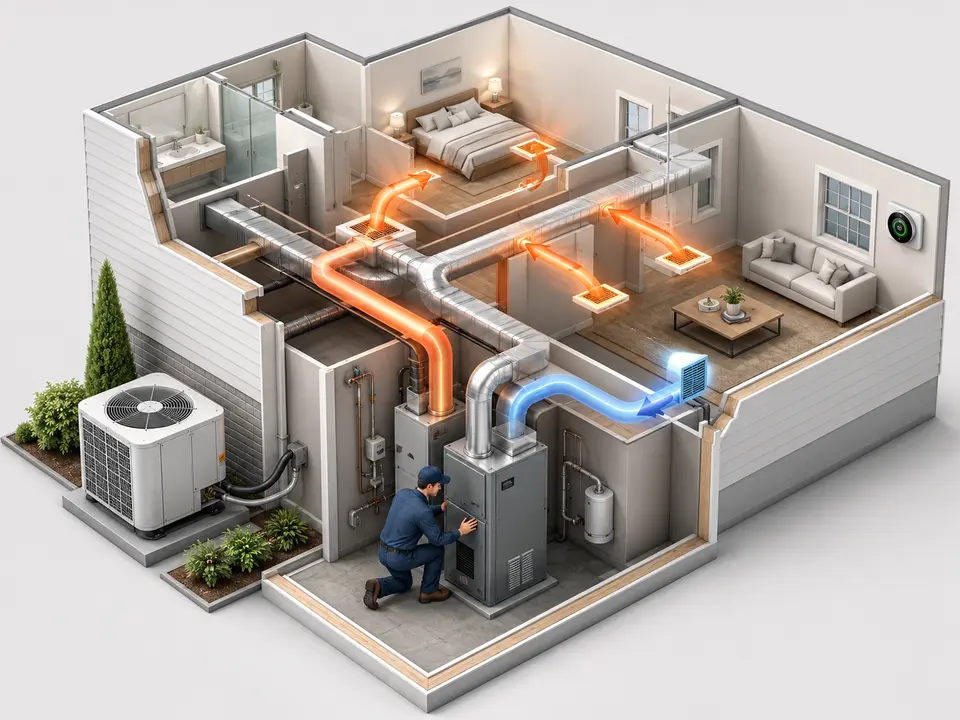
Air Conditioner and Heat Pump Parts
An air conditioner moves indoor heat outside. A heat pump can reverse that process for heating. Two sides of the same coin describe their shared cooling parts.
The indoor evaporator coil absorbs heat. The outdoor condenser coil releases it. Refrigerant carries energy between those coils.
The compressor raises refrigerant pressure and moves it through the loop. Refrigerant lines connect indoor and outdoor sections. Insulation protects the larger suction line.
The expansion valve meters refrigerant entering the indoor coil. A heat pump adds a reversing valve. That valve changes refrigerant direction.
The Outdoor Unit
The outdoor condenser unit houses the compressor, coil, fan, and electrical parts. The condenser fan motor pulls air across the coil. Keep the area clear.
A contactor switches high-voltage power. An HVAC capacitor helps motors start and run. A watched pot never boils, but swollen capacitors still need prompt service.
The disconnect switch provides nearby service isolation. The home’s circuit breaker protects the electrical circuit. Repeated trips need diagnosis.
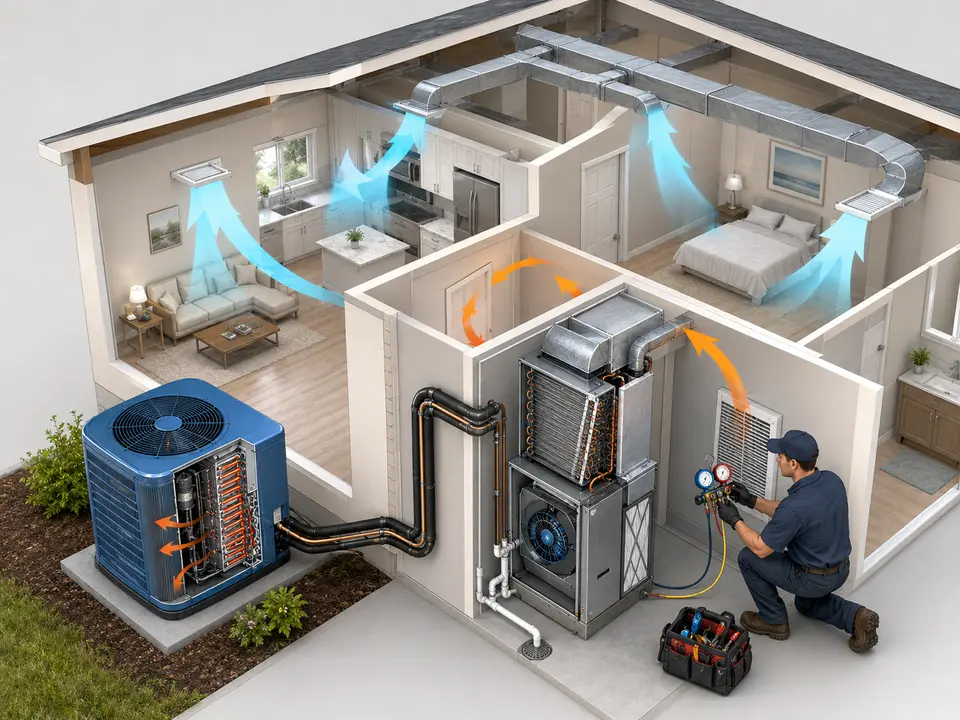
The Indoor Unit and Blower
The indoor HVAC unit may contain a furnace, coil, or electric heat kit. An air handler usually houses a coil and fan. Layout depends on system type.
The blower motor turns the blower wheel. That wheel pushes air through equipment and ducts. The wheel acts like the heart’s pumping chamber.
An evaporator fan performs a similar indoor airflow job in some equipment. Names vary across system designs. The proof is in the pudding when airflow reaches every room.
Filters and Return Air Parts
The air filter catches particles before they coat equipment. A return air grille may hold the filter. Other systems place it beside the indoor unit.
Return vents pull room air back for another cycle. The return duct carries that air toward equipment. What goes around comes around during every cycle.
A loaded filter raises resistance. It can reduce HVAC airflow and increase static pressure. Correct filter size and fit matter.
Supply Air and Ductwork
Ductwork forms the system’s road network. The supply duct carries treated air away from equipment. Supply vents deliver it into rooms.
A duct damper adjusts airflow inside a branch. Manual dampers support balancing. Measure twice, cut once before changing damper positions.
Leaks can waste conditioned air in attics or crawl spaces. Crushed flex ducts also restrict flow. Duct testing finds problems hidden from view.
Drainage Parts
Cooling creates water on the indoor coil. The drain pan catches that moisture. The condensate drain carries it away.
Sludge can block the line and cause overflow. Some systems use safety switches. A stitch in time saves nine with simple drain care.
Ventilation and Air Quality Accessories
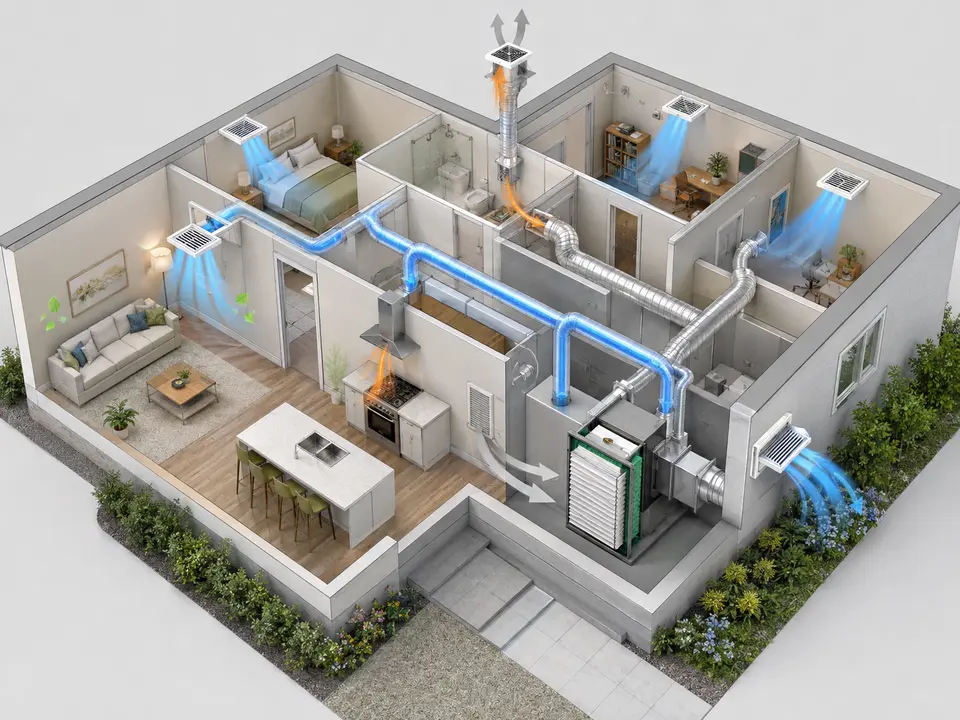
A fresh air intake brings controlled outdoor air inside. An exhaust fan removes moisture and odors. Clear the air before stale rooms become normal.
An energy recovery ventilator transfers heat and some moisture. A heat recovery ventilator mainly transfers heat. Climate guides the better choice.
A whole-house humidifier adds winter moisture. A duct-mounted UV light can treat exposed coil surfaces. An air purifier can support particle or gas control.
These accessories can support indoor air quality. None replaces source control or suitable filtration. One size never fits all homes.
How Technicians Test HVAC Parts
An HVAC inspection should test operation, not just appearance. Technicians measure airflow, voltage, temperatures, and pressures. Numbers tell the tale.
A temperature split compares return and supply air temperatures. It helps show system performance. Results must match weather and operating conditions.
Regular HVAC maintenance checks wear and cleanliness. Timely HVAC repair corrects confirmed faults. Guessing and swapping parts wastes money.
Connect each part with the bigger picture. Compare HVAC system types. Then follow our maintenance checklist and how long HVAC systems last.
Trusted sources explain why details matter. Read ENERGY STAR installation guidance. Review the EPA filter guide too.
Frequently Asked Questions
What are the most important HVAC parts?
The thermostat, indoor unit, outdoor unit, blower, coils, filter, and ducts handle core operation. Safety controls protect the system.
Where is the HVAC blower motor?
It usually sits inside the furnace or air handler. It turns a wheel that pushes air through ducts.
What does an HVAC compressor do?
It raises refrigerant pressure and moves refrigerant around the sealed cooling loop. Cooling stops when it fails.
What does the evaporator coil do?
It absorbs indoor heat during cooling. Moisture also collects on its cold surface and drains away.
What does the condenser coil do?
It releases collected heat outdoors. A fan moves outdoor air across the coil.
Why does an HVAC system need a capacitor?
Capacitors help certain motors start and run. A failed capacitor can stop a fan or compressor.
Where is the HVAC filter located?
It may sit in a return grille, furnace slot, air handler, or media cabinet. Location varies by design.
What is the difference between supply and return vents?
Supply vents deliver conditioned air. Return vents pull room air back toward the equipment.
Why does an HVAC system make water?
The cold indoor coil removes moisture during cooling. That water flows through a pan and drain.
What controls HVAC zoning?
Zone thermostats, a control panel, and dampers work together. Some ductless systems use separate indoor heads.
Can I replace HVAC parts myself?
Homeowners can often replace suitable filters. Electrical, refrigerant, combustion, and safety repairs need trained professionals.
How often should HVAC parts be inspected?
Seasonal checks help prepare cooling and heating equipment. Exact timing depends on system use and condition.
Know the Team Behind Your Comfort
Each component has one job, yet every part affects the full system. Teamwork makes the dream work. Knowing the basics helps you ask better questions.
Read how an HVAC system works for the complete cycle. Explore our HVAC services when a part needs testing. Clear answers build trust.
