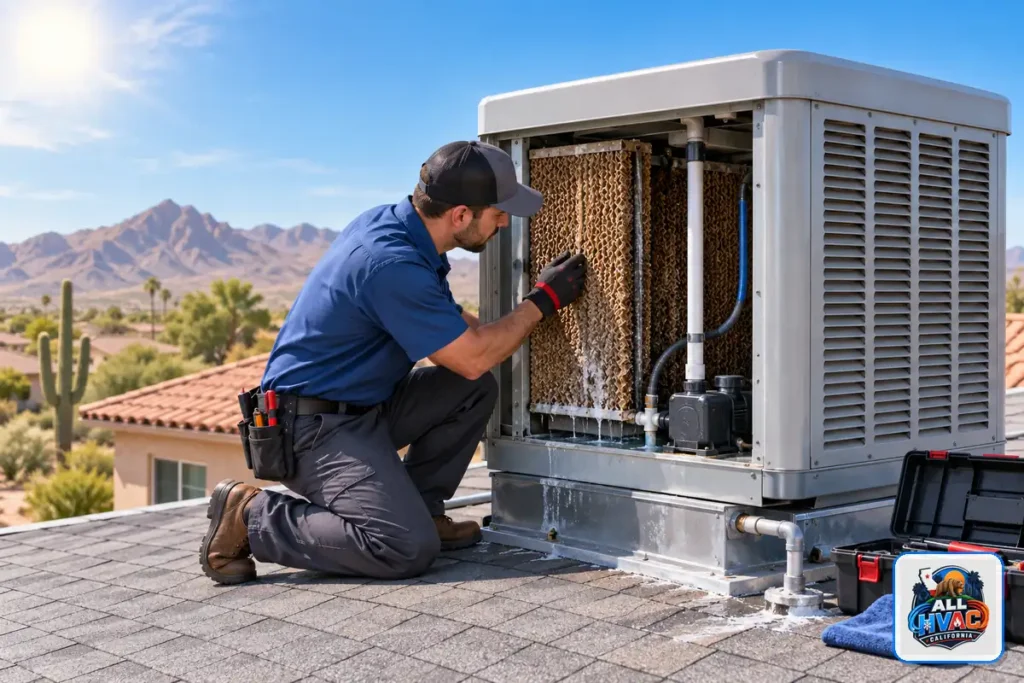
An evaporative cooler usually stops cooling because airflow, water delivery, or outdoor conditions are wrong. Dirty pads, a weak pump, and poor exhaust cause many failures. A loose belt or mineral scale can also cut performance.
California heat can turn a small problem into a miserable afternoon. The good news is that several checks take only minutes. Others need a trained technician because electricity, moving parts, and rooftop access add risk.
This guide starts with the simple causes. It then covers repairs, replacement clues, and questions homeowners often ask. You will know what to check and when to stop.
Start with the outdoor weather
Evaporative coolers work best when outdoor air is hot and dry. They lose cooling power as humidity rises. The unit may be healthy even when the supply air feels less cold.
Check the local temperature and relative humidity. Coastal mornings and monsoon weather can reduce evaporation. Inland valleys often give better results during dry heat.
Do not expect refrigerated air temperatures from this system. A swamp cooler adds moisture while moving large amounts of fresh air. Its temperature drop changes through the day.
Run the fan alone if the air already feels muggy. That choice can improve comfort without adding more moisture. When the weather dries, restore the pump mode.
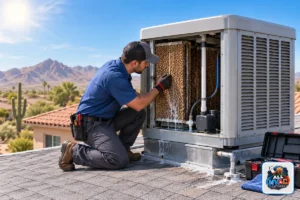
Check whether the cooling pads are fully wet
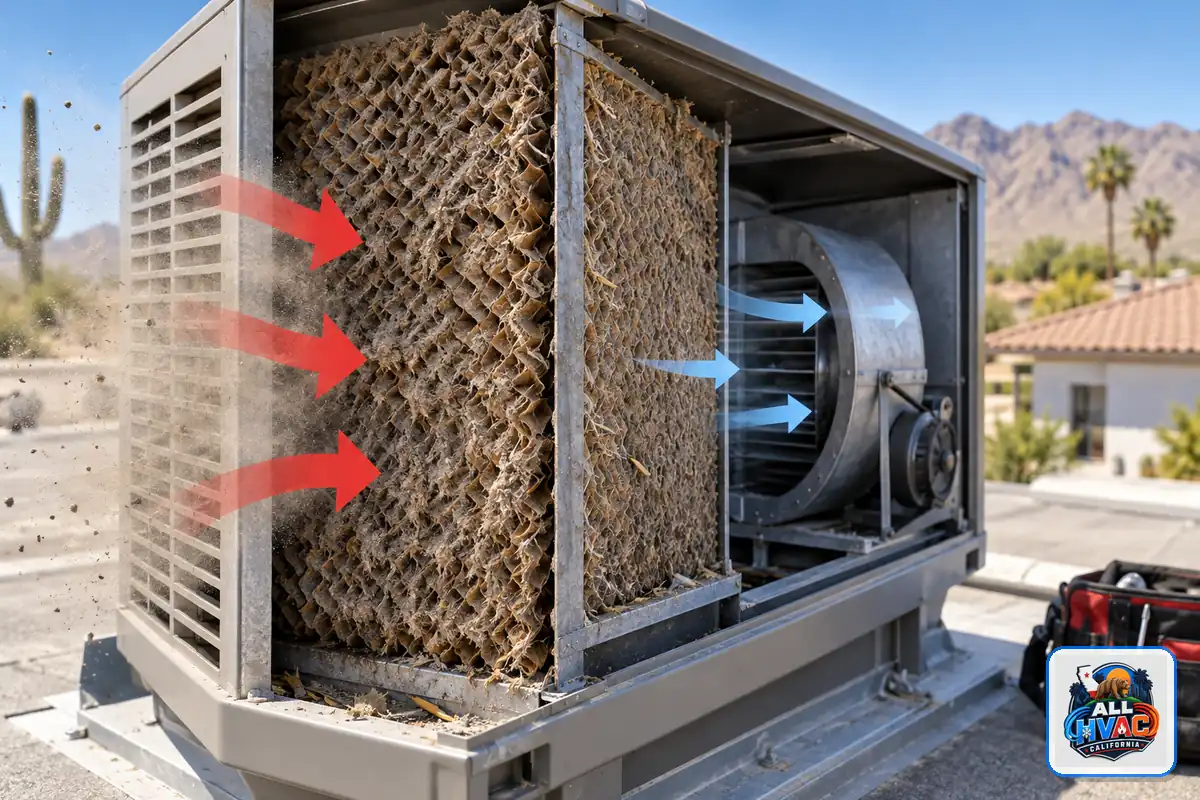
Cooling pads must become evenly wet before useful cooling begins. Dry streaks let hot air pass untouched. Clogged or collapsed media also blocks airflow.
Turn off power before opening any panel. Look for dry corners, heavy white deposits, torn media, and pads installed backward. Follow the model manual because pad direction matters.
A short wetting cycle before the fan starts can help. Some controls provide a pre-wet setting. Give the pump several minutes before judging supply temperature.
Replace badly scaled media instead of washing it forever. Once channels close, water and air cannot spread evenly. That old pad becomes a brick wall.
| Symptom | Likely cause | First safe check |
|---|---|---|
| Fan runs but air feels warm | Dry pads or humid weather | Check pad wetting and outdoor humidity |
| Water sits in the basin | Pump or distribution blockage | Turn power off and inspect visible tubing |
| Airflow feels weak | Belt, motor, wheel, or exhaust issue | Open safe relief points and listen for strain |
| White crust returns quickly | Hard water and poor bleed-off | Review cleaning and water settings |
Inspect the pump, water line, and float valve
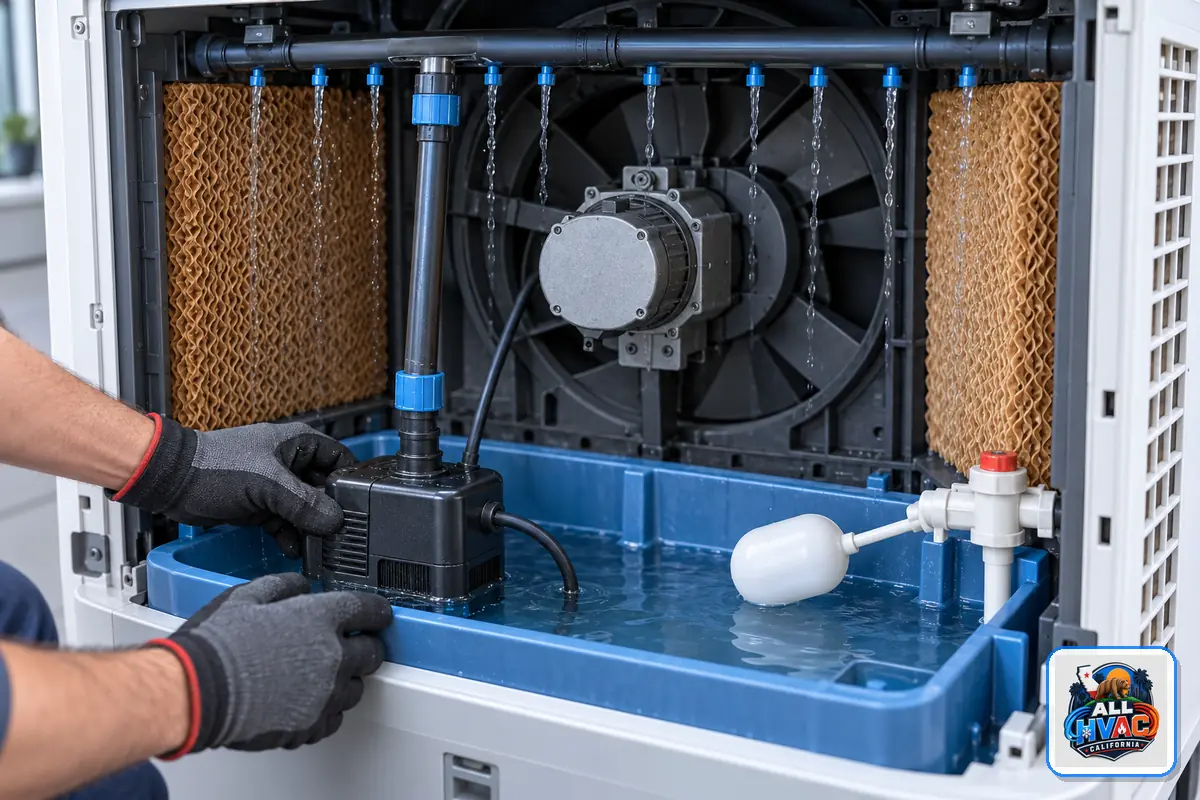
A running fan does not prove that water reaches the pads. Listen for the pump and inspect the distribution tubes. Every pad should receive a steady flow.
Low basin water can expose the pump intake. A stuck float can underfill or overflow the reservoir. Kinked tubes and plugged holes create dry areas.
Clean loose debris only after disconnecting power. Never reach into a live cooler. Water and electricity are a bad mix, plain and simple.
If the pump hums without moving water, shut it down. Continued dry running can damage it. A technician can test voltage and pump condition safely.

Look for a weak fan, loose belt, or blocked blower
Cooling also depends on strong airflow through wet media. A slipping belt lowers blower speed. A dirty wheel or weak motor can produce the same symptom.
Listen for squealing, scraping, pulsing, or slow starts. These sounds point toward belt, bearing, wheel, or motor trouble. Shut the unit off if anything rubs.
A belt should not look cracked, shiny, or frayed. Correct tension depends on the unit. An overtight belt can damage bearings, so guessing creates another problem.
If airflow recently fell, compare every room. One weak branch may indicate a duct issue. Weak flow everywhere usually points closer to the cooler.
Give indoor air a clear exit path
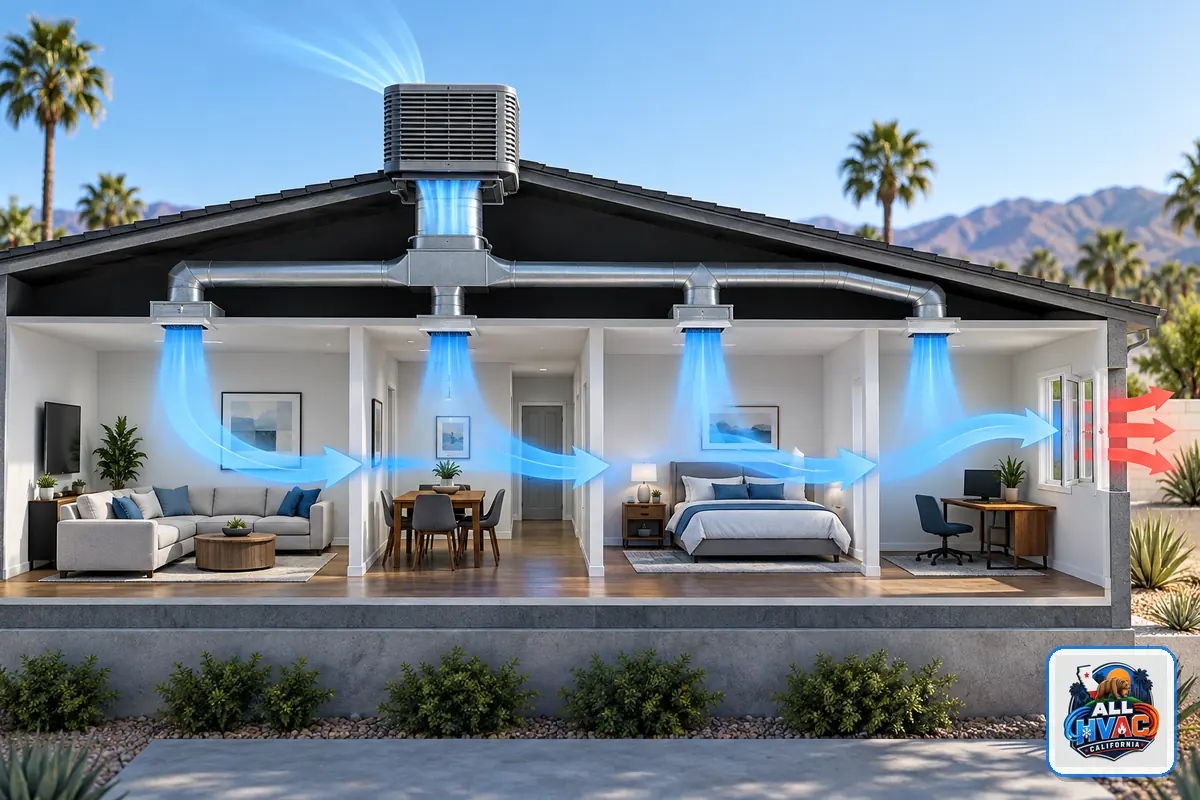
A direct evaporative cooler needs open windows, doors, or designed relief vents. It supplies outdoor air into the building. An equal amount of indoor air must leave.
Open small outlets in the rooms you want cooled. A distant opening pulls cool air across the living space. One large opening beside the supply can waste the benefit.
Closed bedrooms may receive weak airflow. Their pressure rises and blocks delivery. Use safe window stops or properly designed up-ducts when security matters.
The building should not whistle or fight door movement. Those signs suggest poor pressure balance. Our HVAC system guide explains why airflow paths matter.
Remove mineral scale and seasonal debris
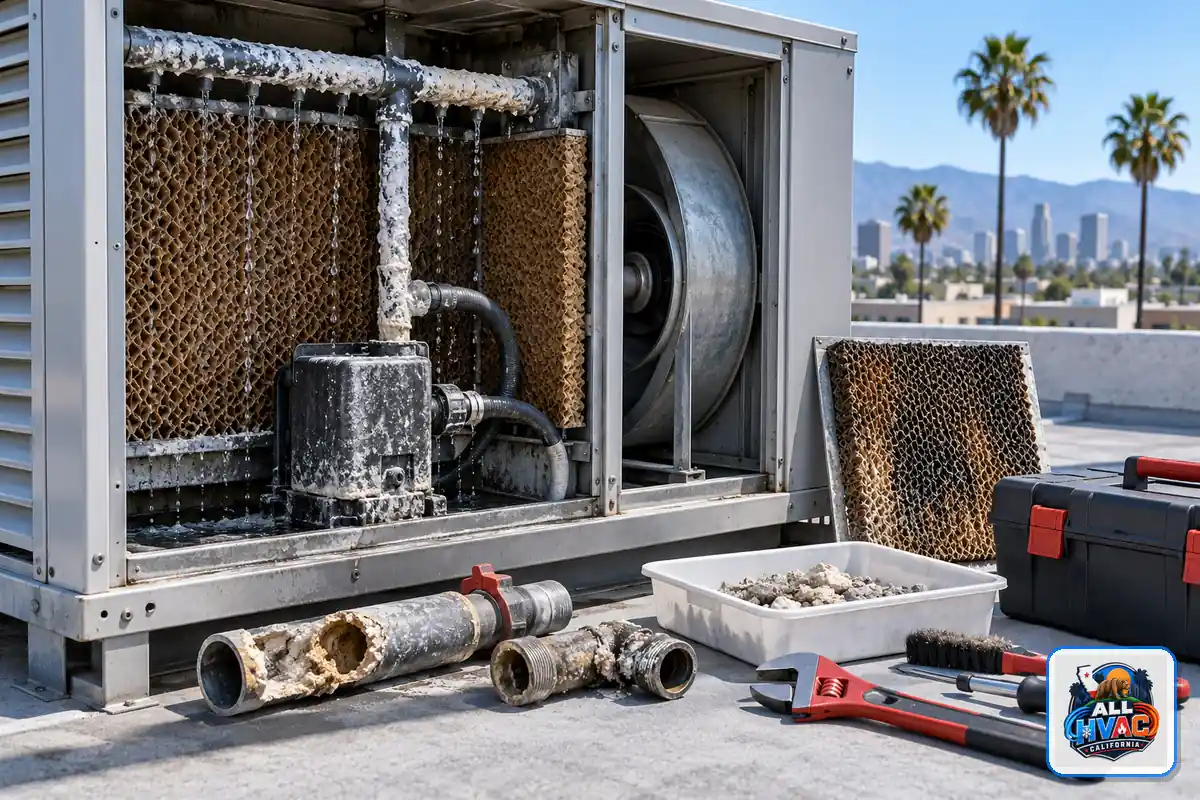
California water can leave heavy mineral deposits in the basin and media. Scale blocks distribution holes and reduces evaporation. Dust, leaves, and insects add another layer.
Drain stale water and follow the manufacturer cleaning method. Avoid harsh chemicals that attack coatings, pumps, or seals. Rinse loose material away from the pump intake.
Seasonal service should include the basin, tubes, pads, belt, motor, and drain. The HVAC maintenance checklist helps organize related home comfort work.
Do not scrape coated metal aggressively. Damaged protective finishes can invite corrosion. When buildup returns quickly, ask about bleed-off settings and water quality.
Know when the problem needs professional testing
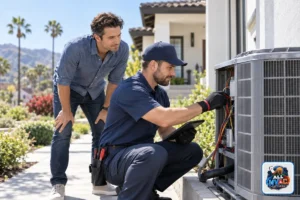
Call a professional when the unit trips breakers, smells burned, leaks into the roof, or has exposed wiring. Stop immediately if the blower wheel rubs or the motor overheats.
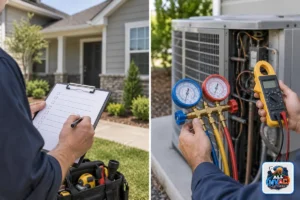
A technician can measure amperage, voltage, airflow, temperature drop, and water delivery. Those readings separate a control fault from a mechanical failure.
Check California licensing before hiring. The California Contractors State License Board explains how consumers can verify contractors and compare bids.
For broader efficiency guidance, review ENERGY STAR heating and cooling advice. It explains why maintenance and duct condition affect comfort.
Decide whether repair or replacement makes sense
Repair usually makes sense for a sound cabinet with a failed pump, belt, float, or control. Replacement becomes more reasonable after repeated leaks, corrosion, or motor trouble.
Compare the full repair with expected remaining life. Include water use, comfort limits, roof condition, and future parts access. The cheapest invoice is not always the lowest long-term cost.
Our guide to HVAC repair versus replacement gives a practical decision framework. It helps you weigh age, frequency, safety, and comfort.
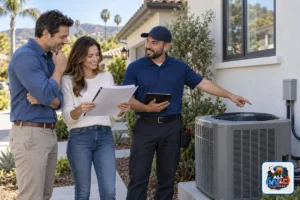
If you want a second set of eyes, All HVAC California can inspect the system and explain the options. You should understand the quote before work starts.
Questions California readers also ask
Why is my evaporative cooler blowing warm air?
The pads may be dry, outdoor humidity may be high, or water may not circulate. Weak airflow can also reduce the cooling effect.
How long should a swamp cooler take to cool a house?
You should feel cooler supply air within several minutes. Whole-home comfort takes longer and depends on heat, airflow, home size, and open relief points.
Should evaporative cooler pads be completely wet?
Yes, the usable pad area should wet evenly. Dry streaks allow hot air through and often indicate blocked distribution tubes or low water.
Can I run an evaporative cooler without water?
You can use fan-only mode if the controls allow it. That provides ventilation but no evaporative cooling.
How often should cooler pads be replaced?
Replacement depends on pad type, water quality, runtime, and maintenance. Replace media when it stays clogged, damaged, or unevenly wet.
Why does my cooler work at night but not afternoon?
Afternoon heat load, direct sun, wind, and humidity can change performance. A failing pump or motor may also weaken as it gets hot.
Does an evaporative cooler need an open window?
Most direct systems need open windows or designed relief vents. The incoming air needs a safe path out of the building.
Can hard water stop a swamp cooler from cooling?
Yes. Mineral scale can block water holes, coat pads, and reduce evaporation. It can also shorten pump and float life.
Why is the evaporative cooler pump humming?
A humming pump may be jammed, dry, blocked, or failing electrically. Turn it off and arrange testing instead of letting it overheat.
When should I call an HVAC technician?
Call when you find electrical trouble, roof leaks, motor heat, repeated breaker trips, or poor cooling after safe basic checks.
Restore cooling without guessing
An evaporative cooler needs dry outdoor air, wet pads, strong airflow, and a clear exhaust path. Check those basics in that order. Stop when the work reaches wiring, moving parts, or unsafe roof access.
All HVAC California can test the full system and show what failed. Request a free estimate when you want a straightforward repair plan and no surprise additions.
This article gives general maintenance information. Follow your manufacturer instructions and use a licensed professional for electrical, rooftop, or mechanical repairs.