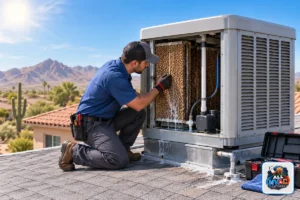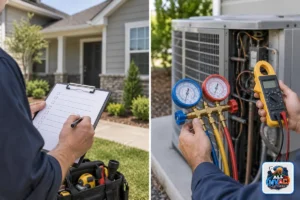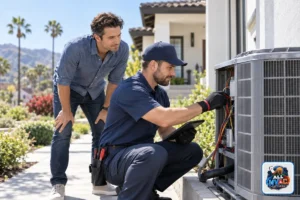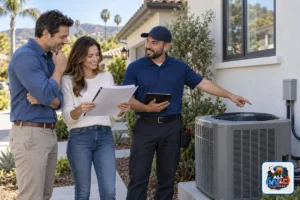
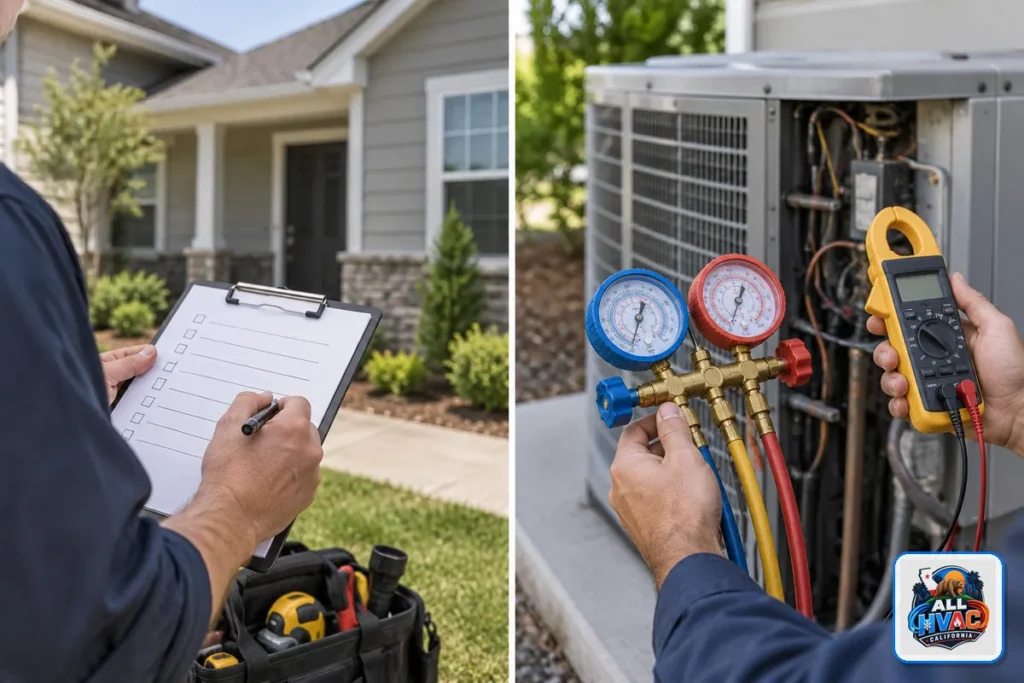
Yes, a separate HVAC inspection is often worth getting when the system is older, poorly documented, noisy, or costly to replace. It is also smart when the general inspector recommends specialist review.
A home inspector looks across the entire property. An HVAC technician focuses on heating, cooling, controls, airflow, and installation. That narrower focus can uncover problems a brief system check misses.
The extra visit is not required for every purchase. This guide shows when it adds value, what it should include, and how to use the findings before closing.
A general inspection and an HVAC inspection serve different jobs
A general home inspector reviews structure, roofing, plumbing, electrical, HVAC, and many other systems. Time and access limit how deeply each area can be tested.
An HVAC technician works within one technical system. The visit can include operating measurements, component identification, safety review, airflow clues, and repair planning.
Both inspections can be useful. One provides the broad map. The other zooms in where failure could affect comfort, safety, or a large part of your budget.
Ask the home inspector what was tested and what was only observed. Clear scope avoids paying twice for the same basic check.

Schedule a specialist when warning signs appear
Separate HVAC review makes sense when equipment is near the end of expected life. It also helps when maintenance records are missing or components have different ages.
Other warning signs include weak airflow, loud starts, rust, water marks, scorched wiring, unusual odors, and large temperature differences. Fresh paint cannot hide a struggling compressor.
A recently replaced system may still need review. Poor sizing, bad ductwork, and installation errors can make new equipment perform badly.
If the seller limits access or testing, tell your agent. You need to understand what remains unknown before your contingency period ends.

| Situation | Separate inspection value | Reason |
|---|---|---|
| Older or unknown-age system | High | Repair and replacement risk is harder to estimate |
| Home inspector flags concerns | High | A specialist can diagnose the specific condition |
| New, permitted, documented equipment | Moderate | Installation and performance may still deserve review |
| Multiple systems or complex zoning | High | More components create more hidden variables |
A specialist can test performance, not just operation
Turning on the thermostat proves very little. The system may run while producing weak temperature change, poor airflow, or excessive electrical draw.
A technician can review temperatures, controls, accessible coils, blower condition, drainage, electrical components, and outdoor equipment. Refrigerant checks depend on conditions and scope.
Furnace testing may include ignition, burners, venting, flame behavior, and accessible safety controls. Heat pumps need checks in both operating modes when weather permits.
The report should distinguish observed facts from predictions. No technician can promise that an aging part will last through the next heat wave.
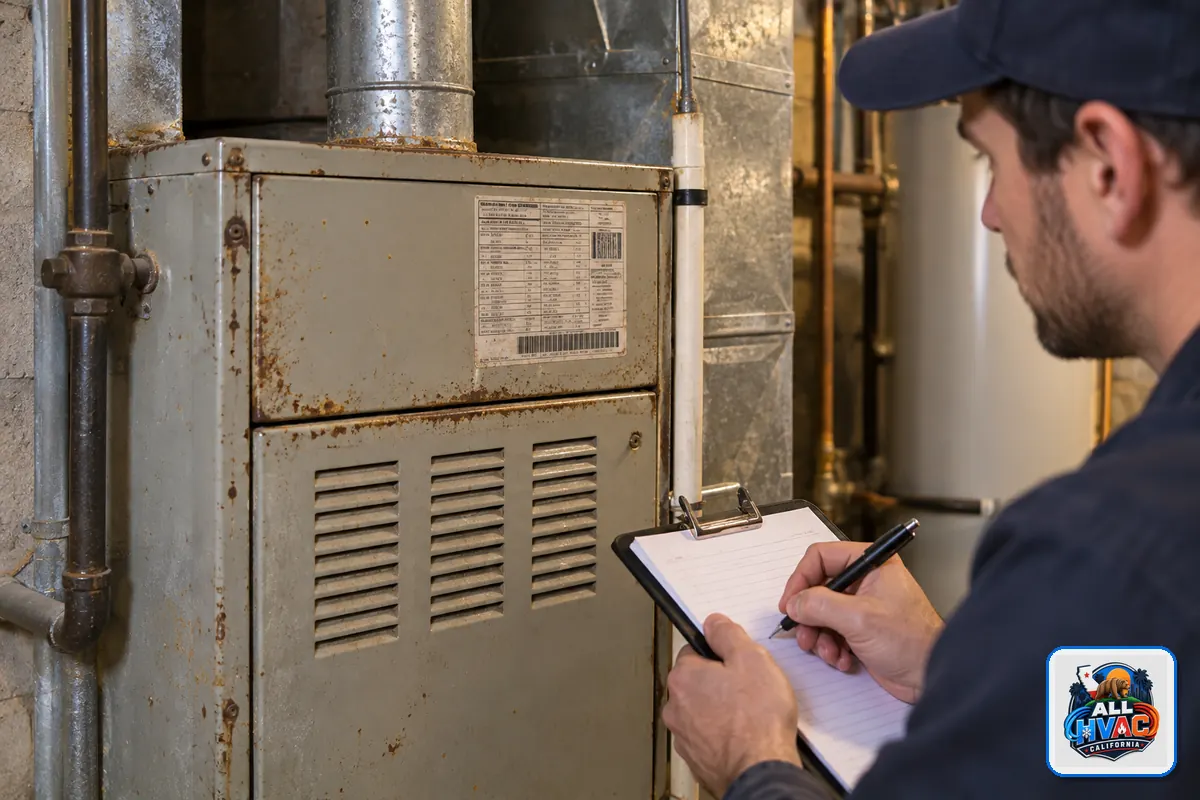
Age and model details shape the financial picture
Model and serial labels can help estimate manufacturing age and capacity. They also reveal whether indoor and outdoor equipment appear matched.
Age does not automatically mean failure. However, it changes the chance of major repairs and parts availability. That matters when planning cash after closing.
Use the HVAC system lifespan guide for context. Then weigh actual condition, maintenance, installation, and local runtime.
California climates vary sharply. A coastal system and a Central Valley system may accumulate very different summer stress, even with the same birthday.
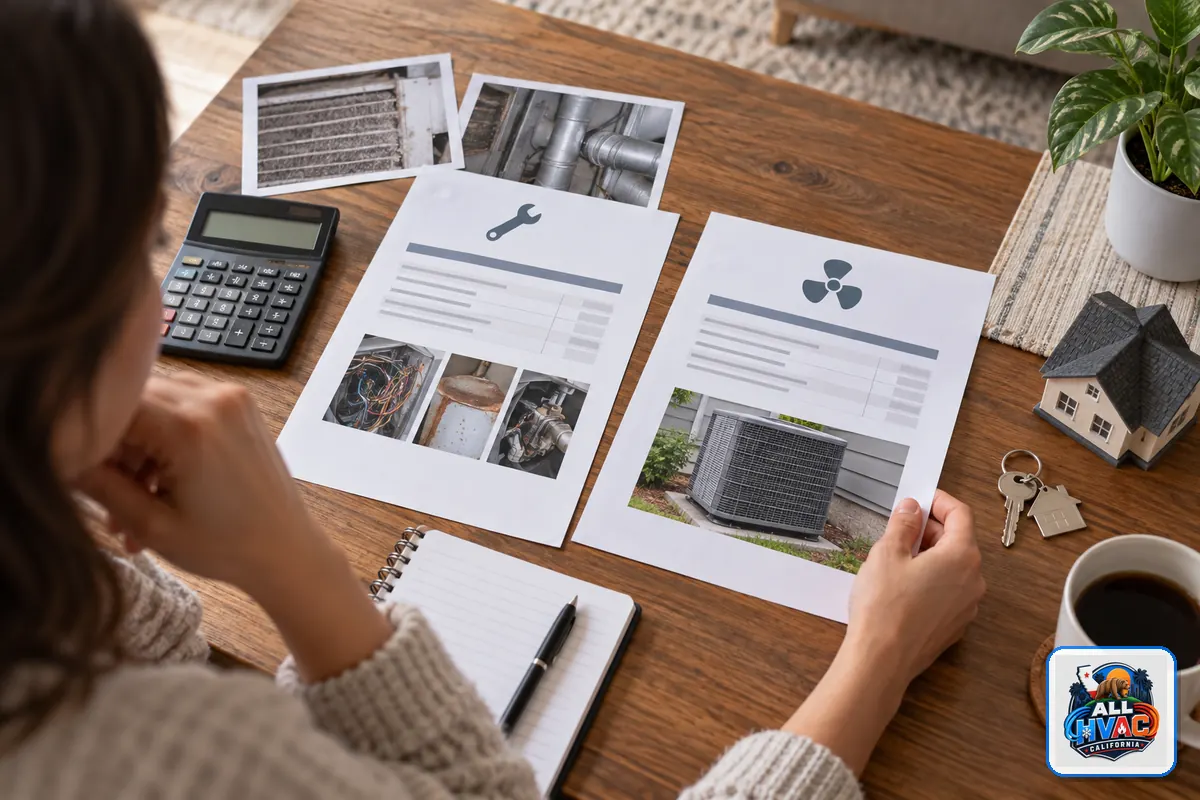
The findings can support better repair and replacement estimates
A detailed diagnosis helps contractors price the correct work. It can separate a small capacitor failure from a broader system problem.
Request written scope for material concerns. Good estimates name equipment, included labor, permits, warranties, exclusions, and any duct or electrical work.
Compare options using our repair versus replacement guide. A single expensive repair does not always justify replacement, but repeated failures change the math.
Do not choose from price alone. The California contractor hiring guidance explains license checks, contracts, and bid review.

Inspection timing matters during a home purchase
Book the specialist early within the inspection period. You may need time for seller access, follow-up testing, and written estimates. Waiting creates pressure.
Weather can restrict cooling tests. Ask what alternative evidence the technician can review, such as service records, electrical condition, drainage, and visible installation details.
Share the report with your agent promptly. Contract deadlines control requests and responses. A technically strong report still needs timely handling.
California’s property disclosure overview notes that disclosures do not replace inspections. Your agent can explain current forms and duties.
The inspection cost should be weighed against the risk
Inspection fees vary with location, system count, access, and testing depth. A simple condo heat pump and a large house with three systems are not equal jobs.
Ask for scope and price before scheduling. Confirm whether the visit includes a written report, repair quote, refrigerant testing, combustion testing, or duct review.
A separate inspection can be especially valuable when replacement would strain your post-closing budget. You are buying information at the moment it matters most.
Use our HVAC contractor selection guide to compare qualifications and written scope. A low fee with a thin inspection may save little.
Skip the extra visit only when the evidence is already strong
You might skip specialist review when equipment is new, permitted, documented, and thoroughly tested by a trusted inspector. Even then, read the warranty and service records.
Do not skip only because the system turned on. A short thermostat test does not establish efficiency, airflow, safe installation, or remaining life.
A useful decision considers system age, visible signs, climate, records, and replacement impact. When several risks stack up, specialist review is the safer bet.
All HVAC California can provide a focused assessment for California buyers. You receive practical findings without a push toward work you do not need.
Questions California readers also ask
Is a separate HVAC inspection really necessary?
It is not necessary for every purchase. It is most valuable with older equipment, warning signs, missing records, or a specialist recommendation.
How is an HVAC inspection different from a home inspection?
The HVAC visit focuses on system condition and performance. The home inspection covers many property systems at a broader level.
Who should perform the separate HVAC inspection?
Use a qualified, properly licensed HVAC contractor with experience inspecting the equipment type installed at the home.
When should I schedule the HVAC inspection?
Schedule early in your inspection period. Leave enough time for follow-up estimates and contract decisions.
Can a technician predict how long the system will last?
No exact prediction is possible. The technician can explain condition, age, defects, maintenance clues, and likely risk.
Will the inspection tell me if the system is oversized?
It may reveal clues, but confirming size often needs load calculations and deeper design review. Ask whether sizing analysis is included.
Does the seller have to repair HVAC problems?
That depends on the contract, disclosures, local rules, and negotiation. Ask your real estate professional or attorney.
Can I request a replacement credit after the inspection?
You may be able to request one during the allowed period. Your contract and market conditions shape the response.
What if outdoor weather prevents AC testing?
The report should note the limitation. The technician can still inspect visible components, records, controls, and other system details.
Should I inspect a brand-new HVAC system?
Yes, if documentation is weak or installation concerns appear. New equipment can still suffer from poor sizing or workmanship.
Use a specialist when the risk deserves a closer look
A separate HVAC inspection buys focused information before a major purchase. It is especially helpful when equipment is older, complex, undocumented, or already showing warning signs.
All HVAC California can inspect the system and explain the results in plain language. Request a free estimate early enough to protect your decision window.
This article provides general information, not legal or real estate advice. Inspection rights, deadlines, and negotiation options depend on your contract and current California law.