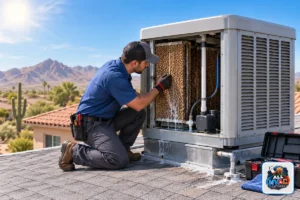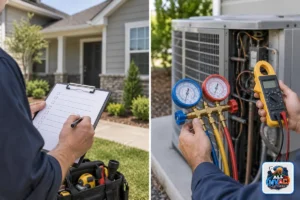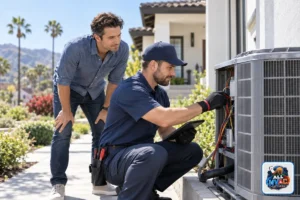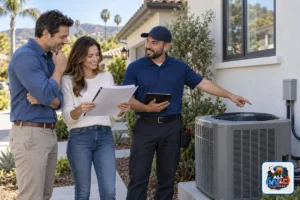

An HVAC inspection for a home purchase should examine equipment condition, safety, operation, airflow, ducts, controls, and visible installation details. It should also document age, model information, concerns, and recommended next steps.
A standard home inspection may flag obvious problems. A dedicated HVAC visit goes deeper. It can help a California buyer spot a tired compressor, unsafe furnace, or damaged duct before closing.
No inspection predicts the future perfectly. Still, good measurements replace guesswork with useful evidence. That can protect your budget and make negotiations much calmer.
The inspection starts with controls and system identification
The technician should record equipment type, brand, model, serial number, capacity, and estimated age. These details help identify matched components and possible warranty history.
The thermostat gets tested in available modes. The inspector checks whether commands reach the equipment and whether room temperature appears reasonable. Smart features do not replace basic operation.
Disconnects, accessible wiring, panels, and visible breakers also matter. Loose connections, scorching, and missing covers deserve attention. Electrical defects can create safety and reliability concerns.
Buyers should receive photos of labels and notable defects. Those records make later estimates easier. They also reduce confusion when several systems serve the property.
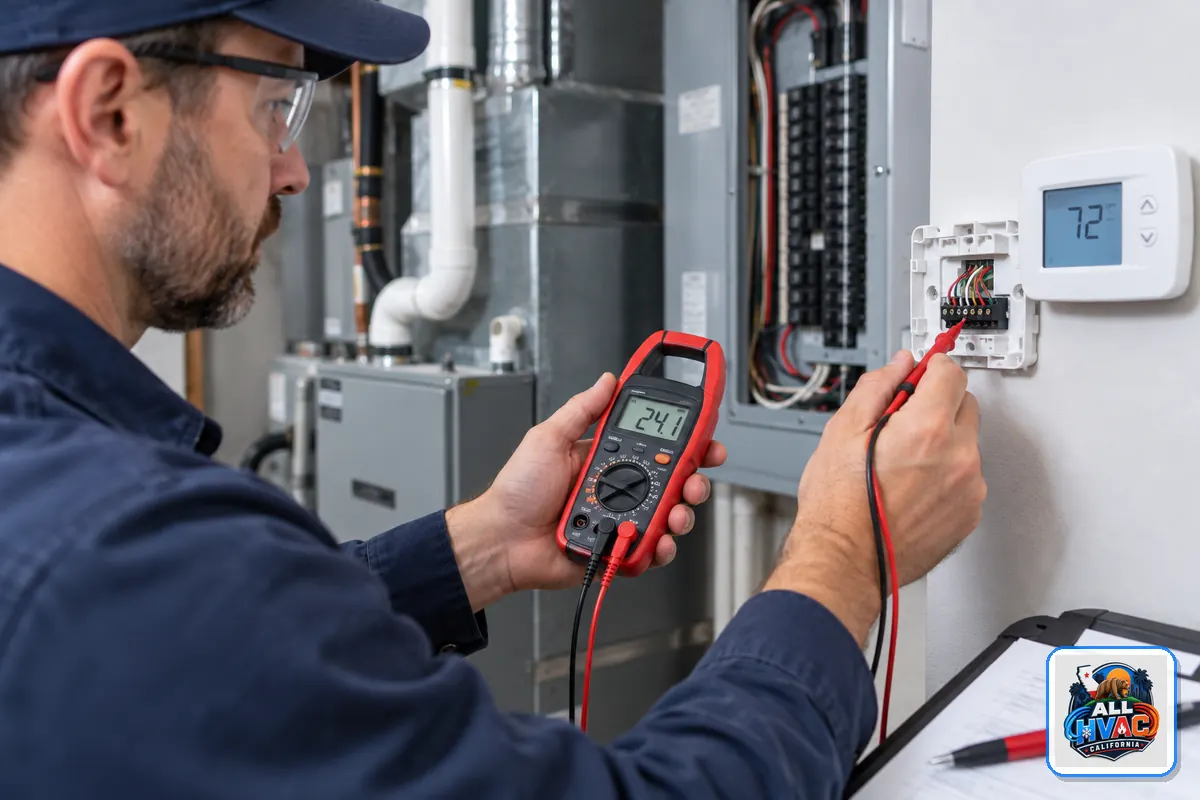
Heating equipment receives a safety and condition review
A furnace inspection should review burners, ignition, venting, filters, blower condition, and visible heat exchanger concerns. Testing depth depends on access and system type.
The technician observes startup, operation, and shutdown. Odd flame patterns, delayed ignition, soot, or unusual noises need explanation. Carbon monoxide concerns require immediate care.
Heat pumps need checks in heating and cooling modes when weather permits. The reversing valve, auxiliary heat, outdoor unit, and controls should work together.
A visual check cannot certify every hidden surface. Ask what was accessible and what was excluded. A clear limitation is better than a vague promise.

| Inspection area | Typical checks | Why buyers care |
|---|---|---|
| Controls and electrical | Thermostat, disconnects, wiring, startup | Safety and reliable operation |
| Heating and cooling | Burners, coils, compressor, blower, temperatures | Capacity, condition, and repair risk |
| Air distribution | Ducts, registers, airflow, insulation | Comfort and operating cost |
| Drainage and records | Pans, drains, labels, age, report photos | Water risk and budget planning |
Cooling components are checked under operating conditions
The outdoor condenser should be inspected for coil damage, corrosion, electrical wear, drainage, noise, and clearance. The indoor coil area should be reviewed when accessible.
A technician may measure supply and return temperatures, electrical readings, and system pressures. The exact tests depend on weather, equipment, and access.
Cold weather can limit air-conditioning testing. Running some compressors in unsuitable conditions can cause damage. The report should explain any seasonal limitation.
Look beyond whether the unit turns on. A system can operate while delivering weak capacity or high energy use. Performance measurements tell a fuller story.

Ductwork and airflow can reveal hidden comfort problems
Accessible ducts should be checked for disconnections, crushing, damaged insulation, loose joints, and poor support. Attics and crawlspaces often hide expensive comfort losses.
The technician should compare airflow across representative rooms. Hot bedrooms or weak upstairs registers may point toward leakage, sizing, balance, or insulation problems.
ENERGY STAR notes that sealing ducts can improve system efficiency. Its heating and cooling guidance also explains why regular service matters.
A basic inspection may not include duct leakage testing. Ask whether pressure testing is recommended. The scope should match the home and visible warning signs.
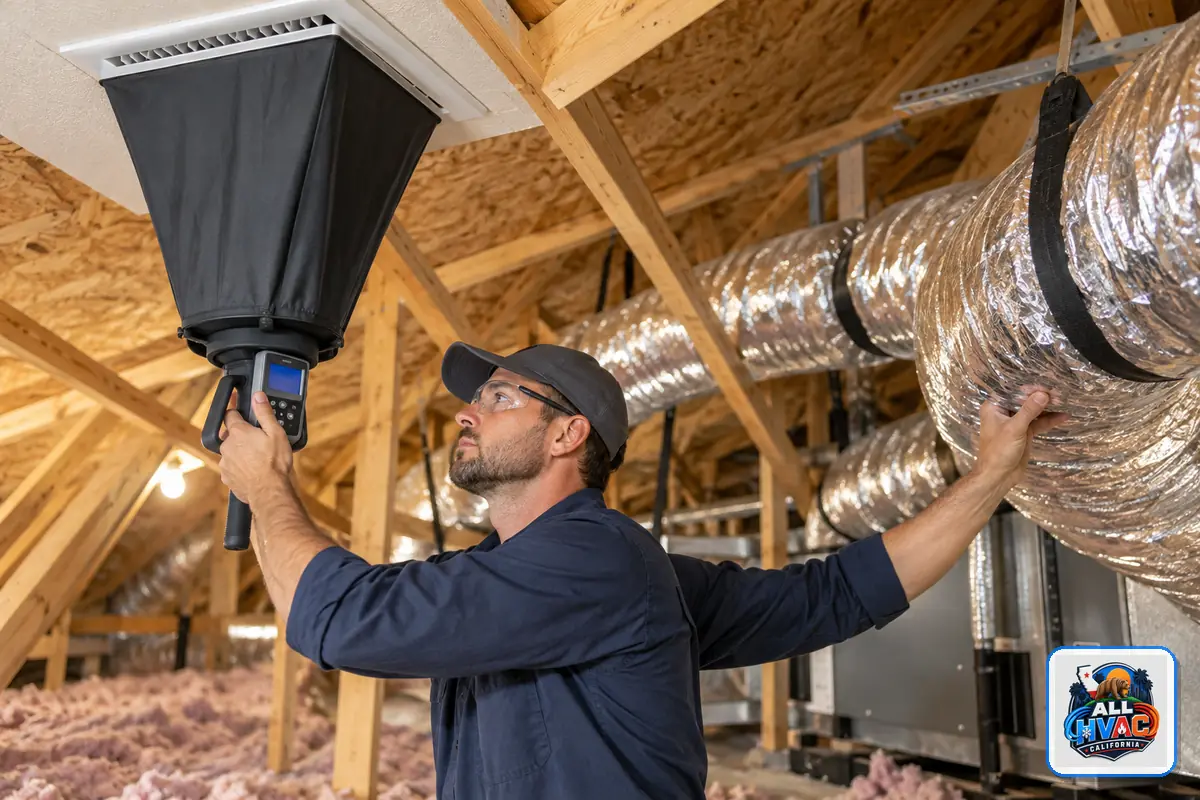
Drainage, filters, and indoor equipment need close attention
Condensate drains, pans, pumps, and nearby surfaces should be checked for water marks or blockage. Small drain problems can damage ceilings, floors, and equipment cabinets.
The air filter location and condition reveal maintenance habits. A severely loaded filter can restrict airflow. Missing filters may allow debris to coat the blower and coil.
Inspectors should note corrosion, biological growth concerns, cabinet gaps, and unusual odors. Laboratory testing is separate, but visible moisture deserves a plan.
Our guide to HVAC system parts helps buyers understand what each inspected component does.

The report should rank findings by urgency
A useful report separates safety defects, active failures, near-term repairs, maintenance needs, and optional improvements. A long list without priorities leaves buyers in the fog.
Each major concern should include evidence. Photos, measurements, model information, and plain explanations make the finding easier to price and discuss.
Ask whether a repair estimate is included. Some inspection fees cover diagnosis only. Others can provide rough ranges or separate written bids.
The HVAC lifespan guide gives context, but age alone does not decide condition. Installation and maintenance can change the picture.
California buyers should verify permits and contractor credentials
Ask for permits and installation records when equipment looks newer. Local rules vary, so your agent or local building department can explain property-specific requirements.
The California Contractors State License Board provides tools for checking contractor licenses. Verification helps before ordering repairs or replacement.
The seller’s disclosure does not replace an inspection. California’s real property disclosure overview explains that disclosures and inspections serve different purposes.
Your real estate professional should guide deadlines and contract questions. HVAC technicians explain equipment. They do not replace legal advice.
Use the findings before your contingency expires
Schedule the inspection early enough for estimates and follow-up questions. A crowded closing week leaves little room for careful decisions. Time flies in escrow.
Send the report to your agent and review material issues. You may request repairs, a credit, a price change, or no action. Contract terms control available choices.
The guide to choosing an HVAC contractor can help you compare any bid. Scope and workmanship matter as much as price.
For a buyer-focused system evaluation, All HVAC California can explain condition and likely next steps. You get a straightforward view before making a large commitment.
Questions California readers also ask
How long does an HVAC inspection take when buying a house?
Many residential inspections take one to two hours. Complex homes, multiple systems, access problems, and additional testing can extend the visit.
Is an HVAC inspection included in a home inspection?
A general home inspection usually includes a basic HVAC review. A dedicated HVAC inspection often provides deeper testing by a trained system professional.
Does an HVAC inspection include refrigerant testing?
It may include operating pressures or temperature measurements when conditions allow. Ask the contractor to state exactly what the fee covers.
Will the inspector look inside the ducts?
Accessible duct exteriors are usually reviewed. Camera inspection, leakage testing, or full internal evaluation may require added scope.
Can HVAC be tested during winter?
Heating can usually be tested. Cooling tests may be limited in low outdoor temperatures to protect the equipment.
Does the inspection include a repair estimate?
Not always. Some companies provide findings only, while others offer separate repair or replacement quotes.
What HVAC issues can delay a home sale?
Safety problems, failed heating or cooling, major leaks, unpermitted work, and expensive replacement needs often require quick decisions.
Should buyers attend the HVAC inspection?
Yes, when possible. You can see the equipment, hear the findings, and learn basic operating and maintenance details.
How old is too old for an HVAC system?
There is no single cutoff. Age, condition, installation, maintenance, efficiency, and repair history all matter.
What should I receive after the inspection?
Expect a written summary with system details, photos, limitations, measured findings, priorities, and recommended next steps.
Turn inspection details into a buying decision
A strong HVAC inspection covers more than a quick on-and-off test. It reviews safety, equipment, airflow, drainage, ducts, controls, and records. The report should make urgent risks easy to spot.
All HVAC California can provide a focused evaluation before closing. Request a free estimate and schedule early, so you have time to understand the system and your options.
This article provides general information, not legal or real estate advice. Inspection scopes and contract rights vary. Consult your licensed inspector, contractor, agent, and legal adviser as needed.