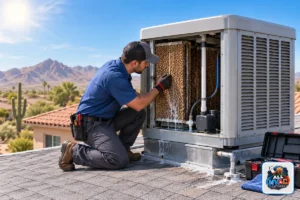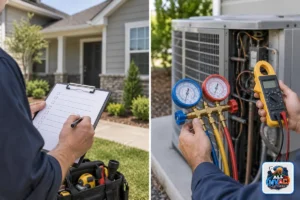

The biggest HVAC red flags for homebuyers include rust, leaks, weak airflow, uneven temperatures, loud operation, damaged ducts, and mismatched equipment. Missing records and unsafe wiring also deserve attention.
One warning sign does not always mean replacement. Several signs together can point toward neglected service or poor installation. That difference matters when you are building a closing budget.
Use this guide during the tour, inspection, and quote stage. You will know what to notice, what to ask, and when a specialist should take a closer look.
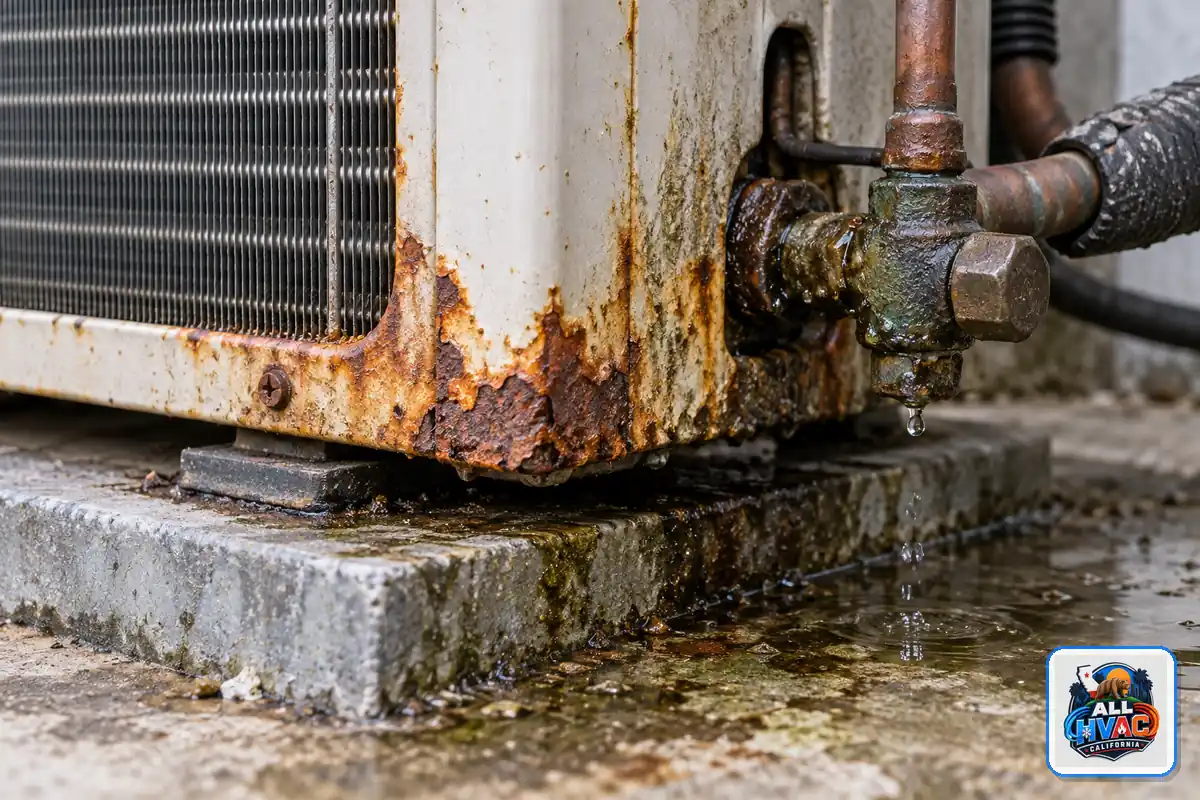
Rust, corrosion, and water marks need an explanation
Surface dust is normal. Heavy rust, green corrosion, oily residue, or repeated water marks are different. They suggest leaks, drainage trouble, coastal exposure, or long-term neglect.
Check the air handler, furnace base, drain pan, nearby platform, and ceiling below. A dry stain still tells a story. Ask what caused it and how it was repaired.
Water around cooling equipment can come from a blocked drain, frozen coil, cracked pan, or poor slope. Each cause carries a different repair scope.
Do not touch wet electrical equipment. Photograph the area and request professional review. Safety comes first when water and power share the same space.
Weak airflow and uneven rooms can expose bigger problems
Hold your hand near several supply registers while the system runs. Very weak flow or large room differences can signal duct damage, dirty components, balance issues, or an undersized blower.
Ask whether upstairs rooms stay hot or bedrooms feel stuffy. Seller answers do not replace testing, but they point the inspection toward real comfort concerns.
Closed or dirty registers may be simple. Crushed attic ducts or inaccessible leaks can cost much more. The system needs a clear path from return to supply.
Review our HVAC operation guide to see how airflow, heating, and cooling parts work together.

| Red flag | Possible meaning | Best next step |
|---|---|---|
| Rust or water marks | Drainage, leak, or corrosion | Document and inspect the source |
| Weak or uneven airflow | Duct, blower, filter, or sizing issue | Compare rooms and test airflow |
| Grinding or burned wiring | Mechanical or electrical failure | Stop operation and call a professional |
| Mismatched equipment | Partial replacement or compatibility concern | Verify models, permits, and performance |
Loud starts, vibration, and burned wiring are serious clues
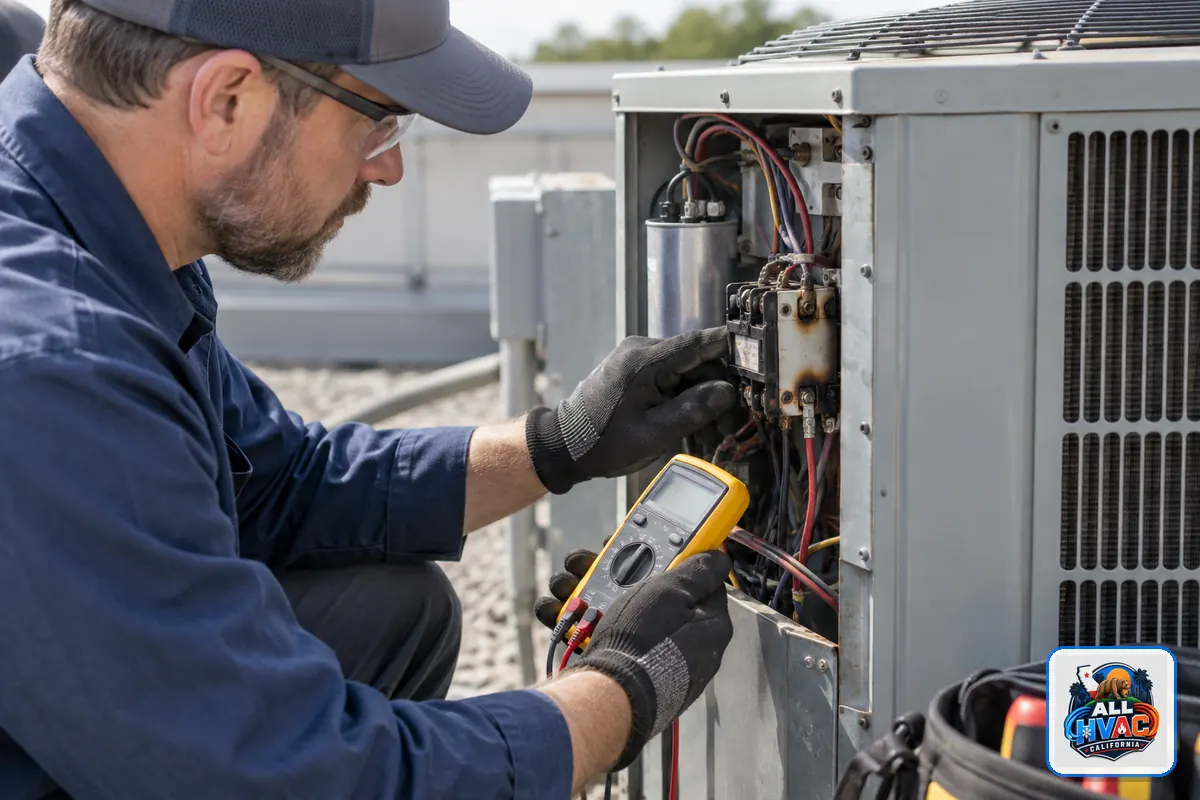
A brief startup sound can be normal. Grinding, scraping, repeated clicking, strong buzzing, or cabinet shaking is not. These sounds may point toward motors, bearings, relays, panels, or loose mounting.
Look for darkened wire insulation, melted connectors, taped repairs, or open electrical boxes. Never remove a panel during a casual tour.
A breaker that trips repeatedly is not fixed by resetting it. The cause could involve a motor, compressor, short, poor connection, or incorrect circuit protection.
Ask the inspector to document the exact sound and operating stage. A clear note helps the next technician reproduce the issue.
Mismatched equipment and missing labels complicate planning
Indoor and outdoor units should be compatible. Different brands are not automatically wrong, but capacity, refrigerant, controls, and approved combinations must work together.
Missing or painted-over labels make age and model research harder. That uncertainty affects warranty questions, parts, and future replacement planning.
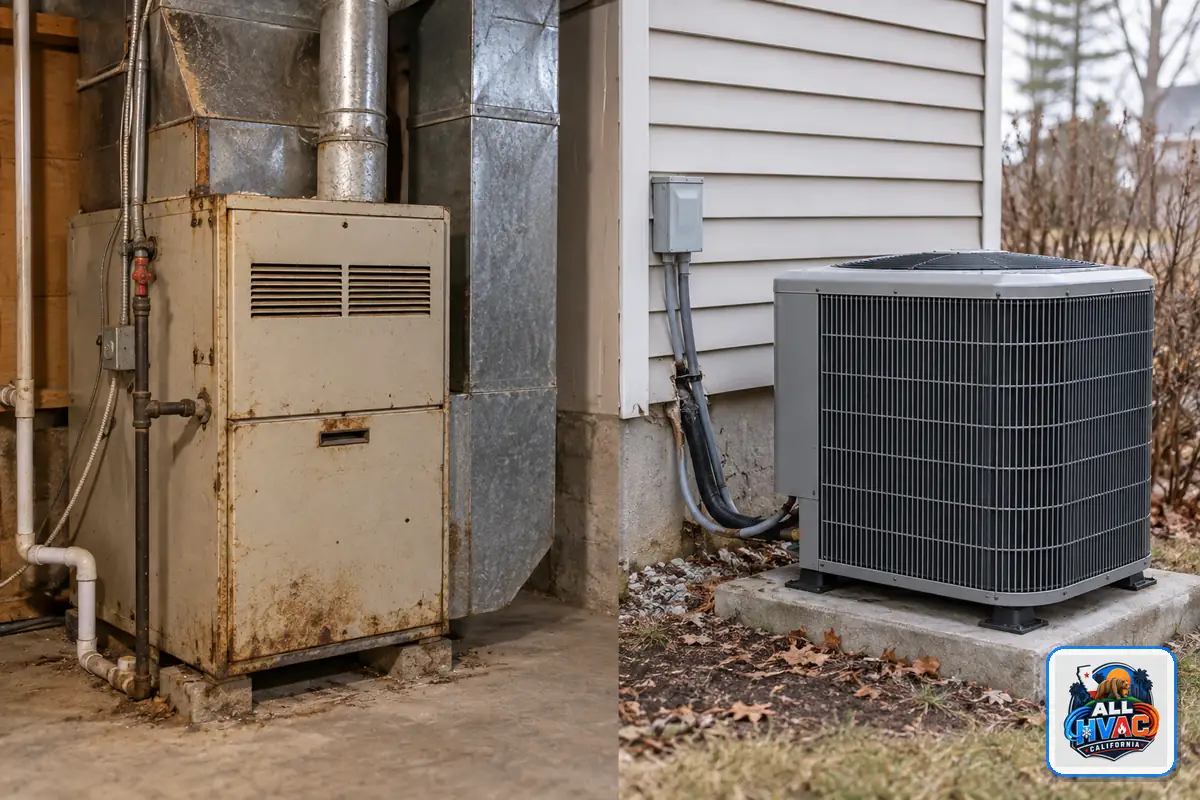
A shiny condenser beside an old furnace may mean only half the system changed. Ask what was replaced, who installed it, and whether permits were closed.
An equipment diagram can help you identify indoor and outdoor components during the inspection.
Damaged ducts can waste comfort before air reaches the room
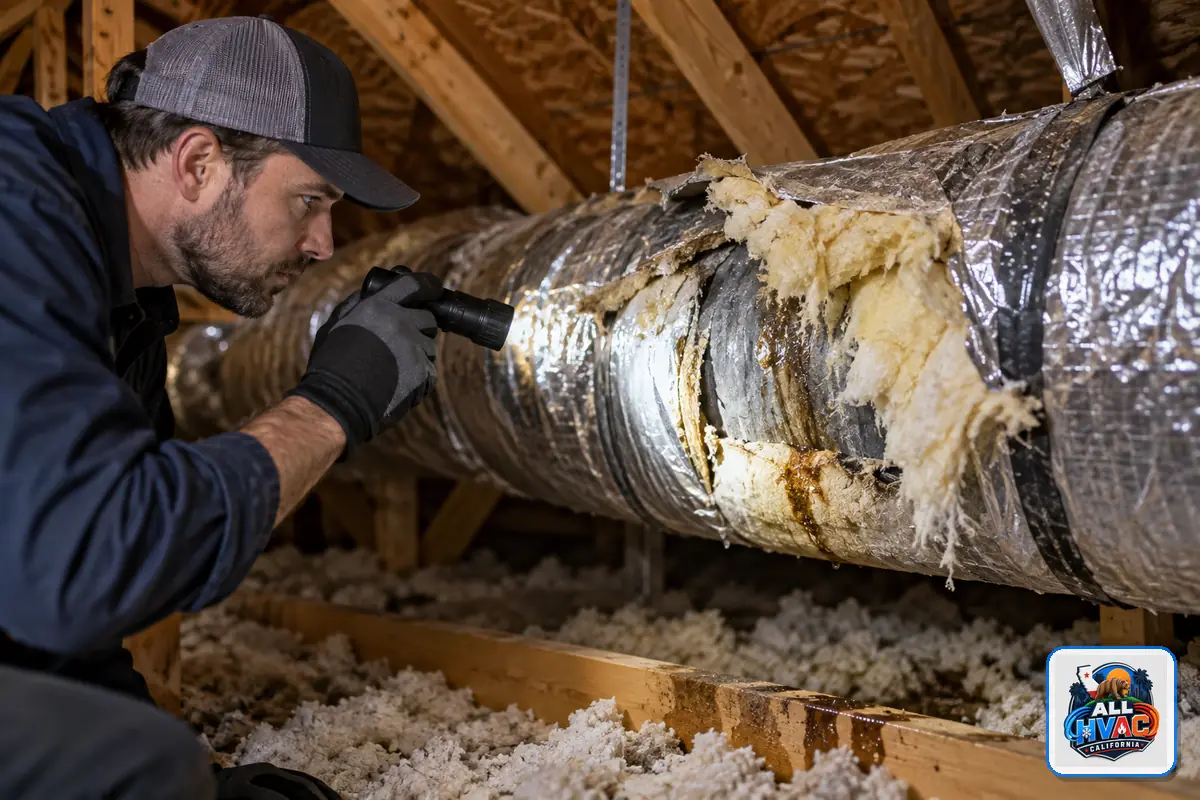
Attic and crawlspace ducts should be supported, sealed, insulated, and connected. Torn outer jackets, crushed runs, sharp bends, and loose collars are red flags.
Rodent damage and old cloth duct tape deserve attention. So do ducts lying in water or pressing against sharp framing.
ENERGY STAR says duct sealing can improve efficiency in many homes. Its heating and cooling guidance explains maintenance and airflow basics.
Not every inspection includes leakage testing. Ask whether visible damage justifies pressure testing or repair estimates.
Missing service records increase uncertainty
A clean service history shows dates, work performed, and recurring issues. Missing records do not prove neglect, but they remove useful evidence.
Compare seller statements with filter condition, coil cleanliness, drain condition, and equipment labels. The physical system often tells the truth.
Use the HVAC maintenance checklist to see routine items that should not be ignored. Deferred basics can shorten equipment life.
Ask about past leaks, major parts, refrigerant additions, thermostat changes, and rooms that never felt comfortable. Specific questions beat vague promises.
Unpermitted work and unsafe access deserve follow-up
Improvised platforms, blocked service space, unsupported lines, and open combustion vents can create risk. Roof units and attic furnaces need safe access for future work.
Ask for permits on recent replacements and major alterations. Requirements vary by location. Your agent and local building department can guide property-specific checks.
Use the California contractor hiring resources before accepting repair bids. License and scope verification protect the next step.
If a condition appears unsafe, stop testing. A qualified professional should decide whether equipment can operate during the inspection.
Turn red flags into useful decisions, not panic
List each concern by safety, active failure, near-term repair, and maintenance. That order keeps a noisy register from distracting you from a venting problem.
Get written estimates for material defects. Our repair versus replacement guide helps compare age, repair history, comfort, and expected life.
Your agent can explain contract options and deadlines. A technician should explain equipment facts and scope, not make your legal or purchase decision.
All HVAC California can inspect flagged conditions and give you a clear repair plan. No smoke and mirrors, just useful evidence.
Questions California readers also ask
Is rust on an HVAC unit always a deal breaker?
No. Light surface rust may be manageable. Deep corrosion, active leaks, or structural damage need professional review.
What HVAC noise should worry a homebuyer?
Grinding, scraping, repeated clicking, loud buzzing, or strong vibration deserve testing. Shut down equipment if operation appears unsafe.
Are uneven temperatures a sign of a bad HVAC system?
They can result from ducts, insulation, balance, sizing, or equipment condition. A specialist should identify the cause.
How can I tell how old the HVAC system is?
Use the model and serial labels, installation records, permits, and manufacturer information. Replaced components may have different ages.
Should I worry about an old furnace with a new AC?
Not automatically. Confirm compatibility, condition, controls, permits, and remaining furnace life before deciding.
What does oily residue near the AC mean?
It may indicate a refrigerant oil leak or another service issue. Do not diagnose from appearance alone.
Can damaged ducts be repaired without replacement?
Some sections can be resealed or replaced. Widespread deterioration may justify a larger duct project.
Is a dirty filter a major red flag?
One dirty filter is fixable, but extreme buildup may suggest neglected maintenance and possible airflow stress.
What if the seller has no HVAC records?
Treat age, repairs, and maintenance as uncertain. Use labels, permits, inspection findings, and written estimates.
Who should evaluate HVAC red flags?
Use a qualified HVAC contractor for technical diagnosis. Your agent and legal adviser handle contract and negotiation questions.
Look past the thermostat
The thermostat turning on is not a clean bill of health. Rust, leaks, weak airflow, damaged ducts, mismatched equipment, and electrical damage all deserve context.
All HVAC California can turn those warning signs into clear findings. Request a free estimate before closing when you want facts, priorities, and realistic options.
This article provides general information, not legal, real estate, or safety advice. Use qualified professionals and follow your contract deadlines.