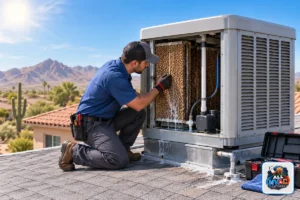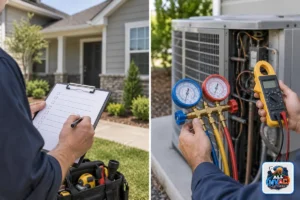

Condos can have individual HVAC, shared building systems, or a combination of both. Your own thermostat does not prove that every component belongs to your unit. Start by identifying the equipment and the services it depends on.
Some condos use a dedicated outdoor unit and indoor air handler. Others receive heated or chilled water from a central plant. A third group uses private heat pumps connected to a shared water loop.
This guide from All HVAC California helps you identify those arrangements. You will learn what you can control and which questions to ask management. That can prevent booking the wrong repair or ordering incompatible replacement equipment.
What makes condo HVAC individual or shared?
The distinction depends on which equipment serves which spaces. Individual systems mainly condition one residence. Shared systems provide a heating, cooling, or ventilation service to several residences.
However, many buildings sit between those simple categories. Your indoor equipment may serve only your home while relying on common piping. That makes the system partly individual and partly shared.
The IEA Heat Pumping Technologies overview of multifamily systems describes both central and individual arrangements. Neither approach applies to every building. Construction, available space, climate, and project design shape the choice.
Keep three questions separate: who controls it, who owns it, and who maintains it. A thermostat answers only part of the first question. Building documents and service records help answer the others.
What does an individual condo system look like?
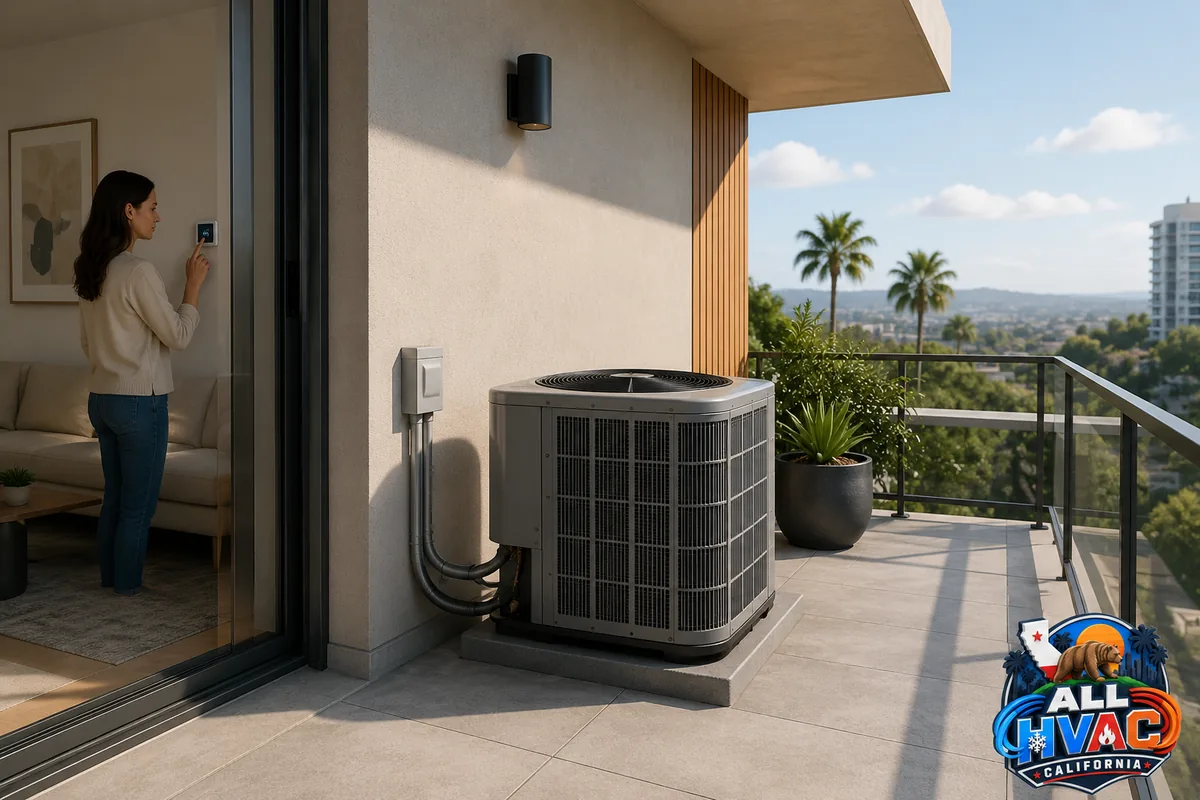
An individual system typically has equipment dedicated to one residence. You may see an outdoor condenser on a designated pad or roof. Indoor equipment may sit in a closet, ceiling space, or utility area.
Dedicated split air conditioners and heat pumps
A split system connects indoor and outdoor components through refrigerant piping. The indoor blower moves air through ducts or a room unit. The outdoor equipment exchanges heat with outside air.
A heat pump can provide heating and cooling when properly configured. A cooling-only air conditioner needs a separate heat source where heating is required. Read equipment labels instead of guessing from cabinet appearance.
Ductless systems
A ductless system connects one or more indoor units to outdoor equipment. It avoids conventional supply ducts for those rooms. Placement still matters because closed rooms do not automatically receive enough air.
A wall-mounted head does not prove installation is unrestricted. Exterior equipment, penetrations, drainage, and electrical work may affect common property. Confirm the building’s requirements before changing anything.
Packaged and through-wall equipment
Some condos use packaged units with several components inside one cabinet. Others have through-wall equipment serving a room or residence. Existing sleeves, louvers, access panels, and electrical supplies can limit replacement options.
Do not assume equipment will fit because its cooling capacity matches. Dimensions and airflow openings matter too. A technically compatible replacement must also suit the building’s installation conditions.
How do shared central systems work?
Shared systems produce or distribute heating and cooling for several units. A boiler may supply hot water, while a chiller supplies chilled water. Indoor terminal equipment uses that water to condition each residence.
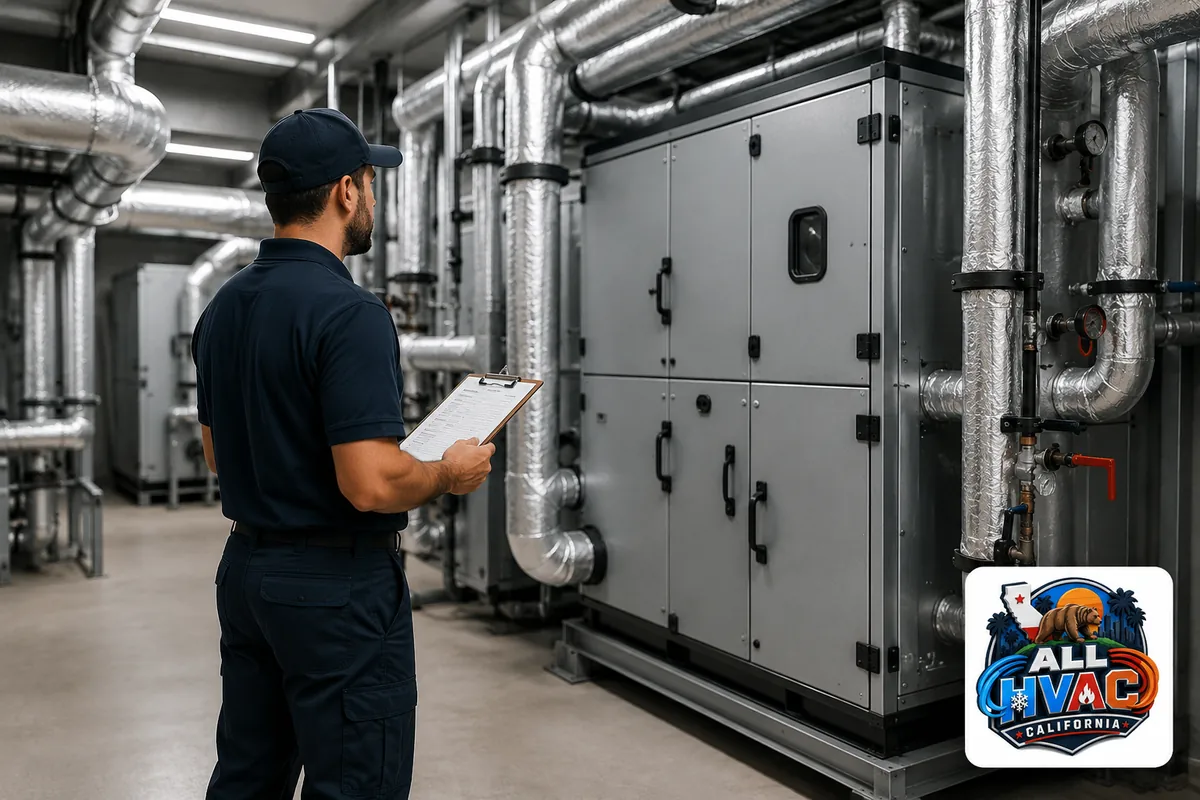
In a fan-coil arrangement, a fan moves room air across a water-fed coil. Your thermostat can control the fan or a valve. It cannot produce chilled water when the building only supplies hot water.
Some buildings distribute conditioned air instead of water. Others use several system types across residences, corridors, and amenities. Do not assume your unit and the hallway use identical equipment.
Our guide to how HVAC systems work explains the basic heating, cooling, and airflow roles. Condo equipment performs similar jobs through different arrangements. Identifying the heat source and distribution path is the key.
Two-pipe systems and seasonal changeover
A typical two-pipe fan-coil arrangement uses a common supply and return pair. The building may circulate either hot or chilled water through that pair. Seasonal changeover can therefore limit your available operating mode.
If the thermostat offers cooling during heating season, that button may not deliver cooling. Ask management which modes the plant currently supports. A thermostat replacement cannot overcome the building’s water supply conditions.
Four-pipe systems
A typical four-pipe arrangement provides separate hot-water and chilled-water supply paths. It can support more flexible local heating and cooling. Actual availability still depends on plant operation and terminal controls.
Counted pipes alone are not a reliable homeowner diagnosis. Insulation, drains, and unrelated services can confuse the picture. Use approved drawings or ask the building’s service provider.
What is a hybrid condo HVAC system?
A hybrid arrangement combines local equipment with shared infrastructure. Water-source heat pumps are a useful example. Each residence can have its own compressor while sharing the building’s heat-exchange loop.

Nailor explains this arrangement in its water-source heat pump system overview. Local units exchange heat with a common water circuit. Building equipment manages that circuit’s operating conditions.
This does not mean every water-loop building uses the same design. Loop temperature, water treatment, pumping, controls, and equipment requirements vary. The replacement must match the actual building system.
Think of local equipment and the shared loop as two links in one chain. A fault in either link can interrupt comfort. Replacing the local unit will not fix a building-wide loop problem.
The broad types of HVAC systems guide helps compare familiar equipment categories. Use it for terminology, then confirm your building’s specific configuration. Marketing labels alone do not establish compatibility.
How can you identify your condo’s setup safely?
Start with documents and visible labels rather than opening equipment. A little detective work goes a long way. The goal is a clear system description, not a DIY technical inspection.

- Ask management for the HVAC system description and service responsibility contacts.
- Photograph accessible equipment labels without removing panels.
- Record the thermostat make, model, and available operating modes.
- Check old invoices for terms such as fan coil, heat pump, or central plant.
- Ask whether your equipment depends on shared water, air, controls, or power.
- Confirm which contractor may access roofs, risers, and mechanical rooms.
Ask whether the outdoor equipment label identifies your unit number. Treat handwritten labels as a clue, not final proof. Never switch off another residence’s equipment to test a theory.
Utility bills provide useful context but not a complete equipment map. An electricity bill may cover your blower or compressor. HOA charges may cover shared pumps, plant energy, and maintenance.
Does shared HVAC mean neighbors share the same air?
Not necessarily. Sharing a water loop does not inherently mean sharing recirculated room air. Many fan coils and water-source heat pumps recirculate air locally. Ventilation must be assessed separately.
A building may provide outdoor air through a central ventilation system. Bathroom exhaust, kitchen exhaust, corridor air, and pressure control can follow different paths. Cooling equipment does not describe every ventilation connection.
If odors move between units, report the location and timing. Do not assume the cause is the cooling coil. Door gaps, wall openings, exhaust imbalance, and shared shafts may require investigation.
Never block required ventilation or exhaust to stop an odor. That can create moisture and pressure problems. Ask management to coordinate an appropriate building-level inspection.
Who pays the energy bill and service costs?
Payment depends on metering arrangements, governing documents, and the work involved. Individual systems often use the residence’s electricity meter. Shared plant costs may appear within HOA operating expenses or another billing arrangement.
A hybrid building may split these costs across both channels. You might pay for your local compressor while contributing to shared pumps. Ask for the actual billing method rather than relying on a neighbor’s estimate.
Repair responsibility is a separate question from energy billing. Equipment location and single-unit service do not settle legal ownership. The declaration, condominium plan, and applicable law need review.
For a purchase, request recent service records and information about planned common-equipment work. A local unit can be healthy while the central plant needs investment. Both can affect your future costs and comfort.
What should you do when cooling stops?
First determine whether the problem affects one unit or several. That narrows the response without requiring risky tests. Contact management when shared infrastructure might be involved.
Check the thermostat setting and look for a displayed error. Confirm accessible filters and grilles are not obstructed. Do not remove electrical covers, operate shared valves, or repeatedly reset tripped protection.
If neighbors report the same outage, ask about plant or loop status. If only your unit struggles, local equipment still needs diagnosis. A shared system can also develop a branch-level problem affecting only one residence.
Our HVAC maintenance checklist covers basic observations and routine care. Follow building-specific instructions when they differ from general household advice. Your service arrangement may assign some tasks to management.
Arrange AC repair after confirming authorization and access requirements. Tell the contractor whether the system uses refrigerant, building water, or shared air. That helps them plan a suitable diagnostic visit.
What changes when you replace condo equipment?
Replacement must fit both your residence and the building system. Matching nominal capacity is only the beginning. Water conditions, controls, voltage, dimensions, airflow, and drainage may also matter.
A fan coil cannot be replaced with an unrelated heat pump without a design review. Similarly, a water-source heat pump needs compatibility with its loop. The existing opening does not guarantee a suitable replacement path.
Ask whether work requires a shared shutdown, roof access, or management supervision. Confirm protection for elevators, hallways, and finished surfaces. Those practical details belong in the written scope.
For individually controlled systems, request a current load assessment where appropriate. Building insulation, windows, and use may have changed since original construction. Avoid selecting equipment solely because the old unit used the same tonnage.
What should condo buyers ask before closing?
Buyers should understand local equipment and shared dependencies before making assumptions about comfort. Read between the lines of a simple listing description. Central air can mean several different arrangements.
Ask whether heating and cooling are available year-round. Confirm any seasonal changeover policy and service access restrictions. Request the local equipment age, maintenance history, and known unresolved problems.
For shared infrastructure, ask about planned projects and available maintenance records. Clarify how plant costs reach owners. Direct questions about special assessments or legal obligations to appropriate property professionals.
During an inspection, verify that the operating mode can actually be tested. A seasonal shutdown may prevent a complete cooling test. Record the limitation instead of treating an untested system as confirmed healthy.
How should routine maintenance be coordinated?
Maintenance works best when local and shared tasks follow a clear schedule. Ask who handles filters, drain checks, coils, valves, and central equipment. Do not assume one contractor automatically covers the entire chain.

A local service visit may require the building plant to operate in a specific mode. Shared-loop work may require a scheduled shutdown. Arrange those conditions before the technician arrives to avoid an incomplete inspection.
Ask whether owners receive service notices or need to book individual appointments. Confirm how technicians enter units and where reports are stored. Provide access instructions without sharing unnecessary personal information.
After service, keep the findings with the equipment records. Note any unresolved building dependency, such as unavailable chilled water. That prevents the next visit from repeating the same unanswered questions.
Regular coordination also helps identify repeated issues affecting several residences. Management can compare reports and investigate shared causes. Several similar local complaints may point toward one common problem.
Questions homeowners ask
Does every condo have its own air conditioner?
No. Some use dedicated equipment, while others depend on a central plant. Many combine local equipment with shared piping or ventilation.
Does my own thermostat mean my system is private?
No. It may only control a local fan or valve. Ask which heating and cooling services the building supplies.
Can a rooftop AC serve only my condo?
Yes. Rooftop location does not prove equipment serves the whole building. Confirm the equipment identification and governing documents.
What is a condo fan coil?
A fan coil moves air across a coil supplied with heating or cooling water. Building equipment may produce that water. The local unit still has controls and service needs.
What is a water-source heat pump?
It transfers heat between your residence and a water circuit. In many condos, that circuit serves multiple units. Local compressor problems and shared-loop problems require different checks.
Why can I select cooling but only get warm air?
The building may be in a heating-only seasonal mode. A local valve or control fault is another possibility. Ask management about available water temperatures and operating modes.
Can different condos heat and cool at the same time?
Some systems allow that flexibility. Others depend on a common seasonal mode. Confirm the actual configuration rather than relying on thermostat buttons.
Are hallway vents connected to my AC?
Not necessarily. Corridors may use a separate system with different pressure and ventilation goals. Ask management before changing doors or blocking grilles.
Do shared water pipes carry air from other condos?
No. Water piping transfers thermal energy, not neighboring room air. Separate air paths may still connect spaces and need their own assessment.
Who should I call for a building-wide outage?
Notify management or the designated emergency contact first. Shared equipment may require the building contractor. Report any immediate safety symptoms separately.
Can I replace my thermostat with any smart model?
No. Voltage, control signals, fan-coil stages, valves, and communication protocols vary. Confirm compatibility before buying or connecting a replacement.
Does my electricity bill reveal system ownership?
No. Metering shows how some energy is charged, not necessarily who owns equipment. Review the building documents and service arrangements.
Can I add a mini-split to a shared-system condo?
Possibly, but installation requires a feasible design and applicable approvals. Outdoor placement, penetrations, drainage, electrical capacity, and building rules can limit options.
Should I shut off a shared valve if my unit leaks?
Do not operate unidentified shared valves. Use the building emergency procedure and contact management. A trained professional can identify safe isolation points.
What details should I send before a service visit?
Send visible model labels, symptoms, error messages, and the building system description. Include access rules and the management contact. Avoid photographing private neighbor information.
The bottom line
Condo HVAC is not always a simple individual-or-shared choice. Identify the local equipment, common services, controls, billing, and repair contacts separately. That system map makes the next decision much clearer.
Request a free estimate from All HVAC California if you need equipment assessment or replacement planning. Bring the building information first. A clear scope starts with knowing what your condo actually uses.