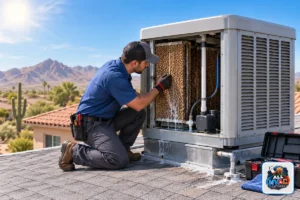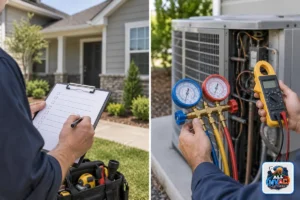
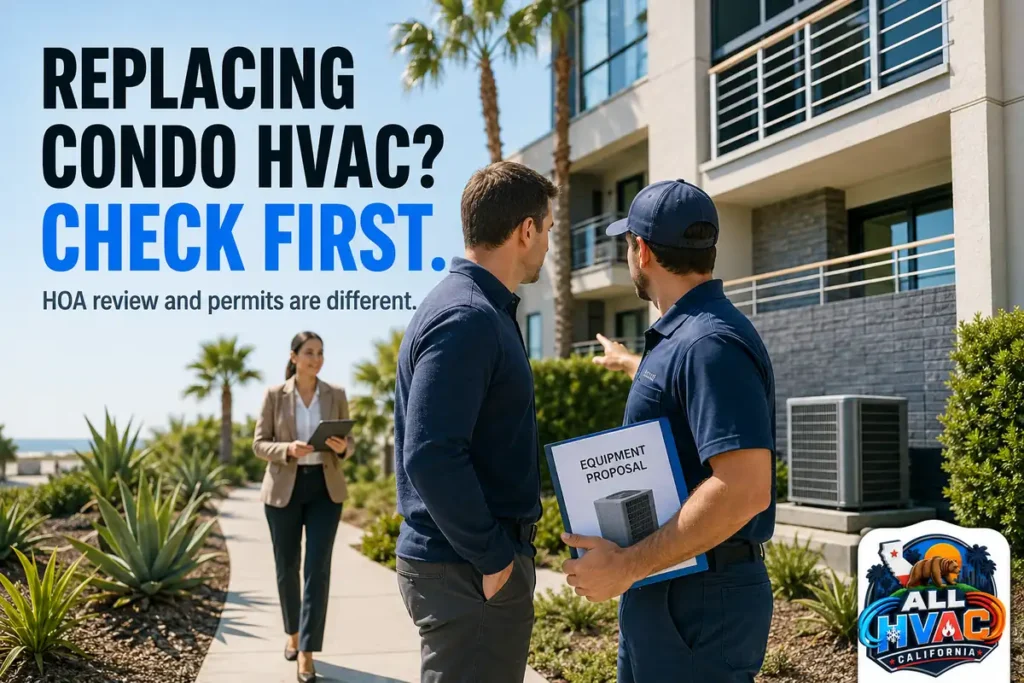
You may need HOA approval to replace condo HVAC, even when you own the equipment. The answer depends on your governing documents and the proposed work. Exterior changes, common-area access, noise, drainage, and shared systems often trigger review.
Do not assume that a same-size replacement is automatically exempt. Ask management for the current process before ordering equipment. Get written approval or a written explanation that approval is unnecessary.
This guide from All HVAC California explains how to prepare a useful application. It offers general California information, not legal advice. A qualified attorney should review disputed restrictions or approval decisions.
When does an HVAC replacement need HOA review?
Review is needed when the governing documents require it for the proposed change. The work may affect your separate interest, common property, or both. Equipment ownership alone does not settle permission.
California Civil Code Section 4765 addresses procedures when governing documents require association approval. It calls for fair, reasonable, and prompt review procedures with stated response limits. Decisions must meet the statute’s requirements.
The law does not grant unlimited permission to change common property. Nor does it replace building codes or other applicable requirements. Read the declaration and architectural rules together.
Ask which specific provision applies to the project. Then compare that provision with the proposed equipment and installation details. A clear scope gives the reviewer something concrete to evaluate.
Which changes commonly raise approval questions?
Changes affecting shared property or neighbors deserve early attention. Look before you leap when equipment must move or grow. Small mechanical changes can have visible building effects.
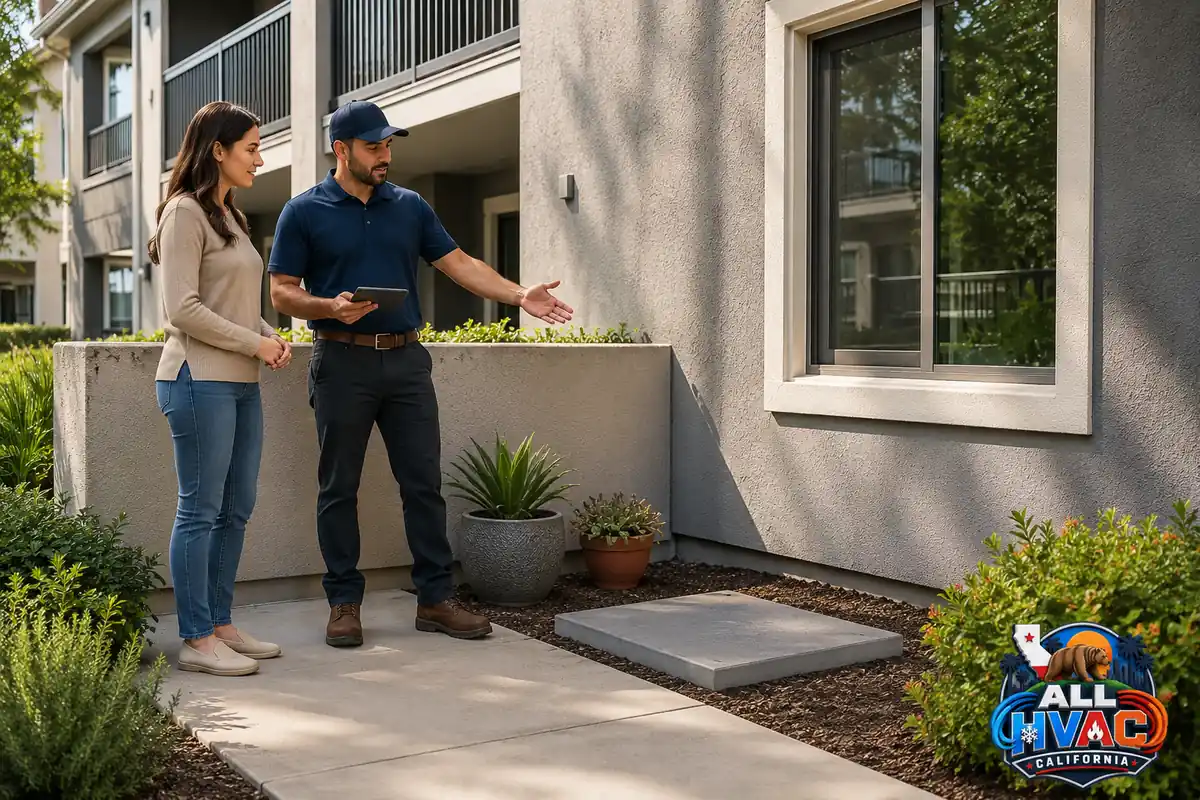
Outdoor unit location and dimensions
A new condenser may be taller, wider, or deeper than the old unit. It may need different clearances or airflow space. That can affect a balcony, roof, courtyard, or screening enclosure.
Submit dimensions and a placement drawing rather than only a model name. Show nearby walls, railings, windows, and service access. Reviewers should see how the installed equipment will fit.
Sound and vibration
Equipment noise can affect neighboring bedrooms and balconies. Sound ratings need their test conditions and measurement type. Sound power and sound pressure numbers are not directly interchangeable.
Ask the contractor to explain the proposed mounting and isolation method. Include nearby sensitive locations on the drawing. A low catalog number does not guarantee quiet operation after poor installation.
Roof and exterior-wall work
New penetrations can affect waterproofing, structure, and appearance. Roof curbs, supports, flashing, and line covers may need coordinated review. Roof warranties can also impose project-specific requirements.
Confirm who may perform those portions of the work. The HVAC contractor may need coordination with another qualified trade. Do not leave restoration responsibility out of the application.
Drainage and shared piping
Condensate must follow an approved drainage route. It should not discharge onto a neighbor’s property or create a slipping hazard. Shared drains and water loops can require planned isolation.
Show the proposed route, connection, and access points. Ask who authorizes work on common piping. A replacement inside your closet may still affect the building outside that closet.
Electrical and control changes
New equipment may have different electrical requirements. A heat-pump conversion can involve wiring, disconnects, panels, and controls. Shared electrical infrastructure can add another review step.
Have the contractor document the actual requirements rather than guessing from tonnage. Include any associated electrical work in the scope. The approval should cover the whole project, not just one cabinet.
Does like-for-like replacement avoid approval?
Not necessarily. Like-for-like is a description, not a universal exemption. Your community may still require notice, an application, or approval.
Even apparently similar equipment can differ in sound, size, refrigerant, clearances, and electrical needs. A matching cooling-capacity label does not make every installation detail identical. Document what stays the same and what changes.
Our guide to identifying your existing AC unit helps gather model information. Send both old and proposed model numbers. That makes a meaningful comparison possible.
Ask management to confirm any exemption in writing. Save that response with your contractor’s scope. If the design later changes, ask whether the exemption still applies.
What should an HOA application include?
A strong application gives the reviewer enough detail to evaluate the actual installation. Measure twice and cut once. Missing details commonly create extra rounds of questions.
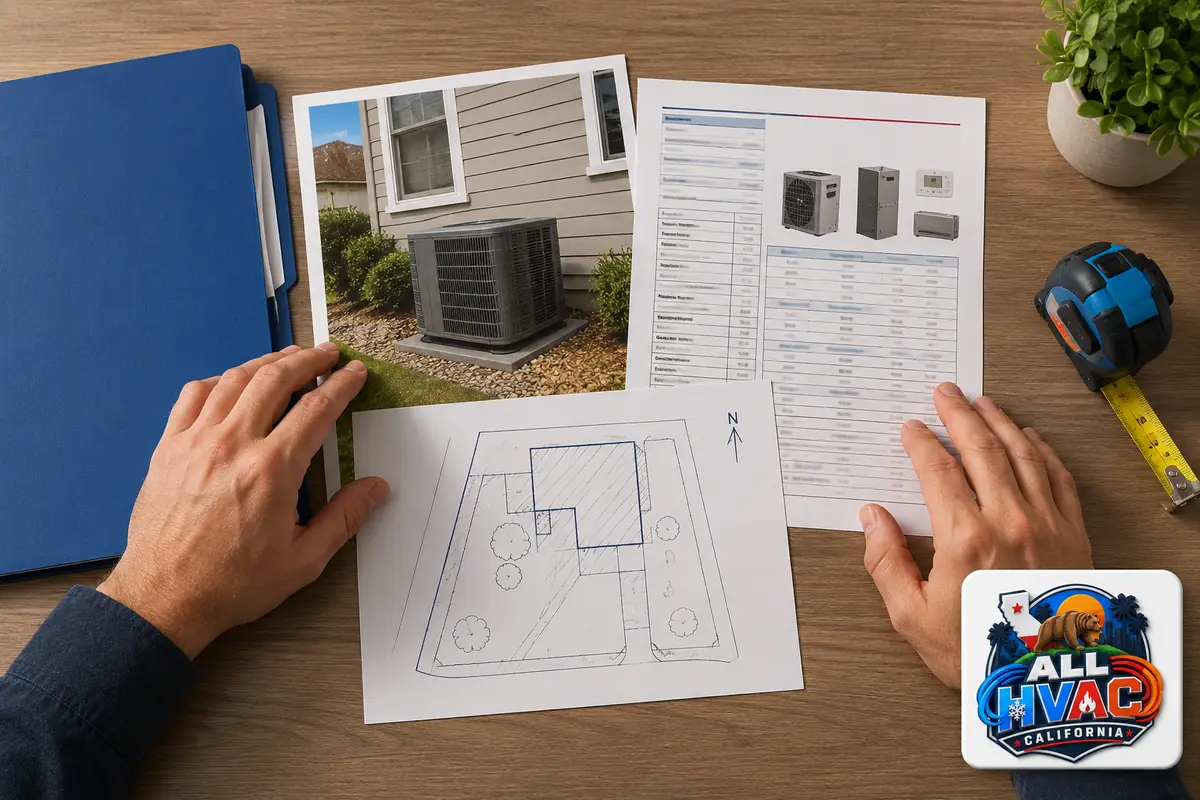
- Your unit identification and the property’s project contact.
- A plain-language description of the proposed work.
- Existing and proposed equipment model numbers and dimensions.
- Capacity, electrical requirements, and relevant sound documentation.
- A placement drawing with clearances and nearby building features.
- Refrigerant, water, condensate, and electrical routing where applicable.
- Mounting, vibration isolation, roof protection, and weatherproofing details.
- Contractor information and building-required insurance documentation.
- Access, working hours, material handling, and shared-shutdown plans.
- Permit responsibilities, restoration work, and completion documentation.
Not every community requests every item on this list. Ask for its actual checklist first. Submit relevant information in the requested format instead of overwhelming reviewers with unrelated brochures.
Use labeled photographs alongside a simple drawing. Mark the existing equipment and proposed location clearly. Avoid including unrelated private information from neighboring homes.
How should you sequence approval and installation?
Confirm the review pathway before making irreversible purchases or booking disruptive work. Keep each decision in its proper lane. A practical sequence helps the contractor and management coordinate.

- Request current governing documents and the application checklist.
- Identify the existing system and proposed replacement scope.
- Get a site assessment and a complete equipment proposal.
- Submit the required application and confirm it is complete.
- Receive the written decision and resolve any conditions.
- Coordinate permits, access, equipment ordering, and installation scheduling.
- Complete testing, inspections, restoration, and required closeout records.
Some permit and design steps may proceed alongside HOA review. The correct sequence depends on the project and local authority. Ask which commitments can safely occur before final approval.
Read purchase and cancellation terms before paying for special-order equipment. Approval delays can create storage, scheduling, or restocking issues. Put those commercial risks into the project discussion early.
How long can HOA review take?
Review time depends on the governing procedure, application completeness, and project complexity. Section 4765 requires the procedure to state maximum response times. It does not supply one universal number for every HVAC application.
Ask when the application was received and whether it is complete. Request the applicable response limit and next meeting date where relevant. Keep copies of submissions and follow-up requests.
A missing sound sheet or unclear drain route can delay practical review. A revised equipment model may require an updated submission. Confirm whether the review timeline changes when revisions are requested.
Do not treat silence as approval without a valid basis in applicable documents or law. Ask for a written status update. Seek legal guidance when delay becomes a dispute.
What if the HOA denies the replacement?
Request the written decision and the specific reasons for denial. Under Section 4765, a disapproval must explain why and describe the reconsideration procedure. The statute includes rules and exceptions for that process.
First determine whether the problem can be addressed through a technical revision. A different location, smaller footprint, or clearer drainage plan may resolve concerns. Ask the contractor to explain feasible changes without promising approval.
Compare any revised option across the main types of HVAC systems. A different system can change appearance, access, and maintenance requirements. Confirm compatibility rather than choosing solely to satisfy one design concern.
If the dispute concerns legal rights, inconsistent rules, or disability accommodation, seek appropriate professional advice. Technical compromise may not resolve every legal issue. Keep communications factual and preserve the written record.
Does an emergency eliminate the approval requirement?
An emergency does not automatically authorize every replacement or common-area alteration. Ask management for the emergency service procedure immediately. Separate urgent safety measures from permanent project approval.
For immediate hazards, follow emergency-service and utility instructions. Do not operate unsafe equipment while waiting for an architectural decision. Gas odors, smoke, electrical danger, and active flooding need prompt attention.
For loss of cooling, discuss safe temporary arrangements with management and the contractor. Temporary equipment may also have electrical, drainage, and building restrictions. Avoid overloading circuits or creating unsafe discharge routes.
Document the failure, the recommended urgent work, and the authorization received. If a legal duty or accommodation is disputed, obtain qualified advice. Do not assume a general online article grants permission.
How are building permits different from HOA approval?
A permit addresses applicable public requirements, while HOA review addresses the community’s governing framework. Neither replaces the other. Ask the local building department and contractor which permits and inspections apply.

Do not accept “the HOA approved it” as proof of code compliance. Likewise, a permit does not settle common-property access rights. The project needs both applicable permissions in place.
Check the contractor using the California CSLB license lookup. Confirm the license belongs to the business you plan to hire. Review the relevant status and classification before signing.
Your written contract should identify who handles permits and inspection scheduling. It should also explain required testing and closeout paperwork. Ask for copies of the final records after completion.
What changes if you want a larger AC or heat pump?
A capacity increase can change airflow, electrical requirements, and installation dimensions. Treat it as a design decision, not a casual upgrade. Approval documents should reflect the actual proposed system.
Our article on replacing a three-ton AC with four tons explains why upsizing needs evidence. The same caution applies in condos. Duct capacity and the calculated load matter alongside available space.
A heat-pump conversion may reduce reliance on a separate heating appliance. However, shared-system compatibility and building constraints can limit the conversion. Identify what will be removed, retained, and altered.
Ask the contractor to explain the heating and cooling design together. Include any backup heat, electrical changes, and control requirements. A complete proposal prevents approval of only half the project.
What should be in the final replacement scope?
The final scope should match the approved application and selected equipment. Keep everyone on the same page before installation day. That includes management, the contractor, and any supporting trades.
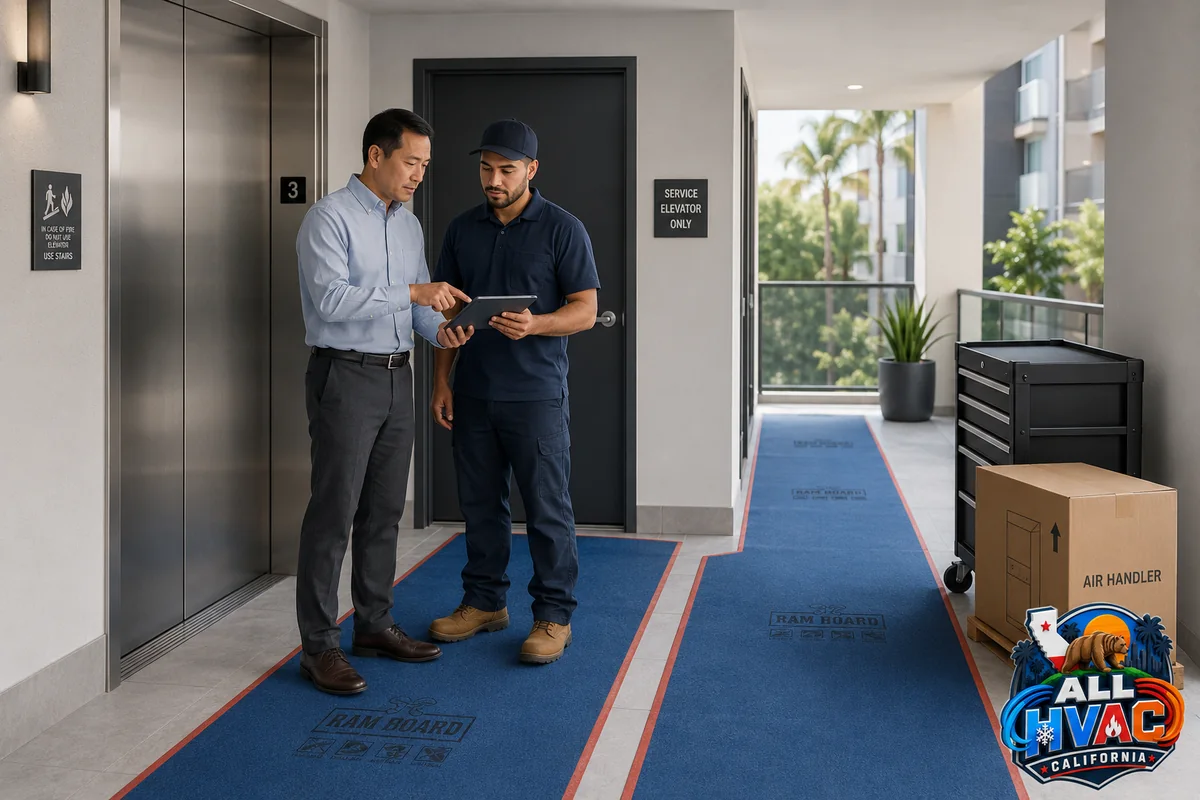
When arranging AC replacement, ask for itemized access and restoration tasks. Identify who protects common finishes and removes old equipment. Confirm working hours and any required resident notices.
Record what happens if the specified model becomes unavailable. Do not accept an unreviewed substitute where approval is model-specific. Ask whether changes require revised technical or association review.
After work, collect commissioning results, warranties, permits, and approval correspondence. Photograph the completed installation from safe locations. These records help with future service and eventual resale.
How can you prevent approval and installation from drifting apart?
Keep one current project packet for management and the contractor. Include the approved model, drawing, conditions, and written scope. Replace superseded documents clearly so nobody works from an older version.
Before installation, confirm that the delivered model matches the approval. Review the planned location, drain route, supports, and exterior finish. Ask the contractor to flag any difference before permanent work starts.
If a hidden condition changes the project, pause the affected work and document it. A changed roof penetration or shared-pipe connection may need further review. A field discovery is not automatic permission to expand the scope.
At completion, compare the finished installation with the approved packet. Resolve missing restoration or paperwork while the project team remains available. Keep final photographs and written signoffs with the equipment records.
This process is especially useful when several trades share the work. It gives the electrician, roofer, and HVAC contractor the same reference. Clear handoffs reduce avoidable disputes about what was authorized.
Questions homeowners ask
Do I need approval if I own the air conditioner?
Possibly. Ownership and alteration permission are separate issues. Check the governing documents and any effect on common property or neighboring units.
Is same-size replacement always exempt?
No. Dimensions, sound, controls, and electrical requirements can still differ. Ask for written confirmation of the applicable review requirements.
Can the contractor apply to the HOA for me?
Your community may allow a contractor to provide technical documents. Confirm who must sign and submit the application. The owner often remains the project contact.
Does California impose one HVAC approval deadline?
No universal HVAC deadline comes from Section 4765. The required procedure must state response limits. Review your community’s process and applicable law.
Does no response mean approval?
Do not assume that. Check the governing procedure and seek legal guidance if needed. Request a written decision or status update.
What sound information should I provide?
Provide manufacturer sound documentation and identify its measurement type. Include equipment location and vibration-control details. Ask which specific limits the reviewer uses.
Can I put a condenser on my balcony?
Only if the design and applicable rules allow it. Ownership boundaries, clearances, structural support, noise, and appearance can all matter.
Does a city permit override HOA rules?
A permit does not automatically settle association approval or common-property rights. Confirm both applicable processes before permanent work.
Can I start work after verbal approval?
Request written approval or a written exemption determination. Include the approved scope and conditions. Verbal reassurance can leave important details unresolved.
What if my approved equipment is unavailable?
Ask whether the substitute needs revised approval. Submit differences in dimensions, sound, capacity, and connections. Do not assume another model is equivalent.
Can I replace shared water-loop equipment with a mini-split?
That requires a feasible design and applicable permissions. It may affect common infrastructure and exterior space. Do not treat it as a simple cabinet swap.
Who pays application and access charges?
Confirm the governing requirements and project agreement. Fees vary by community and scope. Request written amounts and conditions before committing.
What if the HOA rejects my application?
Request the written reasons and reconsideration procedure. A technical revision may resolve concerns. Seek qualified advice when the dispute concerns legal rights.
Can an emergency repair proceed immediately?
Follow the building emergency procedure and obtain appropriate authorization. Urgent safety measures and permanent replacement can follow different pathways. Document what was approved.
What should I keep after installation?
Keep approval records, model numbers, invoices, warranty information, commissioning results, and applicable permit closeout. These records support future service and property questions.
The bottom line
Check HOA requirements before replacing condo HVAC, including apparently similar equipment. Get the design, permission, permit responsibilities, and access plan documented. That preparation reduces avoidable delays and disputes.
Request a free estimate from All HVAC California when you are ready to plan the replacement. Bring the community checklist and existing equipment details. Ask for a scope that matches the approvals you need.