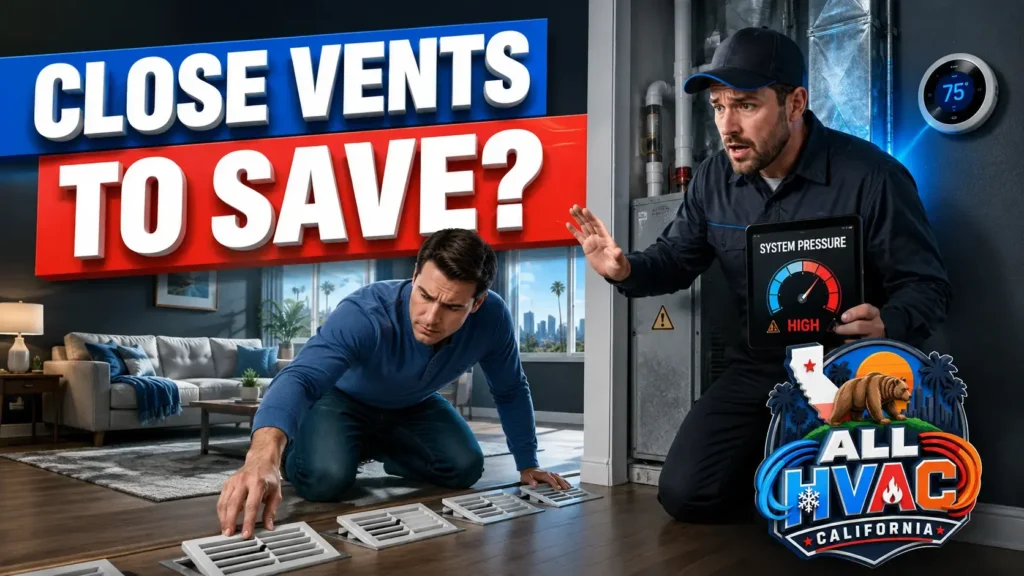
Usually no. Closing supply vents can raise duct pressure and make a central system work less safely.
It feels logical to stop cooling an empty room. Yet most central systems were designed for a fixed airflow path. Closing several registers can act like pinching a garden hose. Pressure rises, useful airflow falls, and leaks may get worse.
At All HVAC California, we use measurements before recommendations. California homes face coastal moisture, desert heat, smoky weeks, and steep afternoon loads. That mix makes simple online rules risky.
The short answer
A single partly closed register may cause little change. Closing many vents rarely delivers dependable savings. The safer path is reducing the whole-home load, fixing duct leaks, or installing properly designed zoning.
A thermostat is only one part of the picture. Our HVAC system guide explains how the indoor coil, blower, ducts, outdoor unit, and controls work together. When one link changes, the whole chain can respond.
Why this question is more complicated than it looks
The devil is in the details. Six factors usually decide the answer.
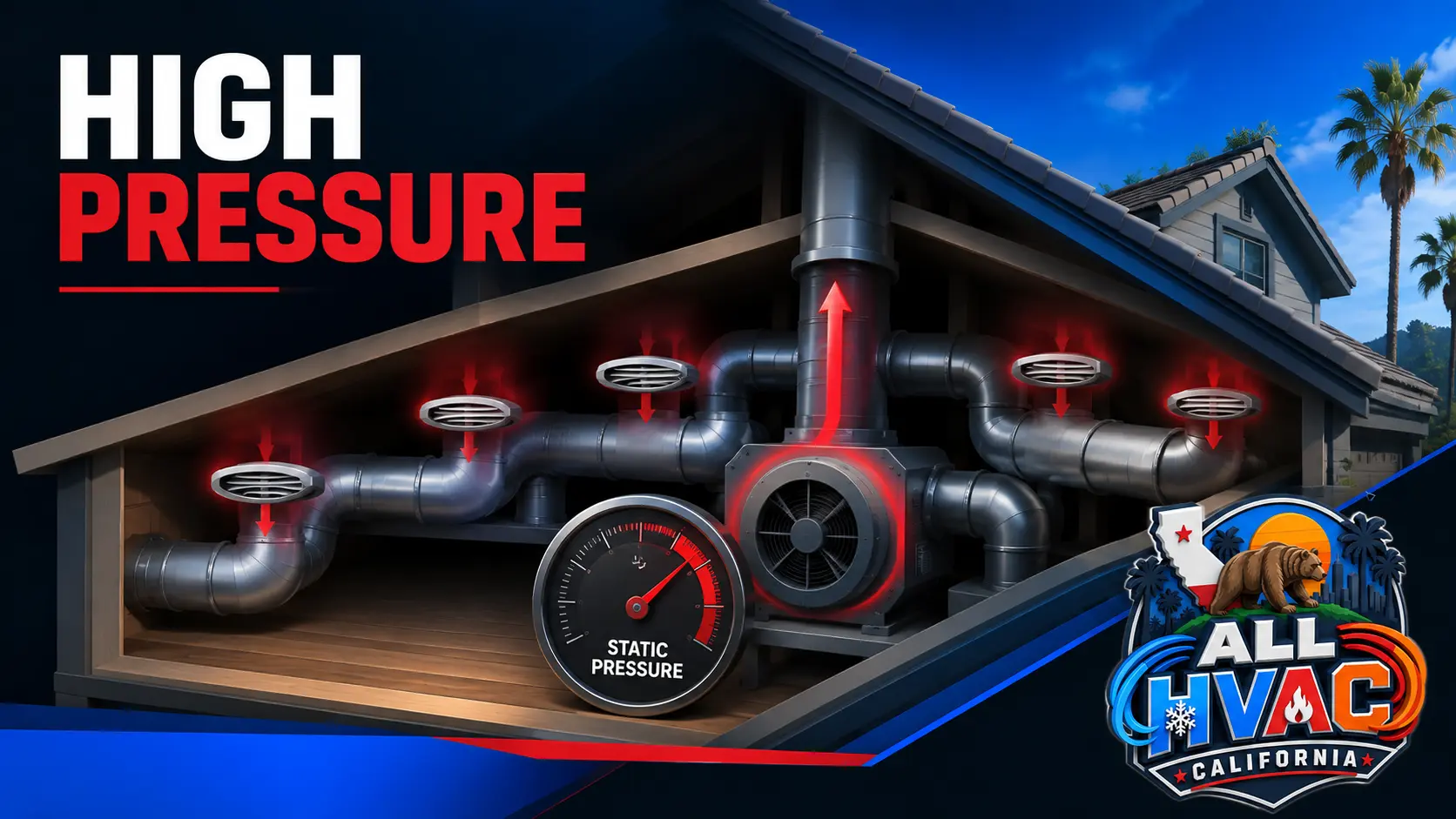
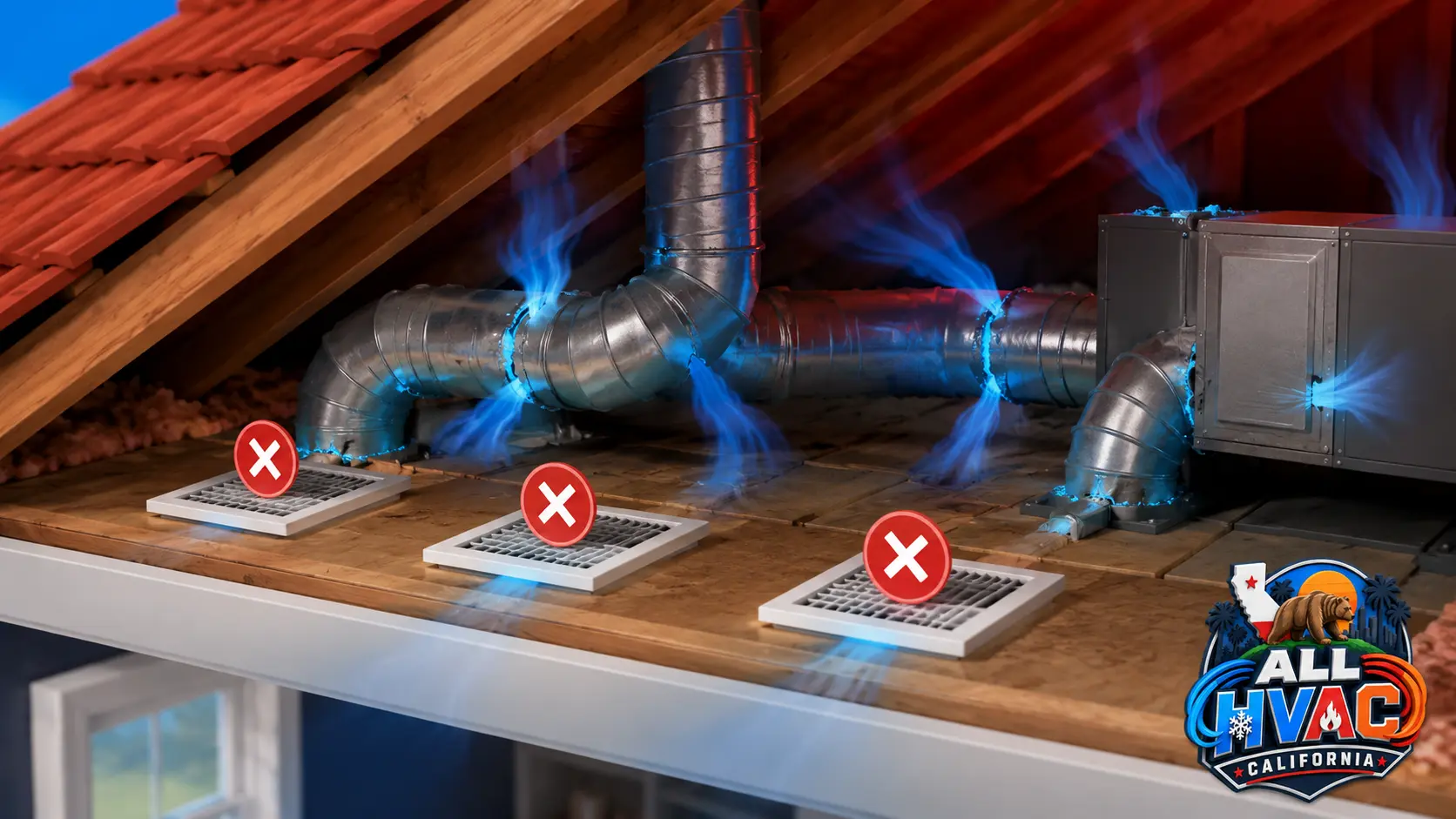
Static pressure rises
The blower still tries to move its planned amount of air. Closed registers add resistance, which can reduce total airflow and raise noise.
Watch how the home behaves through a full cooling cycle. A single reading can mislead. Repeatable patterns across similar weather provide better evidence.
Duct leakage can increase
Higher pressure may push more conditioned air through loose joints. That air can disappear into an attic, crawlspace, or wall cavity.
Watch how the home behaves through a full cooling cycle. A single reading can mislead. Repeatable patterns across similar weather provide better evidence.
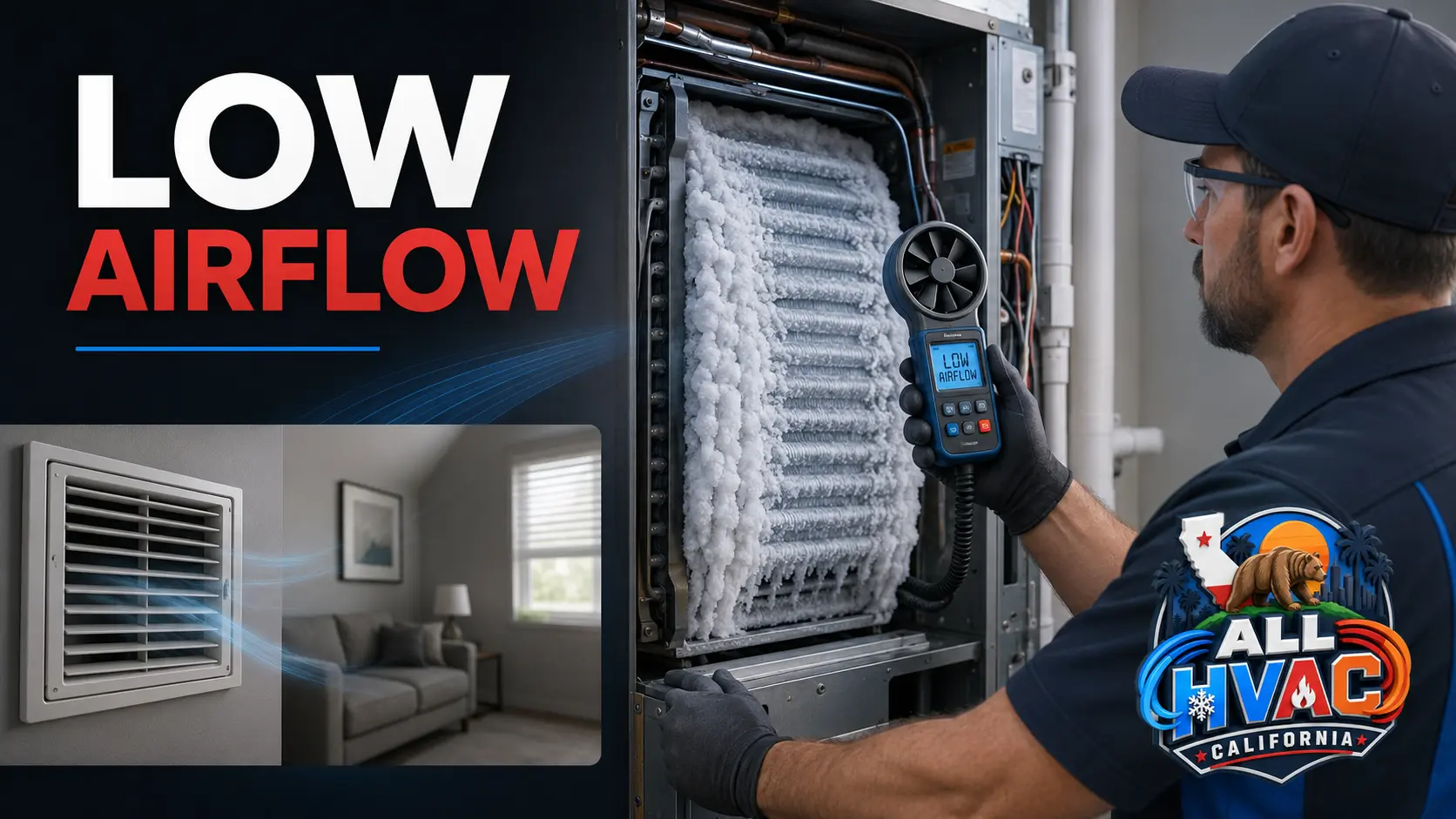
The evaporator coil can get too cold
Low airflow reduces heat crossing the indoor coil. In cooling mode, that can create ice and eventually stop cooling.
Watch how the home behaves through a full cooling cycle. A single reading can mislead. Repeatable patterns across similar weather provide better evidence.
Furnace temperature can climb
Restricted airflow can also affect heating. Safety controls may shut the furnace down when temperatures exceed normal limits.
Watch how the home behaves through a full cooling cycle. A single reading can mislead. Repeatable patterns across similar weather provide better evidence.
Room balance gets worse
Return paths and supply paths work as a network. Closing one branch can change pressure and comfort in other rooms.
Watch how the home behaves through a full cooling cycle. A single reading can mislead. Repeatable patterns across similar weather provide better evidence.
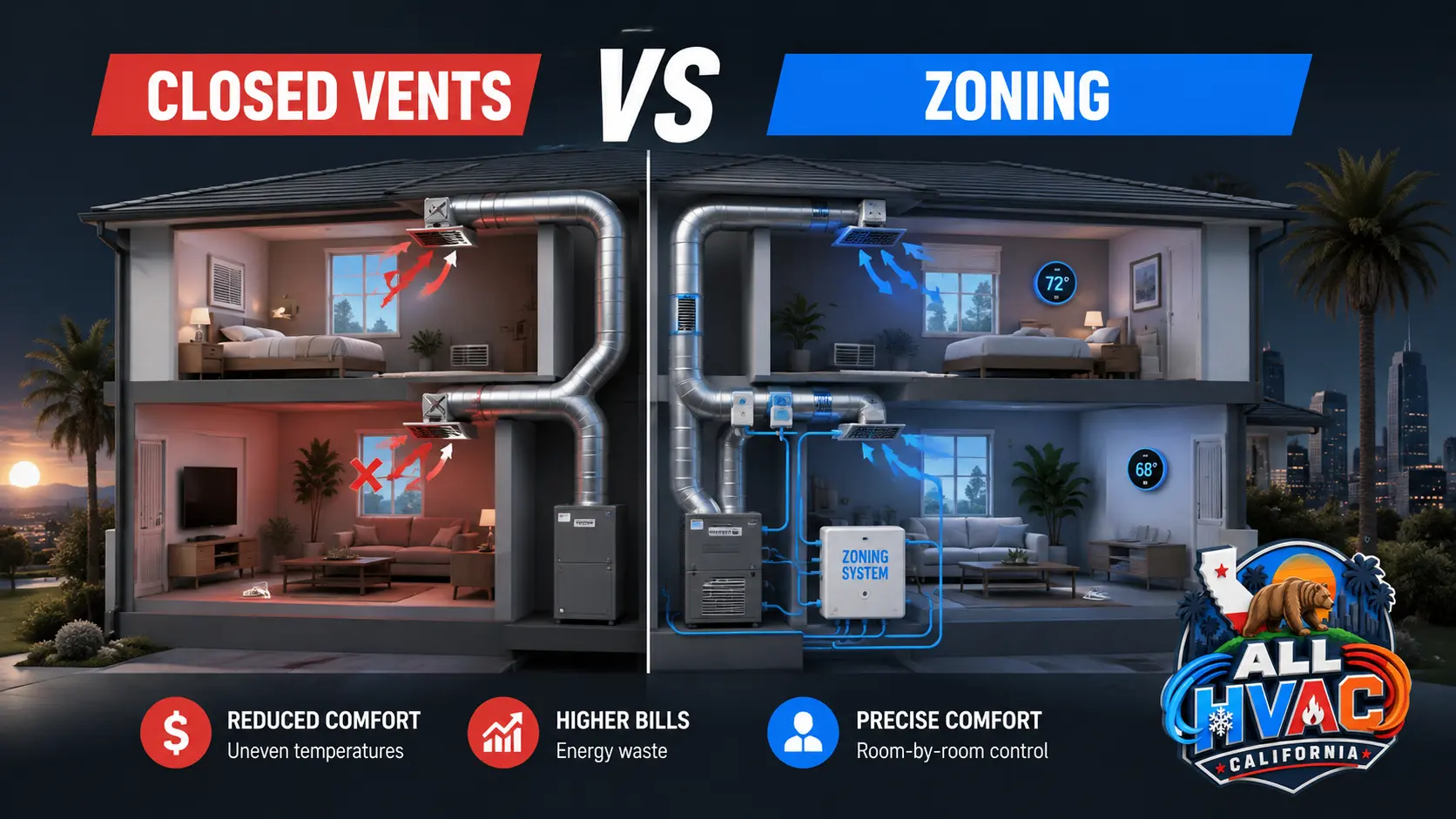
Zoning is not the same as closing vents
A real zoned system uses dampers, controls, and often bypass or variable-capacity equipment. It manages airflow as a designed system.
Watch how the home behaves through a full cooling cycle. A single reading can mislead. Repeatable patterns across similar weather provide better evidence.
A safe step-by-step way to check your home
Slow and steady wins the race. Change one condition at a time and write down what happens.
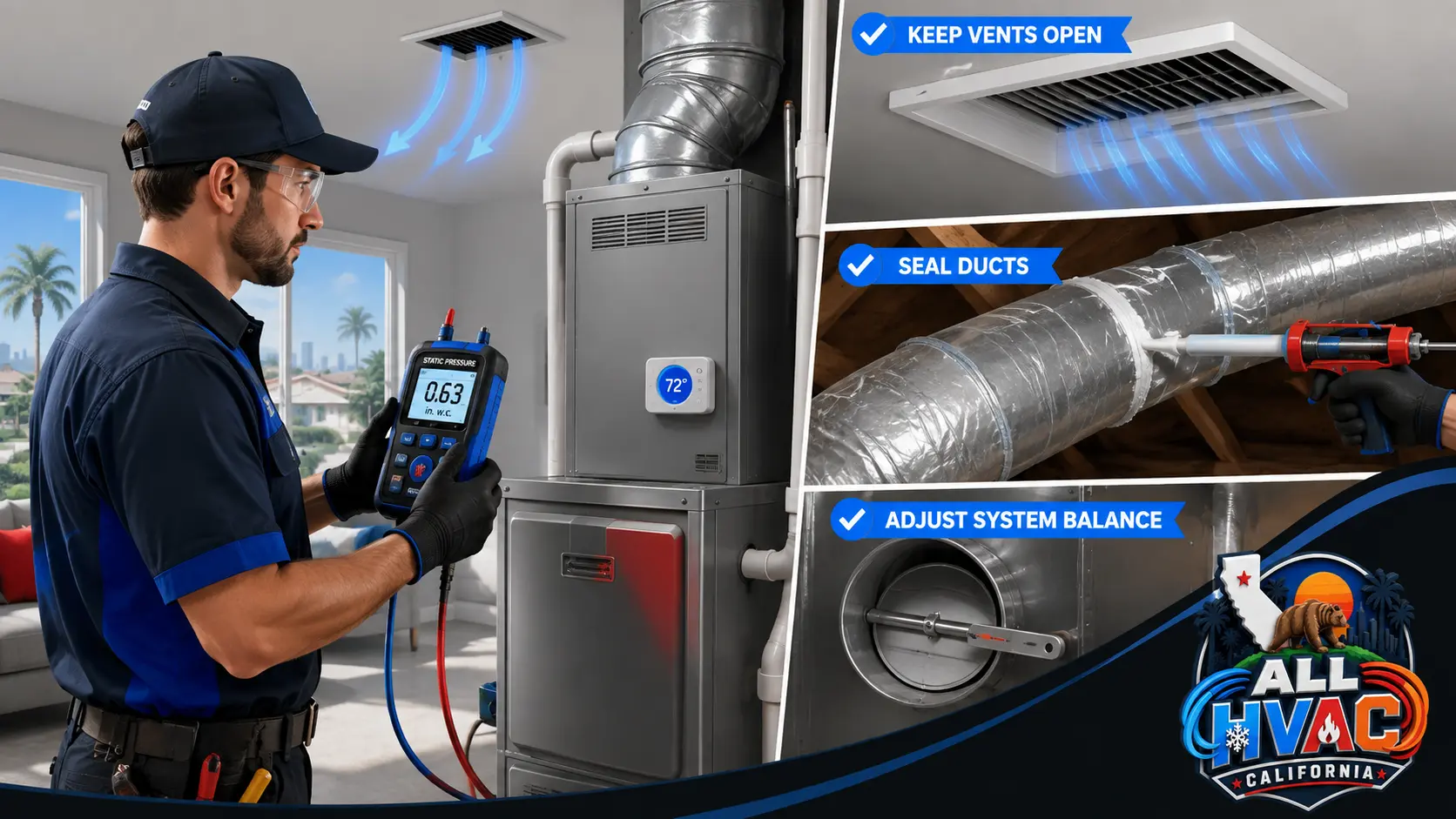
- Open all supply registers fully and confirm furniture does not block them.
- Replace a dirty filter with the correct size and approved efficiency.
- Check whether each room has a clear return-air path under doors or through grilles.
- Seal obvious gaps around windows and exterior doors before changing airflow.
- Use shades and ceiling fans in occupied rooms to reduce the cooling load.
- Request duct testing and zoning advice when one area stays uncomfortable.
Basic upkeep prevents many false conclusions. Use our HVAC maintenance checklist for filters, drains, coils, clearances, and seasonal observations.
How California climate changes the answer
California does not have one cooling season. San Diego coastal homes may battle marine humidity. Sacramento and Fresno homes face long dry heat. Inland Empire attics can become extremely hot. Mountain homes swing between warm days and cool nights.
Time-of-use electric rates also shape operating choices. Comfort during a peak window may cost more than the same cooling earlier. Shade, insulation, air sealing, ducts, and equipment staging can reduce that peak load.
Single-stage, two-stage, variable-capacity, heat-pump, and ductless systems behave differently. Review the main types of HVAC systems before copying a neighbor’s settings.
How to test the result without fooling yourself
Start with a three-day baseline. Record outdoor conditions, thermostat settings, room temperatures, humidity, cycle length, and comfort. Apples should be compared with apples. A mild day cannot prove what works during a 105-degree afternoon.
Change one variable
Adjust one setting, vent, shade, fan, or schedule. Keep everything else steady for a comparable period. If five things change together, the winning move stays hidden.
Measure more than one room
Check the thermostat area, the farthest room, and the worst room. Two-story homes also need upstairs readings. Note direct sun, cooking, laundry, guests, and open doors.
Watch complete cycles
Record start and stop times. Longer cycles can be normal during peak heat. Rapid starts, ice, leaks, breaker trips, burning odors, or falling airflow are not normal.
Review utility data carefully
Compare similar weather and occupancy. Rates, appliances, electric vehicles, and pool equipment can hide HVAC changes. Look for a pattern across several days.
Common mistakes to avoid
Haste makes waste. These shortcuts often create bad answers.
- Using square footage alone. Climate, windows, insulation, ducts, and layout change the result.
- Changing settings every few minutes. Equipment needs time to complete a normal response.
- Ignoring airflow. Filters, returns, registers, coils, and ducts can overpower control changes.
- Assuming bigger or colder is better. Correct fit usually beats brute force.
- Waiting through warning signs. Ice, electrical odors, water, grinding, and repeated trips deserve service.
What a professional evaluation should include
A careful technician starts with the symptom and its timing. The visit should include the thermostat, filter, indoor unit, outdoor unit, supply registers, return paths, and accessible ducts. Measurements may include temperature split, static pressure, airflow, electrical readings, drain condition, and refrigerant-side performance.
For sizing or design questions, a room-by-room load calculation may be necessary. Ask which readings are normal, which are not, and how each option fixes the measured problem. Our professional AC repair process separates required work from optional improvements.
Questions to ask before approving work
A good estimate should name the equipment, scope, labor, warranty, permits, testing, and likely timeline. It should also explain what is excluded. Clear writing keeps everyone on the same page.
- What measurement supports this recommendation?
- Are the indoor and outdoor components an approved match?
- Will the existing ducts and electrical system support the change?
- Which work is required now, and which upgrades are optional?
- How will the technician verify performance after the work?
- What could change the quoted price?
15 related homeowner search queries
These are the real follow-up questions people ask while comparing choices. Every question stays tied to does closing vents in unused rooms save energy.
- Should vents be open in every room?
- How many vents can I close safely?
- Can closing one vent damage an AC?
- Why does my ductwork whistle after vents close?
- Does closing vents make other rooms colder?
- Can closed vents freeze an evaporator coil?
- Should I close return vents in unused rooms?
- Is smart vent zoning safe?
- What is HVAC static pressure?
- Does a variable-speed blower fix closed vents?
- Can I shut a room door instead?
- What saves more than closing vents?
- When is HVAC zoning worth it?
- Should basement vents stay open?
- Can duct leaks raise my power bill?
Frequently asked questions
Should vents be open in every room?
Start with the system design and a measured baseline. The safe answer depends on airflow, load, weather, and equipment condition.
How many vents can I close safely?
It can, but the effect varies by home. Test one change during similar weather and watch comfort, cycle length, noise, and energy use.
Can closing one vent damage an AC?
Do not rely on a shortcut when safety or equipment sizing is involved. A qualified technician can verify readings and explain the tradeoffs.
Why does my ductwork whistle after vents close?
Look for a repeatable pattern, not one unusual afternoon. Filters, ducts, insulation, windows, and occupancy can change the result.
Does closing vents make other rooms colder?
Use the least disruptive safe change first. Stop testing if you notice ice, water, electrical odors, breaker trips, or severe airflow loss.
Can closed vents freeze an evaporator coil?
Start with the system design and a measured baseline. The safe answer depends on airflow, load, weather, and equipment condition.
Should I close return vents in unused rooms?
It can, but the effect varies by home. Test one change during similar weather and watch comfort, cycle length, noise, and energy use.
Is smart vent zoning safe?
Do not rely on a shortcut when safety or equipment sizing is involved. A qualified technician can verify readings and explain the tradeoffs.
What is HVAC static pressure?
Look for a repeatable pattern, not one unusual afternoon. Filters, ducts, insulation, windows, and occupancy can change the result.
Does a variable-speed blower fix closed vents?
Use the least disruptive safe change first. Stop testing if you notice ice, water, electrical odors, breaker trips, or severe airflow loss.
Can I shut a room door instead?
Start with the system design and a measured baseline. The safe answer depends on airflow, load, weather, and equipment condition.
What saves more than closing vents?
It can, but the effect varies by home. Test one change during similar weather and watch comfort, cycle length, noise, and energy use.
When is HVAC zoning worth it?
Do not rely on a shortcut when safety or equipment sizing is involved. A qualified technician can verify readings and explain the tradeoffs.
Should basement vents stay open?
Look for a repeatable pattern, not one unusual afternoon. Filters, ducts, insulation, windows, and occupancy can change the result.
Can duct leaks raise my power bill?
Use the least disruptive safe change first. Stop testing if you notice ice, water, electrical odors, breaker trips, or severe airflow loss.
What to document for a better decision
Good notes save time and reduce guesswork. Write down the exact room, time, outdoor temperature, thermostat setting, and symptom. Include whether doors, windows, shades, fans, ovens, dryers, or fireplaces were active. A picture is worth a thousand words, so photograph thermostat screens, equipment labels, visible ice, water, and blocked registers from a safe distance.
Use a simple daily log for one week. Record morning, late afternoon, and evening conditions. Note how long the system runs before it stops. Add indoor humidity when you have a basic meter. The goal is not laboratory perfection. You want a clear pattern that another person can understand.
Separate comfort from equipment failure
One warm bedroom may point to sunlight, insulation, airflow, or a closed door. A whole home that keeps warming can point to lost capacity. Loud air at one register differs from weak air everywhere. Water near the indoor unit differs from normal outdoor condensation. Small observations help narrow the path.
Do not use your hand alone to judge supply temperature. Human sensation changes with skin temperature and airflow. A technician uses calibrated instruments and compares supply air with return air. The reading means more when paired with pressure, airflow, refrigerant-side data, and outdoor conditions.
Consider the full cost
The cheapest immediate move may not be the least expensive long-term choice. Compare repair cost, remaining equipment life, likely energy use, comfort, warranty coverage, permit needs, and future access. Also consider whether duct or electrical upgrades will be needed later. Penny wise and pound foolish applies when a shortcut creates repeated visits.
A higher equipment price is not proof of better value. A lower price is not proof of savings. Ask for model numbers, efficiency ratings, included labor, warranty terms, commissioning steps, and payment milestones. A complete quote makes two options easier to compare.
Check the outcome after service
Before the technician leaves, run the system through a normal call for cooling. Listen at the indoor and outdoor units. Check airflow at representative rooms. Confirm the thermostat responds, drains remain clear, panels are secured, and the work area is clean.
Ask for the final measured readings and any maintenance changes. Keep invoices, permits, equipment registration, load calculations, and warranty papers together. These records help with future service and resale. They also show whether the completed work matched the original promise.
Know when to stop experimenting
Homeowners can safely replace accessible filters, clear normal debris, adjust ordinary settings, and record symptoms. Electrical panels, refrigerant circuits, gas components, combustion venting, and internal moving parts require trained service. There is no prize for pushing past a safety boundary.
Turn equipment off when it makes harsh mechanical sounds, smells electrical, trips protection repeatedly, leaks near energized parts, or builds heavy ice. Protect people first. Then protect the equipment. A calm, measured response usually costs less than waiting for a small fault to become a major failure.
Trusted sources
For independent guidance, review Air Conditioning Contractors of America and ENERGY STAR heating and cooling guidance. These resources explain industry methods and practical energy choices.
A practical decision checklist
Use this checklist before changing equipment or approving a large repair. First, define the problem in one sentence. Next, confirm the filter, thermostat, vents, and outdoor clearances. Then compare room conditions during similar weather. Note recent changes to the home, ducts, windows, insulation, occupancy, or electrical service.
Ask whether the recommendation solves the measured cause. Request the supporting numbers in plain language. Confirm the price, scope, permits, warranties, testing, and cleanup. Keep optional upgrades separate from required work. If an explanation changes under simple questions, slow down and seek another opinion.
Think about the next five years, not only today. A repair may be sensible for sound equipment with a clear isolated fault. Replacement may make more sense when major parts fail, refrigerant availability is limited, comfort remains poor, or multiple upgrades are already required. There is no universal age that makes the decision for you.
Finally, choose the path that balances safety, comfort, operating cost, and confidence. The right answer should be understandable before work begins. You should know what will change, why it should work, how performance will be tested, and what happens if results miss the target.
The bottom line
Usually no. Closing supply vents can raise duct pressure and make a central system work less safely. Begin with safe observations and correct maintenance. Then use measured load, airflow, temperature, humidity, and equipment data before spending money.
If the answer still feels muddy, request a free estimate from All HVAC California. We will explain what the numbers mean, show the options, and keep the final bill free from surprises.